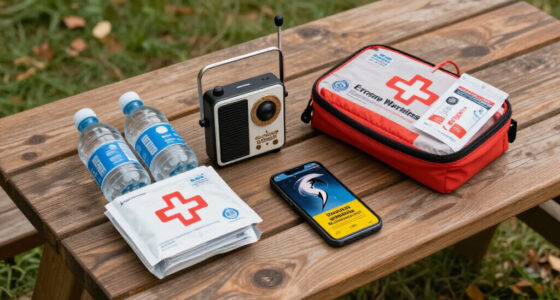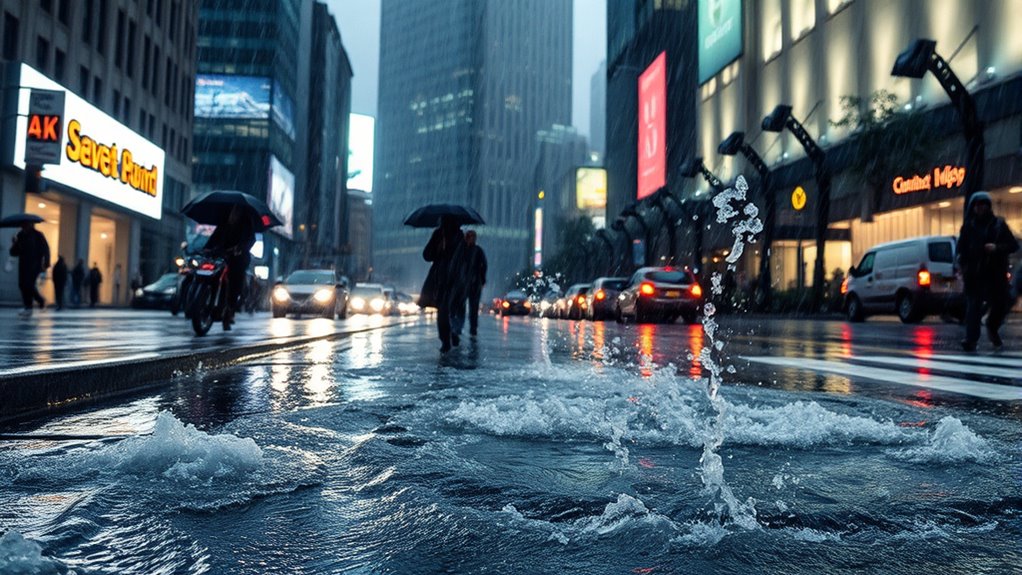

Extreme rainfall events are becoming more frequent and intense, overwhelming urban drainage systems and causing severe flooding. These heavy downpours can lead to transportation disruptions, property damage, and health risks. Many existing drainage networks aren’t built to handle the increased volume, so flooding is now a common problem. To protect your community, cities are adopting green infrastructure and upgrading drainage systems. Stay with us to discover how urban areas are strengthening their defenses against these climate challenges.
Get ready for Prime Big Deal Days — try Prime free
Exclusive member deals on October 6–7, plus fast free delivery. Cancel anytime.
As an affiliate, we earn on qualifying purchases.
Key Takeaways
- Increased heavy rainfall can overwhelm outdated urban drainage systems, leading to frequent flooding.
- Climate change intensifies rainfall events, requiring infrastructure upgrades to prevent urban flooding.
- Green infrastructure like permeable pavements and rain gardens reduces runoff and mitigates flood risks.
- Urban flooding disrupts services, damages property, and poses health hazards during extreme rainfall.
- Continuous community engagement and investment are essential for effective flood resilience planning.
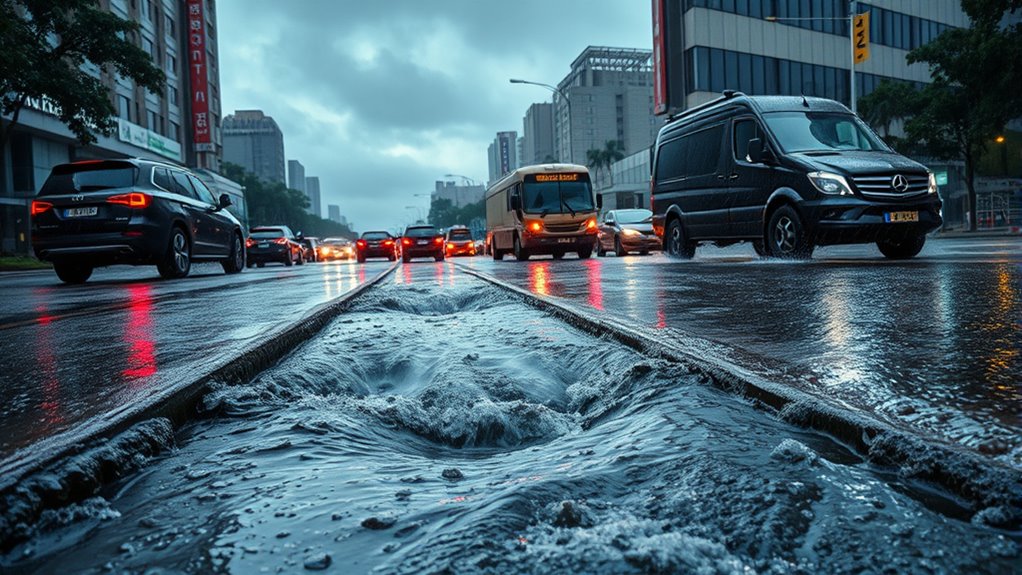
Extreme rainfall events have become more frequent and intense in recent years, substantially increasing the risk of urban flooding. When these heavy downpours hit your city, the existing urban infrastructure often struggles to handle the volume of water, leading to overwhelmed drainage systems and flooded streets. This pattern highlights the urgent need for effective climate adaptation strategies that can bolster your city’s resilience against such weather extremes. Investing in resilient urban infrastructure is essential, as outdated or inadequate drainage networks simply can’t keep pace with the increasing intensity of storms. You might notice that traditional stormwater systems were designed for past climate patterns, not the new, more severe rainfall events. As a result, water accumulates quickly, causing disruptions to transportation, property damage, and even health hazards. Recognizing the importance of urban infrastructure upgrades can help communities better prepare for future storms.
Extreme rainfall increases urban flooding risks, highlighting the need for resilient infrastructure and climate adaptation strategies.
To address these challenges, cities are turning to innovative solutions that integrate climate adaptation into their urban planning. This involves upgrading drainage infrastructure to include larger pipes, green infrastructure like permeable pavements, and rain gardens that absorb runoff naturally. These measures help slow down and filter stormwater, reducing the burden on conventional systems. By doing so, you can minimize flood risks and protect critical infrastructure, such as hospitals, schools, and emergency services, which are essential during extreme weather events. Climate adaptation isn’t just about responding to current conditions; it’s about proactively designing urban infrastructure that can withstand future climate uncertainties.
Implementing these strategies requires a thorough understanding of your city’s specific vulnerabilities. It means evaluating where flooding is most likely to happen and prioritizing upgrades in those areas. Urban planners and engineers are now exploring multi-layered approaches that combine green and gray infrastructure to create a more resilient urban environment. For example, deploying green roofs and urban wetlands can greatly reduce runoff while also providing additional benefits like improved air quality and urban cooling. These integrated solutions help you adapt to changing climate conditions, making your city more resilient against extreme rainfall.
Ultimately, the success of climate adaptation depends on your community’s willingness to invest in resilient urban infrastructure. It’s not just about fixing problems after they occur but about designing smarter, more sustainable cities that can absorb and manage heavy rainfall when it happens. By prioritizing these upgrades, you’re helping to safeguard your neighborhood, reduce economic losses, and ensure a safer, more sustainable urban future. The key lies in recognizing that climate adaptation is an ongoing process—one that requires continuous innovation, investment, and community engagement to effectively combat the rising threat of extreme rainfall events.
urban drainage system upgrade kit
As an affiliate, we earn on qualifying purchases.
As an affiliate, we earn on qualifying purchases.
Frequently Asked Questions
How Do Urban Design Changes Mitigate Flood Risks?
You can reduce flood risks by incorporating green infrastructure and permeable pavements into urban design. Green infrastructure absorbs rainwater, reducing runoff, while permeable pavements allow water to seep through, decreasing surface flooding. These strategies help manage stormwater more effectively, prevent overwhelmed drainage systems, and protect your community from flood damage. By embracing these design changes, you create a more resilient and sustainable urban environment.
What Are the Economic Impacts of Urban Flooding?
Imagine the floodwaters as thieves stealing your peace of mind. Urban flooding hits your wallet hard, raising insurance costs and causing extensive property damage. You face higher expenses for repairs, temporary housing, and increased premiums, which strain your finances. These economic impacts ripple through communities, reducing property values and increasing costs for local governments. Ultimately, flooding isn’t just an environmental issue—it’s a financial burden that can linger long after the waters recede.
How Does Climate Change Influence Rainfall Patterns?
Climate change influences rainfall patterns by increasing climate variability, leading to more unpredictable and intense rainfall distribution. You’ll notice more frequent heavy rainfalls and prolonged dry spells, as warmer temperatures cause moisture to evaporate and then fall as rain. These shifts disrupt traditional rainfall patterns, making weather more extreme and less predictable. As a result, communities face higher risks of flooding, droughts, and other climate-related challenges, impacting agriculture, infrastructure, and daily life.
What Role Do Government Policies Play in Flood Prevention?
Think of government policies as your friendly guide, helping prevent floods through effective policy implementation and thoughtful funding allocation. By setting clear regulations, investing in infrastructure, and prioritizing flood resilience, you can reduce risks. When policies are well-designed and properly funded, they actively support communities in managing heavy rainfall, making urban areas safer and more resilient. Your role is essential in advocating for and supporting these proactive measures.
How Can Communities Prepare for Extreme Rainfall Events?
To prepare for extreme rainfall events, you should focus on effective stormwater management practices like installing rain gardens and permeable pavements. Additionally, raise community awareness about flood risks and safety measures through local workshops and social media. Make sure your property is properly insured and have an emergency kit ready. Staying informed about weather updates also helps you act quickly, reducing damage and ensuring safety during heavy rainfall.
Conclusion
As you see, extreme rainfall events are becoming more frequent, leading to devastating urban floods. Can cities adapt quickly enough to protect their residents and infrastructure? By implementing better drainage systems, planning resilient urban spaces, and taking proactive measures, you can help reduce the risks. The question isn’t just how much rain falls, but how prepared you are to face the deluge. Will you take action now to safeguard your community against future floods?
Fall Picks
fall essentials
As an affiliate, we earn on qualifying purchases.