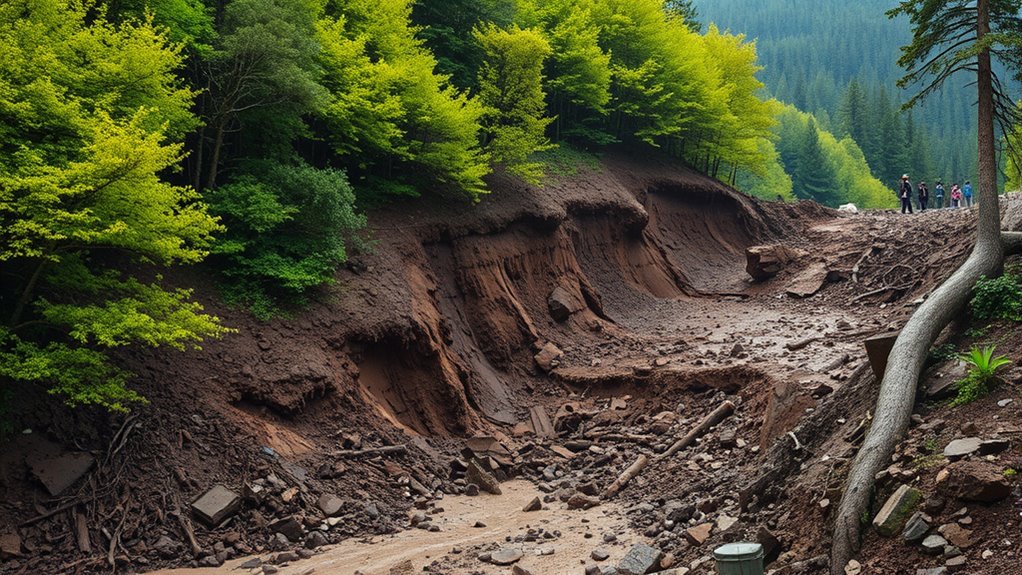

Landslides and mudslides happen when unstable soil or rock suddenly slips downhill, often after heavy rain, seismic activity, or construction that disturbs the land. Key warning signs include cracks in your yard, leaning trees, or tilting structures. To stay safe, reinforce slopes, improve drainage, and avoid building on unstable ground. Recognizing these causes and signs can help you prepare better—keep exploring to learn more about how to protect yourself and your property.
Key Takeaways
- Heavy rains and seismic activity are primary triggers for landslides and mudslides.
- Soil instability caused by saturated, loose, or clay-rich soils increases landslide risk.
- Deforestation and construction disturb natural ground stability, elevating vulnerability.
- Recognizing early warning signs like cracks, tilting structures, and leaning trees can prevent danger.
- Preventative measures include reinforcing slopes, improving drainage, and avoiding construction on unstable land.
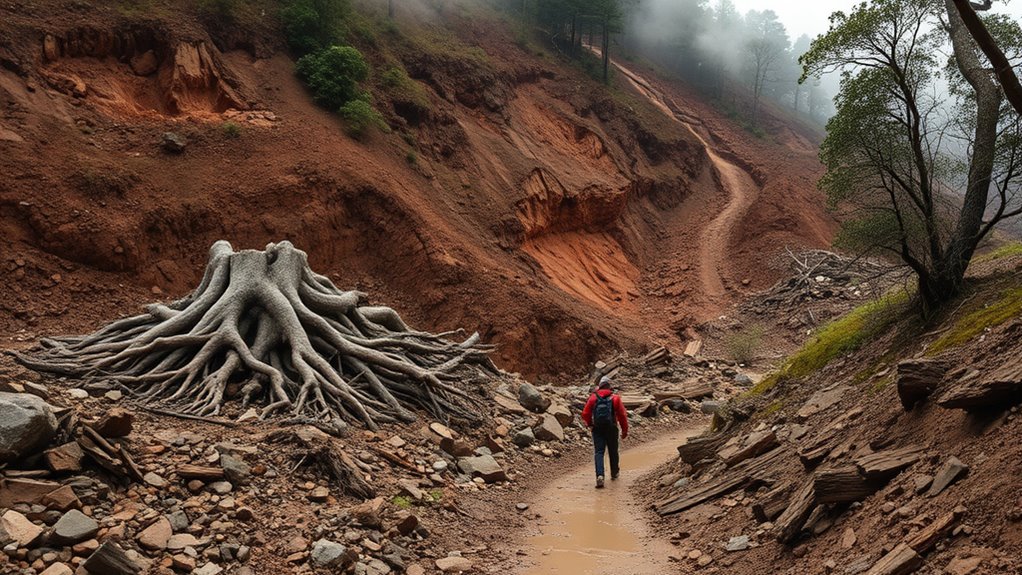
Landslides and mudslides happen when large amounts of soil, rock, or debris suddenly move downhill, often causing widespread destruction. If you live in an area prone to such events, understanding what contributes to these movements can help you stay alert and prepared. One key factor is soil instability, which refers to the condition where the ground can’t hold itself together, making it more likely to slide during heavy rain or seismic activity. Soil instability often develops gradually but can be detected early if you know the warning signs.
You should pay close attention to signs like new cracks forming in your yard, retaining walls tilting or cracking, or leaning trees and poles. These are often indicators that the ground beneath is weakening. Pooled water around your property, especially after storms or heavy rain, can also suggest that the soil is becoming saturated and less stable. If you notice the land around your home shifting or accumulating debris in unusual places, it’s a clear sign you need to take action. Ignoring these warning signs can lead to sudden, dangerous landslides that could damage your property or threaten your safety.
Understanding soil instability isn’t just about recognizing warning signs; it also involves knowing what causes it. Heavy rains are a primary trigger, as they saturate the soil and reduce friction holding it together. Deforestation, construction, and land development can disturb the natural stability of the ground, making it more susceptible to sliding. The type of soil also matters—clay-rich soils tend to swell and shrink with moisture changes, increasing instability, while loose, sandy soils are more prone to quick movements. Slope steepness is another factor; the steeper the terrain, the higher the risk, especially if the soil is compromised. Additionally, using projectors with high contrast ratio can significantly improve the visibility of terrain features in visualizations related to land stability.
If you see signs of soil instability, it’s essential to take preventative measures. Reinforcing slopes with retaining walls, improving drainage systems, and avoiding construction on unstable ground can reduce risk. Staying informed about weather forecasts and recent land changes in your area can also help you anticipate potential landslides. Always keep an eye out for early warning signs and act quickly if you notice anything unusual. Recognizing the causes and warning signs of soil instability puts you in a better position to protect yourself, your family, and your property from the devastating effects of landslides and mudslides.
Frequently Asked Questions
How Can I Predict When a Landslide Might Occur?
You can predict when a landslide might occur by paying attention to signs like cracks in the ground or leaning trees. Regular geological surveys help identify changes in soil stability and detect potential risks early. Keep an eye on heavy rainfall and rapid snowmelt, which can trigger slides. Staying informed about weather forecasts and monitoring land conditions allows you to act quickly and stay safe before a landslide happens.
Are There Specific Signs Indicating an Imminent Mudslide?
You might notice signs of an imminent mudslide, like subtle ground movements or water pooling on slopes. These clues can be deceptive, but if you see cracks appearing, trees tilting, or the soil softening and becoming muddy, stay alert. Such signs indicate instability building beneath the surface. Keep monitoring the area and heed warnings from local authorities—these early signals could be your only warning before disaster strikes.
What Are the Most Effective Early Warning Systems?
You can rely on sensor technology and community alerts as the most effective early warning systems. Sensors monitor soil movement, rainfall, and ground vibrations, providing real-time data. When thresholds are crossed, alerts are automatically sent to your community via text, sirens, or apps. This proactive approach helps you stay informed and prepare, reducing risks during potential mudslides or landslides. Stay connected and heed warnings promptly for your safety.
How Do Climate Change and Deforestation Influence Landslide Risks?
Climate impact from global warming increases landslide risks by causing intense rainfall and rapid snowmelt, which saturate soil and destabilize slopes. Deforestation effects are equally significant; cutting down trees removes essential root systems that hold soil together, making slopes more prone to failure. When you combine these factors, your risk of landslides rises substantially, especially in vulnerable areas. To stay safe, monitor weather alerts and support efforts to reduce deforestation.
What Should I Include in an Emergency Kit for Landslide Safety?
In your emergency kit, include first aid supplies like bandages and antiseptics, just like during the 2010 California mudslides. Don’t forget communication devices such as a charged cell phone and a portable charger, so you can call for help if needed. Also, pack essentials like water, non-perishable food, a flashlight, and warm clothing to stay safe and prepared during a landslide emergency.
Conclusion
Remember, landslides and mudslides can strike unexpectedly, like a sudden wave crashing ashore. Just last year, a small hillside gave way after heavy rains, reminding us how nature’s patience wears thin. Staying alert and prepared is your best defense—think of it as building a sturdy dam before floodwaters arrive. By understanding causes and practicing safety, you can navigate these dangers and protect yourself, turning a potential disaster into a story of resilience.