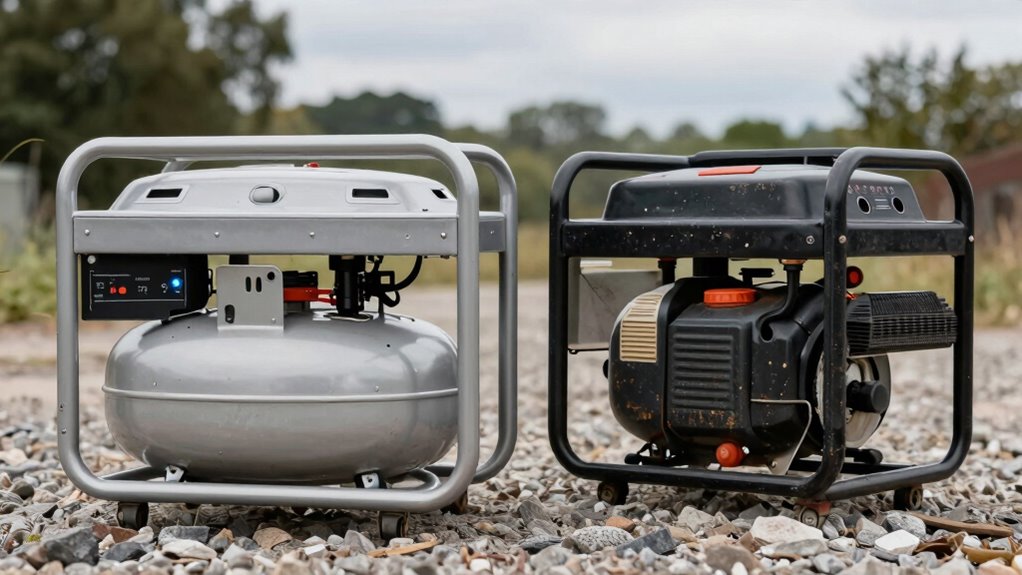

When comparing propane and gasoline generators, consider safety, costs, and performance. Propane offers safer, cleaner long-term storage and handles cold weather better, making it ideal for emergencies in remote areas. It costs more upfront but can save you money over time thanks to stable fuel prices and lower maintenance. Gasoline is cheaper initially but has safety risks, shorter shelf life, and performs less reliably in cold conditions. To make the best choice, you’ll want to explore these tradeoffs more closely.
Key Takeaways
- Propane offers longer shelf life and better storage safety, reducing degradation issues common with gasoline.
- Propane engines require less maintenance and produce cleaner emissions, enhancing performance and environmental benefits.
- Initial costs for propane generators are higher, but lower fuel and maintenance expenses can offset the investment over time.
- Propane performs more reliably in cold or remote conditions, maintaining stability when gasoline may thicken or evaporate.
- Gasoline may be cheaper upfront but often incurs higher long-term costs due to fuel degradation, emissions, and maintenance needs.

DuroStar DS13000MX 13,000-Watt 500cc Dual Fuel Portable Generator – Gas and Propane, Remote Electric Start, Whole Home Power Backup, Transfer Switch Ready, RV & Emergency Ready
- Power Output: 13,000 Watts for backup power
- Fuel Options: Dual fuel: Gasoline or Propane
- Safety Feature: CO Alert for safety
As an affiliate, we earn on qualifying purchases.
As an affiliate, we earn on qualifying purchases.
Propane vs. Gasoline Generators: Which Is Right for You?
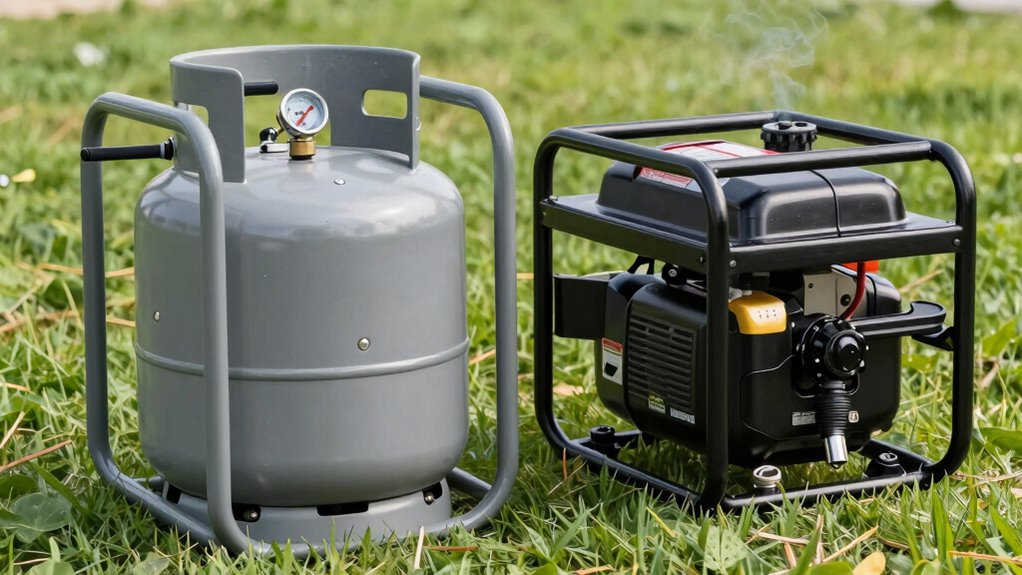
Choosing between propane and gasoline generators depends on your specific needs and priorities. Propane offers easier fuel storage since it’s stored in pressurized tanks, which are safer and less prone to spills or leaks. This can simplify safety protocols, making propane a good choice if you value safer handling and long-term storage. Gasoline, however, requires careful storage in approved containers, with strict safety measures to prevent spills, fumes, or fire hazards. If you need a generator for frequent or long-term use, propane’s stable storage and cleaner-burning properties might appeal to you. On the other hand, gasoline’s availability and portability can be advantageous for short-term or emergency needs. Additionally, fuel efficiency varies between the two, influencing operational costs over time. Proper wiring practices are essential to ensure safe and reliable operation of your generator, especially in preventing heat buildup and electrical hazards. Ultimately, your decision hinges on how you weigh fuel convenience, safety considerations, and your specific power requirements.
How Do Maintenance and Storage Requirements Compare?
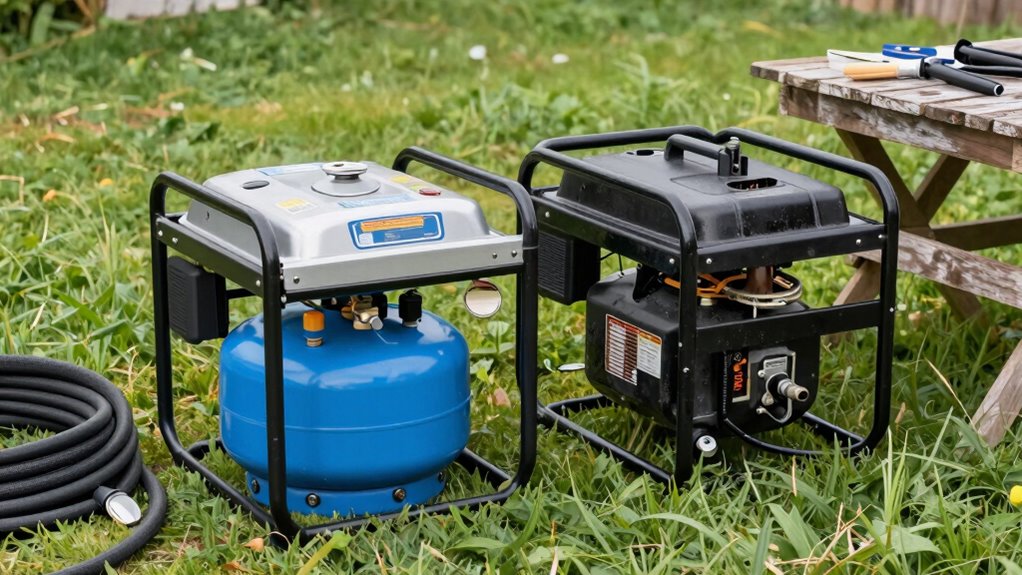
When comparing maintenance and storage requirements, propane generators generally demand less upkeep and pose fewer safety concerns than gasoline models. Propane’s cleaner burn means less frequent maintenance routines, reducing engine wear. Additionally, propane fuel storage is safer and more stable over time, requiring less specialized handling. Propane’s longer shelf life means less worry about fuel degradation and spoilage. Moreover, propane’s fuel stability contributes to more reliable operation during extended storage periods. Its ease of handling further enhances safety and convenience for users. Gasoline, on the other hand, can degrade and become problematic if stored too long, increasing safety risks. Proper fuel storage is crucial for safety and efficiency, and propane’s stable properties make it preferable for long-term storage. Here’s a quick comparison:
| Aspect | Propane Generator | Gasoline Generator |
|---|---|---|
| Fuel Storage | Safer, longer shelf life | Flammable, degrades over time |
| Maintenance Routines | Less frequent, simpler | More frequent, complex |
| Safety | Fewer concerns | Higher risk of leaks and spills |
Furthermore, propane’s environmental benefits include reduced emissions and a cleaner operation that can contribute to a safer environment.
Is Propane or Gasoline Safer to Handle and Store Long-Term?

Propane is generally safer to handle and store long-term than gasoline, thanks to its chemical properties and stability. When considering storage safety, propane’s non-toxic, non-corrosive nature reduces risks. To guarantee safe handling procedures, keep these points in mind:
Propane’s stability and non-toxic nature make it a safer choice for long-term storage than gasoline.
- Store propane cylinders upright in well-ventilated areas away from heat sources.
- Use approved containers designed for propane, avoiding any makeshift setups.
- Regularly inspect for leaks or corrosion, and replace damaged cylinders immediately.
- Proper airflow around the storage area enhances safety by preventing the accumulation of flammable gases. Additionally, proper storage practices are essential for ensuring long-term safety and compliance with regulations, especially considering the market stability of propane compared to gasoline. Maintaining storage conditions also helps preserve the integrity of the fuel over extended periods, reducing potential hazards. Regularly monitoring fuel stability can prevent issues related to fuel degradation and ensure safe usage over time.
What Are the Environmental Impacts of Propane and Gasoline Generators?
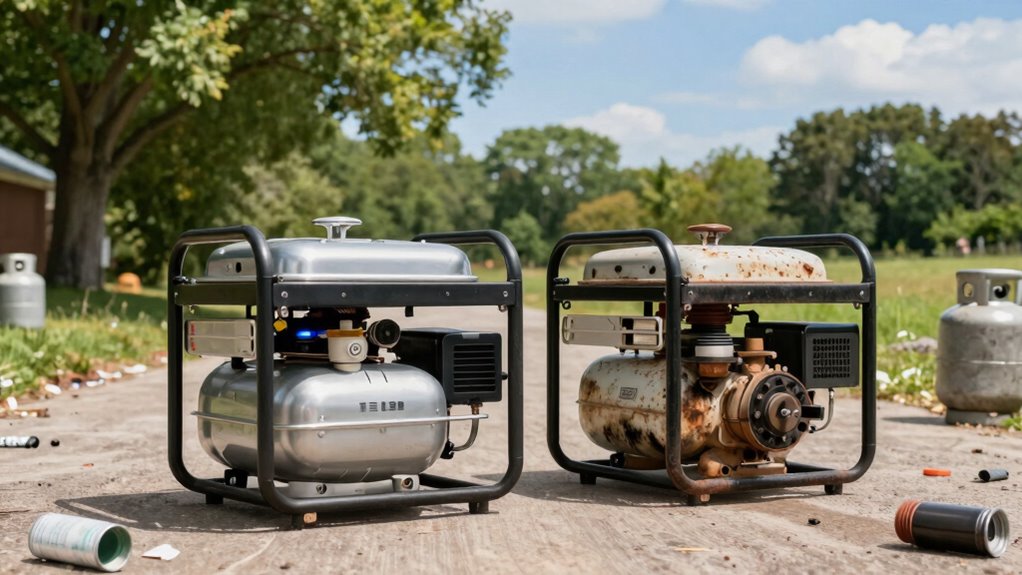
You should consider how emissions from generators affect air quality and the environment. Propane produces cleaner exhaust than gasoline, but both have environmental footprints from fuel production. Understanding these impacts helps you choose a more eco-friendly option for your needs. Additionally, considering comedogenic ratings of fuel additives can influence skin health if you handle fuel regularly. Being aware of the carbon footprint of each fuel type can further inform your environmentally conscious decisions. For example, fuel efficiency varies between propane and gasoline, impacting overall emissions and environmental effects.
Emissions and Air Quality
While both propane and gasoline generators produce emissions that impact air quality, their environmental footprints differ markedly. Propane burns cleaner, releasing fewer harmful pollutants, while gasoline emits higher levels of carbon monoxide, nitrogen oxides, and particulate matter. Consider these key points:
- Propane generators produce considerably fewer emissions, improving air quality.
- Gasoline generators tend to have higher noise levels, adding to environmental noise pollution.
- Fuel efficiency varies, with propane often lasting longer and producing less overall pollution per hour.
- Since propane is often considered vetted for water safety, its use reduces the risk of water contamination in case of leaks or spills.
Your choice affects not just air quality but also the environment’s overall health. Lower emissions from propane mean cleaner air, while gasoline’s emissions contribute more to smog and respiratory issues. Noise levels and fuel efficiency further influence your environmental impact.
Fuel Production Impacts
The environmental impacts of fuel production play a significant role in evaluating the overall sustainability of propane and gasoline generators. Producing gasoline involves extracting crude oil through drilling, which can harm ecosystems, cause spills, and emit greenhouse gases during refining. Propane, derived from natural gas or oil refining, has a similar footprint but often benefits from more efficient extraction methods. Both fuels have limited renewable alternatives, meaning their production relies heavily on finite resources. Fuel efficiency influences how much raw material is needed for the same energy output, impacting environmental strain. While propane generally has a cleaner production process, neither fuel is entirely sustainable. Considering these impacts helps you determine which generator aligns better with long-term environmental goals.
How Do Upfront and Ongoing Costs of Propane and Gasoline Generators Compare?
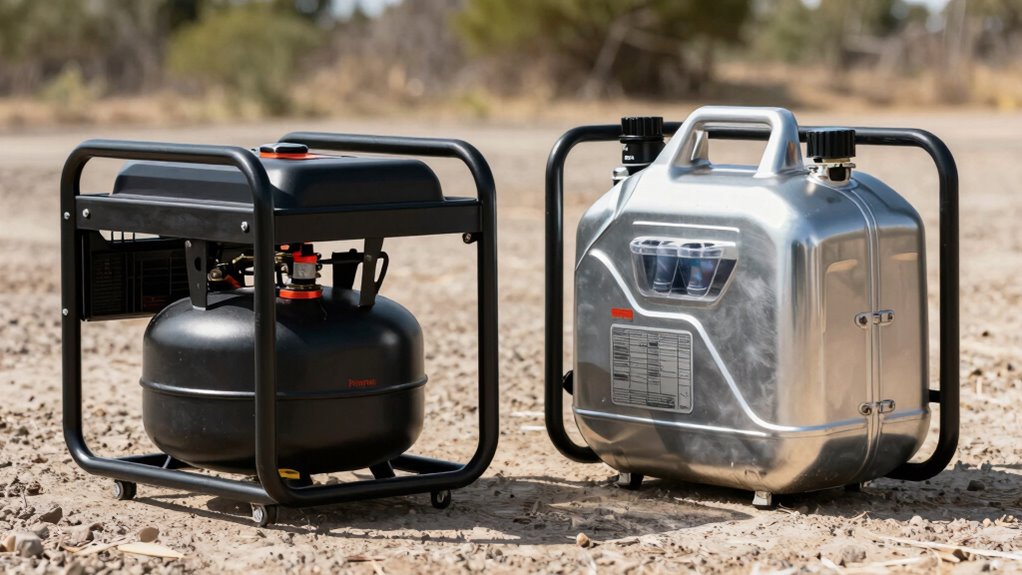
When comparing propane and gasoline generators, you’ll notice differences in initial purchase prices and ongoing costs. Fuel prices can vary over time, affecting your long-term expenses, while maintenance and replacement needs also play a significant role. Understanding these factors helps you choose the option that fits your budget and usage.
Initial Purchase Price Differences
Choosing between a propane and a gasoline generator involves considering their initial purchase prices, which can vary considerably. Generally, propane generators tend to have a higher initial investment but may save money over time. Here are three key points:
- Propane generators often cost about 20-30% more upfront than gasoline models.
- Gasoline generators usually have a lower initial purchase price, making them more accessible initially.
- Fuel storage equipment, such as tanks for propane, adds to the cost of propane generators, affecting the total upfront expense.
- Additionally, fuel flexibility can influence long-term costs and convenience, as propane can be stored longer and burned more cleanly than gasoline.
- When considering initial costs, it’s important to balance the higher upfront expense of propane with potential savings from its longer shelf life and cleaner burning properties.
- The storage requirements for each fuel type can also impact the overall cost-efficiency and ease of use, especially for long-term or emergency applications.
Fuel Cost Variability
While propane generators typically cost more upfront due to higher purchase prices and fuel storage needs, their ongoing fuel costs can vary widely from gasoline models. Fuel price fluctuations impact both types, but propane often remains more stable because of supply chain stability. Gasoline prices tend to fluctuate more, making running costs unpredictable over time. To illustrate, consider this comparison:
| Fuel Type | Price Fluctuations | Supply Chain Stability |
|---|---|---|
| Propane | Less volatile | More reliable |
| Gasoline | More volatile | Less reliable |
You might pay a premium initially for propane, but its steadier prices could save you money during long-term use, especially when gasoline prices spike unexpectedly.
Maintenance and Replacement Expenses
Propane generators generally have higher upfront costs due to their more complex design and the need for specialized fuel storage, which can make initial investment more expensive. However, they often save money over time. Consider these points:
- Fuel storage: Propane tanks last longer and require less frequent refilling than gasoline cans.
- Replacement intervals: Propane generators typically need fewer oil changes and maintenance due to cleaner-burning fuel.
- Maintenance costs: Gasoline generators often have more parts prone to wear, increasing ongoing expenses.
- Fuel efficiency is another factor to consider, as propane tends to burn more efficiently, potentially reducing overall fuel costs over the generator’s lifespan. Additionally, the ease of refueling with propane can minimize downtime during operation.
- Moreover, propane’s longer shelf life makes it more reliable for backup power during extended outages, avoiding fuel degradation issues associated with gasoline.
While propane units may cost more initially, their lower maintenance and longer fuel storage life can offset those costs. Gasoline generators might be cheaper upfront but can incur higher replacement expenses over their lifespan.
Which Generator Performs Best in Cold or Remote Conditions?
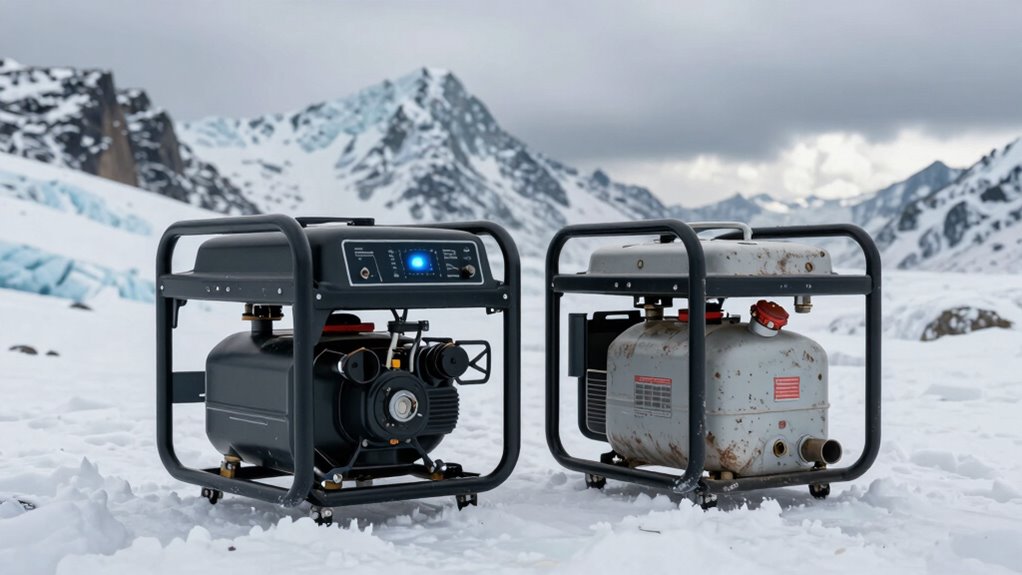
When it comes to cold or remote conditions, propane generators generally outperform gasoline models because propane is less affected by low temperatures. Cold weather can cause gasoline to thicken or evaporate, making starting and running more difficult. Propane, stored at ambient temperatures, remains consistent, ensuring reliable operation. In remote operation areas where access to fuel stations is limited, propane tanks are more practical since they can be stored safely for long periods and refilled easily. Gasoline engines may struggle to start or run smoothly in freezing temperatures, increasing maintenance needs. Propane generators provide stable performance in harsh conditions, making them ideal for outdoor, off-grid, or emergency setups where reliable power is essential despite the weather.
How to Choose the Best Generator for Emergency and Backup Power Needs?

Choosing the right generator for emergency and backup power requires considering your specific energy needs and the conditions where it will be used. Start by evaluating your power requirements: do you need to run essential appliances or a whole house? Then, assess these key factors:
- Fuel efficiency – Opt for a generator that maximizes fuel use, saving costs during prolonged outages.
- Noise levels – Choose a quieter model to minimize disturbance, especially if you live close to neighbors.
- Fuel type – Decide between propane or gasoline based on availability and storage options.
Frequently Asked Questions
How Do Fuel Prices Fluctuate Over Time for Propane Versus Gasoline?
You’ll notice fuel price trends for propane and gasoline fluctuate due to market volatility, but propane tends to be more stable. Gasoline prices often spike with seasonal changes and crude oil market swings, while propane’s prices stay relatively steady because of its storage and supply stability. Over time, propane’s market volatility is lower, making it a more predictable fuel option, especially during unpredictable economic or geopolitical events.
Are There Differences in Noise Levels Between Propane and Gasoline Generators?
Sound sensitivity shows subtle yet significant differences between propane and gasoline generators. Propane generators tend to produce softer, steadier sounds, leading to quieter sound levels, while gasoline models often generate louder, more variable noise. You’ll notice that propane’s consistent hum minimizes disturbance, making it ideal for noise-sensitive environments. Ultimately, you experience less noise nuisance with propane, offering a peaceful, peaceful power solution that’s preferable for quiet comfort.
Can Propane Generators Run on Renewable or Alternative Fuels?
Yes, propane generators can run on renewable or alternative fuels. They’re compatible with alternative fuel options like bi-propane, which is derived from renewable sources, and can be adapted for other renewable energy options. This flexibility makes propane generators a good choice if you want to reduce your carbon footprint. Keep in mind, though, that not all propane generators are designed for all alternative fuels, so check your model’s specifications.
What Are the Long-Term Durability Differences Between Propane and Gasoline Engines?
You’ll find that propane engines generally have a longer engine lifespan because they burn cleaner, reducing carbon buildup. This means less wear and tear over time. Additionally, propane generators often require less maintenance since they produce fewer engine deposits. Gasoline engines, while initially cheaper, tend to need more frequent repairs and parts replacement, which can shorten their durability and increase long-term costs.
How Does the Availability of Refueling Infrastructure Impact Usage in Remote Areas?
You’ll find that the availability of refueling stations substantially impacts your generator use in remote areas. Limited infrastructure development means fewer refueling options, making it harder to rely on gasoline generators long-term. Propane generators can be more practical if you have access to portable tanks, but without sufficient infrastructure development, both types face challenges. Ensuring proper refueling infrastructure is key to maintaining consistent power in isolated locations.
Conclusion
Ultimately, choosing between propane and gasoline generators depends on your priorities. Prioritize safety, sustainability, and savings, and you’ll see that thoughtful consideration transforms your decision. Recognize the risks, respect the rewards, and realize that reliable, responsible power depends on your choice. By balancing benefits and burdens, you’ll confidently choose the generator that guarantees your peace of mind, preparedness, and practical power for every unpredictable predicament.