
Severe winter storms and blizzards can hit suddenly, bringing heavy snow, strong winds, and dangerous conditions that disrupt your daily routines and threaten safety. These storms can cause power outages, making it vital to have emergency supplies like food, water, warm clothing, and batteries ready. It’s essential to stay informed, avoid travel during warnings, and prepare your home. Keep your safety in mind, and you’ll find plenty more tips to stay protected during these harsh weather events.
Key Takeaways
- Severe winter storms and blizzards can cause transportation disruptions, power outages, and dangerous conditions requiring prompt preparedness.
- Essential supplies include non-perishable food, water, batteries, warm clothing, blankets, and emergency communication devices.
- During blizzards, limit travel, wear layered waterproof clothing, move carefully on ice, and stay inside if stranded.
- Stay informed through reliable weather updates, follow alerts, and assist vulnerable neighbors or family members.
- Prepare your home by sealing leaks, maintaining heating systems, and avoiding indoor use of outdoor grills or generators.
Severe winter storms and blizzards can strike suddenly, bringing heavy snowfall, strong winds, and dangerous conditions that disrupt daily life. When you’re faced with such weather, being prepared makes all the difference. Winter storm preparedness isn’t just about having supplies; it’s about knowing how to stay safe during the storm and what steps to take before it hits. Taking the time to plan ahead helps you avoid panic and reduces risks when conditions worsen unexpectedly.
Start by assembling an emergency kit that includes essentials like non-perishable food, water, batteries, a flashlight, and a first aid kit. Keep extra blankets and warm clothing on hand, especially if you’re in an area prone to power outages. It’s also wise to have a portable phone charger and a battery-powered radio so you can stay informed about the storm’s progress and any emergency updates. Having these supplies ready guarantees you can ride out the storm comfortably and safely, even if the power goes out for an extended period.
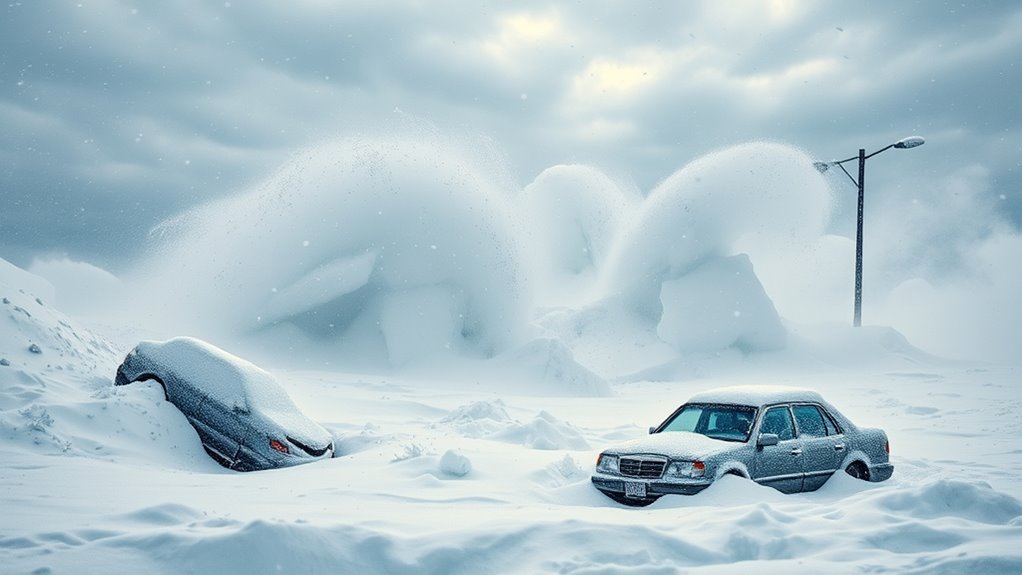
Understanding blizzard safety tips is vital. When a blizzard warning is issued, limit your travel as much as possible. If you must go outside, dress in layers, wear waterproof boots, and cover all exposed skin to prevent frostbite and hypothermia. Keep your movements slow and deliberate to avoid slipping on icy surfaces. If you get stranded in your vehicle, stay inside if possible, and turn on your hazard lights to alert others. Keep the engine off periodically to prevent carbon monoxide buildup, and run the engine only if you’re sure the exhaust pipe isn’t blocked by snow. Being aware of refrigeration cycle principles can also help you troubleshoot and maintain your home heating systems efficiently during prolonged storms.
Stay informed about weather updates from reliable sources. Paying attention to local alerts allows you to make informed decisions about when to seek shelter or evacuate if necessary. It’s also important to check on vulnerable neighbors or family members who might need assistance during the storm.
Preparing your home is equally important. Seal windows and doors to keep cold air out, and ensure your heating system works efficiently. If you lose power, use safe heating alternatives, and never use outdoor grills or generators indoors due to carbon monoxide risks.
Frequently Asked Questions
How Do Winter Storms Affect Wildlife Habitats?
Winter storms disrupt wildlife habitats by causing habitat degradation and forcing animals into unfamiliar areas. You might notice wildlife migration patterns changing as animals seek shelter or food, often risking exposure to harsh conditions. The storms can damage nesting sites and reduce food availability, making survival harder for many species. These impacts threaten ecosystems’ balance and force animals to adapt quickly or face increased risk of decline.
What Are the Economic Impacts of Blizzards on Local Businesses?
Blizzards cause significant economic disruption for local businesses, as they often lead to closures, reduced customer traffic, and supply chain delays. You might see decreased sales and increased costs to guarantee safety and recovery. To maintain business resilience, it is crucial to develop contingency plans, invest in snow removal, and adapt operations. These proactive measures help minimize financial losses and ensure your business recovers quickly after a blizzard.
How Can Infrastructure Be Winter-Proofed Effectively?
You should build your infrastructure like a fortress, making it storm resistant. Invest in storm resistant construction to withstand harsh weather, and upgrade utility systems to be winter-proof. Guarantee pipes are insulated, heating systems are reliable, and power lines are protected against ice and snow. Regular maintenance and emergency preparedness plans help keep everything running smoothly. This way, your infrastructure stays resilient, no matter how fierce the winter gets.
What Are the Psychological Effects of Prolonged Winter Storms?
When experiencing prolonged winter storms, you might notice winter depression and anxiety spikes affecting your mood and mental health. The lack of sunlight can lead to seasonal affective disorder, making you feel more lethargic and isolated. You may also feel increased stress from staying indoors and disrupted routines. To cope, stay active, maintain social connections, and seek natural light when possible. Recognizing these effects helps you manage your mental health better during winter storms.
How Do Winter Storms Influence Long-Term Climate Patterns?
You might be surprised to learn that winter storms can influence long-term climate patterns by affecting atmospheric circulation. These storms contribute to climate variability, which can shift weather trends over decades. For example, frequent winter storms can alter jet stream paths, leading to colder winters or milder summers. By disrupting typical atmospheric circulation, they play a role in shaping the climate’s long-term behavior, impacting ecosystems and human activities.
Conclusion
As you face the brutal winter storms and blizzards, remember that preparation is your best shield. Stay informed, bundle up, and avoid unnecessary travel. These storms can turn the coldest nights into an icy war zone, testing your resilience like nothing else. By staying vigilant, you can weather the storm and come out stronger on the other side—because in the face of nature’s fury, even the bravest can find their limits tested to the extreme.