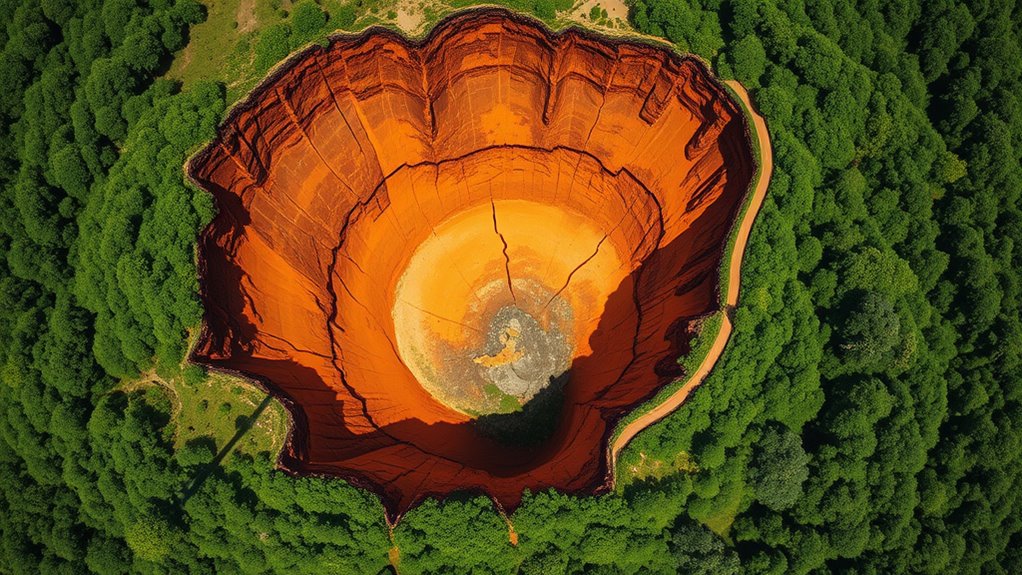

Sinkholes happen when underground water erodes soluble rocks like limestone, or human activities like construction weaken the ground, causing sudden collapses. Urban development over fragile terrain increases risk, especially if proper geological surveys aren’t done. To stay safe, check if surveys have been completed before building or purchasing property, and report any unusual ground signs. Staying aware and prepared is key—continue exploring to find out how you can better protect yourself from these unexpected ground collapses.
Key Takeaways
- Sinkholes often occur due to natural water erosion of underground cavities or human activities like construction over soluble rocks.
- Urban development weakens ground stability, increasing the risk of sinkhole formation beneath infrastructure.
- Conducting thorough geological surveys before construction helps identify vulnerable areas and prevent sinkhole damage.
- Regular site monitoring can detect early signs of ground instability, enabling prompt safety measures.
- Individuals should verify proper surveys, report ground cracks, and avoid over-extraction of groundwater in susceptible zones.

Sinkholes can strike suddenly and without warning, leaving communities stunned and vulnerable. When this happens, it’s often because of a combination of natural processes and human activities. One major factor that influences the likelihood of sinkholes is urban development. As cities expand and construction projects increase, the land undergoes significant changes, which can destabilize underground structures. Building roads, homes, and infrastructure over soft or soluble rock formations without proper precautions can create pathways for water to erode underground cavities. This erosion gradually weakens the ground’s integrity until it can no longer support the surface, resulting in a sinkhole.
To prevent such hazards, geological surveys become essential. These surveys involve detailed assessments of the land’s subsurface conditions before any construction begins. By analyzing soil types, rock formations, and underground water flow, geologists can identify areas prone to subsidence or sinkholes. This information helps developers and city planners make informed decisions about where to build safely and where to avoid development altogether. Skipping these surveys or ignoring their findings can lead to disastrous consequences, as undetected underground voids may suddenly collapse under the weight of new structures.
Understanding the role of geological surveys isn’t just about avoiding property damage; it’s about protecting lives. When you’re involved in urban development, it’s important to prioritize these surveys early in the planning process. They can reveal hidden weaknesses in the terrain that might not be obvious from surface observations alone. For example, regions with limestone bedrock or underground caves are particularly susceptible to sinkholes, especially if there’s significant water movement through the soil. Continuous monitoring and assessment during and after construction are equally important, as they can detect early signs of ground instability before a full-blown sinkhole develops.
As a resident or builder, you should be aware of the importance of proper site evaluation. If you’re considering purchasing property or constructing a new building, ask whether geological surveys have been conducted. If you notice unusual ground cracks or depressions, report them to local authorities promptly. Responding quickly can mitigate damage and prevent injury. In areas prone to sinkholes, community awareness and proactive measures—like maintaining proper drainage and avoiding excessive groundwater extraction—are essential.
Frequently Asked Questions
How Can I Tell if My Property Is at Risk of a Sinkhole?
You can tell if your property’s at risk of a sinkhole by checking for signs of ground instability, like cracking walls, doors that stick, or sudden depressions in the yard. Be alert for any unusual sounds or shifting ground, which could indicate underground cavities forming beneath. Consulting a geotechnical engineer can help assess your land’s stability and determine if underground cavities pose a threat to your property.
What Are the Costs Involved in Sinkhole Repair and Mitigation?
When it comes to sinkhole repair and mitigation, the costs can be a real eye-opener. You might face mitigation expenses ranging from a few thousand to over $100,000, depending on the damage’s extent. The economic impact can be hefty, affecting your property value and insurance premiums. It’s best to weigh these costs early because, like they say, an ounce of prevention is worth a pound of cure.
Are There Insurance Policies That Cover Sinkhole Damage?
Yes, you can find sinkhole insurance that offers coverage options for sinkhole damage. Many homeowners’ insurance policies don’t automatically include this coverage, so you may need to purchase a separate rider or policy. It’s essential to review your policy carefully, as coverage varies by provider. If you live in an area prone to sinkholes, consider investing in sinkhole insurance to protect your property and financial stability.
How Long Does It Typically Take to Fill and Stabilize a Sinkhole?
Filling and stabilizing a sinkhole is like patching a hole in a sinking ship—timely action is vital. It typically takes several days to weeks, depending on size, with soil stabilization and drainage management key to success. You’ll need to carefully assess conditions, remove loose debris, and fill with suitable material, then guarantee proper drainage to prevent future issues. Patience and proper techniques are your best allies in this process.
What Environmental Factors Increase the Likelihood of Sinkhole Formation?
You should watch out for environmental factors like heavy rainfall, rapid groundwater changes, and human activities that disturb underground caverns. In karst landscapes, these conditions weaken the underground rock, increasing the chance of sinkhole formation. When water erodes soluble rocks like limestone, it creates underground caverns that can suddenly collapse. By understanding these factors, you can better anticipate and prevent potential sinkholes in vulnerable areas.
Conclusion
Understanding why sinkholes happen helps you stay alert, prepare, and respond effectively. Recognizing the signs, taking proactive measures, and acting swiftly can make all the difference. Stay vigilant, stay informed, and stay safe. Because knowing what to do, knowing when to act, and knowing how to respond keeps you one step ahead. Remember, awareness, preparation, and quick action are your best tools against sinkholes. Stay cautious, stay confident, and stay safe.