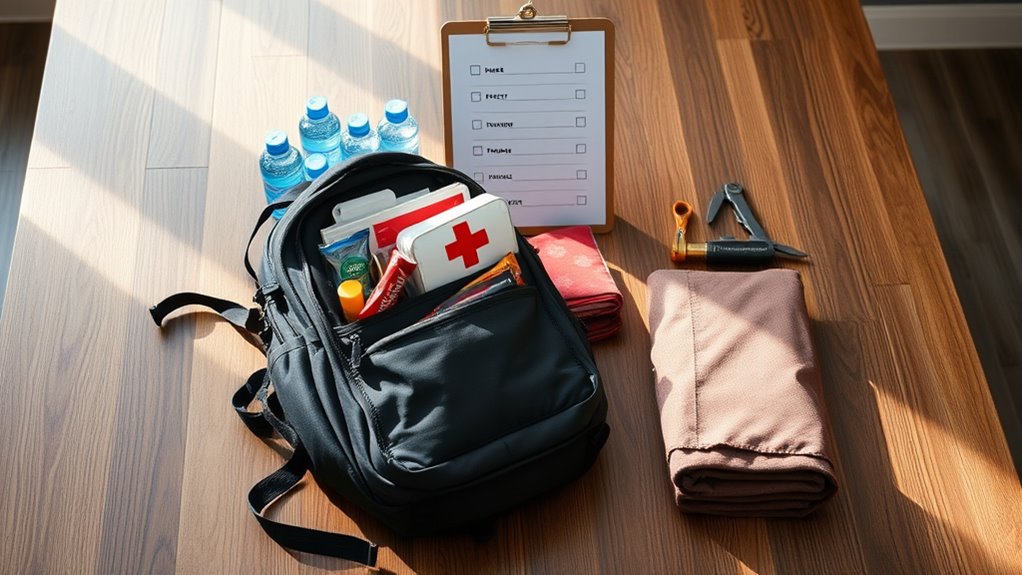

To build a 72-hour emergency kit, gather non-perishable foods, plenty of water, and essential supplies like a manual can opener, basic first aid items, and personal hygiene products. Store everything in a cool, dry, organized space for quick access. Regularly check expiration dates and replace expired items. Keep water purified and rotated for freshness. If you continue exploring, you’ll discover more tips to make your kit complete and ready for any emergency.
Key Takeaways
- Include non-perishable foods, water, and comfort items to sustain and boost morale during the first 72 hours.
- Store supplies in a cool, dry, organized container for quick access and easy evacuation.
- Pack at least 1 gallon of water per person per day, and include purification tools like tablets or filters.
- Regularly check expiration dates and replace expired items to ensure readiness.
- Prepare a plan for quick deployment, combining food, water, and essential safety supplies.
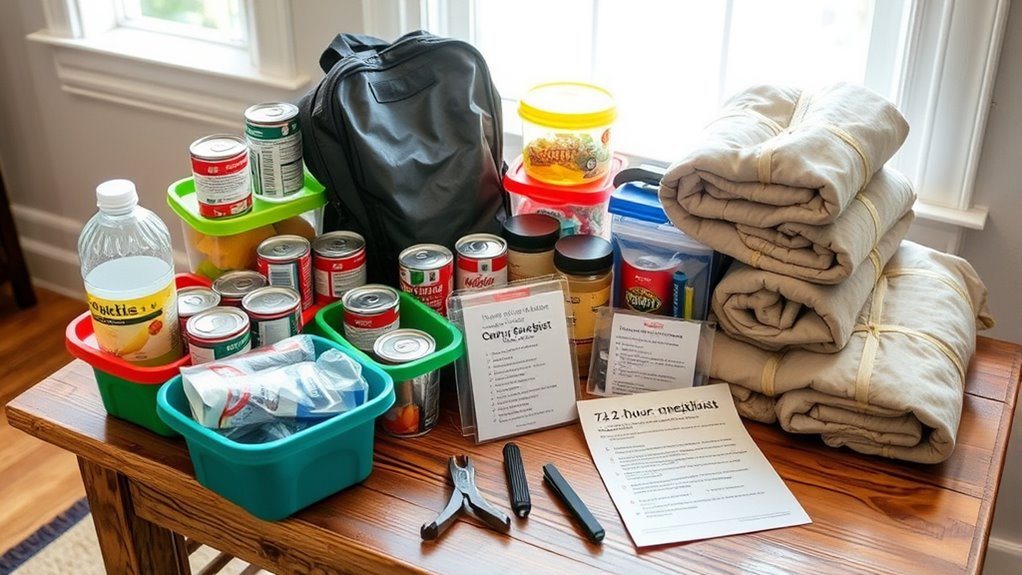
Preparing a 72-hour emergency kit is a crucial step in ensuring you’re ready for unexpected disasters. When it comes to food storage, you want to focus on non-perishable items that are easy to prepare and have a long shelf life. Canned goods, freeze-dried meals, energy bars, and powdered drinks are excellent choices because they provide necessary nutrients and can be stored for years without spoiling. Remember to include a manual can opener if you opt for canned foods, and consider packing some comfort foods to lift your spirits during stressful times. It’s also wise to have a variety of foods to prevent monotony and ensure a balanced intake of vitamins and minerals. Keeping your food supply in a cool, dry place helps extend its shelf life and maintains its quality.
Water purification is equally critical because safe drinking water can become scarce during emergencies. You should store at least one gallon of water per person per day, which covers drinking and basic hygiene needs. To guarantee your water remains safe, include water purification options like water filters, purification tablets, or boiling methods. Portable water filters or pump-style purifiers are convenient and effective at removing bacteria, chemicals, and sediments from contaminated water sources. If you rely on bottled water, rotate it regularly to keep it fresh. In addition to storing water, learn how to purify local water sources if your supplies run out or become contaminated. Boiling water for at least one minute kills most pathogens, making it safe to drink. Water purification tablets are lightweight and easy to use, providing an extra layer of security when you’re on the move or in a pinch. Understanding the importance of water treatment can significantly enhance your emergency preparedness.
Together, proper food storage and water purification form the foundation of your emergency preparedness. They ensure that you can sustain yourself for the critical first days following a disaster. It’s important to check expiration dates regularly and replace items as needed to keep your supplies fresh and effective. Packing these essentials in a durable, accessible container allows for quick evacuation if necessary. By focusing on these elements, you’re not just building a kit—you’re creating a safety net that can support you through uncertain times. Remember, the key to an effective emergency kit is readiness, so stay organized, stay informed, and regularly review your supplies to adapt to changing needs.
Frequently Asked Questions
How Often Should I Update My Emergency Kit?
You should update your emergency kit at least once a year to guarantee all supplies are fresh and functional. Regular kit maintenance involves checking storage containers for leaks or damage and replacing expired items like food, water, and medications. Set a reminder to review your kit, ideally during daylight savings time or a specific date, so you stay prepared. Keeping your kit current helps you respond quickly in an emergency.
What Are the Best Storage Options for My Kit?
Think of your emergency kit as a treasure chest—choose portable storage like sturdy backpacks or waterproof containers to keep it safe. You’ll want options that are easy to carry and protect your supplies. Include water purification tools, so you’re prepared even if water sources become compromised. Opt for lightweight, durable containers that won’t break or leak, ensuring your kit stays intact and ready when you need it most.
Can I Include Pets in My Emergency Supplies?
Yes, you can include pets in your emergency supplies. Focus on pet safety by packing essential pet supplies like food, water, medications, and comfort items. make certain these supplies are easily accessible and stored separately from your own to prevent mix-ups. Regularly check and update your pet supplies to keep them fresh. Including your pets in your emergency plan helps ensure they stay safe and comfortable during a disaster.
How Do I Customize My Kit for Specific Disasters?
Imagine tailoring your emergency kit to fit your unique needs, turning it into a personalized safety net. To do this, include disaster-specific supplies like masks for wildfires or water purification tablets for floods. Think about your area’s risks and add personalized kit essentials such as extra medications or important documents. This way, you’ll feel more prepared and confident, knowing your kit is designed to handle whatever comes your way.
What Are Common Mistakes to Avoid When Building a Kit?
You should avoid using expired supplies, as they may be unsafe or ineffective. Don’t overpack valuables; keep only essential items to prevent weight and clutter. Also, steer clear of overpacking, which makes your kit hard to carry and organize. Regularly check and update your supplies to verify everything is functional and current. Staying practical and cautious helps you stay prepared without unnecessary burden or risks.
Conclusion
Now that you’ve assembled your 72-hour emergency kit, you’re like a sturdy ship ready to weather any storm. With each item carefully packed, you’re holding a lighthouse’s beam in the darkness, guiding you safely through life’s unpredictable tides. Remember, preparedness isn’t just an act—it’s your shield and compass. Keep it ready, keep it close, and you’ll face any challenge with confidence, knowing you’re equipped to navigate even the roughest waters.