
TL;DR

Get emergency and outdoor gear delivered free with Prime
- Fast, free delivery on millions of items
- Prime Video, Amazon Music and more included
- Member-only deals all year
Outdoor Life’s Oct. 24 report names New York, Pittsburgh, Miami and Milwaukee as four big U.S. cities with notable fishing opportunities. Its examples include migrating striped bass near Manhattan, flathead catfish in Pittsburgh’s rivers, peacock bass in Miami canals and trout and salmon near Milwaukee.
Outdoor Life has highlighted New York, Pittsburgh, Miami and Milwaukee as four major U.S. cities with fishing opportunities in rivers, canals and harbor waters. The report, published Oct. 24, describes species and settings that challenge the assumption that good fishing requires leaving urban areas.
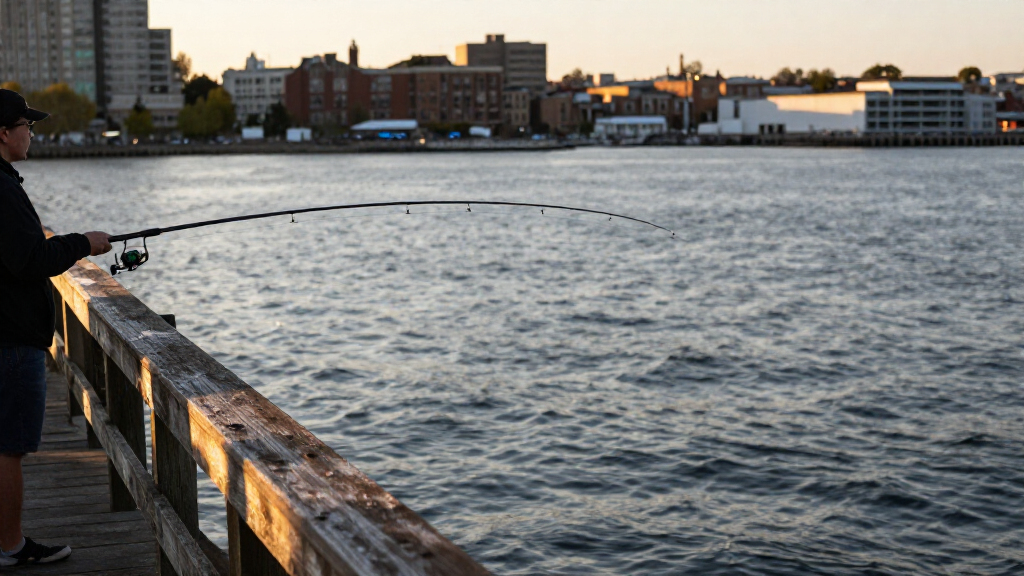
In the New York area, the report points to migrating striped bass and bluefish passing the city twice a year, as well as fishing in the Hackensack River and New Jersey Meadowlands. Writer Joe Cermele recounts a fall trip with Captain Zach Flake, casting near Manhattan and catching striped bass among bridges, bulkheads and other built structures. He describes seeing only one other boat at the public ramp that day; that is an observation from the trip, not a measure of overall angler activity.
Pittsburgh offers access to the Ohio, Monongahela and Allegheny rivers where they meet downtown. Cermele identifies flathead catfish as a notable target. In Miami, he describes a network of freshwater canals where anglers may find peacock bass, knifefish and snakeheads, alongside largemouth bass, snook and small tarpon. The report does not provide catch statistics or compare the cities using a common ranking method.
For Milwaukee, the report points to brown trout in the harbor, steelhead in downtown rivers and salmon runs from Lake Michigan. The examples reflect the author’s experience and assessment of these locations; they are not presented as a formal, data-based comparison of fishing quality across U.S. cities.
Fishing Access Inside City Limits
The report’s practical takeaway is that urban waterways can offer anglers nearby access to a range of fish, sometimes without the crowds associated with popular rural or coastal launches. Cermele recounts finding little boat traffic on one New Jersey trip and says he saw no other boats while fishing in Miami on an earlier outing. Those accounts suggest that some city waters may be less pressured than anglers expect, but they do not establish a general pattern for every location or season.
The examples also show how rivers, canals and harbor infrastructure can create fishing habitat within developed areas. For readers who live in or visit these cities, that may broaden the places they consider for a fishing trip. Conditions vary, however: the report does not assess water quality at each site, identify public access points for every fishery, or offer current regulations. Anglers should check local advisories, access rules and fishing regulations before going.
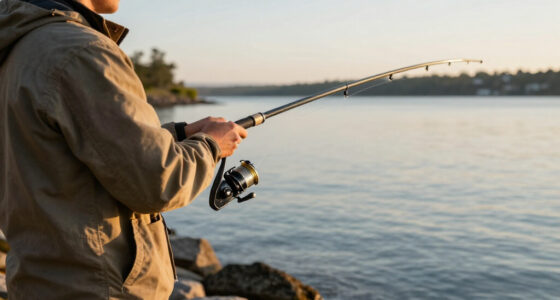
urban shore fishing rod and reel combo for striped bass
As an affiliate, we earn on qualifying purchases.
As an affiliate, we earn on qualifying purchases.
Why Urban Waters Hold Fish
Cermele’s New Jersey account focuses on a waterway with a history of pollution. He writes that the Hackensack River is not perfect but has improved, and describes its tidal movement bringing saltwater in and out. In his assessment, bridge pilings, bulkheads, piers and rock walls create changes in depth and current that can provide habitat for striped bass and smaller fish.
The broader point is limited but relevant: some urban waterways have changed over time, and built environments can support fish as well as human infrastructure. The report cites changes in environmental law as part of the reason waterways in many cities are cleaner than they once were, but it does not name specific laws or provide water-quality measurements. Its four city examples come from the author’s fishing experience rather than a systematic survey.
“I found reaffirmation that sometimes it’s worth running toward the rust and concrete instead of away.”
— Joe Cermele, Outdoor Life writer
How the Four Cities Compare
The article does not explain a scoring system for selecting the four “best” cities, nor does it rank them against one another. It offers no comparative data on catch rates, fish populations, access, costs or season length. The fishing descriptions are based on Cermele’s experience and the locations he chose to feature.
It is also unclear from the report how current conditions, including water quality and local fish populations, compare across all four cities. The article does not list specific regulations, access restrictions or health advisories. Readers should consult relevant local and state agencies for up-to-date guidance before fishing or keeping fish.
Check Local Conditions Before Fishing
The report does not announce a new program, policy or scheduled follow-up. Its immediate use for readers is as a starting point for exploring urban fishing locations, not as a substitute for trip planning. Before heading out, anglers can check local fishing rules, public access details and water or fish-consumption advisories with the relevant authorities.
Season and target species will shape what is available: the report describes spring and fall migrations for striped bass and bluefish around New York, while Milwaukee’s examples include trout, steelhead and salmon. The article gives no current forecasts or dates for runs. Local agencies and fishing guides can provide more specific information as conditions change.
Key Questions
Which four cities does the report highlight?
New York, Pittsburgh, Miami and Milwaukee are the four cities named by Outdoor Life. The article presents them as examples, not as a formally ranked list supported by comparative data.
What fish can anglers target in these cities?
The report mentions striped bass and bluefish near New York; flathead catfish in Pittsburgh; peacock bass, knifefish, snakeheads, largemouth bass, snook and small tarpon in Miami; and brown trout, steelhead and salmon in Milwaukee.
Does the report prove urban waters are cleaner now?
No. Cermele writes that many urban waterways are cleaner than they used to be and describes the Hackensack River as improved but not perfect. The report provides no water-quality measurements or city-by-city comparison.
Are these cities ranked from best to worst?
No ranking order or scoring method is given. The report identifies four places the writer considers worth fishing, based on his experience and examples.
Source: rss
Halloween Picks
halloween
As an affiliate, we earn on qualifying purchases.