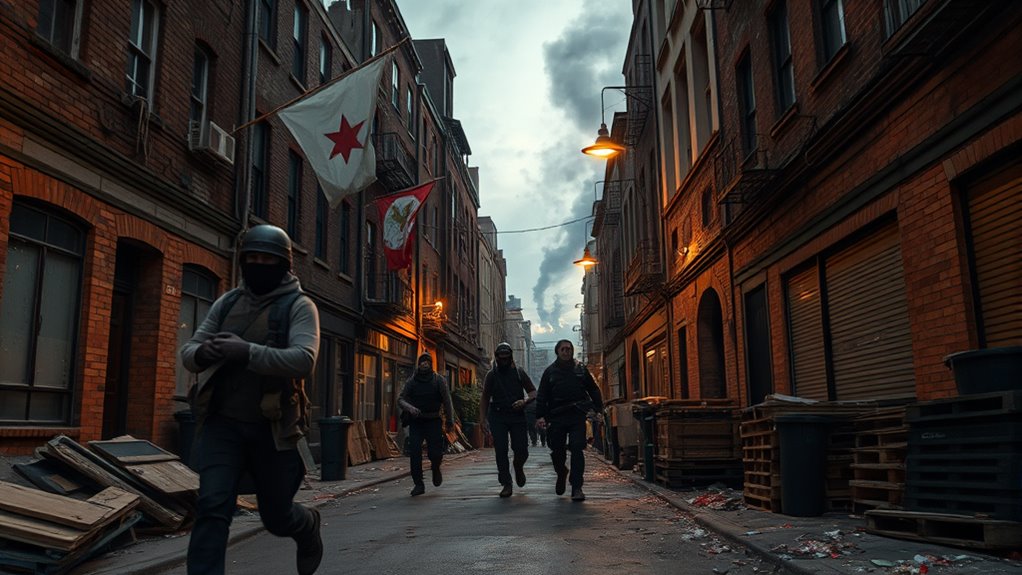

During civil unrest, you should quickly establish barricades using available materials like furniture, trash bins, or abandoned vehicles to block key streets and create choke points. Stay vigilant by monitoring crowd movements from a safe distance and keep defenses discreet. Coordinate with neighbors to share information and develop a unified response. Prioritize mobility and quick reinforcement of barriers, and always plan an escape route. For more essential tips on staying safe, keep exploring ways to strengthen your community defenses.
Key Takeaways
- Construct strategic barricades using available materials to slow or block hostile crowds and protect key areas.
- Maintain high situational awareness by monitoring crowd movements and using natural cover to stay discreet.
- Collaborate with neighbors to coordinate barricade placement and safety measures for a unified defense.
- Ensure barricades are stable, unobtrusive, and capable of being quickly dismantled or reinforced as needed.
- Keep clear escape routes and plan mobility to adapt swiftly to changing situations during civil unrest.

During periods of civil unrest, staying safe in an urban environment requires quick thinking and proactive planning. One of the most effective ways to protect yourself and your property is by understanding how to establish community barricades and improvised defenses. These measures can markedly slow down or deter hostile individuals, giving you essential time to escape or seek safety. Community barricades are often created by residents working together to block key streets or alleys with anything available—sandbags, furniture, dumpsters, or even vehicles. They serve as physical barriers that disrupt the movement of aggressive crowds or looters, forcing them to slow down or change course. When you see signs of unrest, consider collaborating with neighbors to coordinate barricading efforts, especially in strategic choke points like entrances to your block or around critical infrastructure.
Collaborate with neighbors to create community barricades at strategic choke points during civil unrest.
Improvised defenses are equally important, especially when resources are limited. These might include makeshift roadblocks using abandoned vehicles or creating obstacles from household items. For example, stacking trash bins or heavy furniture across the street can impede access without requiring specialized tools. Using items like metal fences, plywood, or even large rocks can reinforce your barricades. Keep in mind that the goal isn’t just to block entry but also to create safe zones or choke points that can buy you time to retreat or respond. Always assess the environment, ensuring your defenses are stable and won’t accidentally cause harm if disturbed.
It’s essential to maintain situational awareness while establishing these defenses. Stay hidden and monitor the movements of crowds from a safe distance. Avoid making your barricades overly conspicuous, as they might attract unwanted attention or escalate tensions. Use natural cover and blend into your surroundings if possible. When constructing improvised defenses, prioritize mobility—your ability to quickly dismantle or reinforce barricades is key in case the situation shifts suddenly. Also, ensure you have a clear escape route planned in advance. Never get trapped behind your own defenses; always keep an exit point accessible. Developing a communication plan with neighbors ensures everyone stays informed and coordinated during response efforts.
In addition, communicate with your community about the positioning of barricades and defenses. A coordinated effort helps prevent confusion and ensures everyone understands their role in maintaining safety. Remember that during civil unrest, patience and vigilance are your best allies. Your proactive approach—setting community barricades and improvised defenses—can make the difference between safety and danger. Stay alert, plan ahead, and work together to protect yourselves and your neighbors as the situation unfolds.
Frequently Asked Questions
How Can I Identify Safe Routes During Civil Unrest?
To identify safe routes during civil unrest, you should conduct a thorough risk assessment of your surroundings, noting areas with heavy police presence or protests. Look for alternative routes that bypass conflict zones and crowded areas. Stay updated on news and social media to spot potential hazards. Always trust your instincts, plan multiple routes, and keep emergency supplies handy. Flexibility and awareness will help you navigate safely through unpredictable situations.
What Legal Considerations Should I Be Aware Of?
You should be aware of your legal rights and self-defense laws in your area before maneuvering during civil unrest. Understand when it’s lawful to defend yourself and avoid escalating situations. Carry any necessary identification and be prepared to explain your actions if questioned. Staying within the bounds of the law helps protect you from legal trouble, even if you’re acting to ensure your safety. Always prioritize de-escalation when possible.
How Do I Communicate Securely in a Crisis?
Did you know 70% of people use unsecured messaging apps? To communicate securely during a crisis, you should use encrypted messaging apps like Signal or Telegram, which protect your messages from interception. Always enable two-factor authentication, avoid sharing sensitive info over unsecured networks, and consider using a VPN. By taking these steps, you guarantee your communication remains private and secure when it matters most.
What Are the Best Ways to Find Emergency Supplies?
You should focus on locating supply caches and practicing food scavenging in your area. Look for hidden or overlooked storage spots, like abandoned buildings or behind dumpsters, where supplies might be hidden. Carry a small toolkit to access locked areas if needed. Stay discreet to avoid attracting attention, and always verify the supplies’ safety before using them. Building local knowledge on where caches are stored can greatly improve your chances of finding emergency supplies quickly.
How Can I Protect My Mental Health During Prolonged Unrest?
To protect your mental health during prolonged unrest, practice mindfulness techniques like deep breathing and grounding exercises to stay centered. Focus on maintaining emotional resilience by establishing routines, limiting news intake, and staying connected with loved ones. Take breaks from stressful situations, and prioritize self-care. These strategies help you manage anxiety, stay calm, and keep a clear mind, ensuring you’re better equipped to handle ongoing challenges.
Conclusion
In turbulent times, your ability to adapt and stay alert can be the difference between safety and disaster. By remaining calm, knowing your surroundings, and practicing these urban survival tactics, you turn chaos into manageable challenges. Remember, your preparedness is more powerful than a fortress, capable of turning the tides in your favor. Stay vigilant, trust your instincts, and you’ll navigate even the most chaotic civil unrest with resilience that could outlast a thousand storms.