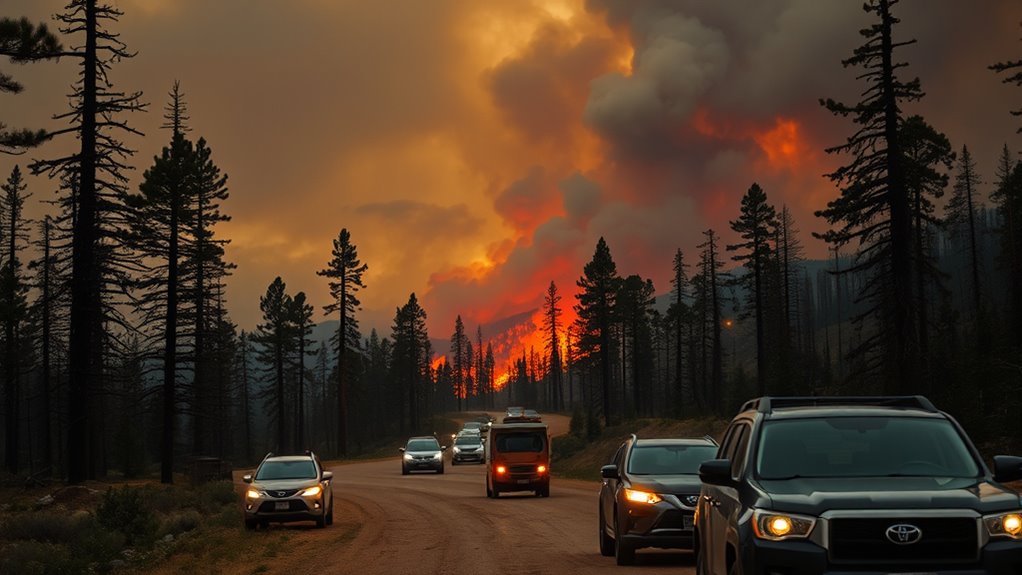

During a wildfire, act quickly once you receive alerts or see signs of danger. Follow official evacuation orders and use designated routes to guarantee safety. Keep calm, drive carefully with headlights on, and avoid shortcuts or unfamiliar roads. Have an emergency kit ready and communicate your plans with family. Stay alert for updates from emergency services, and remember that prompt, well-planned actions can make all the difference. Keep going to learn how to stay safe and prepared.
Key Takeaways
- Act quickly upon official alerts or signs of fire proximity to ensure safety.
- Follow predetermined evacuation routes and avoid shortcuts or unfamiliar roads.
- Keep emergency kits ready, including water, documents, and essentials for quick departure.
- Stay calm, drive safely with headlights on, and prioritize safety over possessions.
- Wait for authorities to declare it safe before returning home and stay updated on fire status.

When a wildfire threatens your community, knowing how to evacuate quickly and safely can make all the difference. Your immediate priority should be to act swiftly, minimizing panic and confusion. Effective fire safety and emergency planning are your best tools in this situation. Before a wildfire strikes, it’s vital to have a clear plan in place. This plan should detail multiple evacuation routes, designated meeting points, and essential supplies. Familiarize yourself with local evacuation maps and listen to official alerts. The key to safe evacuation is preparation—knowing your options and staying informed so you can make decisions without hesitation.
Having a clear wildfire evacuation plan and staying informed can save lives.
As soon as you receive an alert or see signs of an approaching fire, don’t delay. Gather your emergency kit, which should include water, non-perishable food, medications, important documents, and basic first aid supplies. Keep your vehicle fueled and ready to go at all times during fire season. When evacuating, prioritize your safety over possessions. Follow official instructions and evacuation routes exactly as advised; these routes are chosen for safety and to avoid congestion. Avoid shortcuts or unfamiliar roads, which might be blocked or dangerous. If you’re unsure of your evacuation route, listen to local radio or use your smartphone to access emergency updates.
During evacuation, stay calm and focused. Keep your family or travel companions together, and communicate your plans clearly. If you’re in a vehicle, drive at a safe speed, and turn on your headlights to increase visibility. Never attempt to outrun the fire; instead, move away from the fire’s path and towards designated shelters or safe zones. If you’re unable to evacuate by vehicle, find a nearby safe spot such as a cleared area, a fire-resistant building, or a designated emergency shelter. Remember, safety is your top priority, so don’t take unnecessary risks. It’s also important to remember that fire safety, including understanding how to evacuate, is a crucial part of emergency preparedness.
Post-evacuation, stay alert for further updates, and follow instructions from emergency services. Once you’re in a safe location, avoid returning to your home until authorities confirm it’s safe. Having practiced your fire safety and emergency planning ahead of time means you’re more prepared to handle the chaos of a wildfire. Your proactive approach, combined with quick action, can greatly reduce risks and ensure your safety and that of your loved ones during a wildfire event.
Frequently Asked Questions
How Can I Prepare My Pets for Wildfire Evacuation?
To prepare your pets for wildfire evacuation, create pet emergency plans and assemble pet evacuation kits with essentials like food, water, medications, and comfort items. Practice quick evacuations so your pets become familiar with the process. Keep collars with updated ID tags on your pets and guarantee they’re microchipped. Staying organized and prepared helps reduce stress and ensures your pets’ safety during an emergency.
What Are the Best Communication Methods During Evacuation?
During evacuation, you should rely on multiple emergency communication methods for alerts. Sign up for local emergency alerts and use your phone’s emergency notifications to stay informed. Keep a battery-powered radio handy for real-time updates. Follow official social media accounts and listen for evacuation alerts from authorities. These methods guarantee you receive timely information, helping you stay safe and make quick decisions during wildfire evacuations.
How Do I Assist Neighbors With Disabilities?
Helping neighbors with disabilities is like planting seeds of community support that bloom in times of need. You can assist by checking in regularly, helping them develop accessible planning, and ensuring their evacuation plans include necessary tools and assistance. Offer to accompany them during evacuation, share resources, and coordinate with local support services. Your proactive involvement creates a safer, more inclusive community where everyone feels supported and prepared.
What Should I Do if I Get Separated From Family?
If you get separated from your family, stay calm and find a safe spot. Use your emergency contact information to notify them of your location. Head to your predetermined family reunification site if possible. Keep your phone charged and try to contact your emergency contacts or local authorities. Stay alert for updates, and don’t wander; your priority is safety and reuniting with your loved ones quickly.
Are There Specific Routes Recommended for Wildfire Evacuation?
Think of your evacuation planning like plotting a treasure map—knowing the best routes is essential. Use official route maps from local agencies to identify recommended evacuation routes, avoiding roads prone to congestion or fire. Always have multiple routes in mind, and stay updated on fire conditions. During an emergency, follow the designated routes, and avoid shortcuts to guarantee your safety and that of your loved ones.
Conclusion
As you prepare to evacuate, remember that every detail matters—like packing essential supplies or knowing your escape routes. Sometimes, it’s those small moments, like catching a glimpse of a familiar landmark or hearing a neighbor’s advice, that remind you you’re part of a community. In wildfires, coincidence can be a lifesaver, guiding you safely out or bringing help just when you need it most. Stay vigilant, stay safe, and trust those little signs along the way.