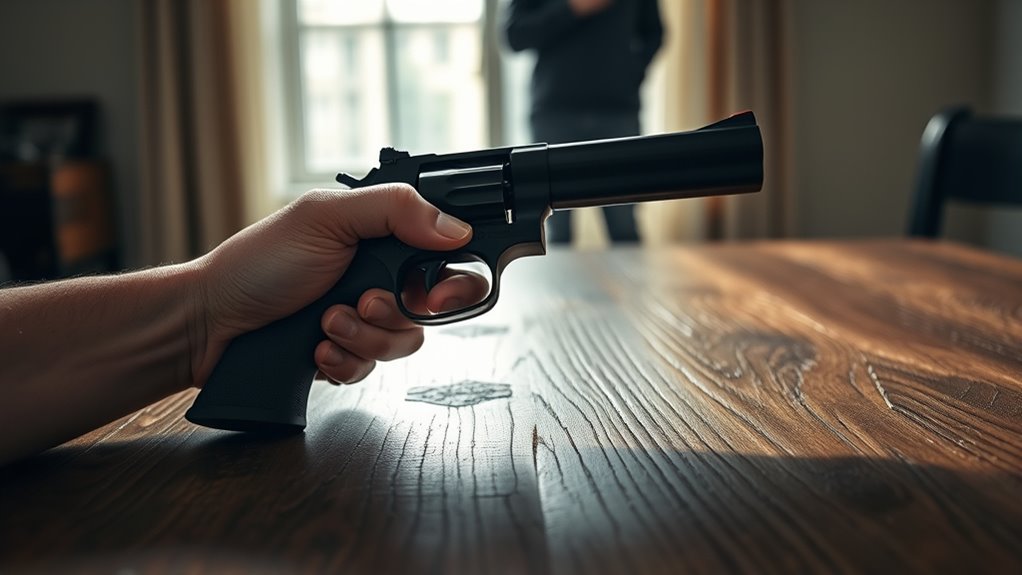

When considering the ethics of self-defense and weapons, you must focus on responsible use, ensuring your actions are necessary and proportional to the threat. Firing should be a last resort, with careful aim and awareness of potential consequences. Morally, you’re responsible for minimizing harm and respecting human life. Balancing the need for self-protection with ethical standards can be complex, but understanding these principles helps you make better choices—if you want to explore more, there’s much to learn.
Key Takeaways
- Responsible self-defense requires proportional and necessary use of weapons to minimize harm and uphold moral standards.
- Ethical firearm use involves careful aiming, avoiding overuse, and considering alternative non-lethal options.
- Legal compliance supports moral decision-making, emphasizing that discharging a weapon is justified only in genuine threats.
- Disarmament advocates promote reducing weapons to prevent violence, but self-defense may justify limited weapon use in imminent danger.
- Upholding moral integrity in self-defense balances the right to protect with responsibilities to avoid unnecessary harm.

Have you ever wondered when it’s justified to use force in self-defense? The question isn’t always straightforward, and it involves weighing moral considerations alongside legal ones. One key aspect is ammunition morality—how responsible you are with your firearm’s ammunition, and whether your use aligns with ethical standards. When you carry a weapon, you’re entrusted with a powerful tool that can protect or harm. Ethical use demands that you only fire when absolutely necessary, avoiding unnecessary harm, and ensuring that your actions are proportional to the threat. Overusing ammunition or firing indiscriminately crosses into moral gray areas, potentially causing harm beyond what’s justified. Responsible handling includes not only aiming carefully but also considering whether discharging your weapon is the only way to neutralize a threat. This moral calculus is essential because it recognizes that every shot carries weight, both physically and ethically. Additionally, understanding the importance of lawful self-defense helps guide responsible behavior in high-pressure situations.
On the other hand, the concept of defense disarmament plays a significant role in the broader ethical debate. Defense disarmament advocates argue for reducing or eliminating weapons, believing that less weaponry leads to fewer violent conflicts and moral dilemmas. From their perspective, promoting disarmament aligns with a moral duty to prevent harm before it occurs, emphasizing non-violence whenever possible. Yet, when faced with imminent danger, disarmament isn’t always practical or ethical; sometimes, the use of weapons becomes necessary to protect oneself from serious harm or death. The challenge lies in balancing the moral imperative to avoid violence with the reality that, in certain situations, defending yourself with force is justified. This balance influences how you view the morality of using weapons in self-defense—whether as a last resort or as a means of safeguarding your life.
Understanding these principles helps you navigate the complex moral landscape surrounding self-defense. It’s about making deliberate, informed choices that respect human life and minimize harm. You must consider not only the legality of your actions but also their ethical implications—such as whether your response is proportional and justified. Recognizing that ammunition morality calls for restraint and responsibility, and that defense disarmament encourages minimizing conflict, you can better assess when using force is ethically permissible. Ultimately, self-defense isn’t just about protecting yourself physically; it’s about upholding moral integrity, ensuring your actions reflect a sense of justice and responsibility. Making these distinctions helps foster a more conscientious approach to the use of weapons, emphasizing that self-defense should be exercised with moral clarity and moderation.
Frequently Asked Questions
Is There a Moral Difference Between Using Weapons Defensively and Offensively?
You might see a moral difference between defensive and offensive weapon use. Defensive weapon morality focuses on protecting yourself or others, which is generally viewed as morally acceptable. Offensive use, however, involves attacking first, raising questions about justification and proportionality. You should consider intent and context, as many argue that defensive actions align with moral principles, while offensive ones can cross ethical boundaries depending on the situation.
How Do Cultural Differences Influence Perceptions of Self-Defense Ethics?
Cultural differences markedly shape how you perceive self-defense ethics. In some cultures, honor codes emphasize defending family and community, making self-defense more justified. Others prioritize non-violence and strict adherence to cultural norms against violence. These beliefs influence whether you see defensive actions as morally acceptable or as a last resort. Understanding these perspectives helps you appreciate why perceptions of self-defense vary across different societies.
Should Non-Lethal Weapons Be Considered Ethically Preferable to Deadly Force?
You should consider non-lethal weapons as ethically preferable because they often reduce psychological impact and legal implications for everyone involved. Non-lethal options can protect you while minimizing harm and avoiding the severe consequences associated with deadly force. By choosing these tools, you promote ethical self-defense, lessen trauma, and stay within legal boundaries, making your response safer and more responsible in situations where force is necessary.
What Role Does Intent Play in Determining the Morality of Self-Defense Actions?
Intent is the compass guiding your actions in self-defense. If your goal is to prevent intentional harm without causing unnecessary suffering, your actions are more morally justified. When you act with genuine intent to protect rather than to inflict harm, your morality shines through like a lighthouse guiding ships. Without pure intent, even justified actions can lose their moral clarity, making intent the true measure of ethical self-defense.
Are There Ethical Limits to Escalating Force in Self-Defense Situations?
You should recognize that ethical limits to escalating force in self-defense depend on maintaining a proportional response. You must assess the threat level and avoid excessive retaliation, respecting escalation limits. Using only necessary force ensures your actions remain morally justified. Over-escalating can harm your moral standing, so stay within these boundaries and adapt your response to the situation to uphold ethical self-defense.
Conclusion
So, next time you’re faced with danger, remember: defending yourself is sacred—unless it’s with a bazooka or a tank. Ethics? Sure, they’re important, but apparently only when they don’t get in the way of your right to arm yourself like a one-person army. Because who needs nuance when you can just blast away, right? In the end, it’s all about balance—unless, of course, you prefer chaos and a really loud gun show.