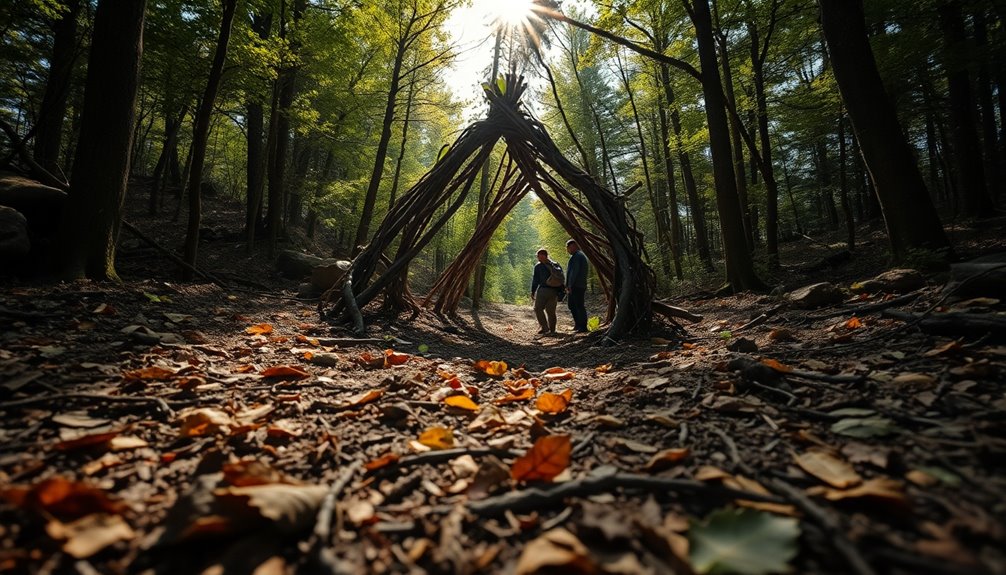
Shielding your retreat from fire threats is essential for safety. Start by examining the 20-foot area around your home, removing flammable materials and creating fire breaks. Prune trees and clear brush to minimize fuel sources. Use fire-resistant materials like concrete for walls and metal for roofing to enhance protection. Store firewood at least 25 feet away and keep flammable items secured in metal sheds. Consider fire safety training to build confidence in emergency situations. With these proactive steps, you can greatly lower fire risks and protect your home; there are even more strategies waiting for you to explore. Prioritize installing smoke detectors and fire extinguishers in strategic locations throughout your home. Additionally, create an evacuation plan and practice it regularly with your family to ensure everyone knows what to do in case of a fire. Building the perfect campfire, while enjoyable, should also be done with caution and in accordance with local regulations to prevent unintentional wildfires. By being proactive and prepared, you can significantly reduce the risk of fire threatening your home and loved ones.
Prime for Young Adults — start your free trial
Fast free delivery, streaming and member deals for eligible 18–24 year olds.
As an affiliate, we earn on qualifying purchases.
Key Takeaways
- Clear a 20-foot area around your retreat to remove flammable materials and create effective fire breaks.
- Use fire-resistant materials like stucco or metal roofing to enhance your structure's protection against flames.
- Regularly assess and maintain landscaping to ensure defensible space and reduce fire risks.
- Store all flammable items at least 25 feet away from your retreat to minimize potential fire hazards.
Understanding Fire Risks
Understanding fire risks starts with recognizing the dangers posed by your environment, especially if you live near wooded areas or government-owned forests. Wildfires can double in strength within a minute, making it essential to stay informed.
Environmental laws may limit controlled burns, unintentionally heightening fire threats. If you're a rural resident or a prepper, you're likely surrounded by trees that can fuel brush fires, endangering your home. Keep in mind that trees within 50 feet can become fire hazards.
Furthermore, during emergencies, firefighting resources can quickly become overwhelmed, leaving you vulnerable. Negligent neighbors and hazardous heating methods during power outages can lead to structure fires, adding to the risk.
Awareness is your first line of defense against these dangers.
Essential Fire Preparedness Steps
Evaluating the area around your home is essential for identifying fire hazards and implementing effective fire preparedness measures.
Start by examining the 20 feet surrounding your structure. Remove flammable materials and create fire breaks to reduce risk.
Clear trees and branches within 10 to 50 feet, and choose non-flammable plants for landscaping. Store flammable materials in metal sheds away from living spaces.
Regularly check gas tanks, ensuring they're distanced from potential fire sources. Keep firewood at least 25 feet from your home.
Consider using goats to manage underbrush effectively.
Importance of Fire Safety Training

Taking proactive fire preparedness steps is only part of the equation; equipping yourself with fire safety training can make a significant difference in emergency situations.
Understanding fire behavior and risks is vital, as it helps you respond effectively when every second counts. Training teaches you essential skills like creating fire breaks, using firefighting equipment, and managing potential hazards.
You'll gain confidence in handling emergencies, which can save lives and property. Plus, continuous education guarantees you stay updated on best practices and new techniques.
DIY Firefighting Tools
DIY firefighting tools can empower you to tackle small fires before they escalate, ensuring your safety and protecting your property.
Consider having Chimfex on hand, a versatile fire extinguisher that works on multiple fire classes. For grease fires, baking soda is a must-have; it's easy to store and effective.
Investing in bunker gear can enhance your protection, and you might find affordable options from local fire departments or online. Don't forget Nomex hoods, which provide essential head protection during your firefighting efforts.
With these tools in your arsenal, you'll be better prepared to respond quickly and effectively to any fire emergency that arises, safeguarding both your home and your loved ones.
Choosing Fire-Resistant Materials

Selecting fire-resistant materials for your home can greatly enhance safety and minimize damage in the event of a fire.
Start with concrete or cinder block walls, which provide excellent protection against flames. For roofing, consider metal options, as they withstand high temperatures and reduce the risk of ignition.
When choosing siding, look for non-combustible materials like stucco or fiber-cement, which not only resist fire but also offer aesthetic appeal. If you're retrofitting, you can apply these fire-resistant materials over existing structures for added protection.
Don't overlook windows—install tempered glass or dual-pane options to reduce heat transfer.
Creating Effective Fire Breaks
Creating effective fire breaks is crucial for protecting your property, as they help stop wildfires from spreading by clearing flammable vegetation and materials.
Start by evaluating the area around your home and identify spots with dense brush or overhanging branches. Aim to create a buffer zone of at least 30 feet wide, removing all dry leaves, dead trees, and flammable plants.
You can also thin out trees to increase space and reduce fire fuel. Consider using goats or other means to manage underbrush effectively.
Regularly inspect and maintain these fire breaks to make sure they remain clear.
Long-Term Fire Protection Strategies

Maintaining fire breaks is just one part of an extensive long-term fire protection strategy that safeguards your property against wildfires. You should regularly assess and clear the area around your home, ensuring that vegetation is kept at bay. Here's a simple approach to visualize your efforts:
| Strategy | Action |
|---|---|
| Fire Break Maintenance | Clear debris and flammable materials |
| Vegetation Control | Trim trees and maintain landscaping |
| Storage Practices | Keep flammable items away from homes |
Incorporating these strategies consistently will help you create a defensible space around your property. By being proactive, you can greatly reduce the risk of fire damage and protect your retreat for years to come.
Frequently Asked Questions
What Are the Best Fire-Resistant Plants for Landscaping?
For landscaping, you'll want to choose fire-resistant plants like lavender, succulents, and ornamental grasses. These plants have lower oil content, making them less flammable and helping protect your home from potential fire hazards.
How Can I Assess My Property's Fire Risk?
Evaluating your property's fire risk is like examining a ticking time bomb. Start by assessing the 20 feet around your home, identifying flammable materials, and clearing trees and debris that could fuel potential fires.
What Are the Costs of Fireproofing My Home?
Fireproofing your home can cost anywhere from a few hundred to several thousand dollars, depending on materials and labor. You should evaluate your budget and prioritize essential upgrades for the best protection.
How Often Should I Conduct Fire Safety Drills?
You should conduct fire safety drills at least twice a year. Regular practice helps you and your family stay prepared, ensuring everyone knows escape routes and safety procedures in case of an emergency.
What Insurance Covers Fire Damage for My Retreat?
“An ounce of prevention is worth a pound of cure.” For your retreat, look into homeowners, renters, or specialized fire insurance. Each policy varies, so compare coverage options to guarantee you're fully protected against fire damage.
Conclusion
By fortifying your home against wildfires, you're building a fortress of safety amidst the flames. Each fire-resistant material and cleared path symbolizes your commitment to protection, turning vulnerability into resilience.
As you embrace fire safety training and DIY tools, you arm yourself with knowledge and preparedness, like a knight ready for battle.
With these measures in place, your retreat transforms into an unyielding sanctuary, ensuring both you and your loved ones can weather any storm that comes your way.
Fall yard work Picks
leaf blowers
As an affiliate, we earn on qualifying purchases.