Urban prepping focuses on securing limited space, stockpiling essentials, and building neighborhood networks to handle centralized resource disruptions. Rural prepping emphasizes land use, growing food, and self-sufficiency to survive long-term disruptions with less reliance on external supplies. Your environment influences how you store resources and plan responses. Understanding these key differences helps you create an effective preparedness plan suited to your surroundings—keep going to discover more ways to tailor your approach.
Key Takeaways
- Urban prepping focuses on stockpiling essentials and securing resources due to centralized supply chains, while rural prepping emphasizes self-sufficiency through land use.
- Urban environments require quick response plans for chaos and limited space, whereas rural areas prioritize long-term sustainability and transportation logistics.
- Urban residents build local networks and mutual aid systems, while rural communities rely on close-knit relationships and shared resources.
- Infrastructure in cities is more developed but vulnerable, necessitating local resource sharing; rural areas need backup power and alternative communication methods.
- Urban prepping emphasizes adaptability and evacuation plans, whereas rural prepping concentrates on maintaining food, water, and supply independence.
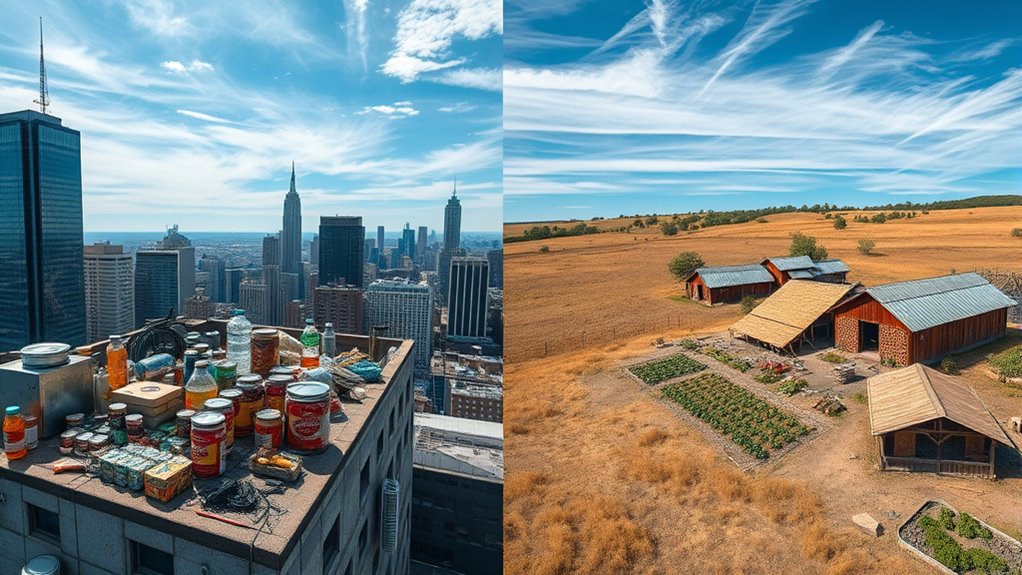
Have you ever wondered how prepping strategies differ between urban and rural environments? The approach you take depends heavily on your surroundings, especially when it comes to community resilience and resource distribution. In urban areas, your prepping plan must account for high population density, limited space, and the potential for social chaos if disaster strikes. Since resources like food, water, and medical supplies are typically centralized in city centers, you need to focus on securing personal stockpiles and establishing local networks. Building community resilience in an urban setting involves connecting with neighbors, local groups, or neighborhood associations to create a support system that can share resources and provide mutual aid during emergencies. Because supply chains can be easily disrupted in cities, you should prioritize stockpiling essentials and developing alternative resource sources, such as community gardens or local barter systems. Urban prepping often requires adaptability, as the high density means that chaos or panic can spread quickly, so maintaining situational awareness and having plans for safe evacuation routes are vital.
In contrast, rural prepping benefits from greater space and often more natural resources, but it also presents unique challenges. Resource distribution in rural areas tends to be more self-reliant; you might have land for growing food, raising animals, or collecting water. This allows you to develop a more sustainable, long-term approach to prepping. Community resilience in rural environments is often rooted in close-knit relationships and shared land or resources, which can create a robust support network. Because rural areas are less likely to face immediate social chaos, your focus might be on maintaining self-sufficiency and preparedness for longer-term disruptions, such as agricultural failures or supply chain interruptions. You may also need to plan for transportation challenges, as distances to urban centers or supply hubs can be significant, requiring reliable transportation and backup power sources. Additionally, technological infrastructure in rural areas may be less developed, making alternative communication and power solutions more critical. The distribution of resources tends to be more dispersed, so stockpiling and local resource management are essential.
Ultimately, whether you’re in an urban or rural setting, understanding how your environment influences community resilience and resource distribution helps you craft a prepping strategy tailored to your needs. Urban prepping emphasizes securing local resources and building networks within a dense population, while rural prepping leverages land and self-sufficiency to create a resilient, long-term plan. Recognizing these differences allows you to prepare more effectively, ensuring you’re ready for whatever emergencies come your way.
Frequently Asked Questions
How Do Prep Priorities Differ Between Urban and Rural Areas?
You should focus on community safety and infrastructure resilience, but priorities differ. In urban areas, you need to prioritize security, crowd control, and reliable communication systems because of higher population density and more complex infrastructure. In rural areas, your focus shifts to self-sufficiency, access to water, and maintaining resilience in less-developed infrastructure. Tailoring your prep plan to these environment-specific needs guarantees you’re better prepared for emergencies in either setting.
What Are the Best Communication Methods for Urban Preppers?
Think of communication as your lifeline in chaos. You should rely on emergency radios and learn signal codes, which act like secret handshakes in urban prepping. Emergency radios keep you connected when cell towers fail, while signal codes provide quick, discreet messages to trusted allies. Using these methods, you’ll stay informed and coordinated, turning chaos into clarity and helping you navigate urban emergencies with confidence.
How Does Population Density Impact Resource Planning?
Population density directly impacts your resource planning by influencing how much you need to stockpile and how quickly supplies can run out. Higher density areas require more careful resource allocation, as demand is greater and access may be limited during emergencies. You should prioritize compact, versatile supplies and plan for efficient distribution, ensuring your resources sustain you and others in crowded environments where shortages can occur rapidly.
Are Urban Preppers More Vulnerable to Certain Threats?
You’re more vulnerable to urban crime and civil unrest because dense populations attract trouble and chaos. In crowded areas, threats spread quickly, making it harder to maintain safety and resources. While urban preppers face risks of looting and violence, rural preppers might encounter isolation but less immediate danger. Staying alert, securing your space, and building community ties help mitigate these vulnerabilities. Your preparedness can turn urban risks into manageable challenges.
How Can Rural Preppers Prepare for Urban Emergencies?
You can prepare for urban emergencies by focusing on community resilience and transportation planning. Strengthen local networks so you’re not isolated, and establish communication plans with neighbors. Keep transportation options in mind—know alternative routes and have supplies ready for different scenarios. By building strong community ties and understanding urban transit, you’ll be better equipped to handle disruptions and guarantee safety during emergencies.
Conclusion
Whether you’re in the bustling city or quiet countryside, prepping shapes your resilience like a sturdy tree rooted in different soils. Urban prepping demands quick thinking and resourcefulness amid chaos, while rural prepping offers space and self-sufficiency. Embrace your environment’s strengths and adapt your plans accordingly. Remember, no matter where you stand, preparation is your shield against the storms of uncertainty—your safety net in a world that never stops changing.