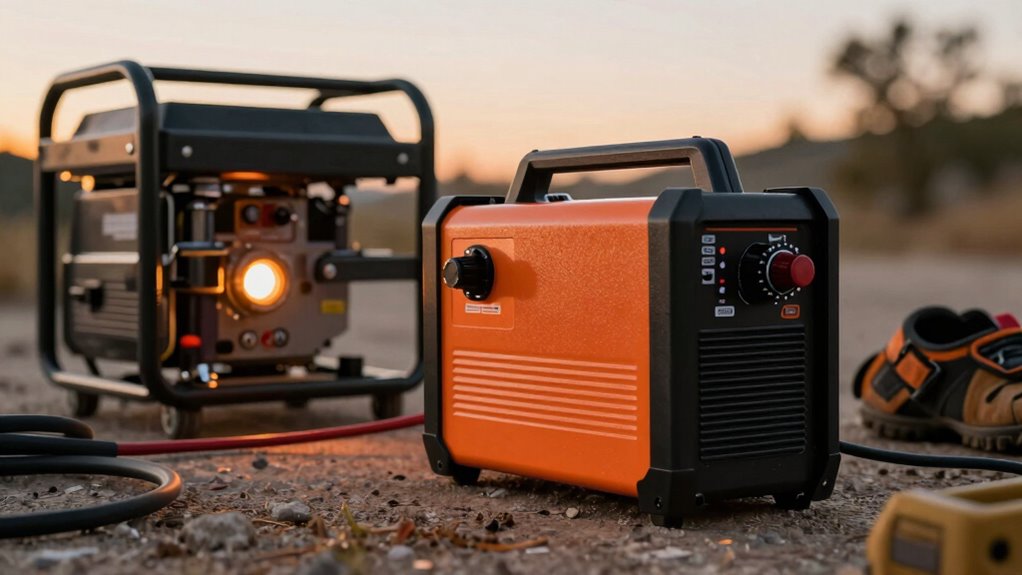
When using inverter welders off-grid, you need to make certain your generator can handle both startup surges and runtime power demands. Pick a generator with at least 20-30% more capacity than your welder’s maximum power draw to prevent overloads and unstable performance. Keep in mind, surge capacity is critical for smooth startup. If you want to know how to match your setup properly and avoid common pitfalls, there’s more to take into account than just matching wattage.
Key Takeaways
- Ensure the generator’s surge capacity exceeds the inverter welder’s startup wattage by 20-30%.
- Match the generator’s continuous power rating with the welder’s running wattage for stable operation.
- Verify voltage regulation and power factor to prevent damage and ensure consistent weld quality.
- Use measurement tools to assess actual surge capacity and identify potential power fluctuations.
- Prioritize safe practices like stable setup, regular maintenance, and backup power to optimize off-grid welding performance.
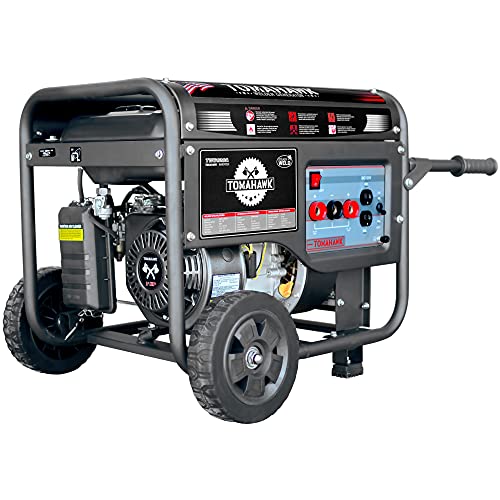
TOMAHAWK Welder Generator Stick Welder Engine Driven 120 Amp 7 HP Gasoline Portable 2,200 Watt Quiet Inverter Generator Engine
- Welding Capacity: Up to 120 amps with 60% duty cycle
- Warranty: 2-year support from U.S. technicians
- Quiet Operation: 2200W inverter for smooth power
As an affiliate, we earn on qualifying purchases.
As an affiliate, we earn on qualifying purchases.
Understanding Inverter Welders and Their Power Needs
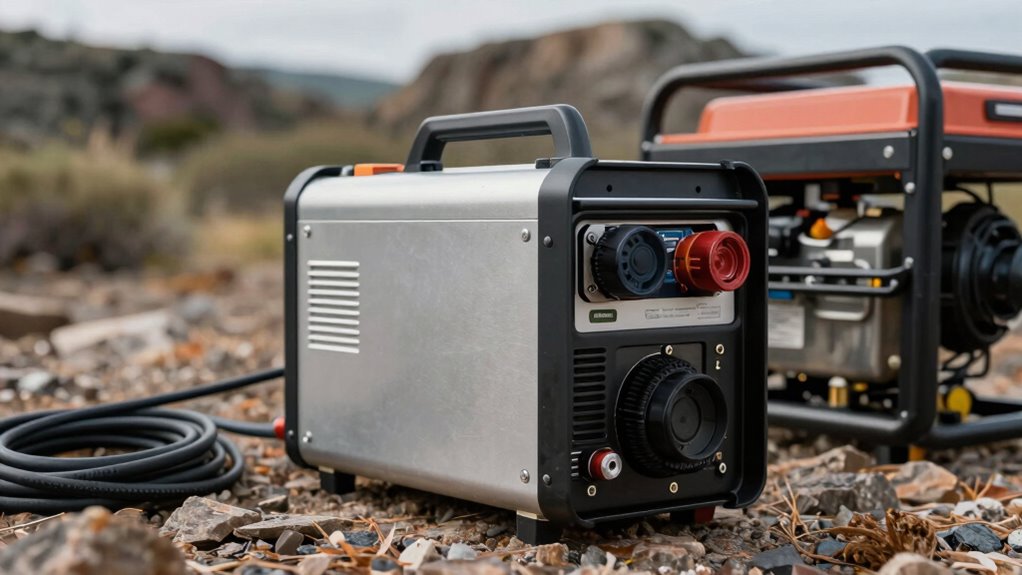
While inverter welders are known for their energy efficiency and portability, understanding their power needs is essential for off-grid applications. You need to take into account battery compatibility, ensuring your power source can supply the required voltage and current without overloading. Inverter efficiency plays a vital role; higher efficiency means less energy loss during conversion, making your setup more reliable and cost-effective. Knowing the inverter’s power ratings helps you match it with your batteries and generators, preventing underperformance or damage. Additionally, understanding the surge power requirements during startup guarantees your power supply can handle the initial load. Proper power management is crucial to maintain a stable and safe operation. For optimal performance, consider battery capacity and the inverter’s ability to handle peak loads, which are critical for consistent welding quality. It’s also important to be aware of power source limitations to avoid potential system failures. A thorough understanding of power source compatibility ensures your off-grid setup remains efficient and dependable. Moreover, evaluating energy consumption rates can help optimize your overall system efficiency. By grasping these fundamentals, you’ll optimize your inverter welder’s performance and guarantee a smooth operation in remote locations.
Why the Generator Rule Matters for Off-Grid Welding
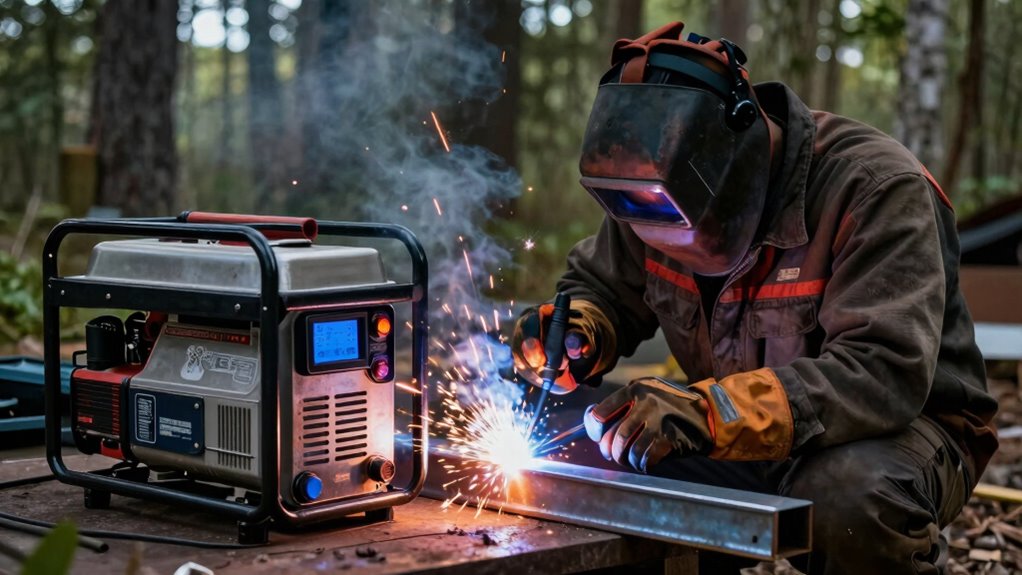
Understanding the generator rule is vital for successful off-grid welding because your power source must reliably meet the inverter welder’s startup and running demands. If your generator isn’t up to par, you risk unstable operation or even damage. Proper battery maintenance ensures your power system stays steady, preventing voltage drops that can disrupt welding. Additionally, selecting the right welding electrode is fundamental; incompatible electrodes can increase the load on your generator, causing fluctuations. When you follow the generator rule, you guarantee consistent power delivery, which improves weld quality and equipment longevity. Regular generator testing can help identify potential issues before they cause disruptions. The performance characteristics of your generator play a crucial role in determining its suitability for off-grid welding. Ignoring this rule can lead to frequent interruptions and costly repairs. Ultimately, respecting the generator rule helps you maintain a stable power environment, making off-grid welding safer and more effective. Ensuring your power system capacity aligns with your welding needs is essential for optimal results.
How to Assess Your Generator’s Power Output for Inverter Welders
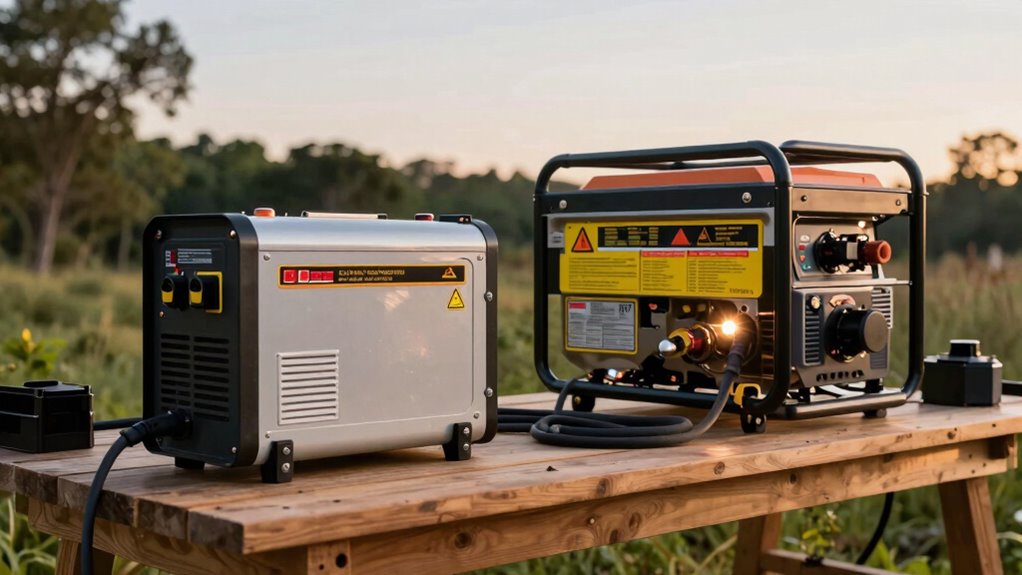
To guarantee your generator can power your inverter welder, start by checking its power ratings to see if they meet your welder’s requirements. Next, measure the surge capacity to confirm it can handle short-term spikes during startup. This way, you’ll know your setup can handle the demands of off-grid welding projects effectively. Additionally, understanding the power output of your generator ensures compatibility with inverter welders, which often require specific electrical characteristics for optimal performance. Recognizing the importance of electrical safety and proper grounding techniques can prevent potential hazards during operation. Considering the horsepower range of electric dirt bikes can also give insight into the energy demands of certain power tools and equipment used on the same site. Furthermore, being aware of side-channel attacks in cybersecurity can help you safeguard your sensitive data from potential threats during electrical or digital operations.
Check Power Ratings
How can you determine if your generator can handle your inverter welder’s power needs? Start by checking its power ratings, focusing on continuous and surge capacities. Modern inverter technology ensures stable power output, but you need to match it with your welder’s requirements. Battery efficiency also plays a role; a generator with higher efficiency can better support your welder’s demands. Use the table below to compare key specs:
| Generator Model | Continuous Power (kW) | Surge Power (kW) |
|---|---|---|
| Model A | 3.0 | 3.5 |
| Model B | 4.0 | 4.5 |
| Model C | 5.0 | 6.0 |
| Your Generator | ? | ? |
Ensure your welder’s startup and running wattages align with these ratings for smooth operation. Additionally, understanding AI cybersecurity jobs can help protect your equipment from digital threats that could disrupt your work. Recognizing the importance of power ratings is crucial, as it ensures compatibility and prevents potential damage or inefficiency during operation. Being aware of generator efficiency can also influence your choice, as more efficient models can deliver better performance for inverter welders. Moreover, considering power factor can help you select a generator that optimally supports your welder’s power requirements and minimizes energy waste. It’s also beneficial to consider load management techniques to ensure your setup remains reliable during demanding tasks.
Measure Surge Capacity
Evaluating your generator’s surge capacity is vital to guarantee it can handle your inverter welder’s startup demands. Start by checking your generator’s maximum power output during initial startup, known as surge capacity. This should be at least 20-30% higher than your welder’s running wattage to account for startup spikes. Consider your generator’s battery capacity, which influences its ability to sustain brief power surges. Proper voltage regulation is also indispensable; it ensures stable power delivery and prevents voltage drops that could damage your welder. Use a multimeter or power analyzer to measure the actual surge capacity under load conditions. Confirm that your generator can handle the inverter welder’s startup demands without tripping or voltage fluctuations, ensuring safe and consistent operation. Monitoring your power output can help you better understand your generator’s capabilities during operation. Additionally, understanding your generator’s surge capacity can prevent potential damage to your equipment and improve overall efficiency. Recognizing the importance of power quality is essential, as fluctuations can impact both your welder’s performance and longevity. Regularly checking and maintaining your generator’s performance metrics ensures reliable operation and extends its lifespan. Conducting periodic assessments of your generator’s surge capacity can help identify wear or potential issues before they cause failure.
Common Generator Limitations That Affect Welding Performance
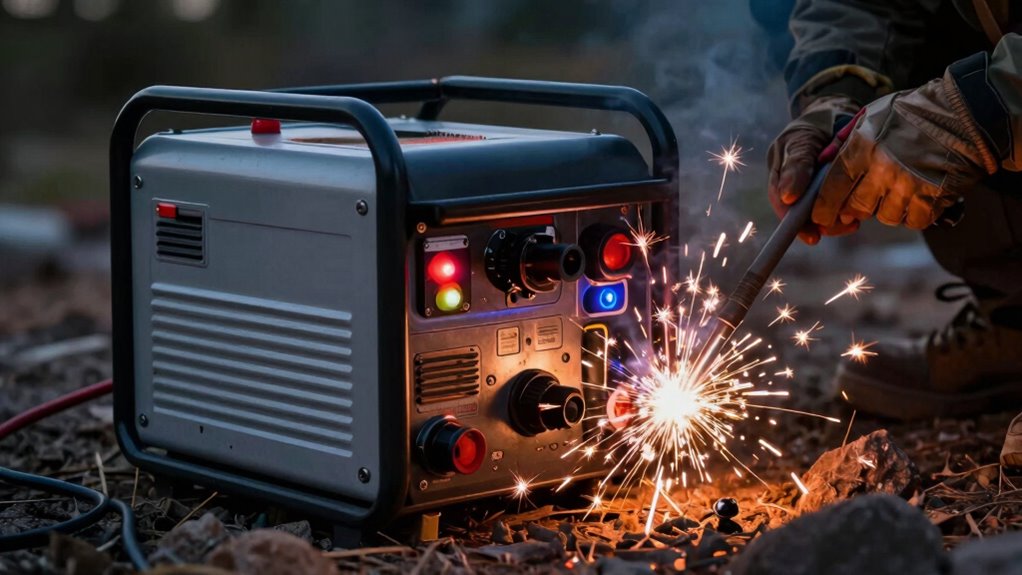
While generators are essential for off-grid welding, their limitations can considerably impact your weld quality and consistency. One major factor is fuel efficiency; a generator with poor efficiency may run out of power unexpectedly, causing interruptions or inconsistent welds. Noise levels also matter—high-noise generators can be distracting and may lead to fatigue, reducing your focus and weld precision. Additionally, some generators struggle with maintaining stable voltage under load, which affects arc stability and weld quality. Overly large or underpowered units can cause fluctuations that compromise your welds. Being aware of these limitations helps you choose a generator suited for welding tasks, ensuring smoother operation, better welds, and less downtime in your off-grid setup.
Practical Tips for Matching Inverter Welders With Generators
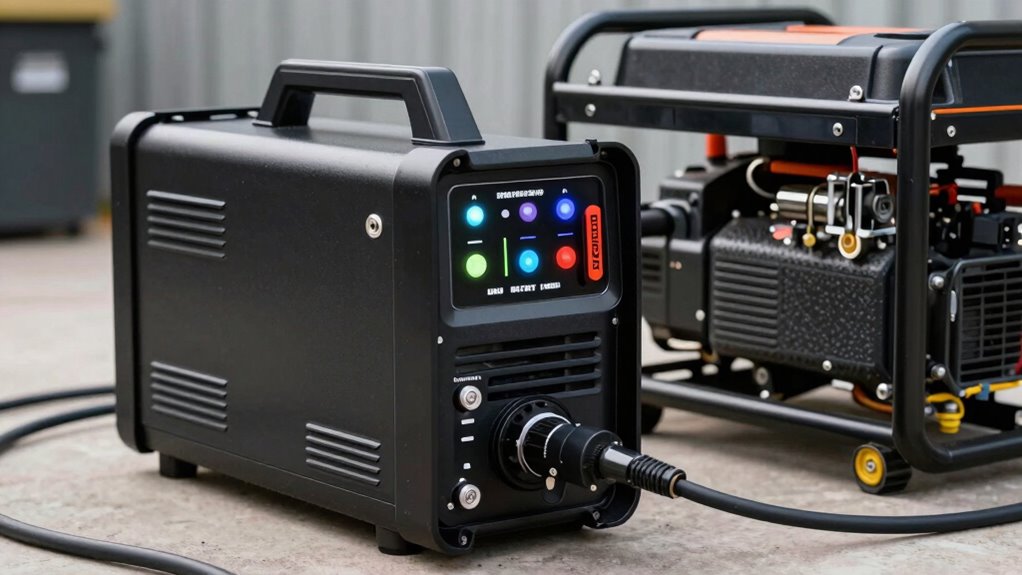
To guarantee your inverter welder performs reliably off-grid, pairing it with the right generator is essential. Start by checking the generator’s power output to match your welder’s startup and running wattage needs. Focus on inverter efficiency, as a high-efficiency generator provides cleaner power and reduces energy waste. Battery compatibility matters if your setup includes a battery bank; ensure the generator can handle the voltage and current requirements for seamless integration. Avoid overloading by selecting a generator with at least 20-30% more capacity than your welder’s maximum draw. This buffer prevents voltage drops and maintains stable operation. Proper matching minimizes downtime and extends equipment life, making your off-grid welding projects more reliable and efficient. Additionally, consider solar system safety measures to ensure your setup remains protected from power surges and faults during operation.
Signs You’re Using an Inverter Welder With an Inadequate Generator
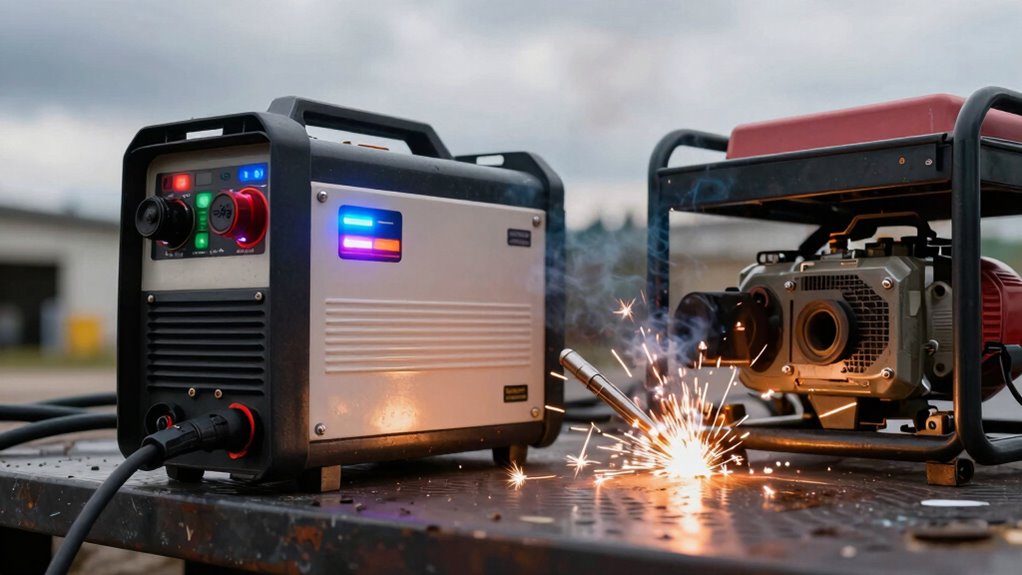
If your inverter welder isn’t paired with a suitable generator, you’ll notice it may not run smoothly. You might experience inconsistent power output or find that your breaker keeps tripping. These signs indicate your generator isn’t providing enough stable energy for your welder’s needs.
Inconsistent Power Output
Have you noticed your inverter welder’s performance fluctuating or cutting out unexpectedly? This inconsistency often points to an inadequate generator struggling to maintain steady power output. When your power fluctuations are frequent, it’s a clear sign that voltage stability is compromised.
- You may see sudden dips or spikes in weld quality, indicating inconsistent power delivery.
- Your welder might shut down or trip circuit breakers, reflecting unstable voltage levels.
- The welder’s arc could flicker or become erratic, a direct result of fluctuating power supply.
These issues aren’t just frustrating—they can damage your equipment or compromise weld integrity. Ensuring your generator can provide stable, consistent power is essential for reliable inverter welding performance.
Frequent Circuit Breaks
Frequent circuit breaks are a clear sign that your inverter welder’s generator can’t sustain the power demands. When this happens, your welder may trip circuit breakers often, disrupting your work. This issue can stem from an inadequate generator that struggles to supply consistent power, especially under heavy loads. To avoid damaging your equipment or risking welding safety, check your generator’s capacity and ensure it’s suitable for your welder’s requirements. Proper battery maintenance is also essential, as a weak or poorly maintained battery can add stress to the system, leading to more circuit breaks. If you’re experiencing frequent interruptions, consider upgrading your generator or adjusting your setup to prevent damage and ensure safe, reliable welding operations.
Troubleshooting Power Issues During Off-Grid Welding
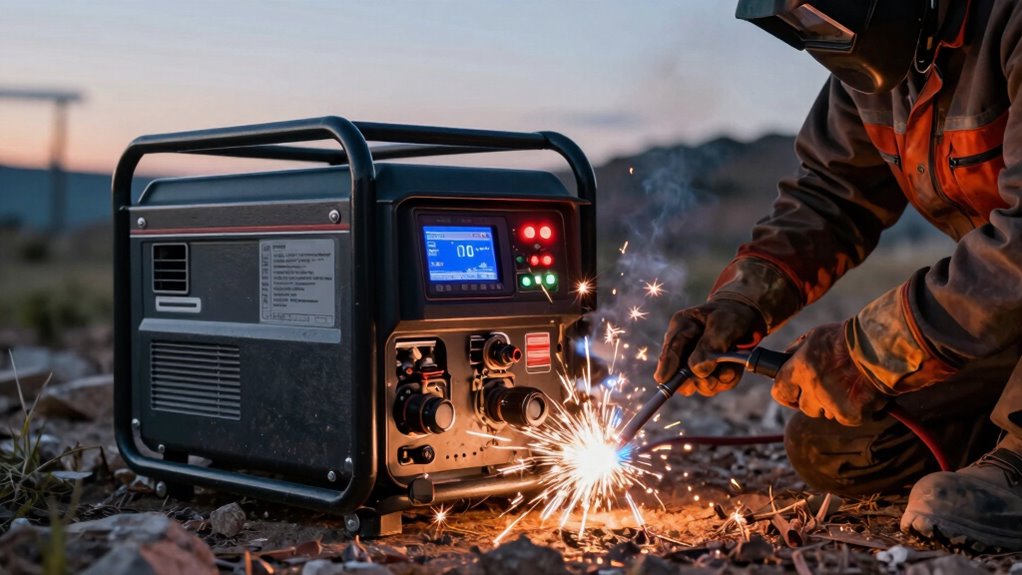
- Test your battery capacity and connections to prevent voltage drops.
- Use a multimeter to monitor voltage levels during welding, ensuring they stay within recommended ranges.
- If voltage fluctuates, add a stabilizer or regulator to smooth out power supply issues.
Addressing these points helps you identify weak links in your power system, ensuring smoother, more reliable welding sessions off-grid.
Best Practices for Safe and Efficient Welding in Remote Settings
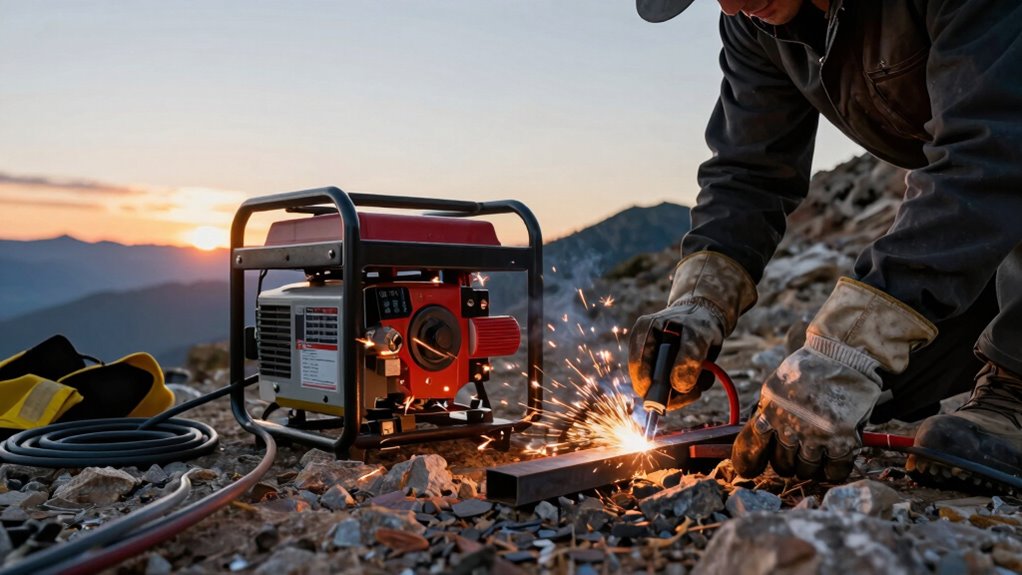
Welding in remote settings demands careful attention to safety and efficiency to prevent accidents and guarantee quality results. Rely on battery power and solar energy to ensure a stable power supply, reducing the risk of interruptions. Keep your equipment well-maintained and check connections regularly to prevent faults. Use appropriate PPE to protect yourself from sparks and fumes, and work in well-ventilated areas. When possible, prioritize solar energy sources to minimize generator use and reduce noise and emissions. Position your setup on stable ground to avoid accidents. Plan your work to optimize energy use, and keep backup power options handy. Staying organized and attentive helps you weld safely and efficiently, even far from traditional power sources.
Additional Equipment Considerations for Off-Grid Welding Setups
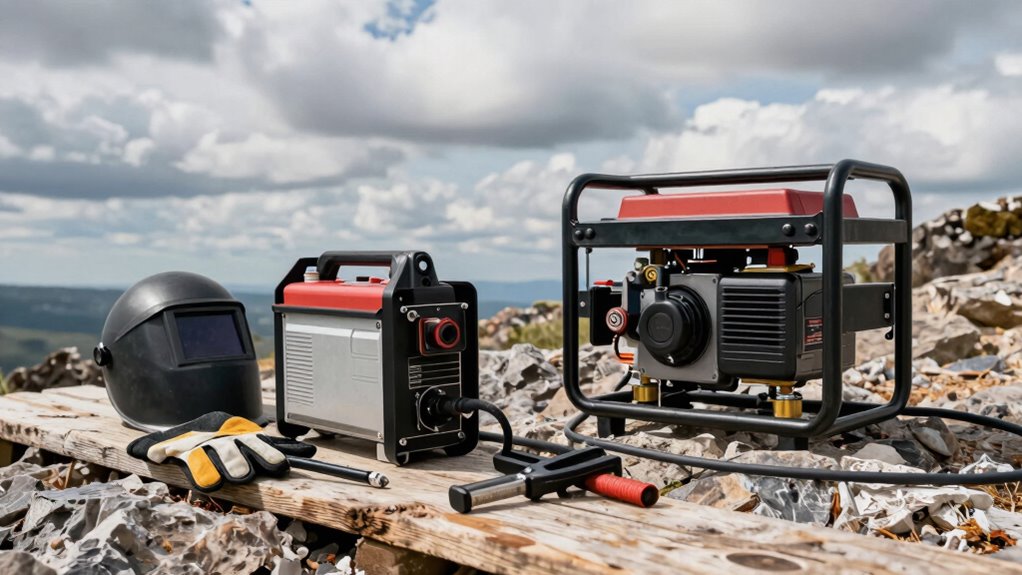
Choosing the right additional equipment is crucial for reliable off-grid welding. First, verify your battery compatibility; your power source must handle the inverter welder’s demands without voltage drops. Second, invest in a quality welding helmet that offers proper protection and visibility, especially in remote environments. Third, consider a portable generator or auxiliary power supply to supplement your batteries during high-demand tasks. These accessories help maintain consistent performance and safety. Properly matching battery capacity prevents voltage issues, while a durable welding helmet keeps you protected from sparks and UV radiation. Adding the right equipment ensures your setup runs smoothly, reduces downtime, and keeps your welding safe and effective in off-grid locations.
Frequently Asked Questions
Can Inverter Welders Operate on Solar Power Systems?
Yes, inverter welders can operate on solar power systems. Their solar compatibility depends on the inverter efficiency, guaranteeing the system delivers stable, clean power suitable for welding. You should ensure your solar setup provides consistent voltage and current, as inverter welders need reliable power sources. Using high-efficiency inverters maximizes energy use from your solar panels, making off-grid welding more practical and eco-friendly.
How Does Temperature Affect Generator Performance for Welding?
If you operate your generator in extreme heat, thermal expansion can cause components to shift, reducing efficiency and risking damage. For example, in a hot climate, ambient conditions lead to higher temperatures that strain the generator’s parts, decreasing performance during welding. Maintaining proper cooling and avoiding prolonged exposure to high temperatures helps manage thermal expansion, ensuring your generator runs reliably and maintains peak performance under varying ambient conditions.
Are There Specific Generator Brands Best Suited for Inverter Welders?
You should look for generator brands known for compatibility with inverter welders, like Honda, Yamaha, or Generac, as they offer reliable power and stable output. These brands often provide solid warranties, giving you peace of mind. Always verify the generator’s specifications match your inverter welder’s requirements, ensuring peak performance and longevity. Choosing reputable brands with good warranty considerations helps prevent issues and keeps your welding projects running smoothly.
What Maintenance Is Required to Ensure Reliable Generator Performance?
To keep your generator reliable, you should regularly check and change the oil, clean or replace the air filter, and inspect spark plugs for wear. Make certain fuel efficiency by using fresh fuel and adding stabilizer if needed. For noise reduction, maintain mufflers and consider soundproof enclosures. Regular maintenance prevents breakdowns, extends your generator’s lifespan, and guarantees smooth operation when you need it most.
Can Portable Generators Handle High-Frequency Inverter Welders?
Yes, portable generators can handle high-frequency inverter welders, but you should select models with sufficient wattage capacity. About 60% of portable generators are rated for inverter welder use. They offer better fuel efficiency and lower noise levels, making them ideal for sensitive electronics and quieter operation. Always verify the generator’s surge capacity and confirm it meets the welders’ power requirements for safe, reliable performance.
Conclusion
When it comes to off-grid welding, understanding your inverter welder’s power needs is your lighthouse guiding you through stormy seas. Match your generator carefully, and you’ll keep your projects sailing smoothly without hitting rocky shores. Remember, the right setup isn’t just about power — it’s about keeping your workflow flowing like a well-oiled machine. Stay informed, stay prepared, and let your welding adventures shine bright, no matter where you are.