
Lightning detectors sense electromagnetic signals emitted during lightning strikes by capturing radio waves across various frequencies. They are most effective at detecting cloud-to-ground lightning, especially stronger and longer-lasting strokes, but may miss weaker intra-cloud lightning or distant storms. Factors like environmental interference, signal variability, and detector placement influence their accuracy. While reliable for immediate alerts, they can’t predict storms or detect lightning equally in all directions. Keep exploring to learn how to maximize their safety benefits.

Get emergency and outdoor gear delivered free — and shop member deals
- Fast, free delivery on millions of items
- Access to Prime Big Deal Days deals on October 6–7
- Prime Video, Amazon Music and more included
Key Takeaways
- Lightning detectors primarily detect electromagnetic signals emitted during lightning strikes, especially cloud-to-ground lightning.
- They can identify strong, high-energy strokes but may miss weaker intra-cloud or distant lightning.
- Environmental noise, interference, and obstructions can reduce detection accuracy and cause false alarms.
- Lightning detectors do not predict storms before lightning occurs and are less reliable for distant or low-intensity strikes.
- Detection effectiveness varies by direction, distance, and environmental conditions, limiting comprehensive lightning activity coverage.
As an affiliate, we earn on qualifying purchases.
How Do Lightning Detectors Detect Nearby Lightning?
Lightning detectors sense nearby lightning by picking up the electromagnetic signals produced during a lightning strike. When a lightning bolt occurs, it emits radio waves across a range of frequencies. Detection technology in lightning detectors captures these signals, allowing you to identify the presence and location of a lightning strike nearby. The detectors analyze the electromagnetic pulses, distinguishing them from other radio noise. This analysis helps determine the direction and distance of the lightning. As a result, you get real-time alerts that warn you of imminent or ongoing thunderstorms. The core of this detection lies in advanced sensors that pick up the subtle electromagnetic signals, making lightning detectors reliable tools for safety and weather monitoring. electromagnetic signals are essential for accurately locating lightning strikes and differentiating them from other radio sources. Additionally, modern detectors often incorporate signal processing algorithms to improve accuracy and reduce false alarms, ensuring you can trust the alerts you receive. These technologies work together to provide quick and reliable lightning detection, helping protect people and property during storms. Incorporating real-time data analysis further enhances the precision of lightning strike localization and reduces the likelihood of false positives. Moreover, advancements in sensor sensitivity enable detectors to better identify even faint electromagnetic signals, increasing their effectiveness in various environments.
Which Types of Lightning Are Most Likely to Be Detected?

Since not all types of lightning produce equally strong electromagnetic signals, some are more likely to be detected by lightning detectors. Cloud-to-ground lightning generally emits stronger signals, making it easier for detectors to pick up. On the other hand, intra-cloud lightning often produces weaker electromagnetic emissions, posing detection challenges. Lightning types that generate high-energy, long-lasting strokes are more likely to be detected because their signals travel farther and are more intense. Conversely, less energetic or more localized lightning can slip past detection systems. The electromagnetic signals emitted by different lightning types vary in strength and duration, influencing their detectability. Variations in lightning energy and the characteristics of electromagnetic emissions impact detection probabilities. Understanding these differences helps you realize why some lightning events are more easily recorded while others remain unnoticed. Recognizing the variability in lightning types is key to improving detection accuracy and understanding lightning behavior. Additionally, advancements in lightning detection technology continue to enhance our ability to monitor even the subtler lightning phenomena.
What Factors Affect How Well a Lightning Detector Can Pick Up Lightning?

The effectiveness of a lightning detector depends on several key factors. Variations in signal strength, environmental interference, and the detector’s sensitivity range all play a role. Understanding these elements helps you choose the right device and interpret its readings accurately. Additionally, car protection accessories can help mitigate some environmental impacts, ensuring more reliable lightning detection. For example, the detector’s placement and environmental conditions can significantly influence its performance. Moreover, antenna quality can also affect how well a detector picks up lightning signals from a distance. To maximize accuracy, selecting a detector with high-quality signal processing capabilities is essential. Proper maintenance and calibration of the device can further enhance its detection reliability over time.
Signal Strength Variability
Several factors influence how effectively a lightning detector can pick up signals from a storm. Signal variability can cause fluctuations in the strength of detected signals, leading to detection inconsistency. This means your device might sometimes miss lightning or give false alarms. Several elements contribute to this variability:
- Distance from the lightning strike
- Storm intensity and size
- Obstructions like buildings or terrain
- Signal strength variability can also be affected by the type and sensitivity of your detector, influencing its overall accuracy. Calibration methods play a role in how well your detector responds to varying signal strengths, ensuring more reliable detection.
Additionally, antenna orientation can significantly impact how effectively your device captures storm signals. Proper antenna placement can enhance signal reception and reduce detection errors.
Understanding signal detection mechanisms helps you recognize why some storms produce clearer readings than others and why occasional detection inconsistencies happen despite having a good device. These factors affect the signal strength reaching your detector, impacting its accuracy. A weak or inconsistent signal can cause detection issues, making it seem like lightning activity is less frequent or absent when it’s not.
Environmental Interference Factors
Environmental interference can substantially impact how well your lightning detector picks up signals. Atmospheric noise, such as static from thunderstorms or other weather phenomena, can create background signals that mask actual lightning activity. Electromagnetic interference from nearby electronic devices, power lines, or radio transmitters can also distort or drown out lightning signals. These interference factors reduce the detector’s accuracy and increase false alarms or missed detections. To improve performance, position your detector away from sources of atmospheric noise and electromagnetic interference. Shielding the device or using filters can help minimize these effects. Recognizing how environmental interference influences your lightning detector allows you to optimize its placement and settings for more reliable lightning detection. Understanding electromagnetic interference is crucial for maintaining accurate readings.
Detector Sensitivity Range
What determines how effectively your lightning detector can pick up distant strikes? Several factors influence its sensitivity range. Proper sensor calibration guarantees the device accurately detects lightning signals without false alarms. The quality and design of the sensor impact how well it picks up weak signals from afar. Additionally, device durability matters; a rugged detector maintains calibration and performance over time, especially in harsh conditions. External factors, like environmental interference, can also limit detection distance, but a well-maintained, calibrated device minimizes these issues. To maximize your detector’s range, choose a model with reliable sensor calibration and sturdy construction. This ensures you get accurate alerts from farther away, improving your safety and awareness during storms.
- Sensor calibration for accuracy
- Device durability in tough conditions
- External environmental interference
What Are the Limitations of Lightning Detectors in Detecting Distant Storms?
Lightning detectors often struggle to accurately identify storms that are far away because their signals weaken over distance. As a result, your storm prediction may be less reliable for distant storms, especially when lightning frequency is low. The weaker signals make it harder to distinguish between actual lightning and background noise, leading to missed detections or false alarms. This limitation means you might not be warned in time for distant storms, reducing your safety margin. Additionally, low lightning frequency in a storm can make detection even more challenging, as fewer signals are available to trigger alerts. While lightning detectors are useful for nearby storms, their effectiveness diminishes with distance, highlighting the importance of all-encompassing weather tools for comprehensive storm prediction.
How Reliable Are Lightning Detectors for Storm Warnings?
Are lightning detectors dependable tools for issuing storm warnings? They can be useful but shouldn’t be relied on solely for precise storm prediction. While they detect lightning strikes nearby, they don’t always predict storms before they develop, limiting their role in weather monitoring. Lightning detectors are more effective for real-time alerts rather than forecasting distant or approaching storms. Their reliability varies based on location and detector quality, so you shouldn’t base safety decisions solely on them. For exhaustive storm warnings, combine lightning detector data with radar, weather forecasts, and other monitoring tools. This layered approach improves storm prediction accuracy and ensures better safety measures during severe weather. Remember, lightning detectors are just one piece of an effective weather monitoring system. Additionally, understanding the limitations of lightning detection can help users better interpret alerts and avoid false sense of security. Knowing how detection range varies can further help you assess the reliability of your device in different situations. It’s also important to consider hotel water parks and their proximity when planning family vacations, as they can enhance your overall experience.
Can Lightning Detectors Detect Lightning in All Directions?
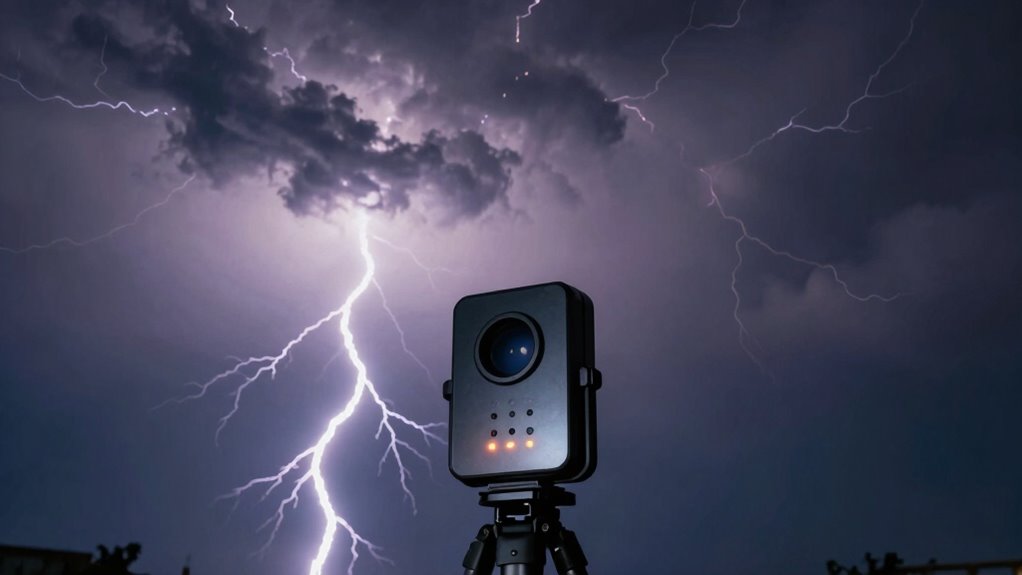
Lightning detectors often have limitations in detecting strikes from every direction due to detection range constraints. The strength of the signal varies depending on where the lightning occurs, affecting accuracy. Environmental factors like buildings or weather conditions can also interfere with the detector’s ability to pick up strikes from all directions.
Detection Range Limitations
While lightning detectors are effective tools for tracking electrical activity in thunderstorms, they have limitations when it comes to detecting lightning from all directions. The detection range is influenced by factors like signal attenuation, which weakens the signals as they travel through the atmosphere. This means lightning strikes that occur farther away or are obstructed by terrain may go undetected. Additionally, the detector’s sensitivity drops with distance, reducing its ability to pick up weaker signals from distant strikes. Environmental interference, such as heavy rain or electrical noise, can further limit the detection range. As a result, your lightning detector might not always provide a complete picture of lightning activity around you.
- Signal attenuation reduces detection range
- Obstructions limit lightning visibility
- Environmental noise affects sensitivity
Directional Signal Strength
Lightning detectors use antenna arrays and advanced algorithms to assess signal strength from different directions, but they can’t detect lightning equally well in all directions. This variability in signal strength leads to uneven detection capabilities, especially as the detector’s sensitivity depends on the lightning’s position relative to the antenna. Factors such as antenna orientation and environmental influences can cause signal strength variability, impacting directional accuracy. Here’s a simplified view:
| Direction | Signal Strength | Detection Confidence |
|---|---|---|
| North | High | Reliable |
| East | Moderate | Fair |
| South | Low | Less Reliable |
| West | Variable | Inconsistent |
| Below Horizon | Minimal | Unlikely |
Understanding these limitations helps you gauge how well your lightning detector perceives strikes from various directions.
Environmental Interference Factors
Environmental interference factors can substantially affect a lightning detector’s ability to identify strikes from different directions. Environmental interference, such as atmospheric noise, can cause false signals or obscure real lightning strikes, making direction detection unreliable. These factors are especially problematic in urban areas or near electronic devices that emit electromagnetic interference. Atmospheric noise from thunderstorms or other weather phenomena can also drown out the signals from lightning, reducing the detector’s accuracy. As a result, your detector may not detect lightning coming from certain angles or might give false alerts. To improve detection, it’s essential to minimize environmental interference and understand these limitations. Recognizing these factors helps you interpret lightning alerts more accurately and avoid false alarms.
- Environmental interference can cause false signals
- Atmospheric noise can obscure lightning strikes
- Electronic devices increase interference risk
What Common False Alarms Can Trigger Lightning Detectors?

Many common objects and activities can set off false alarms on lightning detectors, making it challenging to distinguish real threats from harmless signals. False alarms often occur due to lightning interference from nearby power lines, electronic devices, or even static electricity. For example, fluorescent lights, TV sets, or radios can emit electrical signals that mimic lightning, triggering your detector. Environmental factors like electrical storms or heavy solar activity can also cause false alarms. Additionally, certain weather conditions, such as heavy rain or hail, may produce signals that seem like lightning but aren’t. Understanding these sources helps you avoid unnecessary concern and ensures you respond only to genuine lightning threats. Recognizing common causes of false alarms improves your storm safety awareness.
How Can You Use Lightning Detectors Effectively for Storm Safety?
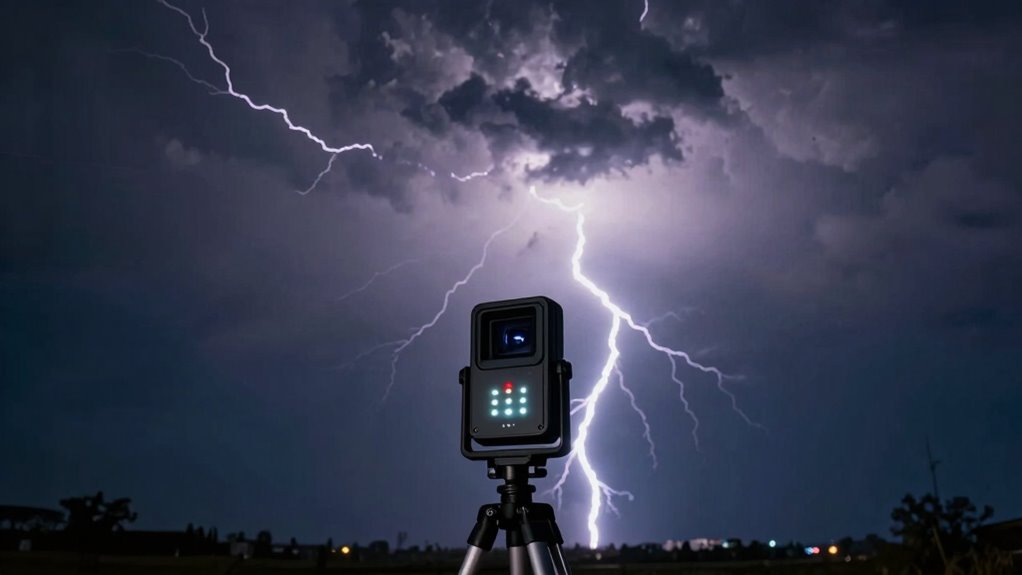
To use lightning detectors effectively for storm safety, you should familiarize yourself with the device’s readings and how to interpret them. Understanding what signals indicate imminent lightning can help you make quick decisions to stay safe. Keep an eye on the detector’s alerts and respond promptly to any signs of nearby lightning activity. Remember, timely detection is key to effective storm safety.
- Know the device’s warning thresholds and what they mean
- Monitor the direction and intensity of detected lightning
- Act quickly when alerts signal nearby lightning to seek shelter
Frequently Asked Questions
Can Lightning Detectors Identify the Type of Lightning Strike?
Lightning detectors can’t identify the specific lightning type or accurately classify each strike. They detect the electromagnetic signals produced by lightning, giving you a general idea of an impending storm. However, they don’t analyze strike details like cloud-to-ground or intra-cloud classification. So, while you’ll get a warning, you won’t know the precise strike classification or lightning type. For detailed analysis, specialized equipment is necessary beyond standard lightning detectors.
Do Lightning Detectors Work Equally Well Indoors and Outdoors?
Lightning detectors work better outdoors than indoors due to outdoor sensitivity and fewer obstructions. Indoor limitations, like walls and electronic interference, can weaken their signals, making them less accurate inside. When you’re outside, detectors can pick up lightning activity more reliably, but indoors, their effectiveness drops. So, for the best results, use lightning detectors outdoors, and don’t rely solely on them when indoors, especially during storms.
How Do Weather Conditions Impact Lightning Detector Accuracy?
Weather conditions can turn your lightning detector into a fickle friend, with humidity interference and thick cloud cover clouding its accuracy. High humidity creates a fog of electrical noise, making it harder to spot real strikes. Dense clouds act like a curtain, muffling signals and reducing detection range. So, when weather turns treacherous, expect your device’s precision to waver, like a lighthouse flickering in a storm.
Are There Specific Brands Known for More Accurate Lightning Detection?
You’ll find that certain brands, like Boltek and Vaisala, are known for their strong reputation and reliable detection range. These brands are trusted for accuracy and consistent performance, making them popular choices. When choosing a lightning detector, consider the brand’s reputation for accuracy and the detection range it offers. Investing in reputable brands guarantees you get better detection capabilities, especially during critical weather conditions.
Can Lightning Detectors Predict the Timing of Lightning Strikes?
Lightning detectors cannot predict the exact timing of lightning strikes or provide precise strike forecasting. They detect the presence of lightning activity nearby, but they don’t give you a countdown or specific moment when a strike will occur. If you need timing prediction, you’ll have to rely on weather forecasts and real-time radar data. Always stay alert during thunderstorms, even if your lightning detector doesn’t indicate an imminent strike.
Conclusion
Lightning detectors are amazing tools that can keep you safe from sudden storms, but they’re not perfect. Remember, they don’t catch every lightning strike, especially those far away or in tricky directions. Use them wisely alongside other safety measures, and stay alert. When lightning strikes, it’s like a thunderous monster roaring from the sky—so trust your detector, but always prioritize your safety. Stay prepared, stay safe, and don’t let nature catch you off guard!
Fall Picks
fall essentials
As an affiliate, we earn on qualifying purchases.