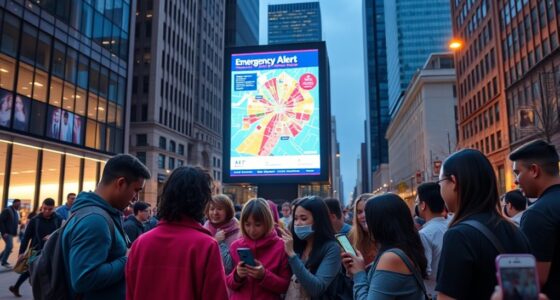
Virtual assistants are transforming emergency management by providing instant access to critical information, monitoring social media and news updates, and analyzing data rapidly to identify risks. They help streamline crisis communication, dispel misinformation, and coordinate resources efficiently. These tools also guarantee inclusive engagement through multilingual messaging and constant support. By acting as a reliable extension of response teams, virtual assistants improve decision-making and can save lives. To discover how they’re shaping future disaster response, keep exploring this evolving technology.

Get emergency and outdoor gear delivered free — and shop member deals
- Fast, free delivery on millions of items
- Access to Prime Big Deal Days deals on October 6–7
- Prime Video, Amazon Music and more included
Key Takeaways
- Virtual assistants provide real-time data monitoring and analysis during emergencies for faster decision-making.
- They serve as centralized platforms for accurate crisis communication and misinformation control.
- They assist in managing response logistics, resource tracking, and coordinating volunteer efforts effectively.
- They facilitate inclusive communication through multilingual support and accessible information for diverse communities.
- They enhance emergency response capabilities, helping save lives with rapid, efficient, and reliable support systems.

Virtual assistants are transforming emergency management by providing real-time support and streamlining communication during crises. When disaster strikes, every second counts, and having a virtual assistant on your team can make a significant difference. These AI-powered tools are designed to aid in disaster response by quickly gathering, analyzing, and sharing critical information. As a first responder or emergency manager, you can rely on virtual assistants to monitor social media feeds, news updates, and emergency alerts to stay ahead of unfolding events. This immediate access to data enables faster decision-making and more effective deployment of resources.
During a crisis, clear and dependable communication is essential. Virtual assistants excel at crisis communication by serving as a central hub for information dissemination. They can automatically respond to common inquiries from the public, providing accurate updates about safety measures, shelter locations, or evacuation procedures. This reduces the burden on human responders, allowing them to focus on more complex tasks. Additionally, virtual assistants can coordinate messages across multiple platforms, ensuring consistent messaging and minimizing misinformation. This is especially important in fast-moving situations where rumors can spread quickly and cause confusion.
Virtual assistants streamline crisis communication, providing accurate updates and coordinating messages across platforms to reduce misinformation and confusion.
You’ll find that virtual assistants also help improve disaster response logistics. By integrating with emergency management systems, they can track resource inventories, coordinate volunteer efforts, and monitor supply chains. Their ability to process large volumes of data instantly means they can identify gaps in response efforts and suggest actionable steps. This proactive approach enhances your overall preparedness and response effectiveness. Furthermore, the importance of maintaining indoor air quality, especially during extended emergency situations, cannot be overstated in safeguarding responders and affected populations.
Moreover, virtual assistants facilitate better communication with affected communities. They can be programmed to deliver multilingual messages, making critical information accessible to diverse populations. This inclusivity ensures that everyone receives timely updates and instructions, reducing panic and promoting cooperation. Their 24/7 availability means that even outside regular hours, you have a dependable support system to address concerns and provide guidance.
In essence, virtual assistants act as an extension of your emergency management team. They enhance disaster response capabilities by enabling rapid data analysis, improving crisis communication, and ensuring consistent, accurate information flow. As technology advances, their role will only grow, helping you respond more efficiently and effectively during emergencies. By integrating virtual assistants into your crisis management strategies, you can create a more resilient and responsive system, ultimately saving lives and reducing the impact of disasters on communities.
AI virtual assistant for emergency response
As an affiliate, we earn on qualifying purchases.
As an affiliate, we earn on qualifying purchases.
Frequently Asked Questions
How Secure Are Virtual Assistants Handling Sensitive Emergency Data?
You’re right to question security; virtual assistants handling sensitive emergency data can be quite secure if they use strong data encryption and robust user authentication. These measures protect information from unauthorized access and breaches. However, you should guarantee the systems are regularly updated and follow best security practices. By doing so, you can confidently rely on virtual assistants to manage emergency data safely and efficiently.
Can Virtual Assistants Operate Offline During Network Outages?
Think of a virtual assistant as a lifeboat in a storm—when network dependency hits, offline operation becomes essential. During network outages, your virtual assistant can operate offline, acting as a steady anchor in turbulent waters. This guarantees critical emergency management tasks continue smoothly without relying solely on internet connectivity, giving you confidence that important information and support are always available, rain or shine.
How Do Virtual Assistants Prioritize Multiple Emergency Alerts Simultaneously?
You need to understand that virtual assistants use alert prioritization algorithms to handle multiple emergency alerts simultaneously. They analyze factors like severity, location, and potential impact to determine which alerts require immediate response. This helps streamline response coordination, ensuring critical threats are addressed first. By dynamically adjusting priorities, virtual assistants support effective emergency management, reducing response times and improving overall safety during complex, multi-alert situations.
Are Virtual Assistants Customizable for Different Disaster Types?
Yes, virtual assistants are customizable for different disaster types. You can implement disaster-specific customization, allowing the assistant to recognize unique scenarios like floods, hurricanes, or wildfires. This enables the virtual assistant to deliver tailored emergency responses, providing relevant alerts, safety instructions, and resource guidance for each situation. Such customization ensures your response efforts are more effective, targeted, and timely, helping you better manage diverse emergencies.
What Are the Costs Associated With Deploying Virtual Assistants in Emergency Services?
You’ll find that the costs associated with deploying virtual assistants in emergency services involve a thorough cost analysis and careful consideration of implementation expenses. While initial investments cover software development, integration, and training, ongoing costs include maintenance, updates, and support. These expenses can vary based on the system’s complexity and scale, but the efficiency gains and improved response times often justify the investment, making it a valuable addition to emergency management strategies.
Conclusion
Virtual assistants act like dedicated copilots in your emergency management journey, guiding you through chaos with precision and speed. They streamline communication, provide essential information instantly, and help coordinate efforts seamlessly. Just like a lighthouse guides ships safely to shore, these digital helpers illuminate the path during crises, ensuring you’re never steering alone. Embracing virtual assistants isn’t just a step forward — it’s like adding a trusted compass to your toolkit, leading you confidently through even the most turbulent times.
Fall Picks
fall essentials
As an affiliate, we earn on qualifying purchases.