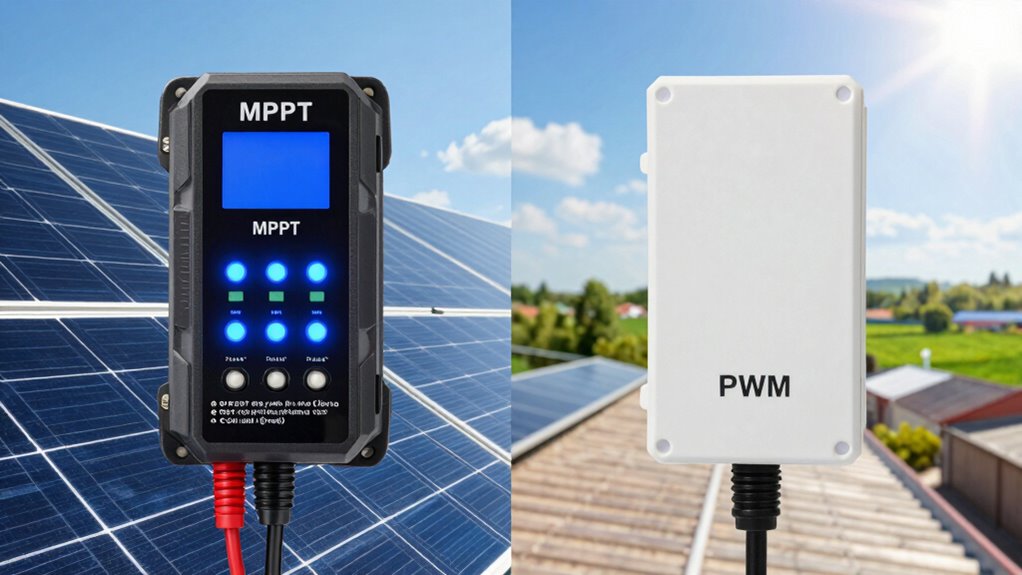
If you want to maximize your solar power, choosing an MPPT controller over a PWM can make a big difference, saving you up to 30% energy. MPPT units adjust their input to find the maximum power point, converting excess voltage into usable current and boosting efficiency. PWM controllers are simpler and cheaper but often waste potential energy due to voltage mismatches. To discover which option suits your system best, explore the details ahead.
Key Takeaways
- MPPT controllers optimize energy capture by adjusting input voltage to find the maximum power point, reducing power waste.
- PWM controllers connect panels directly to batteries, often wasting up to 30% of potential energy due to voltage mismatches.
- MPPT converts excess voltage into usable current, enhancing system efficiency and minimizing energy loss.
- PWM is simpler and cheaper but less effective in varying sunlight, leading to higher energy waste.
- Choosing MPPT over PWM maximizes solar power utilization and improves overall system performance.
What Are MPPT and PWM Charge Controllers: and How Do They Work?
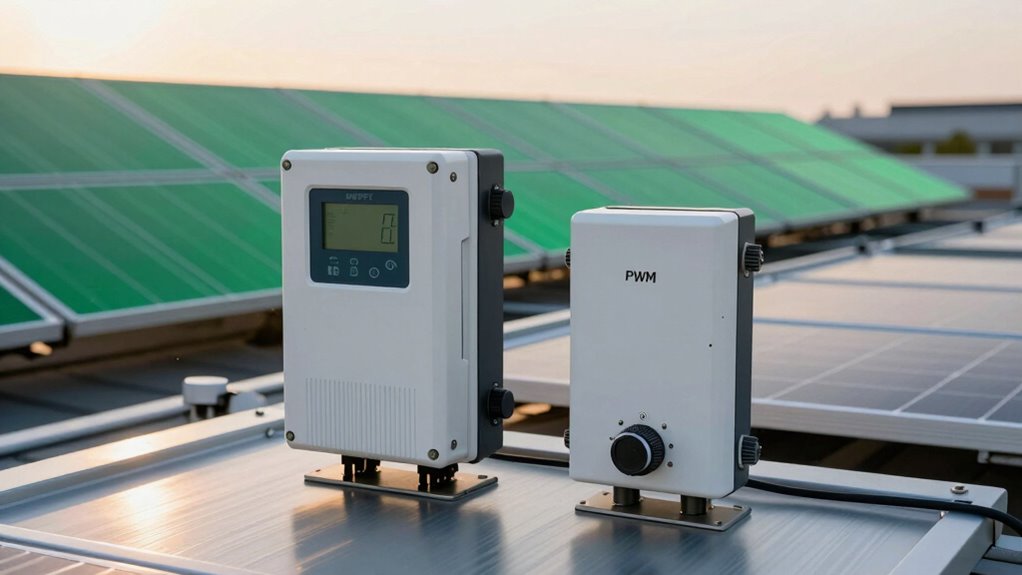
While both MPPT (Maximum Power Point Tracking) and PWM (Pulse Width Modulation) charge controllers regulate the flow of energy from your solar panels to your batteries, they do so using different methods. MPPT controllers adjust their input voltage to match the solar panel’s maximum power point, optimizing power transfer based on battery chemistry and temperature. They work best with larger systems or varied battery chemistries, especially when installation location affects sunlight exposure. Additionally, solar panel technology can influence which charge controller is more suitable for your setup. For instance, newer high-efficiency panels may benefit more from MPPT controllers to maximize energy harvest. PWM controllers, on the other hand, operate by connecting the panels directly to the batteries, fundamentally switching on and off rapidly to maintain a steady voltage. They are simpler and more cost-effective but less efficient. Your choice depends on your system size, battery chemistry, and where your panels are installed.
How Do MPPT and PWM Controllers Capture Solar Power Differently?
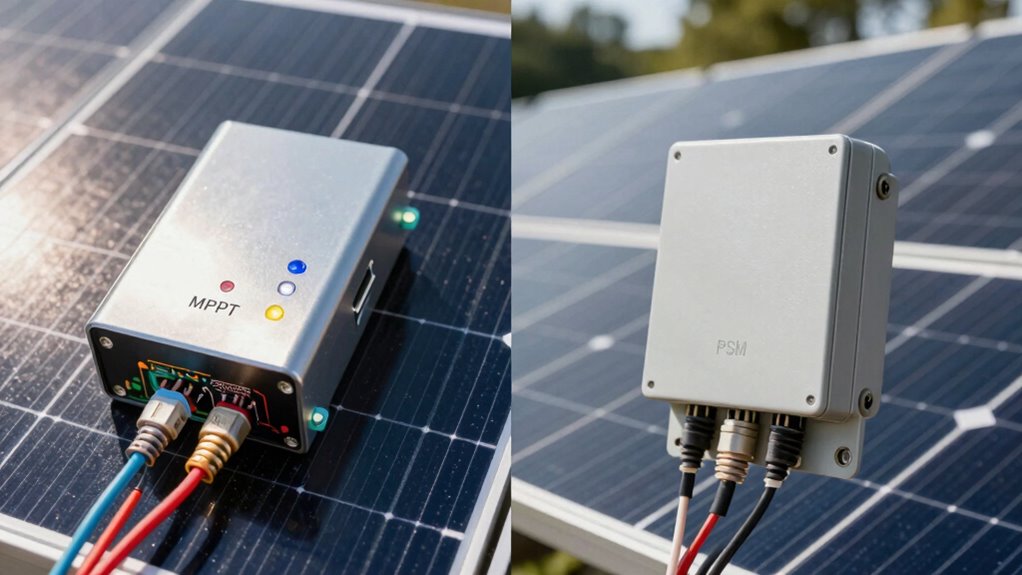
You’ll notice that MPPT and PWM controllers approach capturing solar power differently through voltage matching strategies. MPPT systems optimize power conversion efficiency by constantly tracking the maximum power point, while PWM controllers use a simple on/off switching method. Understanding these differences helps you choose the right controller to maximize your solar setup’s performance. Additionally, considering the capacity of your batteries and solar panels can influence which type of controller will yield the best results. The voltage regulation method employed by each controller significantly impacts overall system efficiency and longevity. Moreover, smart technology integration in modern controllers can further enhance energy harvesting capabilities. Incorporating advanced control algorithms can also improve system adaptability and overall efficiency. Recognizing the importance of system compatibility ensures that your components work harmoniously for optimal energy output.
Voltage Matching Strategies
MPPT (Maximum Power Point Tracking) and PWM (Pulse Width Modulation) charge controllers differ markedly in how they match voltages to maximize solar power capture. MPPT controllers continuously adjust their input voltage to find the best point where solar panels deliver maximum power, ensuring you extract the most energy possible. This precise voltage matching improves system integration, especially in colder climates or when panel voltages exceed battery voltages, leading to better power transfer. Additionally, because MPPT optimizes power flow, it helps preserve battery longevity by preventing overcharging and reducing stress on the battery. In contrast, PWM controllers connect panels directly to the battery, switching on and off rapidly to regulate voltage. While simpler and cheaper, PWM’s voltage matching is less flexible, often wasting potential power, especially under varying conditions.
Power Conversion Efficiency
Understanding how MPPT and PWM controllers capture solar power reveals their differing efficiencies. MPPT controllers optimize power conversion by continuously tracking the maximum power point, converting excess voltage into amperage, which boosts overall efficiency. This means more energy reaches your batteries, enhancing battery longevity by reducing strain. In contrast, PWM controllers connect panels directly to batteries, switching on and off to regulate voltage, which is less efficient but simpler to install. MPPT units are typically more complex and costlier, but their higher efficiency can justify the investment for larger systems. PWM controllers are straightforward and easier to install but waste more energy, especially in colder or cloudier conditions. Additionally, solar panel compatibility plays a role in determining which controller is most suitable. Choosing between them depends on your system’s size, budget, and the desire for maximum power capture.
Incorporating system size considerations can help you decide which type of controller maximizes your solar investment and energy yield.
Maximum Power Point Tracking
Maximum Power Point Tracking (MPPT) and PWM controllers differ markedly in how they capture solar energy, primarily through their approach to optimizing power output. MPPT controllers continuously adjust their input to find the solar panel’s maximum power point, extracting the highest possible energy regardless of weather or load conditions. This method improves overall efficiency, helping extend the solar panel’s lifespan by reducing strain. Additionally, MPPT controllers better match the voltage of the solar array with battery voltage, enhancing battery compatibility and ensuring safer, more effective charging. Proper system sizing is crucial to maximize the benefits of MPPT technology and avoid underperformance. In contrast, PWM controllers simply switch the current on and off, which can waste up to 30% of potential power. Understanding these differences helps you choose the right controller to maximize your system’s performance and longevity.
Pros and Cons of PWM Controllers for Small Solar Systems
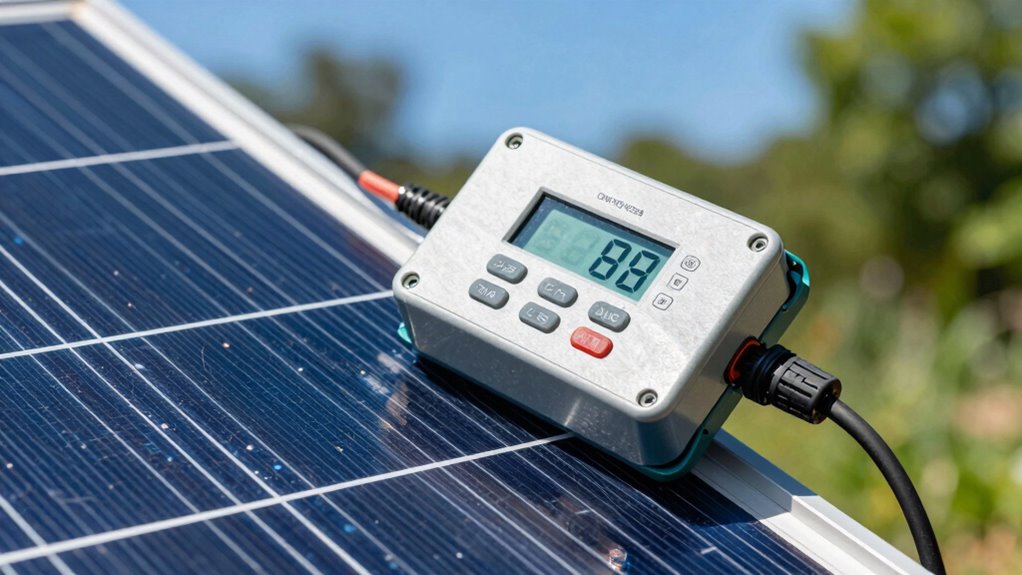
While pulse-width modulation (PWM) charge controllers are simple and affordable, they come with both advantages and limitations for small solar systems. They are easy to install, making system setup straightforward, especially if you’re new to solar. PWM controllers effectively manage battery maintenance by preventing overcharging and deep discharges, extending your battery life. However, they operate at a fixed voltage, which can lead to less efficient power transfer, especially during varying sunlight conditions. This fixed voltage operation can cause a voltage mismatch, resulting in energy losses of up to 30%. This means you might waste up to 30% of your solar power, reducing overall system efficiency. Understanding voltage regulation is essential to optimize your system’s performance and minimize energy loss. For small setups, PWM controllers are budget-friendly and reliable, but if you want maximum efficiency and better energy harvesting, you may need to think about more advanced options like MPPT controllers. Additionally, understanding synthetic lubricants can help ensure the longevity and reliability of your solar system components. To improve overall system performance, it’s also beneficial to explore system optimization techniques that can help reduce energy waste.
When Should You Use an MPPT Charge Controller?

You should consider using an MPPT charge controller when your solar setup involves higher wattage panels or variable sunlight conditions that reduce efficiency. MPPT controllers excel at maximizing power extraction, which can extend your battery lifespan by ensuring batteries aren’t overcharged or undercharged. They’re especially beneficial if your panels operate at higher voltages, as MPPT controllers efficiently convert excess voltage into usable current. While installation ease might be slightly more complex than PWM controllers, the long-term gains in energy harvest make it worthwhile. Additionally, MPPT controllers adapt better to changing sunlight, optimizing energy collection throughout the day. They also help improve overall system efficiency, ensuring you get the most out of your solar investment. If you have a larger system or unpredictable sunlight, an MPPT controller helps optimize performance, saving you money and ensuring your batteries stay healthy over time. Use an MPPT controller when efficiency, energy conversion, and battery longevity are your priorities.
Are MPPT Controllers Worth the Cost Compared to PWM?
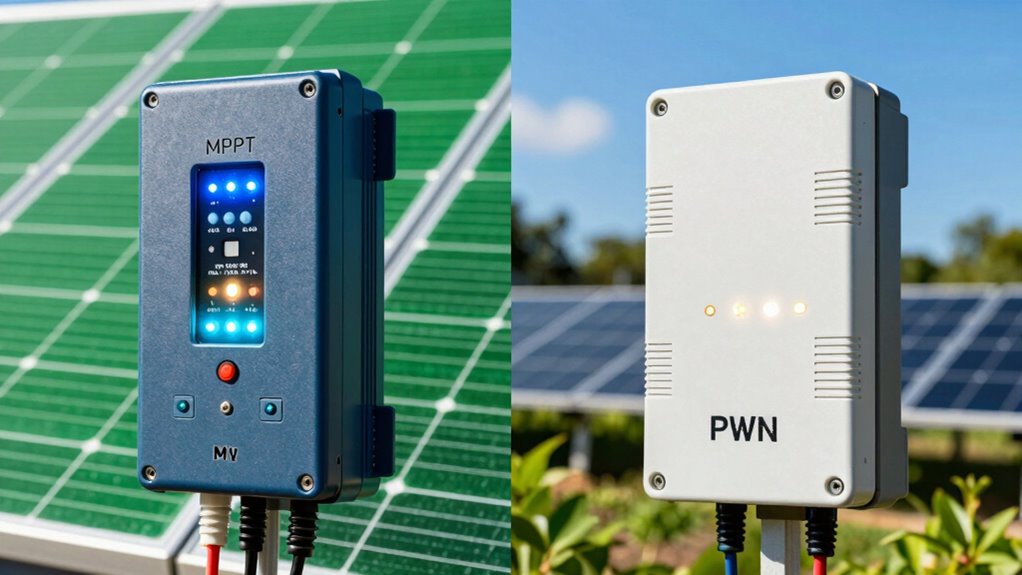
Are MPPT controllers worth the extra cost compared to PWM models? If you want to maximize your solar investment, they often are. MPPT controllers optimize power transfer, increasing system efficiency and generating more energy, especially in variable weather conditions. This can lead to a shorter payback period, despite their higher upfront system cost. Additionally, MPPT controllers help maintain a longer battery lifespan by providing a more consistent charging process, reducing stress on your batteries. While PWM controllers are cheaper initially, the increased energy harvest from MPPT units can outweigh that difference over time. If you’re aiming for a more efficient, durable setup, investing in an MPPT controller can be a smart choice.
How to Choose the Best Charge Controller for Your Solar Setup
Choosing the right charge controller is essential for optimizing your solar system’s performance and ensuring long-term reliability. To select the best one, consider your battery maintenance needs and how well it integrates with your system. Focus on compatibility with your battery type and system voltage. Additionally, selecting a controller with proven durability ensures it can withstand outdoor conditions and provide consistent performance over time. Understanding how gear care tips can extend the lifespan of your components is also beneficial in maintaining system efficiency. Proper storage practices for your equipment help prevent corrosion and damage, further contributing to the longevity of your solar setup. Incorporating body-based healing approaches can also help you stay focused and make informed decisions about your equipment.
Frequently Asked Questions
Can MPPT Controllers Operate Effectively in Low Sunlight Conditions?
Yes, MPPT controllers work well in low sunlight conditions because they optimize power extraction even when solar panel orientation isn’t perfect or shading effects reduce efficiency. They adjust to fluctuating sunlight, capturing maximum energy. Unlike PWM controllers, MPPTs excel in less-than-ideal conditions, ensuring you get the most out of your solar panels, regardless of shading or orientation issues, especially during cloudy days or early mornings.
How Does Temperature Affect MPPT and PWM Controller Efficiency?
Temperature impacts both MPPT and PWM controllers through temperature sensitivity, but MPPTs generally handle efficiency degradation better. High temperatures can cause efficiency loss in both types, though MPPT controllers are designed to optimize power output despite these changes. Conversely, PWM controllers are more susceptible to efficiency drops under temperature fluctuations. To maximize your system’s performance, guarantee proper ventilation and avoid extreme heat environments.
What Maintenance Do MPPT and PWM Controllers Require Over Time?
You should regularly check your MPPT and PWM controllers for dust, corrosion, and loose connections to guarantee controller durability. Keep firmware updated when available, as it enhances efficiency and fixes bugs. Also, inspect cooling fans or vents to prevent overheating. Proper maintenance extends your controller’s lifespan, maintains peak performance, and helps you avoid costly repairs. Staying proactive with these simple steps ensures your solar system stays reliable and efficient over time.
Are There Specific Brands Known for Reliable MPPT or PWM Controllers?
You should look for brands with a strong reputation for reliability, like Victron, Morningstar, or Renogy, which are known for high-quality MPPT and PWM controllers. These brands often have better product availability and customer support, giving you peace of mind. Choosing well-established brands guarantees you get durable, efficient controllers that last longer, minimizing maintenance needs and maximizing your solar power system’s performance over time.
How Do Installation Complexities Differ Between MPPT and PWM Systems?
Installation intricacies impact your project’s progress. MPPT systems generally demand more meticulous installation requirements and wiring complexity, needing precise connections and sometimes additional components. PWM controllers, on the other hand, simplify setups with straightforward wiring and less technical fuss. You’ll find PWM easier to install, perfect for quick setups, while MPPT demands more detailed, deliberate wiring work, but offers superior solar savings for the savvy installer.
Conclusion
So, after all this, it’s amusing how many still settle for PWM controllers, leaving up to 30% of your solar power wasted. You’d think saving a few bucks now is worth sacrificing efficiency and long-term gains. But hey, if you’re okay with missing out on maximum energy and potential savings just for a lower upfront cost, then maybe PWM’s the way to go. Otherwise, investing in an MPPT might just be the smarter, more profitable choice.