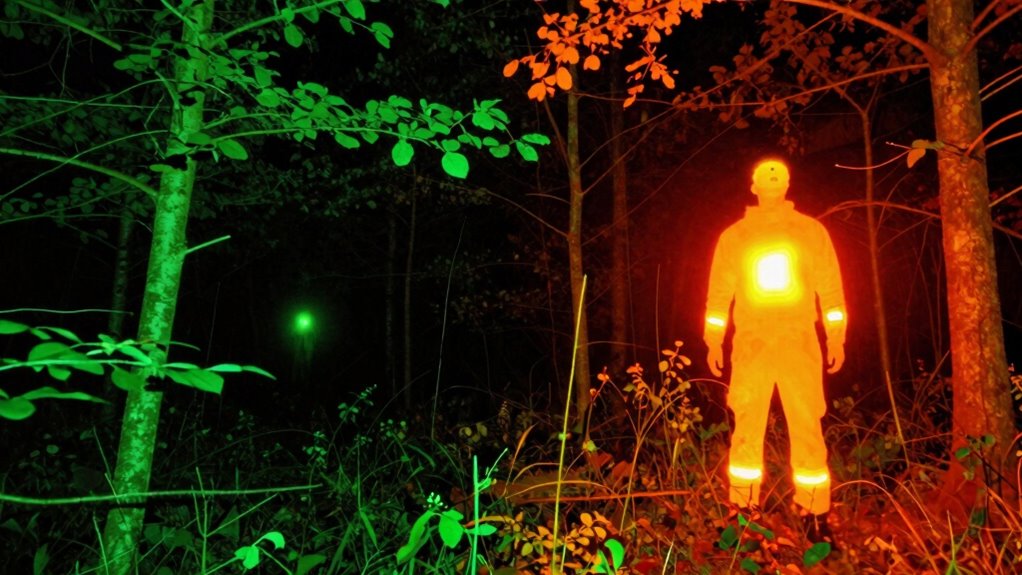

Choosing between night vision and thermal imaging depends on your search environment and targets. Night vision amplifies ambient light for clear images in low-light conditions but struggles in total darkness or clutter. Thermal imaging detects heat signatures, making it ideal for spotting hidden or camouflaged targets in complete darkness, fog, or behind barriers. By understanding their strengths and limitations, you’ll find the right technology for your needs—and learn how combining both can boost your success.
Key Takeaways
- Thermal imaging excels in total darkness, fog, smoke, and concealment, making it ideal for detecting hidden heat signatures.
- Night vision provides clearer images in low-light conditions and is suitable for long-distance observation without extra illumination.
- Combining both technologies offers optimal search capabilities, covering diverse environments and challenging visibility scenarios.
- Thermal devices are better for detecting concealed or camouflaged targets based on heat, while night vision is limited by ambient infrared light.
- Choose thermal imaging for harsh environments and concealment, and opt for night vision when clear visuals in low-light conditions are sufficient.

VisioGear Night Vision Goggles for Adults – 4K Night Vision Binoculars with AI Color Boost Mode, Photo & Video Recording, Rechargeable Battery for Wildlife Observation, Camping & Security
- 4K Video and 40MP Photos: Capture high-resolution videos and photos
- AI Color Boost Mode: Enhances ambient light for natural colors
- 8X Digital and 5X Optical Zoom: Magnify distant objects clearly
As an affiliate, we earn on qualifying purchases.
As an affiliate, we earn on qualifying purchases.
How Do Night Vision and Thermal Imaging Work?
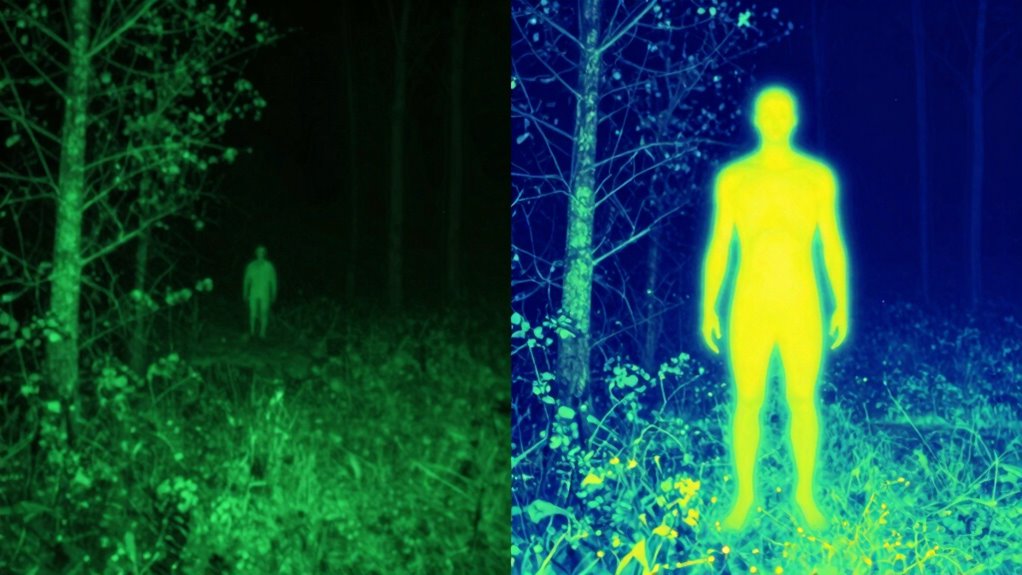
Night vision and thermal imaging are both technologies that help you see in low-light or no-light conditions, but they do so in fundamentally different ways. Night vision amplifies available light, using image enhancement to convert tiny amounts of ambient light—like starlight or moonlight—into visible images. It relies on intensifier tubes that boost the light signals, making details clearer in darkness. However, night vision devices typically have moderate power requirements, often needing batteries to operate the image intensifier tubes. Thermal imaging, on the other hand, detects heat emitted by objects. It captures thermal radiation, creating images based on temperature differences. Since thermal sensors are highly sensitive, they can operate in complete darkness without ambient light. Power requirements for thermal devices tend to be higher, especially for advanced models. Additionally, thermal imaging sensors are capable of detecting heat signatures from a distance, making them particularly useful for search and rescue operations.
What Are the Main Advantages and Limitations of Night Vision?
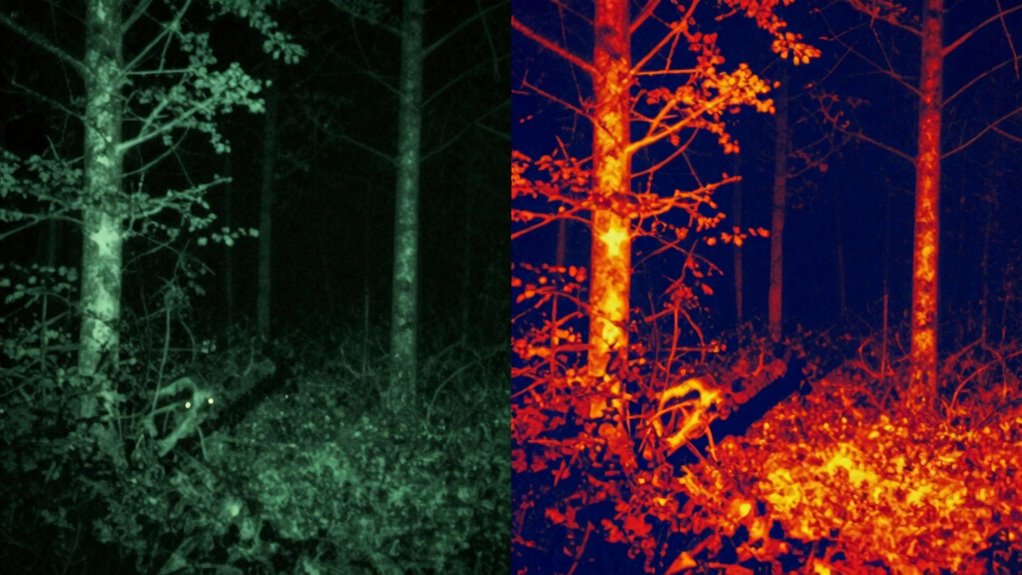
Night vision offers several advantages that make it a popular choice for low-light observation. Its ability to amplify ambient light allows you to see in darkness without additional illumination, providing clear images over long distances. It’s lightweight, portable, and easy to operate, making it suitable for various outdoor activities or security needs. Additionally, night vision devices are generally more affordable than thermal imaging, making them accessible for many users. However, there are limitations to contemplate. Night vision devices require some ambient light to function effectively; in complete darkness, their performance drops considerably. They can also be affected by bright lights, which may cause glare or temporary blindness. Furthermore, night vision technology tends to be less effective at detecting camouflaged objects or those that blend into the surroundings, especially in complex environments. Some models incorporate image enhancement technology to improve performance in challenging conditions. As technology advances, sensor quality continues to improve, addressing some of these performance issues. Understanding these advantages and limitations helps you choose the right tool for your specific needs. Night vision technology is constantly improving to address some of these limitations, including advancements that enhance performance in low-light conditions.
When Is Thermal Imaging Better for Detecting Warm or Hidden Targets?

Thermal imaging excels when you need to detect hidden heat signatures that are invisible to night vision. It works effectively in complete darkness, making it ideal for spotting warm or concealed targets. Understanding when to use thermal can give you a clear advantage in challenging conditions. Additionally, gear care tips can help maintain the performance of thermal imaging devices in demanding environments. Proper device maintenance is essential to ensure consistent detection capabilities over time. Regularly inspecting and calibrating your thermal equipment extends its lifespan and preserves its ability to accurately identify heat signatures. Incorporating care routines into your maintenance can further optimize device functionality and reliability.
Detecting Hidden Heat Signatures
While visible light can be blocked or obscured by obstacles, thermal imaging excels at detecting hidden heat signatures that others might miss. This technology works by sensing differences in the infrared spectrum, allowing you to see heat emitted by objects, even through smoke, fog, or concealment. When targets are hidden behind barriers or camouflaged, heat detection becomes invaluable, revealing warm bodies or equipment that blend into their surroundings. Thermal imaging doesn’t rely on ambient light, so it can identify heat signatures from a distance, regardless of visual obstructions. Additionally, thermal imaging can be used for detecting electrical faults by identifying abnormal heat buildup, making it especially effective for spotting hidden or concealed targets, ensuring you don’t overlook critical heat sources that might otherwise remain invisible to night vision or traditional cameras. The ability to distinguish heat signatures from a distance enhances situational awareness in various operational scenarios. Moreover, thermal imaging can be crucial for search and rescue missions, helping locate individuals in challenging environments or adverse conditions. Its capacity to detect concealed heat sources makes it an indispensable tool in many security and safety applications. In addition, thermal imaging is highly effective in monitoring equipment and infrastructure for potential failures or hazards, further broadening its application scope.
Effective in Complete Darkness
In complete darkness, thermal imaging outperforms visible-light-based devices because it detects heat emitted by objects without relying on ambient light. This is possible through infrared detection, which captures the heat signatures that all living things and warm objects emit. Unlike light amplification devices, thermal cameras don’t depend on any external light source, making them highly effective in total darkness. They can reveal hidden targets behind obstacles or in dense foliage by highlighting temperature differences. This advantage is vital for search and rescue missions, security, or wildlife observation at night. Since thermal imaging directly senses heat, it provides immediate, clear visuals of warm or camouflaged targets even in pitch-black conditions, ensuring you can find what’s hidden without any ambient light.
Which Technology Works Best in Different Search Environments?
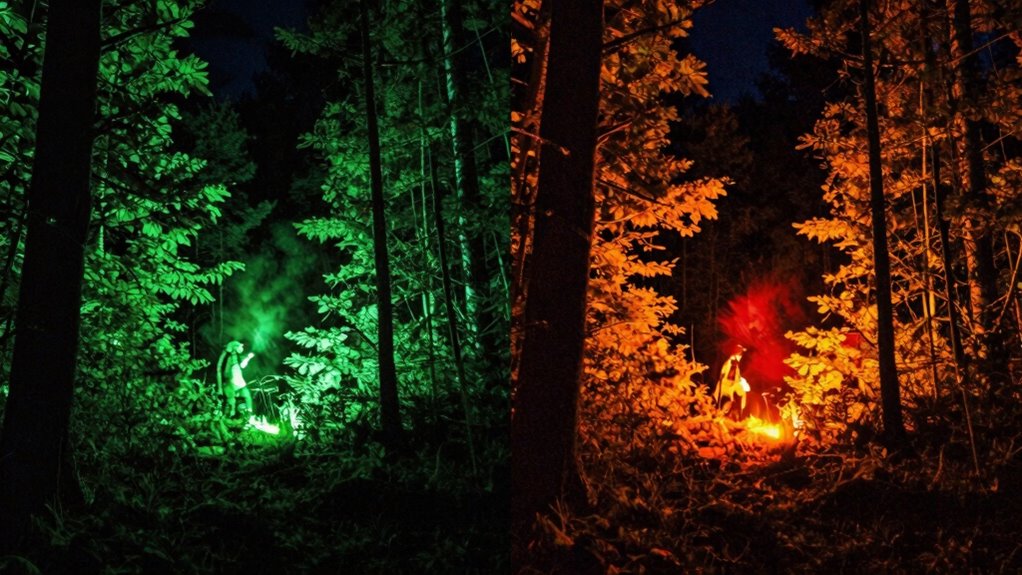
Have you ever wondered which technology performs best in different search environments? When visibility is limited, thermal imaging excels because it detects thermal contrast, making warm objects stand out against cooler backgrounds. This capability is especially useful in smoky or foggy conditions where visibility is reduced. Night vision devices, on the other hand, rely on image enhancement to amplify available light, making them ideal in low-light but not total darkness. In environments with some ambient light, night vision provides clearer images of movement and details. Additionally, mobility and ease of use are important factors to consider when selecting equipment for search operations. Understanding the performance in various conditions of each technology helps you choose the right tool based on the specific environment, ensuring effective search and safety. Proper equipment maintenance and calibration can further optimize the effectiveness of your chosen technology, ensuring reliable operation when it matters most. Being aware of market trends and insights can also inform your choice of technology, especially when considering the latest advancements and promotional offers.
How Do You Decide Between Night Vision and Thermal Imaging?
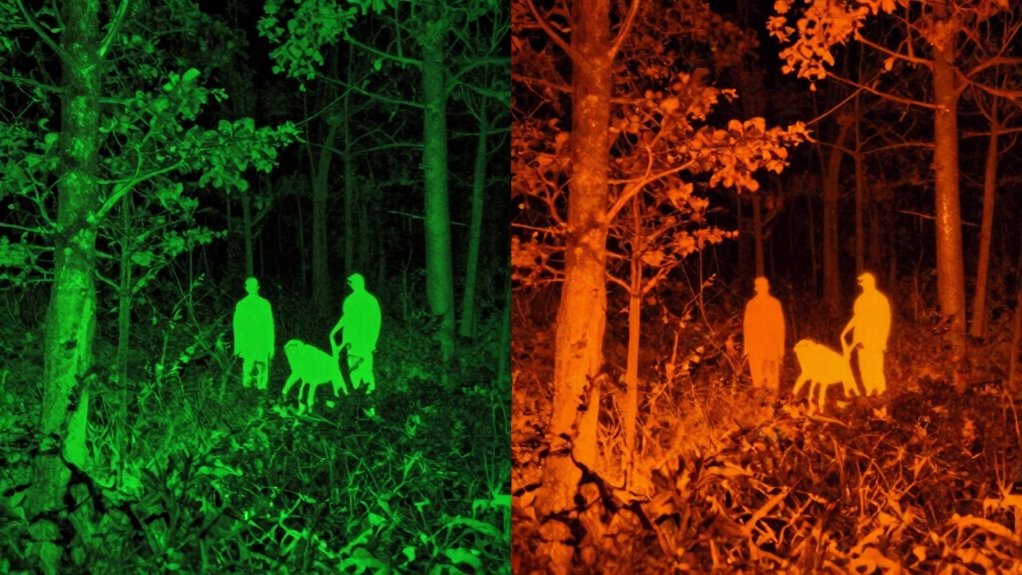
Choosing between night vision and thermal imaging depends on your specific needs and the environment you’ll be operating in. Consider how durable the device is, especially if you’ll be in rugged conditions; thermal imagers often offer better device durability and resistance to harsh elements. User training also plays a role—night vision devices tend to be more straightforward, requiring less training for effective use, while thermal imaging can be more complex but provides clearer detection in challenging conditions. Think about your primary goal: if you need to identify heat sources or detect hidden targets, thermal is the way to go. If you’re working in low-light but visually complex environments, night vision might be more suitable. Ultimately, matching your needs with device durability and your ability to operate the equipment is key. Additionally, understanding the technology differences can help you make a more informed choice. Being aware of image resolution and other technical specifications can also influence your decision based on the level of detail you require. Moreover, considering the cost and budget can be crucial, as thermal devices often come at a higher price point but may offer more advanced features.
What Factors Should You Consider for Your Search Mission?
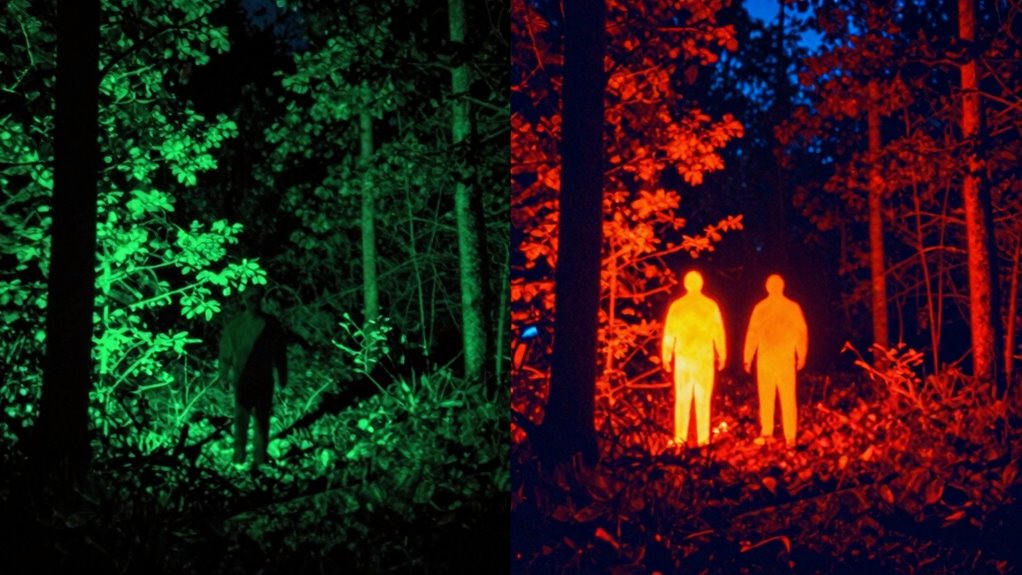
When planning a search mission, you need to evaluate several critical factors to guarantee you select the right equipment. First, consider equipment durability; your gear must withstand harsh conditions and extended use without failure. Reliable, rugged devices ensure you won’t be left vulnerable in the field. Next, think about cost considerations. Balance your budget with the functionality you need, avoiding overspending on features that won’t benefit your specific scenario. While high-end gear offers advanced capabilities, sometimes a simpler, more durable option is more practical. Also, assess how well the equipment performs in different environments and lighting conditions. Ultimately, choosing equipment that combines durability and cost-effectiveness will improve your chances of a successful search mission while maintaining safety and efficiency.
When Should You Use Night Vision Versus Thermal Imaging in Real Scenarios?
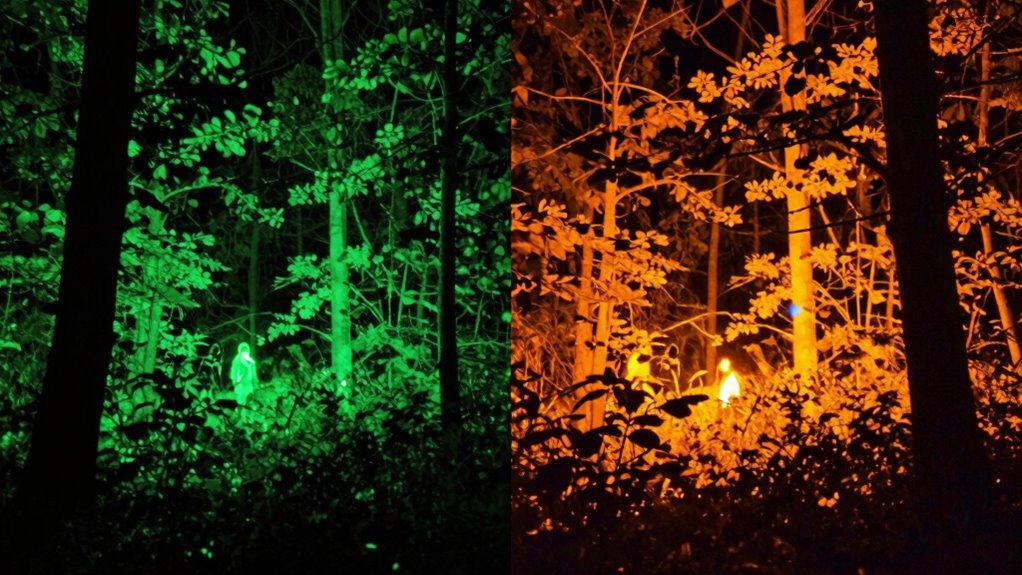
Your choice between night vision and thermal imaging depends on visibility conditions, as each works best in different scenarios. If detecting heat signatures is essential, thermal devices are more effective, but night vision excels in low-light environments with some visual cues. Consider your operational objectives to determine which technology will give you the best advantage in real-world situations.
Visibility Conditions Matter
Visibility conditions play a crucial role in determining whether night vision or thermal imaging is the better choice. In low-light environments with some ambient light, night vision uses light amplification and infrared detection to enhance your vision. It works well in foggy or rainy conditions where some light reaches your device. However, when visibility is poor due to complete darkness or dense cover, thermal imaging is more effective since it detects heat signatures regardless of light conditions. Thermal imaging doesn’t rely on ambient light or infrared detection; instead, it captures temperature differences, making it ideal for spotting targets in challenging weather or terrain. By understanding the environment’s visibility challenges, you can choose the right technology for your search and rescue needs.
Detecting Heat Signatures
Choosing between night vision and thermal imaging for detecting heat signatures depends on the specific scenario you face. Thermal imaging uses infrared detection to sense heat signatures directly, making it ideal for spotting warm objects against cooler backgrounds. It works well in complete darkness and through smoke, fog, or light obstructions. Night vision amplifies available light, but it doesn’t detect heat; instead, it relies on ambient infrared light reflected off objects. Use night vision when the goal is to identify shapes and movement in low-light conditions, but for pinpointing heat sources, thermal imaging provides a distinct advantage. In scenarios where detecting heat signatures is critical—like finding people or animals in dense foliage or obscured environments—thermal imaging is your best tool.
Operational Objectives Differ
Deciding whether to use night vision or thermal imaging hinges on your operational objectives and the environment you’re operating in. If your goal is to identify targets in low-light conditions or through obscurants like smoke or fog, thermal imaging is usually the better choice due to its ability to detect heat signatures. Conversely, if you need detailed visuals for navigation or recognizing faces, night vision offers clearer images and better equipment compatibility with existing gear. Cost considerations also influence your decision; thermal devices tend to be more expensive, so budget constraints may steer you toward night vision. Ultimately, understanding your specific operational objectives helps determine which technology aligns best with your needs and equipment setup.
How Can Combining Both Technologies Improve Search Success?
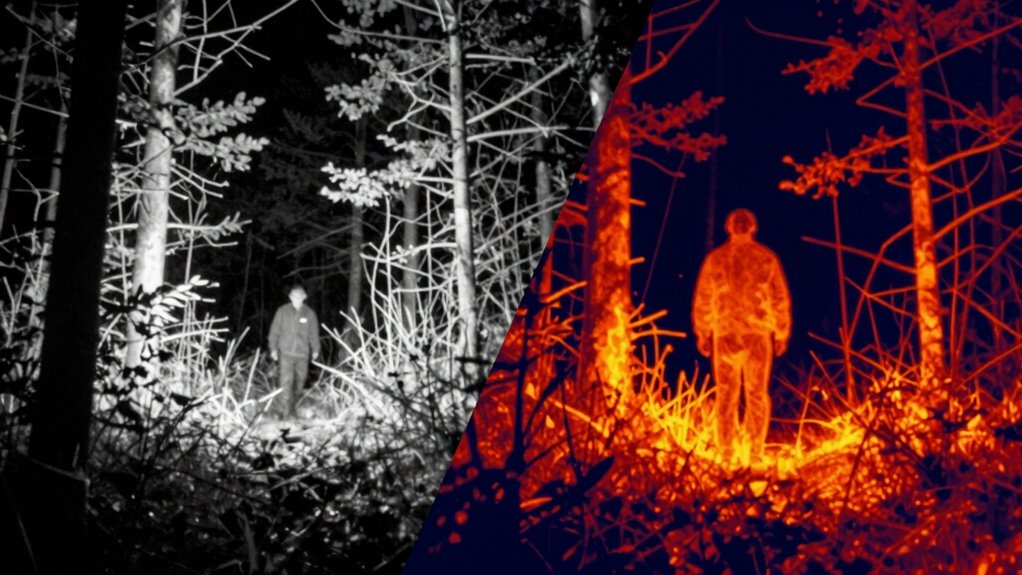
Combining night vision and thermal imaging technologies can markedly boost search success by leveraging their complementary strengths. Night vision uses infrared sensors to amplify available light, providing clear images in low-light conditions. Thermal imaging detects heat signatures, revealing hidden or obscured targets. When you combine these technologies, you get enhanced image clarity and broader detection capabilities.
Consider these benefits:
- You can identify targets even in complete darkness or cluttered environments.
- Infrared sensors improve image enhancement, making subtle details more visible.
- The integration reduces false positives and increases the likelihood of a successful search.
Frequently Asked Questions
Are Night Vision and Thermal Devices Legal to Use in My Area?
You need to check local laws first, as legal restrictions and device regulations vary by area. In some places, night vision and thermal devices are legal for personal use, while others restrict or prohibit their use, especially for hunting or surveillance. Always research your specific jurisdiction’s rules before purchasing or using these devices. Ignoring regulations can lead to fines or other legal consequences, so stay informed and compliant.
How Long Do Batteries Typically Last on Night Vision and Thermal Equipment?
Battery life on night vision and thermal devices varies depending on power consumption and usage. Typically, night vision gear lasts between 20 to 50 hours on a set of batteries, while thermal equipment can last around 4 to 8 hours. Heavier power consumption from high-resolution displays or infrared features shortens battery life. To maximize usage, carry spare batteries and choose devices with efficient power consumption suited for your search needs.
Can These Devices Be Used Effectively Underwater or in Foggy Conditions?
Think of these devices as your trusty lighthouse in foggy conditions or murky waters. While night vision gear struggles with underwater visibility and fog, thermal imaging can often cut through these obstacles, revealing heat signatures even when vision is blocked. So, in foggy conditions, thermal devices are more effective, but neither is fully reliable underwater. Use thermal imaging for better results where visibility is compromised.
What Maintenance Is Required to Keep These Devices Operational?
To keep your night vision or thermal devices operational, you should regularly calibrate them to guarantee accurate imaging. Additionally, clean the lenses gently with a soft cloth to prevent dirt or smudges from affecting performance. Store your devices in a cool, dry place when not in use, and avoid exposing them to extreme temperatures or moisture. Proper maintenance helps extend their lifespan and keeps them ready for your next search.
Are There Affordable Options Suitable for Casual or Beginner Searchers?
If you’re a casual or beginner searcher, budget options and beginner gear are available to suit your needs. You can find affordable night vision or thermal devices that are easy to operate and reliable without breaking the bank. Look for basic models with good reviews, and consider second-hand options to save even more. These gear choices help you get started safely and effectively without investing in high-end equipment right away.
Conclusion
Choosing between night vision and thermal imaging depends on your specific search needs. Did you know that thermal devices can detect heat signatures from up to 1,000 yards away? By understanding their strengths and limitations, you can select the right tool for every situation. Combining both technologies often increases your chances of success, especially in complex environments. Ultimately, knowing when and how to use each can make all the difference in your search missions.