The best home water purification systems depend on what you want to treat and where you want filtered water. I rank the Bluevua RO100ROPOT-UV as the best overall for countertop reverse osmosis without under-sink installation, while the APEC ROES-50 stands out as a practical under-sink option and the Aquasana Rhino suits households seeking whole-house treatment. The main tradeoffs are point-of-use filtration versus treating water throughout the home, along with installation, storage, maintenance, and the contaminants each system is designed to reduce. No single filter is right for every water source or concern. Read on for the full breakdown and help matching a system to your home.

Get emergency and outdoor gear delivered free with Prime
- Fast, free delivery on millions of items
- Prime Video, Amazon Music and more included
- Member-only deals all year
Key Takeaways
- System type matters more than a long feature list: countertop and under-sink reverse osmosis systems treat drinking water at one tap or appliance, while whole-house systems treat incoming water for multiple fixtures.
- The Bluevua RO100ROPOT-UV earns the overall lead for readers who want a countertop RO setup; it avoids under-sink installation, but takes counter space and still needs regular filter care.
- APEC ROES-50 and iSpring RCC7AK-BN offer different under-sink priorities: APEC keeps the setup focused on five-stage RO, while iSpring adds an alkaline stage and higher stated daily capacity.
- Whole-house picks are not interchangeable: Aquasana pairs filtration with UV and salt-free scale control, while the Waterdrop and three-stage systems focus on different combinations of sediment, chlorine, and other stated contaminants.
- Gravity systems trade speed and convenience for a simpler, non-plumbed format: Purewell’s stainless-steel and water-window variants, its other 2.25-gallon model, and the Dry Element system suit distinct space and setup preferences.
| Bluevua RO100ROPOT-UV Countertop Reverse Osmosis Water Filter System |  | Best Countertop Reverse Osmosis System | Filtration stages: 6 | Purification method: Reverse osmosis | RO membrane: 0.0001 μm | VIEW LATEST PRICE | See Our Full Breakdown |
| Waterdrop G3P600 Tankless Reverse Osmosis Water Filter System Silver Faucet |  | Best High-Capacity Under-Sink RO | Filtration stages: 8 | Purification method: Reverse osmosis and carbon block | Pure-to-drain ratio: 2:1 | VIEW LATEST PRICE | See Our Full Breakdown |
| Aquasana Rhino Whole House Water Filter System with UV and Salt-Free Scale Control |  | Best Whole-House System with UV | Model: WH-1000-CS-UVS-B | Filtration stages: Sediment pre-filter, activated carbon, copper-zinc KDF, salt-free scale control, post-filter, and UV | Maximum flow rate: 14.6 gpm | VIEW LATEST PRICE | See Our Full Breakdown |
| Ninja HydraSense Intelligent Water Filtration System (WF1001) |  | Best for Fast, Simple Countertop Dispensing | Purification method: Specialized ultrafine carbon paper filter | Stated contaminant reduction: Up to 99% of over 80 contaminants | Reservoir capacity: 96 oz | VIEW LATEST PRICE | See Our Full Breakdown |
| APEC Water ROES-50 5-Stage Under-Sink Reverse Osmosis System, 50 GPD |  | Best Conventional Under-Sink RO | Model: ROES-50 | Filtration stages: 5 | Purification method: Reverse osmosis and activated carbon | VIEW LATEST PRICE | See Our Full Breakdown |
| iSpring RCC7AK-BN 6-Stage Alkaline Reverse Osmosis Water Filtration System, 75 GPD |  | Best Under-Sink RO with Remineralization | Filtration stages: 6 | Purification methods: Reverse osmosis, alkaline, activated carbon, and carbon block | Certification: NSF/ANSI 58 | VIEW LATEST PRICE | See Our Full Breakdown |
| Waterdrop Whole House Water Filter System, Chlorine & Sediment System |  | Best for Whole-Home Chlorine and Sediment Reduction | Filter stages: 5 | Filtration methods: PP sediment and coconut-shell activated carbon | Maximum flow rate: 15 gpm | VIEW LATEST PRICE | See Our Full Breakdown |
| DREO Countertop Reverse Osmosis Water Filter with Autofill Pitcher |  | Best for Installation-Free RO | Purification method: Reverse osmosis | Reported contaminant reduction: Up to 99.9%; listed examples include PFOA, PFOS, chlorine, and fluoride | Testing standard: Tested by SGS to meet NSF/ANSI 58 standards | VIEW LATEST PRICE | See Our Full Breakdown |
| Purewell 2.25-Gallon Gravity Water Filter System with Water Level Window |  | Best for Electricity-Free Gravity Filtration | Capacity: 2.25 gallons | Filtration stages: 3 | Filtration method: Gravity filtration and ultrafiltration | VIEW LATEST PRICE | See Our Full Breakdown |
| HQUA WF3-01 3-Stage Whole House Water Filtration System | 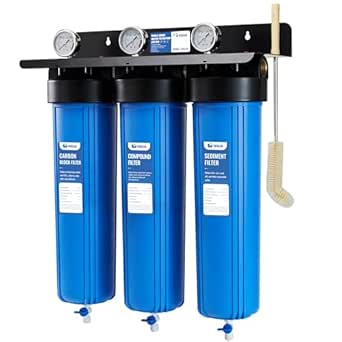 | Best Whole-House Pick for Heavy-Metal Filtration Stages | Filtration stages: 3 | Filter dimensions: Three 20 × 5.5 in filters | Filtration media: Sediment, carbon block, and GAC+KDF compound filter | VIEW LATEST PRICE | See Our Full Breakdown |
| 3-Stage Whole House Water Filter System for Well or City Water |  | Best for Whole-Home Sediment and Chlorine Reduction | Filtration stages: 3 | Filter types: PP, GAC, CTO | Included filters: 9 total (3 sets) | VIEW LATEST PRICE | See Our Full Breakdown |
| Purewell 3-Stage Gravity Water Filter System, 2.25-Gallon, Stainless Steel |  | Best Stainless-Steel Gravity Countertop System | Filtration stages: 3 | Filter pore size: 0.01 microns | Filtration method: Activated carbon, silver ion, hollow fiber UF membrane | VIEW LATEST PRICE | See Our Full Breakdown |
| Dry Element Nano Gravity Water Purification System | 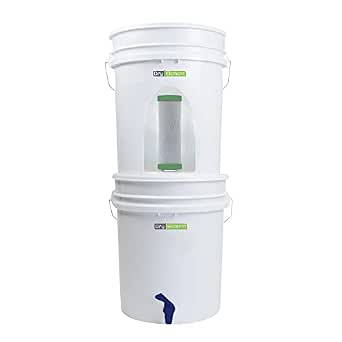 | Best for Emergency and Portable Water Storage | Filtration methods: Activated carbon, nanofiltration | Maximum flow rate: 12 gallons per hour | Filter capacity: Thousands of gallons, subject to pre-screening and water source | VIEW LATEST PRICE | See Our Full Breakdown |
| home water purification system | Filtration stages | Maximum flow rate | Dimensions |
|---|---|---|---|
| Bluevua RO100ROPOT-UV Countert | 6 | 0.26 liters per minute | 10.9 × 15.4 × 14.3 in |
| Waterdrop G3P600 Tankless Reve | 8 | 0.42 gpm | 18.12 × 5.67 × 17.72 in |
| Aquasana Rhino Whole House Wat | Sediment pre-filter, activated carbon, copper-zinc KDF, salt-free scale control, post-filter, and UV | 14.6 gpm | 46 × 9 × 69 in |
| Ninja HydraSense Intelligent W | — | — | 14.37 × 5.07 × 5.07 in |
| APEC Water ROES-50 5-Stage Und | 5 | 0.03 gpm | — |
| iSpring RCC7AK-BN 6-Stage Alka | 6 | — | 15.5 × 16 × 18 in |
| Waterdrop Whole House Water Fi | — | 15 gpm | 14.37 × 7.48 × 15.55 in |
| DREO Countertop Reverse Osmosi | — | — | — |
| Purewell 2.25-Gallon Gravity W | 3 | 0.06 gpm | 8.8 × 8.8 × 20 in |
| HQUA WF3-01 3-Stage Whole Hous | 3 | 15 gpm | — |
| 3-Stage Whole House Water Filt | 3 | 15 gpm | 14 x 13 x 10 inches |
| Purewell 3-Stage Gravity Water | 3 | — | — |
| Dry Element Nano Gravity Water | — | 12 gallons per hour | 14 × 14 × 28 in |
More Details on Our Top Picks
Bluevua RO100ROPOT-UV Countertop Reverse Osmosis Water Filter System
I’d choose the Bluevua when I want reverse osmosis without a plumbing project. Its six stages combine an RO membrane with UV treatment and remineralization, while the glass carafe keeps filtered water out of a plastic storage container. A display for water quality and filter life also makes upkeep easier to track than on the APEC ROES-50, which uses a conventional under-sink tank and faucet. The Bluevua’s tradeoff is capacity: its carafe holds 1.7 liters, so households that use lots of filtered water will refill it often. It also needs an outlet and weighs 17.8 pounds, making it portable in principle but not especially light to move. The 2:1 pure-to-drain ratio is a useful efficiency feature, though this remains a powered countertop appliance.
Pros:- Six-stage treatment includes reverse osmosis, UV light, and remineralization.
- No plumbing or permanent installation is required.
- Borosilicate glass carafe avoids storing filtered water in a plastic container.
- Display tracks water quality and filter life.
Cons:- The 1.7-liter carafe is small for high-volume daily use.
- Requires a corded power source and takes up countertop space.
- At 17.8 pounds, it is cumbersome to move frequently.
Best for: Renters and small households who want multistage RO filtration, UV treatment, and a glass carafe without modifying a sink.
Not ideal for: Large households or buyers who want continuous faucet access; the 1.7-liter carafe requires refills, and the unit needs counter space and an outlet.
- Filtration stages:6
- Purification method:Reverse osmosis
- RO membrane:0.0001 μm
- Carafe capacity:1,700 ml
- Maximum flow rate:0.26 liters per minute
- Water-saving ratio:2:1 pure to drain
- Dimensions:10.9 × 15.4 × 14.3 in
- Weight:17.8 lb
Our verdict“Choose the Bluevua for countertop RO with UV and a glass carafe, but pick an under-sink system if you need greater capacity and faucet access.”
Waterdrop G3P600 Tankless Reverse Osmosis Water Filter System Silver Faucet
The Waterdrop G3P600 is the stronger fit for households that want on-demand RO at the sink rather than a countertop reservoir. Its tankless design is rated for 600 gallons per day, and the smart faucet displays TDS and filter life, giving it a more connected setup than the APEC ROES-50. Waterdrop also lists NSF/ANSI 58 certification for TDS reduction, along with NSF/ANSI 42 and 372 certifications. The stated 2:1 pure-to-drain ratio limits wastewater compared with less efficient RO designs. That performance comes with installation constraints: the system needs under-sink space and electricity, and its 31-pound body is not a casual fit for every cabinet. I’d favor it over the Bluevua for a busy kitchen with a dedicated faucet, but not for renters seeking a no-install option.
Pros:- Rated capacity of 600 gallons per day supports frequent household use.
- Tankless design frees space compared with a storage-tank RO system.
- Smart faucet tracks TDS and filter life at the point of dispensing.
- NSF/ANSI 58, 42, and 372 certifications are listed for specified claims.
Cons:- Requires under-sink installation, electricity, and compatible cabinet space.
- At 31 pounds, the system is substantial to handle during installation.
- A dedicated faucet and fixed setup make it less suitable for renters or temporary kitchens.
Best for: Households with under-sink cabinet space and power who want high-volume RO water from a dedicated faucet.
Not ideal for: Renters, kitchens without an under-sink outlet, or buyers who cannot accommodate an 18-inch-tall system and separate faucet.
- Filtration stages:8
- Purification method:Reverse osmosis and carbon block
- Pure-to-drain ratio:2:1
- Maximum flow rate:0.42 gpm
- Maximum supported water TDS:1,500 ppm
- Dimensions:18.12 × 5.67 × 17.72 in
- Weight:31 lb
Our verdict“Pick the Waterdrop G3P600 for high-volume, tankless under-sink RO when your cabinet and electrical setup can support it.”
Aquasana Rhino Whole House Water Filter System with UV and Salt-Free Scale Control
Unlike the Bluevua and APEC systems, which treat water at a drinking-water tap or carafe, the Aquasana Rhino is designed to treat water across the whole home. Its sediment, carbon, KDF, post-filter, and UV stages target a broader household use case, while salt-free scale control helps limit mineral scale without adding salt or removing the water’s minerals. The system is rated for up to 1,000,000 gallons or 10 years under rated conditions, a very different maintenance proposition from replacing smaller point-of-use cartridges. Its 14.6-gpm maximum flow rate is suited to household plumbing, but performance depends on water conditions: the listed recommended hardness is under 15 gpg, and it requires a corded power source for UV treatment. I’d shortlist it for whole-home treatment, not as a substitute for a dedicated RO system when reducing TDS is the priority.
Pros:- Treats water at the main line for use throughout the home.
- Combines sediment, carbon, KDF, salt-free scale control, and UV stages.
- Rated for up to 1,000,000 gallons or 10 years under rated conditions.
- Salt-free scale control retains minerals rather than softening water with salt.
Cons:- Requires whole-house plumbing installation and a corded power source.
- Recommended for hardness under 15 gpg, limiting fit for some water supplies.
- Does not provide reverse osmosis or target TDS reduction as its primary function.
Best for: Homeowners seeking whole-house chlorine, sediment, scale, and UV treatment who have water within the system’s stated conditions.
Not ideal for: Renters, homes with hardness above the recommended range, or buyers whose main goal is RO-level TDS reduction.
- Model:WH-1000-CS-UVS-B
- Filtration stages:Sediment pre-filter, activated carbon, copper-zinc KDF, salt-free scale control, post-filter, and UV
- Maximum flow rate:14.6 gpm
- Chlorine reduction:Up to 97%
- Recommended water hardness:Under 15 gpg
- UV certification:NSF/ANSI Standard 55, Class B
- Dimensions:46 × 9 × 69 in
Our verdict“Choose the Aquasana when you want UV and filtration at the main water line, not a compact drinking-water RO unit.”
Ninja HydraSense Intelligent Water Filtration System (WF1001)
The Ninja HydraSense suits buyers who want quick countertop dispensing without the slower fill-and-wait routine of a pitcher. Its one-touch pump is described as dispensing six times faster than standard pitchers, and its 96-ounce reservoir provides more ready-to-use water than the Bluevua’s 1.7-liter carafe. The interactive display tracks filter life, while the specialized ultrafine carbon paper filter is stated to remove up to 99% of more than 80 contaminants, including microplastics and PFAS, while retaining natural minerals. This is a different approach from the Waterdrop G3P600: HydraSense avoids plumbing and RO, but it also does not offer RO’s TDS-reduction approach. It needs power, countertop room, and filter replacement every six months, so I’d skip it if outlet access or long filter intervals matter more than convenient dispensing.
Pros:- One-touch dispensing is designed to deliver water six times faster than standard pitchers.
- 96-ounce reservoir holds more water than the Bluevua’s 1.7-liter carafe.
- Touchscreen tracks filter life in real time.
- No plumbing or permanent installation is required.
Cons:- Uses a powered pump and touchscreen, so it needs an outlet.
- Filter replacement is recommended every six months.
- Its countertop footprint may be difficult to accommodate in a small kitchen.
Best for: Households that want fast, one-touch filtered water from a countertop reservoir without installing plumbing.
Not ideal for: Buyers seeking reverse osmosis or TDS reduction, or kitchens with limited counter space and no convenient outlet.
- Purification method:Specialized ultrafine carbon paper filter
- Stated contaminant reduction:Up to 99% of over 80 contaminants
- Reservoir capacity:96 oz
- Filter life cycle:6 months
- Installation type:Countertop
- Dimensions:14.37 × 5.07 × 5.07 in
- Item weight:6.6 lb
- Power requirement:Plug-in
Our verdict“Choose HydraSense for fast, no-install countertop dispensing, but select an RO system if TDS reduction is your main goal.”
APEC Water ROES-50 5-Stage Under-Sink Reverse Osmosis System, 50 GPD
I’d pick the APEC ROES-50 for a straightforward under-sink RO setup that includes its storage tank, faucet, and installation kit. Its five stages use reverse osmosis and activated carbon, with stated reductions covering impurities such as lead, chlorine, fluoride, and heavy metals. Compared with the tankless Waterdrop G3P600, the APEC has a lower rated production capacity at 50 gallons per day and a slower listed maximum flow rate, but its included tank provides stored water at the tap. It also supports incoming water up to 2,000 ppm TDS, above the Waterdrop’s stated 1,500 ppm limit. The tradeoff is a fixed under-sink installation and periodic filter changes, with replacement timing dependent on water quality. I’d favor it for buyers who want a conventional RO kit, not renters or anyone seeking countertop portability.
Pros:- Includes a storage tank, brushed nickel faucet, filter set, and installation kit.
- Five-stage RO and activated carbon filtration targets a range of impurities.
- Supports maximum incoming water TDS of 2,000 ppm.
- Quick-connect fittings and color-coded tubing support installation and maintenance.
Cons:- Requires under-sink installation and a dedicated faucet.
- Rated capacity is 50 gallons per day, below the Waterdrop G3P600’s 600-gallon rating.
- Filter replacement intervals vary with incoming water quality.
Best for: Homeowners who want a complete, tank-based under-sink RO kit with a dedicated faucet and installation components included.
Not ideal for: Renters or buyers who want a no-plumbing countertop option, a tankless footprint, or faster rated production than 50 gallons per day.
- Model:ROES-50
- Filtration stages:5
- Purification method:Reverse osmosis and activated carbon
- Maximum flow rate:0.03 gpm
- Operating pressure:40–85 psi
- Maximum supported water TDS:2,000 ppm
- Certifications:NSF/ANSI 372 and 58
Our verdict“Choose the APEC for a complete, tank-based under-sink RO kit; choose the Waterdrop for higher rated capacity and a tankless design.”
iSpring RCC7AK-BN 6-Stage Alkaline Reverse Osmosis Water Filtration System, 75 GPD
I’d choose the iSpring RCC7AK-BN for a household that wants reverse-osmosis treatment at a dedicated kitchen faucet, with a mineral stage added after filtration. Its NSF/ANSI 58 certification and 75-gallon-per-day rated output make it a more established under-sink-style fit than the installation-free DREO countertop system, but it requires cabinet space, plumbing work, and room for its storage tank. The alkaline stage adds minerals to filtered water; buyers who prefer water without that added stage may prefer the straightforward APEC ROES-50. DIY details include quick-fit connections and a top-mounted faucet fastener, while the clear first-stage housing lets owners see sediment buildup. I’d skip it if avoiding routine maintenance is the priority: the listed filter cycle is six months.
Pros:- NSF/ANSI 58 certified as a complete system
- Alkaline stage adds minerals after RO filtration
- Quick-fit connections and top-mounted faucet fastener can simplify DIY setup
- Transparent first-stage housing makes sediment buildup visible
Cons:- Needs under-sink space, plumbing, and room for the storage tank
- Listed filter life is six months, so recurring replacement is part of ownership
- The added mineral stage may not suit buyers who want a simpler RO setup
Best for: Homeowners seeking a certified under-sink RO system with a separate faucet, mineral addition, and a 75 GPD rated output.
Not ideal for: Renters or households without cabinet and plumbing access, and buyers who want countertop portability or no scheduled filter changes.
- Filtration stages:6
- Purification methods:Reverse osmosis, alkaline, activated carbon, and carbon block
- Certification:NSF/ANSI 58
- Maximum output:75 gallons per day
- Maximum supported water TDS:750 ppm
- Filter life cycle:6 months
- Dimensions:15.5 × 16 × 18 in
- Installation and power:Under sink; no power needed
Our verdict“Choose the iSpring if you want certified under-sink RO with remineralization and can accommodate its installation and maintenance.”
Waterdrop Whole House Water Filter System, Chlorine & Sediment System
For buyers treating water at the point where it enters the home, I’d put the Waterdrop Whole House System ahead of the point-of-use options in this group. Its 15 gpm flow rate and one-inch connections are designed to serve household plumbing, while the iSpring RCC7AK-BN instead focuses on treated drinking water from one under-sink faucet. Waterdrop combines PP sediment filtration with coconut-shell activated carbon to reduce chlorine, odors, and listed contaminants including lead and mercury; its NSF/ANSI 42 and 372 certifications address performance and material safety. The tradeoff is that this is not an RO system and its description does not claim TDS reduction. Installation also takes basic plumbing skills, and the six-month replacement guidance means upkeep remains part of the setup.
Pros:- 15 gpm flow rate and one-inch inlet and outlet connections suit whole-house installation
- Uses sediment and coconut-shell activated carbon filtration
- NSF/ANSI 42 and 372 certifications are listed
- Rated capacity is up to 50,000 gallons
Cons:- Requires plumbing installation rather than a simple countertop setup
- Filter replacement is recommended every 3–6 months
- Does not provide the RO treatment or stated TDS reduction offered by the iSpring RCC7AK-BN
Best for: Homeowners who want a whole-house filter for chlorine taste and odor, sediment, and listed contaminants, with plumbing skills or installation help.
Not ideal for: Buyers seeking reverse-osmosis treatment, TDS reduction, or a plug-in countertop system that needs no plumbing work.
- Filter stages:5
- Filtration methods:PP sediment and coconut-shell activated carbon
- Maximum flow rate:15 gpm
- Operating pressure range:25–90 psi
- Certifications:NSF/ANSI 42 and NSF/ANSI 372
- Inlet and outlet size:1 inch
- Dimensions:14.37 × 7.48 × 15.55 in
Our verdict“Choose Waterdrop for whole-house chlorine and sediment filtration, but look elsewhere if your priority is RO-level treatment at the drinking-water tap.”
DREO Countertop Reverse Osmosis Water Filter with Autofill Pitcher
The DREO countertop RO system is the easiest fit here for someone who wants reverse-osmosis filtration without altering a sink or adding under-cabinet hardware. Unlike the iSpring RCC7AK-BN, it sits on the counter and includes an autofill pitcher, making treated water convenient to serve or store. The built-in TDS meter and filter-life indicator give owners visible upkeep cues, and its stated 3:1 pure-to-drain ratio helps buyers compare water use with other RO designs. DREO reports testing by SGS to meet NSF/ANSI 58 standards; that is distinct from the iSpring’s stated system certification. Its 3-liter capacity and six-month filter life suit modest daily demand, but a household needing larger volumes or whole-home treatment should look at a plumbed system instead.
Pros:- Countertop installation avoids plumbing changes
- Autofill pitcher supports convenient serving and storage
- Built-in TDS meter and filter indicator make monitoring easier
- Self-cleaning feature and stated 3:1 pure-to-drain ratio
Cons:- Three-liter capacity is limited for households with high daily water demand
- Filter replacement is listed at about every six months
- SGS testing to meet NSF/ANSI 58 is not the same as the iSpring system’s stated NSF/ANSI 58 certification
Best for: Renters, apartment dwellers, or small households wanting countertop RO filtration, an autofill pitcher, and no permanent plumbing installation.
Not ideal for: Large households needing high-volume or whole-house filtration, or buyers who do not have counter space for a 14.5-inch-tall unit.
- Purification method:Reverse osmosis
- Reported contaminant reduction:Up to 99.9%; listed examples include PFOA, PFOS, chlorine, and fluoride
- Testing standard:Tested by SGS to meet NSF/ANSI 58 standards
- Pure-to-drain ratio:3:1
- Maximum supported input TDS:1200 ppm
- Capacity:3 liters
- Filter life:6 months
- Dimensions and weight:14.5 × 6.7 × 13.4 in; 9.5 lb
Our verdict“Pick DREO for convenient, portable countertop RO when avoiding plumbing matters more than serving a large household.”
Purewell 2.25-Gallon Gravity Water Filter System with Water Level Window
I’d recommend the Purewell 2.25-Gallon Gravity System to buyers who value a no-power setup and a stored supply of filtered water over RO-style purification. Its three-stage process uses a 0.01-micron hollow-fiber UF membrane, silver ion membranes, and activated carbon; that combination is intended to capture particles and reduce chlorine, but the manufacturer states it does not lower TDS. That sets it apart from the DREO countertop RO system, which is designed for TDS reduction and uses powered countertop equipment. Purewell’s water-level window avoids opening the unit just to check the lower chamber, and the included stand and two filters add practical convenience. The tradeoffs are its slow gravity-fed flow, six-month recommended replacement, and the need to avoid overfilling the upper chamber when the lower one is full.
Pros:- Works by gravity without electricity
- 0.01-micron UF membrane is part of its three-stage filtration
- Water-level window allows checking the lower chamber without opening the unit
- Includes two filters and a stand
Cons:- Does not reduce TDS, unlike the DREO countertop RO system
- Maximum listed flow is only 0.06 gpm
- Requires careful filling to avoid leakage when the lower chamber is full
Best for: Households, cabins, or emergency-preparedness buyers who want gravity-fed filtration without electricity and accept slow batch dispensing.
Not ideal for: Buyers seeking TDS reduction, fast continuous dispensing, or compact equipment for a crowded counter.
- Capacity:2.25 gallons
- Filtration stages:3
- Filtration method:Gravity filtration and ultrafiltration
- Filter pore size:0.01 microns
- Maximum flow rate:0.06 gpm
- Filter capacity:Up to 3,000 gallons per filter; 6,000 gallons for two filters
- Recommended filter replacement:Every 6 months
- Dimensions:8.8 × 8.8 × 20 in
- TDS reduction:Does not lower TDS
Our verdict“Choose Purewell for off-grid, electricity-free filtration when slow dispensing and unchanged TDS are acceptable.”
HQUA WF3-01 3-Stage Whole House Water Filtration System
The HQUA WF3-01 is the more maintenance-focused whole-house choice in this group. Its three large 20 × 5.5-inch cartridges include sediment, carbon block, and a GAC+KDF compound filter, with the product description listing reduction of lead, mercury, arsenic, cadmium, chromium, chlorine, and other chemicals. Compared with the Waterdrop Whole House System, HQUA emphasizes pressure gauges and service valves that help owners monitor clogging and work on the housings. Those features make cartridge changes more manageable, but the listed 31-inch height and 23-inch width demand substantial installation space. The provided information does not include a certification, so I would not treat its contaminant claims as equivalent to a certified system’s verified scope. Its 15 gpm maximum flow is a stated rating, not a substitute for checking household plumbing compatibility.
Pros:- Three 20 × 5.5-inch cartridges combine sediment, carbon block, and GAC+KDF filtration
- Pressure gauges help track pressure changes that may signal clogged filters
- Pre-installed pressure-relief and drain valves support servicing
- Adapters support 3/4-inch or 1-inch NPT connections
Cons:- Large listed footprint requires substantial installation space
- No certification is supplied in the provided product information
- Cartridge replacement timing and costs are not specified in the supplied data
Best for: Homeowners with room for a large whole-house assembly who want multiple filtration stages and pressure monitoring for cartridge maintenance.
Not ideal for: Renters, homes with limited utility-room space, or buyers who require a stated third-party certification before choosing a system.
- Filtration stages:3
- Filter dimensions:Three 20 × 5.5 in filters
- Filtration media:Sediment, carbon block, and GAC+KDF compound filter
- Maximum flow rate:15 gpm
- Maximum supported water TDS:500 ppm
- Maximum temperature:125 °F
- Listed system dimensions:31 × 23 × 8 in
- Monitoring and maintenance features:Pressure gauges, 180-day filter timers, pressure-relief and drain valves
Our verdict“Choose the HQUA WF3-01 if you have installation space and want service-monitoring hardware, but verify certification and cartridge details before buying.”
3-Stage Whole House Water Filter System for Well or City Water
I’d choose this system for a home that needs sediment, chlorine, and odor reduction at the plumbing supply, rather than a drinking-water system that lowers dissolved solids. Its PP, GAC, and CTO stages target those specific issues while preserving natural minerals; unlike the APEC Water ROES-50, it does not use reverse osmosis or reduce TDS. The included three cartridge sets provide replacement filters for an estimated 1.5–2 years, though each set is scheduled for replacement every six months. A 15-gpm maximum flow rate and standard 3/4-inch plumbing suit whole-home installation, while shut-off and bypass valves can make servicing less disruptive. The tradeoff is its limited treatment scope: it does not reduce TDS, and the product data lists installation as under-sink despite its whole-house positioning, so I’d confirm the intended installation setup before buying.
Pros:- Three media stages target sediment, chlorine, and odors.
- Preserves natural minerals and does not lower TDS.
- Includes three sets of cartridges, with a stated 1.5–2-year supply.
- Shut-off and bypass valves support filter changes.
Cons:- Does not reduce TDS or provide reverse-osmosis purification.
- Cartridges require replacement every six months.
- Product data lists under-sink installation, which may need clarification for whole-house use.
Best for: Homeowners on well or city water who want whole-home sediment, chlorine, and odor filtration while retaining minerals and can install a compatible 3/4-inch system.
Not ideal for: Buyers seeking TDS reduction, reverse-osmosis drinking water, or a clearly specified whole-house installation setup without checking the under-sink installation listing.
- Filtration stages:3
- Filter types:PP, GAC, CTO
- Included filters:9 total (3 sets)
- Filter life cycle:6 months
- Filtration capacity:10,000 gallons
- Maximum flow rate:15 gpm
- Plumbing connection:Standard 3/4 inch
- Dimensions:14 x 13 x 10 inches
Our verdict“Choose it for whole-home sediment and chlorine reduction with minerals retained, but not for dissolved-solids removal.”
Purewell 3-Stage Gravity Water Filter System, 2.25-Gallon, Stainless Steel
This Purewell suits households that want a non-electric countertop filter with a more durable-feeling stainless-steel exterior than the Dry Element Nano Gravity’s polypropylene bucket setup. Its 0.01-micron hollow fiber membrane, silver ion membrane, and activated carbon block are intended to reduce chlorine and filter rust, sediment, organic matter, and heavy metals. The 2.25-gallon capacity gives it a smaller footprint than a pair of five-gallon buckets, but also means more frequent refilling for a group. Gravity operation works without power, and the included filters are rated for up to 3,000 gallons each, with replacement every six months. It does not lower TDS, so I would not treat it as a substitute for the APEC Water ROES-50 when dissolved-solids reduction is the goal. One practical drawback is the reported risk of leakage if the upper chamber is refilled while the lower chamber is full.
Pros:- Gravity-fed operation needs no electricity.
- 304 stainless steel housing and spigot with a non-slip stand.
- Three-stage filtration includes a 0.01-micron hollow fiber membrane.
- Two replaceable filters are included.
Cons:- Does not lower TDS.
- The upper chamber may leak if refilled while the lower chamber is full.
- Filter life varies with water quality, and replacement is listed every six months.
Best for: Households wanting a freestanding, electricity-free countertop filter with stainless-steel housing and a moderate stored-water capacity.
Not ideal for: Buyers who need TDS reduction, a large reserve for frequent high-volume use, or a filter they can refill without monitoring chamber levels.
- Filtration stages:3
- Filter pore size:0.01 microns
- Filtration method:Activated carbon, silver ion, hollow fiber UF membrane
- Capacity:2.25 gallons
- Flow rate:4 gallons per hour
- Filter life:Up to 3,000 gallons per filter; replace every 6 months
- Materials:304 stainless steel, polypropylene
- Power source:Non-electric, gravity-fed
- Certifications:NSF/ANSI 42 and NSF/ANSI 372
Our verdict“Pick this for electricity-free countertop filtration in a stainless-steel format, provided TDS reduction and a large stored-water supply are not priorities.”
Dry Element Nano Gravity Water Purification System
I’d rank the Dry Element for emergency preparation and portable use, not for buyers seeking a compact everyday countertop purifier. Its gravity-fed design needs no electricity, tools, or priming, and the stated five-minute setup makes it less involved to assemble than an under-sink system such as the APEC Water ROES-50. The two food-grade five-gallon buckets provide substantially more storage capacity than the Purewell’s 2.25-gallon steel unit, making this a better fit for keeping a larger reserve. The tradeoff is size: at 28 inches tall, it needs more vertical clearance and storage space. Filtration capacity is described as thousands of gallons but depends on the source water and pre-screening, so I would not assume a fixed service life. The product data also does not specify a micron rating or named contaminant-reduction certifications.
Pros:- Gravity-powered operation works without electricity.
- Sets up in about five minutes without tools or priming.
- Two five-gallon food-grade buckets offer more storage than the Purewell 2.25-gallon system.
- Includes a pre-filtration screen and spare spigot.
Cons:- The 28-inch height needs substantial vertical clearance.
- Filter capacity depends on the water source and pre-screening.
- Product data does not provide a micron rating or named filtration certifications.
Best for: Campers and households assembling an emergency water station who want gravity operation, large bucket capacity, and a no-tools setup.
Not ideal for: Buyers with limited counter or storage height, or those who need a fixed filter-life rating, a stated micron size, or specified contaminant-reduction certifications.
- Filtration methods:Activated carbon, nanofiltration
- Maximum flow rate:12 gallons per hour
- Filter capacity:Thousands of gallons, subject to pre-screening and water source
- Setup:Five minutes; no priming or tools required
- Container capacity:Two 5-gallon buckets
- Power source:Gravity
- Dimensions:14 × 14 × 28 in
- Weight:8 lb
- Maximum supported TDS:1000 ppm
Our verdict“Choose it for portable or emergency water storage with a large gravity-fed reserve, not for a compact, precisely specified everyday purifier.”
How We Picked
I compared these 13 systems by where they treat water, what treatment method they use, and how much installation they demand. I also looked at the stated contaminant-reduction scope, capacity or output information supplied for each model, everyday usability, maintenance needs, and whether the design fits a renter, homeowner, or household treating water from a private well. A product’s treatment claims should be checked against its current manufacturer documentation and the buyer’s water test; I did not treat broad category labels as proof that a system removes a particular contaminant.
The ranking favors clear use cases and practical fit over feature count alone. The Bluevua leads for flexible countertop RO, while the APEC and iSpring serve buyers who prefer installed under-sink systems. Whole-house models rank for broader water coverage, but their value depends on matching the listed treatment stages to the home’s actual needs. Gravity units round out the list for buyers seeking non-plumbed filtration, with capacity, pace, and upkeep keeping them behind the more targeted RO and whole-house options for many households.
Factors to Consider When Choosing Best Home Water Purification Systems
Before choosing a system, start with the water you have and the water you want to improve. These four decisions can prevent a mismatch between a filter’s claims and your household’s needs.
Match the System to the Water Problem
Begin with a recent water report from your utility or a test suited to your private well, then identify the specific concern you want to address. A system labeled for chlorine or sediment should not be assumed to reduce lead, arsenic, microbes, or every other contaminant. Compare the exact reduction claims and testing documentation for the model and replacement cartridge, not just the filtration method. If the concern involves a regulated contaminant or a private well, use qualified testing and advice to guide the selection. A common mistake is buying a broad-sounding filter before confirming what is present. Test first, then match claims to results.
Choose Between Point-of-Use and Whole-House Treatment
Point-of-use systems such as countertop and under-sink RO units treat water at a specific outlet, making them a focused choice for drinking and cooking. Whole-house filters sit at the incoming supply and can treat water used at several fixtures, but they may not provide the same treatment as a dedicated drinking-water RO system. Think about whether the problem affects taste at the kitchen tap, sediment across the plumbing, or water used for bathing and laundry. Treating every tap can add equipment and maintenance even when only drinking water needs filtration. Conversely, a single-tap filter will not address a whole-home concern. Buy for the scope of the problem, not the size of the system.
Plan for Installation, Space, and Water Flow
A countertop unit can avoid plumbing changes but occupies worktop space and may need a nearby outlet or regular refilling. Under-sink systems keep the counter clear but require cabinet room, a compatible faucet arrangement, and installation access. Whole-house systems need space at the main water line and may require plumbing work; check service clearance before ordering. Gravity units avoid plumbing altogether, though their batch-based operation may not suit a household that wants water immediately at every use. Also check how the system affects flow, storage, and the number of people it must serve. Measure the installation area and plan around daily water use.
Compare Maintenance and Long-Term Ownership
Filter replacement is part of the system, not an optional extra, so check the cartridge schedule, availability, and instructions before purchase. Reverse osmosis systems may use several filter stages, while whole-house units can have larger service components and gravity filters may require periodic cleaning or element replacement. Manufacturer guidance varies by model and water conditions, so do not rely on one universal replacement interval. Consider whether you can access the filters easily and whether you are comfortable with the required upkeep. Skipping maintenance can reduce performance and complicate claims about water quality. Choose a routine you can keep up with.
Pay for Verified Needs, Not Extra Stages
More stages or added features do not automatically mean better results for your water. An alkaline stage, UV treatment, or scale-control component may suit a particular preference or use case, but each should be weighed against the problem identified by testing and the manufacturer’s stated scope. When comparing systems, look for model-specific performance documentation and clear details on what the certification covers, if any. Avoid assuming that a certification for one contaminant applies to every claim on the packaging. Paying more can make sense when a documented feature solves a real need or a design fits your home better. Spend on evidence-backed treatment and useful convenience.
Frequently Asked Questions
Should I choose reverse osmosis or a whole-house filter?
Choose based on where treatment is needed. Reverse osmosis systems in this roundup are point-of-use options for a drinking-water tap or countertop, while whole-house filters treat water entering the home. A whole-house unit can make sense when the concern affects multiple fixtures, but it may not replace a dedicated drinking-water system for every contaminant. Check the exact model’s claims against a water test before deciding. Some households may need both types, but only when their water results and goals support that setup.
Can I rely on a filter’s label to know whether it removes lead or arsenic?
No: a general label or a list of contaminants is not enough to confirm performance for your water and the exact model. Review the manufacturer’s current documentation for the specific system and replacement filters, including any certification scope and test conditions. Test your water first, especially if it comes from a private well or you have a particular health-related concern. If a result is elevated, ask a qualified water-treatment professional or public-health resource for guidance. Do not assume that a system’s ability to reduce one contaminant means it addresses another.
Is countertop reverse osmosis a good choice if I rent?
A countertop RO model can suit renters who want point-of-use treatment without installing an under-sink system, provided the unit’s setup works with their space and water access. It still takes counter room and requires routine filter care, so check dimensions and maintenance details before choosing. An under-sink system may offer a tidier permanent setup but can involve plumbing changes or landlord approval. Gravity filters avoid plumbing as well, though their batch-based format differs from an RO unit’s operation. The best fit depends on the lease, available space, and how much filtered water you use.
Do I need UV treatment or an alkaline stage?
Those features address different preferences and treatment goals, so neither is automatically necessary for every home. The Aquasana Rhino combines UV with whole-house filtration and salt-free scale control, while the iSpring RCC7AK-BN adds an alkaline stage to an under-sink RO setup. Check what the feature is intended to do and whether the manufacturer documents that benefit for your model and water conditions. A water test can help clarify whether treatment for a specific issue is needed. Avoid choosing an add-on solely because a longer feature list sounds more complete.
How do I estimate the upkeep before buying?
Check the replacement schedule for every filter or element, not only the first-stage cartridge, and confirm that the correct replacements are available for the exact model. Ask how service timing changes with water quality and household use, since published intervals may assume particular conditions. For whole-house units, account for access around the plumbing and the work involved in servicing the system. For countertop, under-sink, and gravity options, consider whether routine changes or cleaning are easy to do in your home. A system with more stages can require more upkeep, so match the maintenance burden to the treatment benefit you actually need.
Conclusion
For the strongest all-around fit among these options, I recommend the Bluevua RO100ROPOT-UV to buyers seeking countertop reverse osmosis without under-sink installation. The APEC ROES-50 is my value-oriented pick for shoppers who want a straightforward under-sink RO system, while the Aquasana Rhino is the premium-style choice for households seeking whole-house treatment with UV and salt-free scale control. Beginners who want a non-plumbed format can start by comparing the Bluevua with the DREO countertop RO; the right pick depends on their preferred setup and space. For a drinking-water system under the sink with an added alkaline stage, choose the iSpring RCC7AK-BN; for a gravity-based, non-plumbed option, compare the Purewell and Dry Element models. Match any final choice to a water test, verified product claims, and a maintenance routine you can follow.