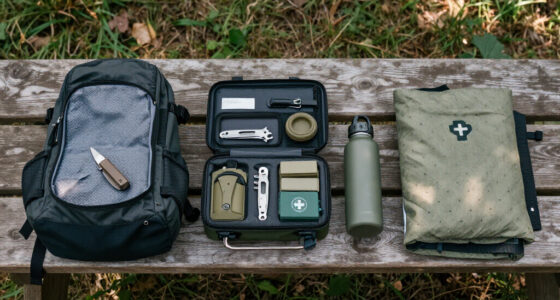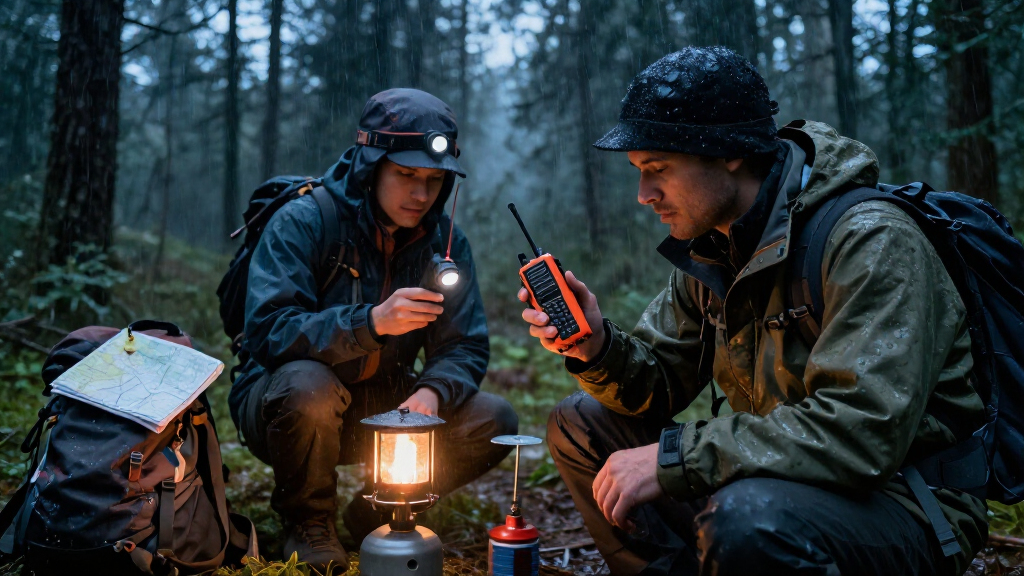
For a tactical emergency radio, the right choice depends less on a headline range claim and more on how you plan to communicate, power the unit, and handle bad weather. I rank the TIDRADIO TD-H9 first for its GMRS capability, GPS and APRS features, and NOAA alerts; the Motorola T605 H₂O is my pick for wet conditions because its IP67 design floats; and the Cobra HH50WXST suits buyers who specifically want CB channels and weather alerts in one handheld.

Get emergency and outdoor gear delivered free with Prime
- Fast, free delivery on millions of items
- Prime Video, Amazon Music and more included
- Member-only deals all year
The tradeoffs are substantial: these are not interchangeable radio types. The Cobra is a CB radio, the TD-H9 is a GMRS handheld, and the three Motorola Talkabout sets are FRS radios with different approaches to pair communication, app features, and weather protection. I weigh communication fit and practical emergency features ahead of stated maximum range, which may not reflect the range available in your terrain.
Key Takeaways
- The TIDRADIO TD-H9 is the most feature-rich pick here, with GMRS repeater support, GPS location sharing, APRS tracking, messaging, and NOAA alerts; its advanced setup and stated programming limits make it less beginner-friendly.
- The Motorola T605 H₂O is the strongest choice for water exposure: its IP67 housing floats face up, unlike the IPX4 T475 and IP54 T802, though its listed battery life is up to nine hours.
- The Cobra HH50WXST is the only CB radio in this group, so it fits buyers who need CB rather than FRS or GMRS, but it requires nine AA batteries and is only IPX4 water resistant.
- The Motorola T475 is the straightforward two-radio pick for basic FRS use with NOAA alerts and a flashlight, but the supplied battery-life information conflicts between eight and twelve hours.
- The Motorola T802 adds Bluetooth app-based location sharing and messaging to an FRS pair, while requiring three AA batteries per radio and offering IP54 protection rather than the T605’s immersion-rated design.
| TIDRADIO TD-H9 10W GMRS Handheld Radio with GPS and APRS |  | Best Overall for Feature-Heavy GMRS Preparedness | Radio type: GMRS handheld two-way radio | Output power: Up to 10W on channels 15–30 | Frequency range: 462.5500–467.7250 MHz (GMRS receive and transmit) | VIEW LATEST PRICE | See Our Full Breakdown |
| Motorola Talkabout T605 H₂O Waterproof Two-Way Radios, 2-Pack |  | Best for Wet and Water-Exposed Conditions | Radio type: FRS | Pack: Two radios with two rechargeable batteries | Channels and codes: 22 channels and 121 privacy codes | VIEW LATEST PRICE | See Our Full Breakdown |
| Cobra HH50WXST Handheld CB Radio with NOAA Weather Alerts |  | Best CB Option for Weather Monitoring | Radio type: Handheld CB radio | Channels: 40 | Maximum talking range: Up to 20 miles | VIEW LATEST PRICE | See Our Full Breakdown |
| Motorola Solutions Talkabout T475 Weather-Resistant Two-Way Radios, 2-Pack |  | Best Straightforward FRS Pair for Emergency Kits | Radio type: FRS two-way radios | Pack: Two radios | Channels and codes: 22 channels and 121 privacy codes | VIEW LATEST PRICE | See Our Full Breakdown |
| Motorola Talkabout T802 Two-Way Radios, 2-Pack, Blue/Black |  | Best FRS Pair for App-Based Location Sharing | Radio type: FRS two-way radios | Pack: Two radios | Channels and codes: 22 channels and 121 privacy codes | VIEW LATEST PRICE | See Our Full Breakdown |
| tactical emergency radio | Radio type | Pack | Channels and codes | Maximum stated range |
|---|---|---|---|---|
| TIDRADIO TD-H9 10W GMRS Handhe | GMRS handheld two-way radio | — | — | — |
| Motorola Talkabout T605 H₂O Wa | FRS | Two radios with two rechargeable batteries | 22 channels and 121 privacy codes | Up to 35 miles; actual range varies |
| Cobra HH50WXST Handheld CB Rad | Handheld CB radio | — | — | — |
| Motorola Solutions Talkabout T | FRS two-way radios | Two radios | 22 channels and 121 privacy codes | Up to 35 miles; conditions affect range |
| Motorola Talkabout T802 Two-Wa | FRS two-way radios | Two radios | 22 channels and 121 privacy codes | Up to 35 miles, depending on conditions |
More Details on Our Top Picks
TIDRADIO TD-H9 10W GMRS Handheld Radio with GPS and APRS
The TIDRADIO TD-H9 takes the top position because it combines actual two-way GMRS communication with more emergency-oriented information tools than the other radios here. GPS location sharing, APRS tracking, SMS messaging, NOAA weather alerts, a compass, and repeater support give it a broader role than a basic pair of walkie-talkies. For a group that can configure radios ahead of time, those features may help coordinate location and communication rather than simply provide a channel to talk on.
Its stated output reaches up to 10W on channels 15–30, and it supports repeater operation. That makes the TD-H9 a different proposition from the FRS Motorola T475, T605, and T802, which emphasize accessible pair communication and convenience. It also differs from the Cobra HH50WXST, which uses CB rather than GMRS. I would choose this model when the buyer understands GMRS setup and wants more tools than weather alerts alone.
The tradeoff is complexity. The supplied details say CHIRP programming is not currently supported, Bluetooth connects to one device at a time, and Bluetooth headset buttons cannot serve as push-to-talk controls. Its IP54 rating also gives less water protection than the T605’s IP67 construction. This is my strongest pick for a prepared, technically engaged radio user, but not the easiest option to hand to a first-time user without setup.
Pros:- Combines GMRS communication with GPS location sharing and APRS tracking.
- NOAA alerts, SMS messaging, compass, and repeater support broaden its emergency toolkit.
- USB-C and Bluetooth programming options are available, with up to 10W output on specified channels.
- Color display and 120MB storage support a more information-rich handheld experience.
Cons:- CHIRP programming is not currently supported, adding friction for some radio users.
- Bluetooth headset buttons cannot be used for PTT, and only one Bluetooth device connects at a time.
- IP54 protection is less suited to immersion than the T605’s IP67 design.
Best for: Prepared GMRS users who want GPS/APRS, repeater capability, messaging, and NOAA alerts in one handheld.
Not ideal for: Beginners seeking simple out-of-box pair communication, or anyone who needs waterproof immersion protection or CHIRP programming.
- Radio type:GMRS handheld two-way radio
- Output power:Up to 10W on channels 15–30
- Frequency range:462.5500–467.7250 MHz (GMRS receive and transmit)
- Display:1.8-inch color display
- Location features:GPS location sharing and APRS tracking
- Weather features:NOAA weather alerts
- Connectivity:Bluetooth, USB-C, and Kenwood programming cable
- Durability:IP54
Our verdict“I recommend the TD-H9 to experienced GMRS users who value location and repeater features more than simple setup or stronger water protection.”
Motorola Talkabout T605 H₂O Waterproof Two-Way Radios, 2-Pack
When wet-weather resilience is the priority, I put the Motorola T605 H₂O ahead of the other FRS pairs. Its IP67 waterproof design floats face up, and the water-activated flashlight can help locate a radio if it lands in water. That is a genuinely different emergency-use advantage from the T475’s IPX4 splash resistance and the T802’s IP54 rating. The bright orange-and-black finish also suits a set meant to be found quickly, though color alone is no substitute for keeping gear secured.
The T605 offers 22 FRS channels, 121 privacy codes, USB-C charging, and two rechargeable batteries. Its stated maximum range is up to 35 miles, a figure I would treat as a best-case claim rather than an expected distance. Compared with the T475, this model trades NOAA weather alerts in the listed feature set for substantially stronger water protection. Compared with the T802, it gives up Bluetooth app-based location sharing and messaging but is the more compelling choice around water.
The main limitation is endurance: battery life is listed as up to nine hours, so long periods away from charging call for a power plan. Its FRS format is also aimed at straightforward group communication, not the repeater-oriented GMRS capabilities of the TD-H9 or the CB operation of the Cobra. I would choose it for boating, wet trails, and emergency kits likely to face rain or accidental immersion, but not for buyers who need the longest listed run time or app-based coordination.
Pros:- IP67 design floats face up, a stronger water-protection story than the other Motorola pairs here.
- Water-activated flashlight can help make a dropped radio easier to retrieve.
- USB-C charging and rechargeable batteries simplify routine power management.
- Offers 22 channels and 121 privacy codes for organizing FRS communications.
Cons:- Battery life is listed as up to nine hours, which may be limiting during extended outages.
- The stated maximum range of up to 35 miles is condition-dependent.
- The listed feature set does not include NOAA weather alerts.
Best for: People who want a two-radio FRS set for boating, wet outdoor activities, or emergency use where a radio could fall into water.
Not ideal for: Buyers who prioritize NOAA alerts, longer stated battery life, or GMRS repeater and location-tracking features.
- Radio type:FRS
- Pack:Two radios with two rechargeable batteries
- Channels and codes:22 channels and 121 privacy codes
- Maximum stated range:Up to 35 miles; actual range varies
- Battery life:Up to 9 hours
- Charging:USB-C
- Water protection:IP67; floats face up
- Retrieval feature:Water-activated flashlight
Our verdict“I would choose the T605 over the other FRS pairs when keeping the radio usable and retrievable around water matters more than weather alerts or app features.”
Cobra HH50WXST Handheld CB Radio with NOAA Weather Alerts
The Cobra HH50WXST earns its place because it is the only CB radio in this roundup. Buyers who specifically need CB communication should not mistake its 40 channels for an FRS or GMRS equivalent: radio service is the key distinction, and this model gives access to 40 CB channels with channel scanning. NOAA weather alerts add a useful information channel during severe weather, while Dual Watch lets the radio monitor two selected channels.
Its Soundtracker system is designed to reduce background noise during both transmission and reception, which may help keep conversation more intelligible in noisy surroundings. An illuminated display supports use in low light. Against the Motorola T475, the Cobra is not a two-radio FRS set with a flashlight; it is a handheld CB unit with weather alerts and scanning. Against the TD-H9, it offers a less elaborate feature set but avoids presenting itself as a GMRS tracking and repeater handheld.
Power is the substantial drawback. The HH50WXST requires nine AA batteries, so the buyer needs to plan for a large supply or another compatible power arrangement based on the manual. Its IPX4 rating indicates water resistance for splashes, not a fully waterproof build. The stated maximum talking range is up to 20 miles, but terrain and conditions affect real-world results. I see it as a specific-service pick for CB users, not the most flexible general-purpose emergency radio for every household.
Pros:- Provides access to 40 CB channels and scans for a clear signal.
- NOAA weather alerts add emergency weather information.
- Dual Watch can monitor two selected channels.
- Soundtracker noise reduction and an illuminated display support practical handheld use.
Cons:- Requires nine AA batteries, making backup power planning important.
- IPX4 water resistance is not a waterproof or immersion rating.
- The stated maximum range of 20 miles is not a guaranteed operating distance.
Best for: Buyers who specifically want a handheld CB radio with NOAA alerts, channel scanning, and dual-channel monitoring.
Not ideal for: Anyone seeking a rechargeable two-radio FRS set, immersion protection, GPS features, or a low-battery-count emergency option.
- Radio type:Handheld CB radio
- Channels:40
- Maximum talking range:Up to 20 miles
- RF output power:4 watts
- Power:12 volts; requires 9 AA batteries
- Weather features:NOAA weather alerts
- Monitoring and audio:Dual Watch and Soundtracker noise reduction
- Water resistance:IPX4
Our verdict“I recommend the Cobra for buyers committed to CB communication who want weather alerts, while other radios here are better for paired FRS use or advanced GMRS features.”
Motorola Solutions Talkabout T475 Weather-Resistant Two-Way Radios, 2-Pack
The Motorola Talkabout T475 is the simplest pick here for buyers who want two FRS radios with familiar emergency basics. It has 22 channels and 121 privacy codes, plus NOAA weather radio and alerts, a built-in LED flashlight, and VibraCall alert. That combination makes it more directly useful as a household or outdoor pair than the single Cobra handheld, while asking much less of the user than the feature-dense TD-H9.
Compared with the T605, the T475 gives up floating IP67 protection in favor of IPX4 splash resistance, but it includes NOAA weather features and a flashlight. Compared with the T802, it lacks the advertised Bluetooth app features for location sharing and messaging. Its appeal is its conventional toolkit and included rechargeable NiMH batteries, along with accessories such as belt clips and a carry case. Those inclusions can make it easier to keep a pair together in a kit, though they do not make the radio more water-resistant.
The product information gives two battery-life figures: up to 12 hours in the description and eight hours elsewhere. I would not plan an outage around the longer figure without checking the current documentation. IPX4 is also only a splash-resistance rating, not protection against immersion. This is the sensible basic FRS choice when alerts and simple radio-to-radio use matter more than tracking, app messaging, or deep water protection.
Pros:- Two-radio FRS package includes 22 channels and 121 privacy codes.
- NOAA weather radio and alerts add a useful emergency information source.
- Built-in LED flashlight and VibraCall alert support basic field use.
- Rechargeable NiMH batteries and a range of accessories are included.
Cons:- IPX4 protects against splashes, not immersion.
- Battery-life information conflicts between up to eight and up to twelve hours.
- Lacks the T802’s Bluetooth app features and the T605’s IP67 water protection.
Best for: Households and outdoor users who want a familiar two-radio FRS set with NOAA alerts, a flashlight, and included rechargeable batteries.
Not ideal for: People expecting waterproof immersion protection, Bluetooth location tools, advanced GMRS functions, or an unambiguous battery-life estimate.
- Radio type:FRS two-way radios
- Pack:Two radios
- Channels and codes:22 channels and 121 privacy codes
- Maximum stated range:Up to 35 miles; conditions affect range
- Water resistance:IPX4
- Battery:Two included 800 mAh NiMH rechargeable batteries
- Weather and light:NOAA weather radio and alerts; built-in LED flashlight
- Battery-life information:Up to 12 hours in description; up to 8 hours in product information
Our verdict“I recommend the T475 as a no-frills FRS kit pair when NOAA alerts and familiar controls matter more than app tools or stronger waterproofing.”
Motorola Talkabout T802 Two-Way Radios, 2-Pack, Blue/Black
The Motorola Talkabout T802 stands apart from the other two-radio Motorola options through its Bluetooth connection to the TALKABOUT app. The supplied description says the app supports off-grid location sharing and messaging, giving a group more coordination tools than the basic T475. It also includes NOAA weather alerts and an integrated flashlight, so the app features are additions to rather than replacements for conventional radio communication.
Compared with the T605, the T802 offers Bluetooth location sharing and messaging but does not match its IP67 immersion protection or floating design. Its IP54 rating is more protective than the T475’s IPX4 on the supplied ratings, yet it still should not be treated as waterproof for submersion. The T802 is best understood as a feature-oriented FRS pair for users comfortable keeping a phone and app part of their coordination plan, not as a dedicated location beacon.
Power is less tidy than the included rechargeable-battery arrangement on the T605 and T475: each T802 requires three AA batteries, though batteries are included and stated battery life is up to 16 hours. The stated maximum range is up to 35 miles, depending on conditions, and should not be read as a promise for obstructed terrain. I would select it over the T475 when app-based coordination matters, but choose the T605 for exposure to water and the TD-H9 for a more advanced GMRS setup.
Pros:- Bluetooth app supports off-grid location sharing, messaging, and radio control.
- Includes NOAA weather radio and alerts.
- IP54 water resistance and an integrated flashlight add practical emergency features.
- Stated battery life is up to 16 hours, with AA batteries included.
Cons:- Requires three AA batteries per radio rather than using the included rechargeable batteries supplied with the T475 and T605.
- IP54 does not indicate protection against immersion.
- The stated maximum range of up to 35 miles depends on conditions.
Best for: FRS users who want a two-radio set with NOAA alerts and app-based location sharing and messaging when off-grid.
Not ideal for: Buyers who want rechargeable batteries included, immersion protection, or a radio system that does not rely on Bluetooth and a phone app.
- Radio type:FRS two-way radios
- Pack:Two radios
- Channels and codes:22 channels and 121 privacy codes
- Maximum stated range:Up to 35 miles, depending on conditions
- Water resistance:IP54
- Connectivity:Bluetooth; TALKABOUT app location sharing and messaging
- Power:Three included AA batteries per radio
- Battery life:Up to 16 hours
Our verdict“I would pick the T802 over the T475 when app-based group coordination is useful, but choose the T605 for water exposure or the TD-H9 for GMRS capability.”
How We Picked
I ranked these five products for emergency-readiness fit, not for a single specification that cannot tell the whole story. I looked at the radio service each model uses, because CB, FRS, and GMRS have different operating characteristics and are not direct substitutes. A buyer who needs a familiar CB setup should not choose a radio just because another model has a higher stated wattage.
I also compared the features that can matter when normal communications are disrupted: NOAA weather information, two-way communication, water and impact exposure clues, power arrangements, and added location or messaging tools. I gave extra weight to options that make a distinct use case clear. The TD-H9 ranks first for its unusual combination of GMRS, GPS/APRS, and repeater support; the T605 earns a separate place for its floating IP67 design; and the Cobra stays relevant as the lone CB choice.
Finally, I treated maximum range as a claim to interpret, not a guarantee. Terrain, obstructions, antenna setup, and conditions affect real communication distance, and the supplied product information does not establish a field range for every scenario. I note meaningful limits, including battery dependence, water-resistance ratings, feature compatibility, and conflicting battery-life figures. I do not treat any of these devices as a replacement for a dedicated distress beacon or a reliable emergency plan.
| tactical emergency radio | Radio type | Pack | Maximum stated range | Water resistance |
|---|---|---|---|---|
| TIDRADIO TD-H9 10W GMRS Handhe | GMRS handheld two-way radio | — | — | — |
| Motorola Talkabout T605 H₂O Wa | FRS | Two radios with two rechargeable batteries | Up to 35 miles; actual range varies | — |
| Cobra HH50WXST Handheld CB Rad | Handheld CB radio | — | — | IPX4 |
| Motorola Solutions Talkabout T | FRS two-way radios | Two radios | Up to 35 miles; conditions affect range | IPX4 |
| Motorola Talkabout T802 Two-Wa | FRS two-way radios | Two radios | Up to 35 miles, depending on conditions | IP54 |
Factors to Consider When Choosing Tactical Emergency Radios
I would start by matching the radio service to the communication job, then check power, weather information, water exposure, and any location tools. The five products share an emergency-radio label, but they do not offer the same kind of communication or the same assumptions about setup.
Choose the radio service before comparing range
The Cobra HH50WXST uses CB, the TIDRADIO TD-H9 is a GMRS handheld, and the Motorola T475, T605, and T802 are FRS radios. Those labels matter more than a comparison of advertised miles. A CB model will not simply operate as an FRS or GMRS radio because the channels and service differ. If you already have compatible radios or a group plan, buy for that system rather than choosing a model based on a larger range number.
The TD-H9 is the only option here that specifically lists GMRS repeater support. That can be useful in a compatible setup, but the buyer needs to understand configuration and applicable operating requirements. The three Motorola pairs are more focused on straightforward FRS communication. I would check the radio service of any devices held by family or team members before building an emergency kit around a new handheld.
Treat maximum range as a best-case claim
Several products state a maximum range of up to 35 miles, while the Cobra lists up to 20 miles. Those numbers do not establish the distance you will get between buildings, in wooded terrain, or across uneven ground. Obstructions, elevation, antenna conditions, and the surrounding environment all affect a radio link. I would use range claims to compare products cautiously, not as a promise that a distant group member will remain reachable.
For emergency planning, consider where radios will be used and test communication in those conditions. A familiar channel plan, charged or fresh power, and agreed check-in times can matter more than a headline distance. If dependable coverage across a large area is a central requirement, compare systems and infrastructure as a whole rather than relying on a handheld’s maximum-range statement.
Match weather protection to the hazard
Water ratings set these radios apart. The T605 is IP67 and floats face up, making it the clearest choice for accidental immersion risk. The T802’s IP54 rating and the T475 and Cobra’s IPX4 ratings describe less water protection; none of those should be treated as equivalent to the T605’s design. A splash-resistant radio may suit rain or routine outdoor use, but it is not the right assumption for a radio likely to be submerged.
Weather alerts are a separate feature from weather resistance. The Cobra, TD-H9, T475, and T802 list NOAA weather features; the T605’s supplied feature list does not. If weather information is a priority, choose a model that explicitly lists it and learn how to access those alerts before an emergency. A water-resistant radio without NOAA features and a weather-alert radio with limited immersion protection solve different problems.
Plan power for the length of an outage
Power choices are a practical divider. The T605 and T475 include rechargeable batteries, with USB-C charging listed for the T605. The T802 uses three AA batteries per radio and lists up to 16 hours of battery life; AA cells can be convenient to stock, but the set requires multiple batteries for each unit. The Cobra requires nine AA batteries, so a buyer should plan for that demand rather than assuming a compact handheld will need only a small spare supply.
The T605 lists up to nine hours. The T475’s supplied information conflicts, listing up to 12 hours in the description and eight hours in product information. I would plan around the more conservative figure until the current product documentation clarifies it. For any rechargeable radio, consider how it will be recharged if the grid is unavailable; for battery-operated models, keep the correct number and type of spare cells with the radio.
Decide whether advanced tools are worth added setup
The TD-H9 offers the deepest feature set: GPS sharing, APRS tracking, SMS messaging, a compass, Bluetooth, repeater support, and a color display. Those tools may help a prepared group coordinate, but they bring setup and compatibility limits. CHIRP programming is not currently supported, Bluetooth connects to one device at a time, and Bluetooth headset buttons cannot be used as PTT. I would choose it for a user willing to learn its functions, not for someone who wants to open a box and hand over two simple radios.
The T802 takes a lighter approach to connected features through Bluetooth and the TALKABOUT app for location sharing and messaging. That can suit people who already plan to use the app, but it makes a phone part of the coordination picture. The T475 is simpler, while the T605 makes a more direct case through water protection. A feature should improve the way your group communicates; extra menus or app steps do not automatically make an emergency kit more dependable.
Build a communication plan around the radios
Two-way radios work best when everyone knows which device and channel to use, how to call another person, and when to check in. The Motorola models are sold as two-radio sets, which can make pair communication straightforward. The Cobra is a single handheld CB option in the supplied product information, while the TD-H9 is a single GMRS handheld. For those models, account for compatible radios for other members of the group.
I would write down the basic plan, keep instructions with the equipment, and practice before relying on it. Weather alerts, flashlights, and location features are useful additions, but a radio is not a guaranteed link or a substitute for other emergency communications. Keep it protected, maintain its power source, and know the limits of its water rating and service type.
Frequently Asked Questions
Which radio in this roundup is best for emergency use?
I rank the TIDRADIO TD-H9 first for prepared GMRS users because it combines two-way communication with GPS location sharing, APRS tracking, NOAA alerts, messaging, and repeater support. That does not make it the best fit for every buyer: the T605 is a better choice around water, the Cobra is the CB option, and the T475 is simpler for basic FRS pair use. I would choose based on the service and conditions your group actually needs.
Are the Motorola T475, T605, and T802 interchangeable?
They are all listed as FRS radios with 22 channels and 121 privacy codes, but they differ in emergency features. The T605 has IP67 protection and floats, the T475 includes NOAA alerts and an LED flashlight with IPX4 splash resistance, and the T802 adds Bluetooth app-based location sharing and messaging with IP54 protection. Their distinct strengths mean I would not choose among them by channel count alone.
Does a stated range of up to 35 miles mean I can expect that distance?
No. The listed maximum is not a guaranteed operating distance. Terrain, buildings, elevation, interference, and other conditions can reduce communication range. I treat the range figures in this roundup as product claims for comparison, not a promise for a specific route or emergency scenario. If coverage matters, test the radios in the places where you plan to use them.
Which model is safest to use around water?
The Motorola T605 H₂O is the strongest choice here for water exposure because its listed design is IP67 and it floats face up. The T802 is IP54, while the T475 and Cobra are IPX4; those ratings should not be treated as protection against immersion. Even with the T605, I would keep the radio secured and follow its instructions rather than relying on a water rating as a complete substitute for care.
Which of these radios has NOAA weather alerts?
The Cobra HH50WXST, TIDRADIO TD-H9, Motorola T475, and Motorola T802 list NOAA weather features. The supplied T605 H₂O feature information does not list NOAA alerts, despite its stronger water protection. If access to weather updates is a deciding need, I would favor one of the explicitly listed alert models and learn how its weather function works before an emergency.
Conclusion
My recommendations depend on the job. For a technically prepared user who wants GMRS, GPS/APRS, messaging, and repeater support, I would choose the TD-H9. For water-heavy settings, the T605’s floating IP67 design is the clearest pick. If your group specifically uses CB, the Cobra is the only match in this roundup. For a simple FRS pair with NOAA alerts and a flashlight, I would start with the T475; for FRS users who want Bluetooth app-based sharing, I would choose the T802 instead.
Before buying, check that the radio service matches the rest of your group, make a power plan, and be realistic about range and water protection. I would also practice with the chosen model and keep a written communication plan with it. The best tactical emergency radio here is the one your group can power, operate, and use with compatible radios when conditions are difficult.