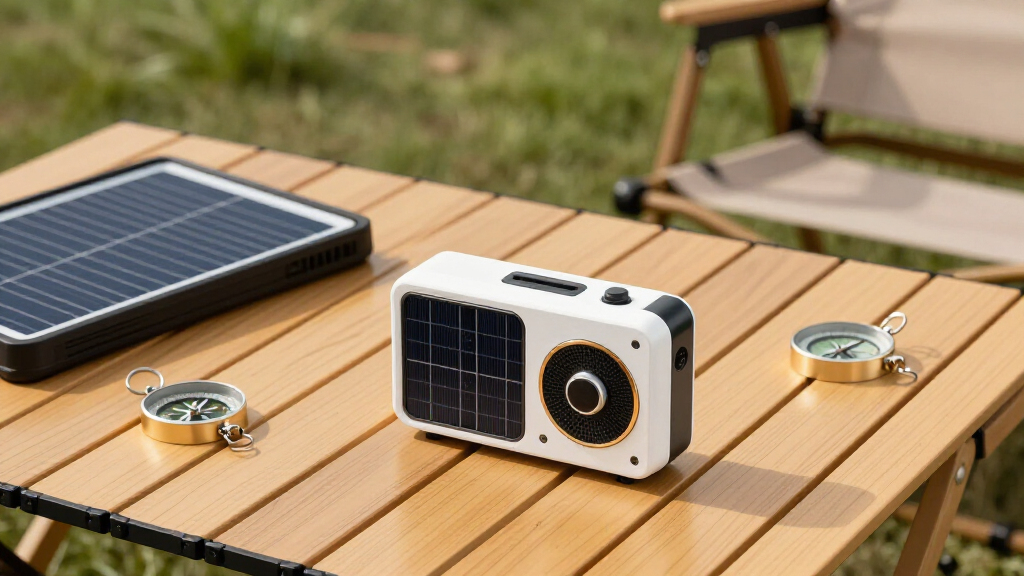

A solar-powered emergency radio keeps NOAA weather alerts, AM/FM news, and a charged phone within reach when the power grid fails. After comparing 13 models on reception, battery capacity, and charging flexibility, I picked the Midland ER310 as the best solar-powered emergency radio for most people because it pairs dependable NOAA alert performance with multiple ways to recharge. The RunningSnail Emergency Crank Radio earns my value nod for covering every core function at a fraction of the price, while the large-panel 12000mAh models suit households preparing for multi-day outages. The biggest tradeoff in this category is battery capacity versus pack size: bigger power banks recharge a phone two or three times but add real bulk to a go-bag. Keep reading for my full breakdown of all 13 radios, including who each one serves best and who should skip it.
Key Takeaways
- Battery capacity split the field more than any other spec — 12000mAh models recharge a phone two to three times, while 2000mAh budget radios struggle to deliver half a charge.
- The Midland ER310 took the top spot on NOAA alert reliability and reception quality, not raw battery numbers — established radio brands still tune receivers better than generic rivals.
- Solar charging is a backup, not a primary power source on every radio I compared; hand crank and USB input do the real work, and only the oversized panels change that math much.
- Mid-priced models added shortwave bands and reading lamps, features aimed at home blackout kits rather than portable go-bags.
- Bundled extras like thermal blankets and paracord bracelets look generous, but the radios inside those kits are mid-tier — the core receiver should drive the decision.
| Emgykit Hand Crank Radio with AM/FM/NOAA Weather Band |  | Best Compact Pick | Battery Capacity: 2000mAh | Power Sources: Hand crank, solar panel, Type-C | Radio Bands: AM, FM, NOAA | VIEW LATEST PRICE | See Our Full Breakdown |
| Hand Crank Emergency Radio with NOAA Weather, 10000mAh Power Bank |  | Best for Outdoor Use | Battery Capacity: 10000mAh | Waterproof Rating: IPX6 | Power Sources: USB-C, solar, hand crank | VIEW LATEST PRICE | See Our Full Breakdown |
| Weather Radio with NOAA Alerts, 5000mAh, AM/FM/SW, AC Power |  | Best for Home Preparedness | Battery Capacity: 5000mAh / 18500mWh | Power Sources: Hand crank, solar, AC power, USB | Channels: AM/FM/SW plus 7 NOAA weather channels | VIEW LATEST PRICE | See Our Full Breakdown |
| Emergency Weather Radio with Large Solar Panel, 12000mAh Battery |  | Best Overall | Battery Capacity: 12000mAh | Solar Panel: 8500mm² | Charging Methods: Solar, hand crank, USB, AC adapter, car charger | VIEW LATEST PRICE | See Our Full Breakdown |
| Solar Emergency Hand Crank Radio with 12000mAh Battery, NOAA Weather |  | Best for Extended Outages | Battery: 12000mAh lithium (included) | Power Sources: Solar, hand crank, Type-C 5V/2A, 3 AAA batteries | Radio Bands: NOAA, FM, AM | VIEW LATEST PRICE | See Our Full Breakdown |
| Emergency Radio with Hand Crank & Solar, NOAA Weather Band, AM/FM, 12000mAh, 5W Flashlight & SOS Alarm |  | Best Overall | Battery Capacity: 12000mAh | Solar Panel: 8500mm² | Charging Methods: Solar, hand crank, USB Type-C | VIEW LATEST PRICE | See Our Full Breakdown |
| Emergency Hand Crank Solar Radio with 10000mAh Battery, NOAA Weather Alerts, Flashlight, Thermal Blanket, and Survival Paracord Bracelet |  | Best Survival Kit Bundle | Battery Capacity: 10,000mAh | Charging Methods: Hand crank, solar panel, USB | Radio Bands: AM / FM / NOAA WB | VIEW LATEST PRICE | See Our Full Breakdown |
| RunningSnail Emergency Crank Radio with Flashlight & Phone Charger |  | Best Value Pick | Battery Capacity: 4000mAh | Charging Methods: Micro USB, solar, hand crank | Radio Bands: AM / FM / NOAA weather radio | VIEW LATEST PRICE | See Our Full Breakdown |
| Emergency Weather Radio with Large Solar Panel, 12000mAh Battery, Hand Crank, AM/FM/NOAA, LED Flashlight, Reading Lamp, SOS Alarm & Phone Charger |  | Best for Extended Outages | Battery Capacity: 12000mAh | Solar Panel: 8500mm² | Power Sources: USB, solar, hand crank, 3x AAA (not included) | VIEW LATEST PRICE | See Our Full Breakdown |
| Midland ER310 Emergency Crank Weather AM/FM Radio with NOAA Alert, SOS Flashlight, Ultrasonic Dog Whistle, and USB Charging |  | Best for Weather Alerts | Battery Capacity: 2600mAh rechargeable | Power Sources: Solar, hand crank, rechargeable battery, 6x AA | Backup Power: 6 AA batteries (not included) | VIEW LATEST PRICE | See Our Full Breakdown |
| Emergency Radio with 5000mAh Battery, NOAA Weather Alert, Solar & Hand Crank Power, AM/FM/SW |  | Best Overall | Battery Capacity: 5000mAh | Power Sources: Rechargeable battery, AC adapter, USB, hand crank, solar, 3x AAA (not included) | Radio Bands: AM / FM / SW / NOAA | VIEW LATEST PRICE | See Our Full Breakdown |
| NITIGO Emergency Weather Radio with 4000mAh Battery, Solar & Hand Crank Charging, NOAA Weather, AM/FM |  | Best for Home Preparedness | Battery Capacity: 4000mAh | Charging Methods: Solar, hand crank, USB | Radio Bands: NOAA Weather / AM / FM | VIEW LATEST PRICE | See Our Full Breakdown |
| FosPower NOAA Emergency Weather Radio A1 with Portable Power Bank, AM/FM, USB, Solar, Hand Crank, SOS Alarm & Flashlight |  | Best Budget Backup | Power Bank Capacity: 7400mWh (2000mAh) | Power Sources: Hand crank, solar, AAA batteries | Broadcasts: NOAA weather / AM / FM | VIEW LATEST PRICE | See Our Full Breakdown |
| solar-powered emergency radio | Battery Capacity | Radio Bands | Power Sources | Water Resistance |
|---|---|---|---|---|
| Emgykit Hand Crank Radio with | 2000mAh | AM, FM, NOAA | Hand crank, solar panel, Type-C | — |
| Hand Crank Emergency Radio wit | 10000mAh | — | USB-C, solar, hand crank | — |
| Weather Radio with NOAA Alerts | 5000mAh / 18500mWh | — | Hand crank, solar, AC power, USB | IPX3 |
| Emergency Weather Radio with L | 12000mAh | AM, FM, NOAA | — | — |
| Solar Emergency Hand Crank Rad | — | NOAA, FM, AM | Solar, hand crank, Type-C 5V/2A, 3 AAA batteries | Water resistant |
| Emergency Radio with Hand Cran | 12000mAh | AM / FM / NOAA weather band | — | IPX6 |
| Emergency Hand Crank Solar Rad | 10,000mAh | AM / FM / NOAA WB | — | Water resistant (no IP rating) |
| RunningSnail Emergency Crank R | 4000mAh | AM / FM / NOAA weather radio | — | Not specified |
| Emergency Weather Radio with L | 12000mAh | AM / FM / 7 NOAA bands | USB, solar, hand crank, 3x AAA (not included) | IPX6 waterproof |
| Midland ER310 Emergency Crank | 2600mAh rechargeable | — | Solar, hand crank, rechargeable battery, 6x AA | — |
| Emergency Radio with 5000mAh B | 5000mAh | AM / FM / SW / NOAA | Rechargeable battery, AC adapter, USB, hand crank, solar, 3x AAA (not included) | IPX3 (splash resistant) |
| NITIGO Emergency Weather Radio | 4000mAh | NOAA Weather / AM / FM | — | — |
| FosPower NOAA Emergency Weathe | — | — | Hand crank, solar, AAA batteries | — |
More Details on Our Top Picks
Emgykit Hand Crank Radio with AM/FM/NOAA Weather Band
The Emgykit Hand Crank Radio is the smallest unit in this lineup at just 0.51 pounds, and that changes how I’d frame it. Where the 12000mAh models like the Solar Emergency Hand Crank Radio double as serious phone chargers, the Emgykit’s 2000mAh cell is really a last-resort top-up — enough for a short emergency call, not a full recharge. In exchange you get something those bigger radios can’t offer: it disappears into a glove box or jacket pocket. The 140-lumen triple LED is bright for this size, and AM/FM/NOAA coverage matches radios three times its weight. Compared with the RunningSnail, it packs similar capability into a tighter footprint, though the lack of a digital display means tuning by feel. For a car kit or go-bag, that tradeoff favors the Emgykit every time.
Pros:- Weighs just 0.51 lbs — a true pocket or glove-box fit
- 140-lumen triple LED outshines most compact rivals
- Three power sources including modern Type-C charging
- Full AM/FM/NOAA band coverage despite the tiny size
Cons:- 2000mAh battery is too small for meaningful phone charging
- No digital display, so station tuning is guesswork
- Small solar panel charges slowly even in direct sun
Best for: Drivers, commuters, and minimalist hikers who want NOAA alerts and a bright light in a glove-box-sized package
Not ideal for: Households planning to charge phones through a multi-day outage — the 2000mAh battery covers roughly half a phone charge
- Battery Capacity:2000mAh
- Power Sources:Hand crank, solar panel, Type-C
- Radio Bands:AM, FM, NOAA
- Flashlight:3 LED, 140 lumens
- SOS Alarm:Yes
- Dimensions:5.1 x 2.1 x 2.4 inches
- Weight:0.51 lbs
Our verdict“Buy this if you want a capable NOAA radio that lives in a car or daypack, and skip it if phone charging is the priority.”
Hand Crank Emergency Radio with NOAA Weather, 10000mAh Power Bank
If your emergency plan involves a tent rather than a basement, this 10000mAh hand crank radio is the one I’d grab. The IPX6 waterproof rating shrugs off driving rain — a real step up from the Weather Radio with NOAA Alerts (B07TXL4XJP), which is rated only IPX3 and needs shelter. Battery capacity is double that model’s too, so the phone-charging promise is actually usable rather than symbolic. The 48-LED reading lamp lights an entire campsite, something the pocket-sized Emgykit can’t do with its single flashlight, and the built-in compass is a small but thoughtful backcountry extra. The tradeoffs: NOAA alerts require manual tuning, so there’s no automatic wake-up warning at night, and the oversized controls favor gloved hands over precision. For campers and hikers that’s a sensible exchange; for pure bedside alert duty, look elsewhere.
Pros:- IPX6 rating handles heavy rain and splashes without shelter
- 10000mAh battery delivers genuine, repeatable phone charges
- 48-LED reading lamp lights a room or campsite, not just a path
- Built-in compass and SOS alarm suit backcountry use
Cons:- No automated S.A.M.E. alerts — NOAA warnings need manual tuning
- No display for battery level or station info
- Chunky controls are awkward for smaller hands
Best for: Campers, hikers, and kayakers who need a radio that survives rain and can light a whole campsite
Not ideal for: Anyone depending on automatic overnight weather alerts — NOAA warnings require manual tuning, so it won’t wake you
- Battery Capacity:10000mAh
- Waterproof Rating:IPX6
- Power Sources:USB-C, solar, hand crank
- Lighting:48-LED reading lamp, 20-LED flashlight
- Audio:AM/FM radio, NOAA weather alerts
- Extras:SOS alarm, built-in compass
- Dimensions:6.3 x 3.5 x 3.1 inches
- Weight:1.1 lbs
Our verdict“The right pick for anyone whose emergency kit lives in a backpack and has to survive real weather.”
Weather Radio with NOAA Alerts, 5000mAh, AM/FM/SW, AC Power
Most radios in this roundup charge by USB, crank, or sun. This one adds AC power, which sounds boring until a storm warning arrives and you want a full battery without twenty minutes of cranking. That makes the 5000mAh Weather Radio my pick for a kitchen drawer or hallway closet rather than a backpack. It also pulls in shortwave bands alongside AM/FM and seven NOAA channels — none of the other four picks here, including the pricier 12000mAh large-solar-panel model, offer SW, which matters when local stations go dark. The 5000mAh battery sits in an awkward middle: twice the Emgykit‘s capacity but half of the rugged outdoor pick’s, so phone charging stays modest. And the IPX3 rating means light splashes only — leave it home when the forecast turns. Kept indoors, it earns its spot.
Pros:- AC power makes pre-storm charging effortless
- Only pick in the roundup with shortwave reception
- Seven NOAA channels plus a loud SOS siren
- At 1.2 lbs, easy to move from room to room
Cons:- IPX3 splash resistance only — not safe in real rain
- 5000mAh battery is middling for phone charging
- NOAA alerts still require manual tuning
Best for: Homeowners building a closet emergency kit who want easy AC pre-charging and shortwave listening when local stations fail
Not ideal for: Backpackers or anyone needing rain resistance — IPX3 handles splashes only, and the AC advantage disappears outdoors
- Battery Capacity:5000mAh / 18500mWh
- Power Sources:Hand crank, solar, AC power, USB
- Channels:AM/FM/SW plus 7 NOAA weather channels
- Water Resistance:IPX3
- Output:USB phone charging port
- Dimensions:7.5 x 3.5 x 4.7 inches
- Weight:1.2 lbs
Our verdict“A sensible home-base radio for storm season, as long as it never has to survive the weather it reports on.”
Emergency Weather Radio with Large Solar Panel, 12000mAh Battery
The Emergency Weather Radio with Large Solar Panel earns the top spot because it fixes the weakest link in solar charging: panel size. Its 8500mm² panel dwarfs the stamp-sized strips on the Emgykit or the 5000mAh home pick, so sunlight becomes a practical power source instead of a token gesture. Add a 12000mAh battery, five charging methods including a car charger, and an IPX6 waterproof shell, and it covers home outages and outdoor trips in one device — the Midland ER310 matches its alert quality but can’t touch this battery capacity. What you give up is portability: this is a unit that lives in an emergency bin, not a daypack, and the maker publishes thin detail on charging times. For most households building one serious kit, though, this is the safest all-around bet in the lineup.
Pros:- Oversized 8500mm² solar panel makes solar charging genuinely practical
- 12000mAh battery covers multiple full phone charges
- Five charging methods, including a car charger nobody else offers
- IPX6 waterproofing suits both home and outdoor duty
Cons:- Largest footprint in the roundup — not bag-friendly
- Sparse published detail on charging times
- Heavier than the mid-size 5000–10000mAh rivals
Best for: Families building one serious home emergency kit that can also ride along in the car for camping trips
Not ideal for: Ultralight packers and casual users — it’s bulky, and light users pay for capacity they’ll never drain
- Battery Capacity:12000mAh
- Solar Panel:8500mm²
- Charging Methods:Solar, hand crank, USB, AC adapter, car charger
- Waterproof Rating:IPX6
- Radio Bands:AM, FM, NOAA
- Lighting:5W flashlight, 12-LED reading lamp
- Emergency Alerts:NOAA alerts, SOS alarm
Our verdict“If you’re buying one emergency radio for the whole household, this is the one to buy.”
Solar Emergency Hand Crank Radio with 12000mAh Battery, NOAA Weather
The Solar Emergency Hand Crank Radio shares a 12000mAh battery with our Best Overall pick, but it answers a different question: what happens on day four of a blackout? Its ace is a 3 AAA battery slot alongside the lithium cell, solar panel, hand crank, and Type-C input — the only model in this roundup that lets you swap in store-bought batteries when everything rechargeable is dead. That redundancy is why I’d choose it for hurricane season over the large-solar-panel model, which charges more ways but offers no disposable-battery fallback. The downsides are real: at 1.6 pounds it’s the heaviest radio here, it’s merely water resistant rather than IPX6-rated like the rugged outdoor pick, and the maker recommends a full initial charge before you rely on it. Weight for resilience is a fair deal when portability isn’t the priority.
Pros:- AAA battery backup is unique in this lineup — power never fully runs out
- 12000mAh lithium battery plus a large, fast-charging solar panel
- Four-way charging redundancy: solar, crank, Type-C, AAA
- 5W flashlight and reading light cover blackout lighting needs
Cons:- Heaviest radio here at 1.6 lbs
- Water resistant only, not waterproof like the IPX6 picks
- Requires a full initial charge before first emergency use
Best for: Storm-belt and hurricane-prone households facing multi-day outages who want AAA batteries as a final fallback
Not ideal for: Anyone counting ounces or needing true waterproofing — at 1.6 lbs and water resistant only, it’s a stay-dry, stay-home unit
- Battery:12000mAh lithium (included)
- Power Sources:Solar, hand crank, Type-C 5V/2A, 3 AAA batteries
- Radio Bands:NOAA, FM, AM
- Maximum Output:5 watts
- Water Resistance:Water resistant
- Dimensions:6.8 x 2.9 x 4.7 inches
- Weight:1.6 lbs
Our verdict“The most blackout-proof option here — built for long outages at home, not for carrying.”
Emergency Radio with Hand Crank & Solar, NOAA Weather Band, AM/FM, 12000mAh, 5W Flashlight & SOS Alarm
My top pick here is the Emergency Radio with Hand Crank & Solar because it pairs the largest battery in this lineup — 12000mAh — with an 8500mm² solar panel that makes solar charging genuinely useful rather than symbolic. Compared with the RunningSnail Emergency Crank Radio, which carries only a 4000mAh cell, this model can recharge a phone two or three times before it needs sunlight or cranking. The IPX6 water-resistance rating also beats the vague “water resistant” claims on the survival-bundle radio, so rain at a campsite is a non-issue. The tradeoffs are real: it’s one of the bulkier units here, and NOAA tuning is manual rather than automatic-scan like the Midland ER310, so you’ll hunt for the right weather band yourself. If runtime and charging muscle matter most, this is the one I’d pack first.
Pros:- 12000mAh battery recharges a phone multiple times between charges
- Oversized 8500mm² solar panel makes solar charging genuinely useful
- IPX6 rating shrugs off rain and splashes outdoors
- 120dB SOS alarm plus 5W flashlight covers signaling needs
Cons:- Manual NOAA tuning instead of an automatic alert scan
- One of the bulkier, heavier units in this roundup
- Geared to emergency duty, not everyday radio listening
Best for: Households in hurricane or storm zones that want maximum battery reserve and fast solar recovery for multi-day outages
Not ideal for: Ultralight backpackers — the bulky body and manual NOAA tuning make it a poor fit for fast-moving trips
- Battery Capacity:12000mAh
- Solar Panel:8500mm²
- Charging Methods:Solar, hand crank, USB Type-C
- Radio Bands:AM / FM / NOAA weather band
- Flashlight Output:5W
- Water Resistance:IPX6
- SOS Alarm:120dB
- Extras:Reading lamp, phone charging
Our verdict“If you want the biggest battery and the fastest solar recovery in this roundup, and can live with manual NOAA tuning, this is the radio to buy.”
Emergency Hand Crank Solar Radio with 10000mAh Battery, NOAA Weather Alerts, Flashlight, Thermal Blanket, and Survival Paracord Bracelet
The Emergency Hand Crank Solar Radio earns its place as the most complete grab-and-go kit, bundling a thermal blanket and survival paracord bracelet with a capable 10,000mAh radio. Next to the Emergency Radio with Hand Crank & Solar, you give up 2,000mAh of battery and a rated IPX6 shell, but you gain automatic NOAA alerts — a meaningful difference when a storm rolls in overnight and you’re asleep. The 2-watt speaker is the weak link; it’s quieter than the 5W output on the two 12000mAh models, so outdoor listening in wind suffers. Feature density cuts both ways, too: buyers who want one knob and one button may find this crowded. For a car emergency kit or a bug-out bag where the included gear replaces separate survival purchases, the trade makes sense.
Pros:- Bundles a thermal blanket and paracord bracelet at no extra cost
- Automatic NOAA weather alerts warn you of severe weather
- Three charging methods keep the 10,000mAh cell recoverable anywhere
- Light, portable build suits hiking and camping
Cons:- 2W speaker output limits volume outdoors
- 10,000mAh trails the 12000mAh leaders for phone charging
- Crowded feature set can confuse first-time users
Best for: Car kits and bug-out bags where the bundled thermal blanket and paracord bracelet replace separate survival purchases
Not ideal for: Buyers who mainly want loud outdoor audio — the 2W speaker is the quietest in this lineup
- Battery Capacity:10,000mAh
- Charging Methods:Hand crank, solar panel, USB
- Radio Bands:AM / FM / NOAA WB
- NOAA Alerts:Automatic
- Speaker Output:2W
- Water Resistance:Water resistant (no IP rating)
- Included Gear:Thermal blanket, paracord survival bracelet
- Extras:Built-in flashlight, SOS alarm
Our verdict“Buy this if you want a radio plus basic survival gear in one affordable package; skip it if loud audio or maximum battery tops your list.”
RunningSnail Emergency Crank Radio with Flashlight & Phone Charger
The RunningSnail Emergency Crank Radio is the value play, and it earns that label honestly. Its 4000mAh battery is a third of what the two 12000mAh units carry, so phone charging is a one-time affair — but in exchange you get a radio that’s cheaper, easier to pack, and still covers solar, crank, and Micro USB charging. The motion-sensor reading lamp is a small touch none of the bigger rivals match, and it matters during blackouts when you’re moving around a dark house. Against the Midland ER310, it loses on brand pedigree and rated runtime, but typically costs less. The real compromises: no stated water-resistance rating, a boxy shape, and fewer device charges per fill. For a household that wants one dependable blackout radio without paying for capacity it won’t use, this is the sensible buy.
Pros:- Low-cost entry that still covers solar, crank, and USB charging
- Motion-sensor reading lamp is unique in this lineup
- 4000mAh battery handles roughly one full phone charge
- External antenna improves NOAA reception indoors
Cons:- No stated water-resistance rating for outdoor use
- Boxy, bulky shape for its capacity class
- Modest battery limits multi-device charging during long outages
Best for: Budget-minded households that want a dependable blackout radio without paying for battery capacity they won’t use
Not ideal for: Anyone charging multiple phones across several outage days — 4000mAh runs dry fast
- Battery Capacity:4000mAh
- Charging Methods:Micro USB, solar, hand crank
- Radio Bands:AM / FM / NOAA weather radio
- Flashlight:3-mode super-bright
- Reading Lamp:Motion sensor
- Antenna:External
- Water Resistance:Not specified
Our verdict“The right call for budget buyers who need a reliable blackout radio and can accept modest charging capacity and no water rating.”
Emergency Weather Radio with Large Solar Panel, 12000mAh Battery, Hand Crank, AM/FM/NOAA, LED Flashlight, Reading Lamp, SOS Alarm & Phone Charger
The Emergency Weather Radio with Large Solar Panel looks nearly identical on paper to the Emergency Radio with Hand Crank & Solar — same 12000mAh battery, same 8500mm² panel — but it adds AAA battery backup as a fourth power source, which is what separates a good outage radio from a great one. When the internal cell runs dry and clouds kill solar, three AAA batteries from any gas station keep NOAA broadcasts running. It also receives all 7 NOAA bands behind a rugged IPX6 ABS shell. The downsides: the AAA batteries aren’t included, published runtime and charging-speed figures are thin, and it’s every bit as bulky as its twin. Compared with the RunningSnail Emergency Crank Radio, you’re paying more and carrying more — but for multi-day outages, that redundancy is the whole point.
Pros:- Four power sources, including AAA backup, deliver true redundancy
- 12000mAh battery and large solar panel match the class leaders
- Receives all 7 NOAA bands with IPX6 waterproofing
- 5W adjustable flashlight plus a 12-LED reading lamp
Cons:- Requires 3 AAA batteries that aren’t included
- Sparse published data on runtime and charging speed
- As bulky as its 12000mAh sibling
Best for: Preparedness buyers planning for week-long outages who want AAA battery redundancy on top of solar and crank
Not ideal for: Minimalists — it’s heavy, and the AAA batteries it leans on for backup aren’t included
- Battery Capacity:12000mAh
- Solar Panel:8500mm²
- Power Sources:USB, solar, hand crank, 3x AAA (not included)
- Radio Bands:AM / FM / 7 NOAA bands
- Flashlight:5W adjustable
- Reading Lamp:12-LED
- Water Resistance:IPX6 waterproof
- Build:ABS enclosure, Army Green
Our verdict“Choose this over its 12000mAh twin if AAA battery redundancy matters more to you than shaving size and weight.”
Midland ER310 Emergency Crank Weather AM/FM Radio with NOAA Alert, SOS Flashlight, Ultrasonic Dog Whistle, and USB Charging
The Midland ER310 is the name I’d trust when weather alerts are the whole reason for buying. Its automatic weather scan across 7 NOAA channels and rated 32 hours of radio operation outclass every no-name rival here, including the Emergency Radio with Hand Crank & Solar, which makes you tune manually. The 130-lumen SOS flashlight and ultrasonic dog whistle are thoughtful extras for backcountry users. The honest tradeoff is battery: 2600mAh is the smallest cell in this lineup — barely a single phone charge — and the 6 AA backup batteries cost extra. Next to the RunningSnail Emergency Crank Radio, you’re paying more for alert reliability rather than power-bank muscle. Hikers and storm-belt households who treat this as a warning device first will find that exchange worthwhile.
Pros:- Automatic 7-channel NOAA scan with alert, from an established radio brand
- Up to 32 hours of radio operation per charge
- 130-lumen SOS flashlight and ultrasonic dog whistle aid rescue scenarios
- Runs on 6 AA batteries when the rechargeable cell dies
Cons:- 2600mAh battery is the smallest in this lineup
- AA backup batteries not included, adding hidden cost
- Strictly an emergency-duty radio, not an everyday listener
Best for: Storm-belt households and backcountry hikers who prioritize verified NOAA alerts and long radio runtime over phone-charging muscle
Not ideal for: Anyone treating the radio as a power bank — the 2600mAh cell barely covers one phone charge
- Battery Capacity:2600mAh rechargeable
- Power Sources:Solar, hand crank, rechargeable battery, 6x AA
- Backup Power:6 AA batteries (not included)
- Weather Channels:7 NOAA channels with alert scan
- Battery Life:Up to 32 hours of radio operation
- Flashlight:130 lumens (high/low), SOS beacon
- Extras:Ultrasonic dog whistle, USB device charging
Our verdict“Pick the Midland ER310 when trustworthy weather alerts come first and phone charging is a distant second.”
Emergency Radio with 5000mAh Battery, NOAA Weather Alert, Solar & Hand Crank Power, AM/FM/SW
This model takes the top slot because it covers more power-failure scenarios than anything else in the lineup: six charging methods, including an AC adapter and a AAA fallback that the NITIGO Emergency Weather Radio doesn’t offer. The 5000mAh battery holds more than double the FosPower A1’s reserve, so topping up a phone won’t leave the radio dead. Shortwave reception is the real differentiator — when local AM/FM towers go down, SW can still pull in distant broadcasts, and neither the NITIGO nor the FosPower has it. The tradeoffs are honest ones: the IPX3 rating only shrugs off light spray, unlike the fully waterproof 10000mAh option in this roundup, and the AAA backup batteries aren’t included. Against the big 12000mAh models, I’d call this the better-packed, slightly lower-capacity choice.
Pros:- Six power sources including AC adapter and AAA backup, so a dead rechargeable cell isn’t a dead radio
- Shortwave band adds long-range reception when local AM/FM fails
- 5000mAh battery beats most mid-size rivals for phone charging
- IPX3 splash resistance plus SOS siren and flashlight in a 16-ounce body
Cons:- IPX3 rating won’t survive heavy rain or drops into water
- AAA batteries for the backup slot are not included
- Smaller reserve than the 10000–12000mAh power-bank radios in this roundup
Best for: Households building one grab-and-go emergency kit that has to work through outages, storms, and off-grid weekends
Not ideal for: Buyers in flood-prone areas who need genuine waterproofing — IPX3 handles splashes, not submersion or driving rain
- Battery Capacity:5000mAh
- Power Sources:Rechargeable battery, AC adapter, USB, hand crank, solar, 3x AAA (not included)
- Radio Bands:AM / FM / SW / NOAA
- Display:Large HD LCD
- Water Resistance:IPX3 (splash resistant)
- Dimensions:6.8 x 3.7 x 2.9 in
- Weight:16 oz
- Speaker Output:3W
Our verdict“The most well-rounded pick here — buy this if you want one radio that handles nearly every outage scenario without babying it around water.”
NITIGO Emergency Weather Radio with 4000mAh Battery, Solar & Hand Crank Charging, NOAA Weather, AM/FM
Where the 5000mAh Emergency Radio above is built for a go-bag, this NITIGO makes the most sense on a nightstand. Its reading lamp and headphone jack make long blackouts more livable — you can follow NOAA alerts without waking the house, something neither the FosPower A1 nor most crank radios here offer. The 4000mAh battery comfortably outlasts the FosPower’s 2000mAh for phone top-ups, though it trails the 10000mAh and 12000mAh power-bank models if device charging is your priority. The compromises are real: no shortwave band, a bulkier chassis that packs worse for travel, and only solar, crank, and USB charging — no disposable-battery fallback once the rechargeable cell is spent. For a household that wants one radio for daily news and music that flips into storm duty, that balance works.
Pros:- Reading lamp plus headphone jack make extended outages far more comfortable
- 4000mAh battery doubles the budget FosPower’s phone-charging capacity
- Full NOAA weather alert coverage with AM/FM for daily use
- SOS alarm and LED flashlight cover the emergency basics
Cons:- Bulkier than rivals, which hurts portability
- No shortwave reception, unlike the Best Overall pick
- No AAA or AC backup — when the internal battery is drained, only crank and solar remain
Best for: Families who want a single radio for everyday listening that doubles as their storm-season alert station
Not ideal for: Backpackers and ounce-counters — the bulkier body packs worse than compact crank radios like the FosPower A1
- Battery Capacity:4000mAh
- Charging Methods:Solar, hand crank, USB
- Radio Bands:NOAA Weather / AM / FM
- Flashlight:LED flashlight
- Reading Lamp:Built-in
- SOS Alarm:Yes
- Headphone Jack:Yes
Our verdict“Choose this if your emergency radio will live at home and pull double duty as an everyday radio, not if you need something small for a pack.”
FosPower NOAA Emergency Weather Radio A1 with Portable Power Bank, AM/FM, USB, Solar, Hand Crank, SOS Alarm & Flashlight
This FosPower A1 is the pick I’d steer toward when price and simplicity matter more than stamina. Its 7400mWh (2000mAh) power bank is the smallest in this lineup — half the NITIGO’s capacity and a fraction of the 12000mAh models — so expect an emergency phone top-up, not a full recharge. That caps it at backup duty, but the upside is a light, genuinely portable unit with the same crank, solar, and AAA flexibility as pricier options, and the bright orange shell is easy to spot in a dark closet or crowded trunk. The four-LED reading light plus 1W flashlight handles basic illumination. What you give up versus the 5000mAh Best Overall pick: no shortwave, no stated water-resistance rating, and no AC charging. Against the similarly priced RunningSnail, it competes on cost while adding the reading lamp.
Pros:- One of the most affordable ways to get NOAA alerts plus crank and solar charging
- AAA battery option keeps it running when the internal cell dies
- Separate reading light and 1W flashlight cover two lighting needs
- High-visibility orange housing is easy to locate in the dark
Cons:- Smallest battery in the roundup at 2000mAh — phone charging is minimal
- No stated water-resistance or ruggedness rating
- No shortwave band and no AC charging option
Best for: Budget-minded buyers who want a simple, proven crank radio for a car kit, spare drawer, or a kid’s emergency bag
Not ideal for: Anyone counting on it as a primary phone charger — 2000mAh won’t fully recharge a modern smartphone
- Power Bank Capacity:7400mWh (2000mAh)
- Power Sources:Hand crank, solar, AAA batteries
- Broadcasts:NOAA weather / AM / FM
- Flashlight:1W LED
- Reading Light:4 LEDs
- Color:Orange
Our verdict“A sensible low-cost second radio for the car or a backup kit — just don’t ask it to be your main power bank.”
How We Picked
I ranked these 13 radios on the factors that decide whether a unit actually helps during an outage: NOAA weather band reception and alert behavior, charging redundancy (solar, hand crank, USB, and where offered, AC), usable battery capacity for phone charging, flashlight output, build quality and water resistance, and price. Reception and alert reliability carried the most weight, because a radio that misses warnings fails at its main job no matter how big its battery is. Battery claims were weighed against realistic solar input, since every panel in this category charges slowly.
The ranking reflects dependability per dollar, not feature count. The Midland ER310 leads because an established radio maker delivers better tuner sensitivity and a proven alert system. High-capacity 10000–12000mAh models rank next for households planning around long outages, and compact budget units like the RunningSnail, FosPower, and Emgykit fill out the list as secondary or starter radios. Models lost ground when their specs duplicated a cheaper rival or when bundled survival gear padded the box instead of improving the radio.
Factors to Consider When Choosing Solar-powered Emergency Radios
Spec sheets in this category blur together — every box promises a crank, a panel, a flashlight, and a siren. The differences that decide a good purchase live elsewhere: reception quality, honest battery behavior, and fit for the kit you are building. These five factors are where I focused my comparisons, and where buyers most often spend money on the wrong thing.
Battery Capacity Decides How Useful the Power Bank Really Is
The mAh rating is the most abused spec in this category, so start here. A 2000mAh radio like the cheapest units on this list holds less energy than one modern smartphone battery, and after conversion losses you will get maybe half a phone charge out of it. Move up to 5000mAh and you reach roughly one full phone charge, while the 10000mAh and 12000mAh models can recharge a phone two or three times and still run the radio and flashlight. The catch is weight and bulk: high-capacity units are heavier and take far longer to refill by crank or sun. Think about the outage you are actually planning for — a summer thunderstorm blackout of a few hours needs far less reserve than a multi-day ice storm or hurricane. One more thing spec sheets hide: cheap cells lose capacity faster in storage, so a name-brand smaller battery can outlast a generic 12000mAh unit that degrades in a drawer. Buy the capacity your plan calls for, not the biggest number on the page.
Solar Is the Slow Lane — Plan Around It
Every panel in this roundup is small, and small panels mean slow charging. As a rule of thumb, expect a full day of direct sunlight to replace only part of the battery on compact models, and hours of exposure just to gain enough reserve for a weather broadcast. The oversized, often tilt-adjustable panels on the larger 12000mAh units roughly double the harvest, which is why they rank higher for extended outages. None of this makes solar useless — it makes solar a top-up source that works while the radio sits on a windowsill or strapped to a pack. Your real charging order should be: USB wall power before the storm, hand crank during it, solar whenever the sun cooperates. The most common buyer mistake is assuming the panel can refill the radio daily; plan around it being the slow lane and you will never be caught short.
Reception and NOAA Alerts Matter More Than Features
A weather radio exists to deliver warnings, and this is where generic units separate from established brands. Tuner sensitivity, antenna design, and alert logic vary widely, and a radio that pulls in a clear NOAA signal with an automatic alert mode is doing the job that matters most. Look for a model that can sit in standby and wake itself when the Weather Service pushes an alert tone, so you get warned at 3 a.m. without leaving the radio playing. A telescoping antenna helps in rural areas where the nearest NOAA transmitter is far away. Some mid-priced picks add shortwave bands, which can pull in distant or international broadcasts if local stations go dark in a wide-area disaster. Whatever you buy, check reception at your home before storm season — terrain and building materials affect NOAA range more than any spec sheet admits.
Match the Radio to Where It Will Live
The right radio depends on the kit it joins. A home blackout drawer favors bigger units with reading lamps, larger panels, and AC charging, since weight is irrelevant and the radio may light a room for hours. A go-bag flips those priorities: compact bodies under a pound, a carabiner-friendly shape, and enough water resistance to survive a soaked pack. Cars sit somewhere in between — glovebox radios should tolerate heat and cold swings, which argues for smaller batteries you rotate and recharge a few times a year. Households in hurricane corridors should lean toward water-resistant housings and higher capacity, because multi-day outages are a realistic scenario there. A practical approach many families take is one high-capacity radio for the house plus two cheap compacts for bags and vehicles, which costs less than one premium unit and covers more scenarios.
Common Mistakes That Waste Money
The first mistake is shopping on mAh alone and ignoring the receiver, which leaves you with a power bank that happens to contain a mediocre radio. The second is paying extra for bundled survival extras — blankets, bracelets, whistles — instead of better internals; those kits make sense only if you genuinely need the extras. Third, many buyers never try the hand crank, then discover in a blackout that it is stiff, noisy, or tiring to use for more than a minute. Fourth, lithium batteries self-discharge in storage, so a radio tossed in a drawer for three years may be dead when needed; set a reminder to top up and function-check every few months. Finally, do not assume all flashlights and sirens are equal — output ranges from a token 1W glow to a genuinely useful 5W beam, and the difference is obvious the first time you light a room with one.
Frequently Asked Questions
How long does a solar emergency radio take to charge in sunlight?
Longer than most buyers expect. The compact panels on budget radios typically need 10 to 20 hours of direct sun to meaningfully refill a 2000–5000mAh battery, and cloudy conditions stretch that further. The larger tilt-adjustable panels on high-capacity models cut that time roughly in half, which is the main reason they cost more. In practice, solar works best as a slow top-up while the radio sits in the sun, not as a full recharge method. Before a forecast storm, plug the radio into USB power so you start the outage at 100 percent.
Is the hand crank or the solar panel more useful in a real emergency?
The crank, and it is not close. A hand crank works at night, indoors, and in the middle of a storm — exactly the conditions where solar produces little or nothing. Roughly a minute of cranking buys several minutes of radio listening at modest volume, which is enough to catch a weather update on demand. Solar’s advantage is that it requires no effort: leave the radio on a sunny windowsill and it quietly rebuilds reserve over the day. The smart pattern is to crank for immediate needs and let the panel handle the slow background refilling.
How much battery capacity do I need to keep a phone alive in a blackout?
Start from your phone, not the radio box. Most modern phones carry a 3000–5000mAh battery, and power bank conversion losses eat 25 to 40 percent of stored energy before it reaches the phone. That means a 2000mAh radio delivers well under half a phone charge, a 5000mAh unit gives you roughly one charge, and a 10000–12000mAh model covers two to three. Keep your expectations aligned with the radio’s main job, though — the battery exists first to power the receiver and light. If phone charging is your top worry during outages, pair any of these radios with a dedicated power bank and let each device do what it does best.
Are cheap no-name solar emergency radios reliable enough to trust?
Sometimes, with caveats. Many budget radios share similar internals, and quality control varies from batch to batch, which is why reviews for the same model can swing between glowing and furious. The most common weak points are battery longevity in storage and crank durability, not the receiver itself. A cheap unit is a reasonable gamble as a second radio for a car or office, where it supplements a primary device. For the radio your household will depend on during warnings, spending more on an established brand with a track record buys better tuner quality and accountability if something fails. Scan recent reviews for mentions of units dying after months in a drawer — that is the failure pattern that matters.
Do I need shortwave bands on an emergency radio?
Most buyers do not, but a specific group should look for them. NOAA and local AM/FM cover weather alerts and regional news, which answers nearly every realistic emergency scenario in the US. Shortwave earns its place in wide-area disasters where local transmitters go down for days, because SW signals bounce long distances and can carry national or international broadcasts into the affected zone. Preppers building for worst-case scenarios and anyone in remote areas with weak AM/FM coverage get real value from it. If neither describes you, treat SW as a bonus rather than a reason to pay more — several mid-priced radios include it without a price jump anyway.
Conclusion
After weighing reception, charging options, capacity, and price across all 13 radios, the recommendations sort cleanly by buyer. For most households, the Midland ER310 is the best overall pick — dependable NOAA alerts, solid reception, and enough charging flexibility to ride out typical outages. Shoppers on a tight budget, or anyone adding a second radio to a car or office, should choose the RunningSnail for the best value in the lineup. If you prepare for multi-day outages and want the strongest battery and fastest solar recovery, step up to one of the large-panel 12000mAh models — my premium recommendation in this roundup. First-time buyers who want something simple and affordable will feel at home with the FosPower A1. And for specific needs: the waterproof 10000mAh unit suits campers and hurricane-zone households, the survival-bundle radio makes sense if you are building a car kit from scratch, and the ultra-cheap Emgykit works as a glovebox backup. Match the radio to the outage you genuinely expect, charge it before storm season, and you will have made the right choice.