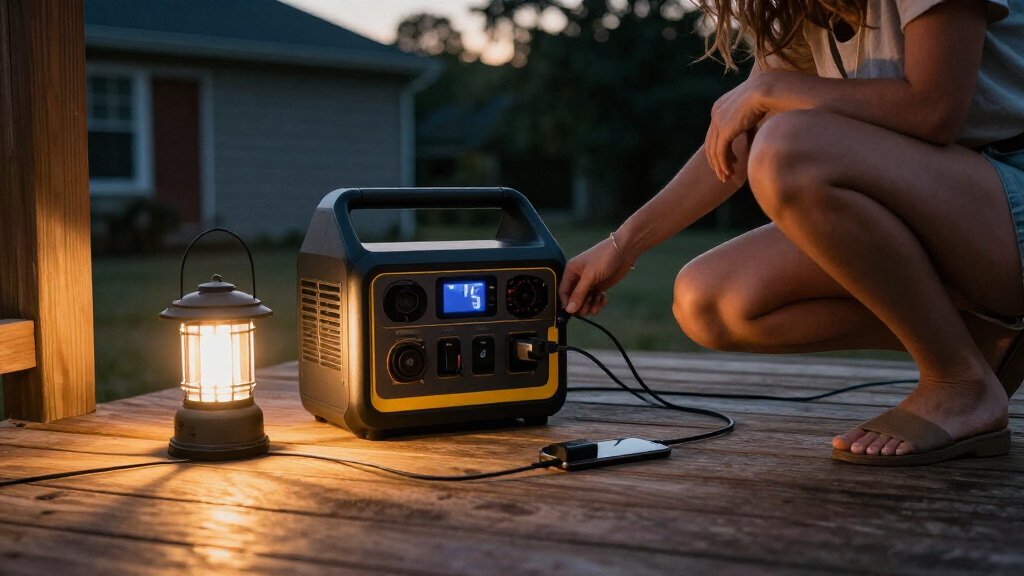

When the power goes out, the right portable power station for emergencies keeps phones charged, radios running, and CPAP machines or small medical devices working until the grid recovers. After comparing 15 popular models, the Anker SOLIX C300 stands out as the best overall pick thanks to its refined interface, fast recharging, and dependable brand support. If you want solar included out of the box, the ZeroKor 300W with its 60W panel is the smarter bundle, while the Jackery Explorer 1000 v2 is the clear choice for whole-home essentials like mini-fridges during extended outages. The main tradeoff in this category is capacity versus portability versus price: the small units here weigh under 4 pounds but can’t run much beyond phones and lights, while the bigger models carry real weight and cost. Battery chemistry matters too — the LiFePO4 models in this lineup will outlast their lithium-ion counterparts by years. Keep reading for the full breakdown of which station fits which emergency scenario.

Get emergency and outdoor gear delivered free with Prime
- Fast, free delivery on millions of items
- Prime Video, Amazon Music and more included
- Member-only deals all year
Complete the kit


Key Takeaways
- The 288–296Wh class (Anker SOLIX C300, Jackery Explorer 300, BLUETTI Elite 30 V2, EnginStar) is the sweet spot for emergency kits — enough capacity for roughly 15–25 phone charges plus LED lighting, while staying light enough to grab in a hurry.
- LiFePO4 battery chemistry was the biggest differentiator within identical price tiers: the DaranEner 192Wh, ALLWEI 256Wh, and DARAN 288Wh units should last 2,000+ cycles versus roughly 500 for the lithium-ion Jackery Explorer 300, which matters for a device that sits unused most of the year.
- The BLUETTI Elite 30 V2 and DARAN 288Wh punch above their capacity class with 600W inverters — enough to run devices the 300W models can’t start, like certain blenders, heated blankets, or small pumps.
- The sub-100Wh units (ENOFLO 97.68Wh, MARBERO M82, Daran 89.6Wh) are airline-legal and glovebox-friendly but are strictly single-device or short-outage tools — they cannot power a CPAP machine through a night in most cases.
- Solar bundling created real value splits: the ZeroKor bundle’s 60W panel is meaningfully more useful than Jackery‘s 40W panel, and both beat buying panels separately — but only the larger stations can actually store a full day of solar harvest.



| portable power stations for emergencie | Weight |
|---|---|
| DaranEner Portable Power Stati | 5.73 lbs |
| ZeroKor 300W Portable Power St | — |
| ALLWEI 300W Portable Power Sta | 6.4 lbs |
| EnginStar 300W Portable Power | 6.5 lbs |
| Anker SOLIX C300 Portable Powe | — |
| DARAN 288Wh LiFePO4 Portable P | — |
| ENOFLO Portable Power Station | — |
| Jackery Explorer 300 Portable | — |
| Anker SOLIX C300 DC Portable P | — |
| BLUETTI Elite 30 V2 Portable P | — |
| Jackery Explorer 300 Portable | 7.5 lbs |
| MARBERO M82 Portable Power Sta | 3.2 lbs |
| Jackery Explorer 1000 v2 Porta | 23.8 lbs |
| Daran Portable Power Station | 2.54 lbs |
| HOWEASY Portable Power Station | 2.3 lbs |
More Details on Our Top Picks
DaranEner Portable Power Station, 192Wh LiFePO4 Battery, 300W Output
I’d choose the DaranEner for a compact emergency kit that may sit unused between outages. Its LiFePO4 battery is rated for 3,500+ cycles, the longest stated cycle life among these five picks, while the 5.73-pound weight makes it easier to move than the ALLWEI or EnginStar. Two AC outlets and several USB ports let it support small electronics together, and the SOS light adds a basic signal option if the lights go out.
The tradeoff is its 192Wh capacity: it holds less energy than the ALLWEI’s 256Wh or EnginStar’s 296Wh, so it is better for keeping phones, a router, or small essentials running than stretching backup across a long outage. Its 300W limit also rules out many household appliances, and the solar panel is not included.
Pros:- LiFePO4 battery rated for 3,500+ cycles
- Light 5.73-pound design is easy to store and carry
- Two AC outlets and multiple USB outputs support several small devices
- Built-in LED includes an SOS mode
Cons:- 192Wh capacity is lower than the ALLWEI and EnginStar options
- 300W output excludes many household appliances
- Solar panel and car charging cable are not included
Best for: People building a lightweight emergency kit for phones, small electronics, and occasional backup over many charge cycles
Not ideal for: Households that need to run appliances for extended outages or want a solar panel included
- Battery capacity:192Wh
- Battery chemistry:LiFePO4
- Battery cycle life:3,500+ cycles
- AC output:300W, 600W surge
- USB-C output:60W PD
- Maximum solar input:60W DC
- Weight:5.73 lbs
- LED light:4 brightness modes, including SOS
Our verdict“Pick the DaranEner for a portable emergency reserve built around small devices and long battery cycle life.”
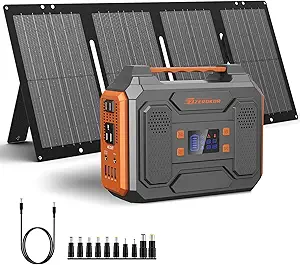
ZeroKor 300W Portable Power Station with 60W Solar Panel
The ZeroKor stands out for buyers who want a solar panel in the box rather than having to source one separately. That gives it an immediate off-grid charging option, unlike the ALLWEI 300W and EnginStar 300W, which list solar charging but do not include a panel. Its AC, car, and solar inputs also give an emergency kit more than one way to replenish power if the wall supply is unavailable.
The included panel is rated at 60W, so solar charging will be gradual and depends on available sunlight. The station’s 300W ceiling suits phones and modest camping gear, not larger appliances, and the panel junction box is not waterproof. The supplied materials also say the battery should be charged and discharged periodically, so this set calls for more upkeep than a buy-and-forget backup.
Pros:- Includes a 60W monocrystalline solar panel
- Can recharge from AC, a 12V car outlet, or a compatible solar panel
- Flashlight includes reading and SOS modes
- Multiple listed protections cover overload, overheating, and electrical faults
Cons:- 300W maximum output limits appliance choices
- 60W panel provides a modest solar charging rate
- Panel junction box is not waterproof and the battery needs periodic cycling
Best for: First-time solar backup buyers who want a panel and charging accessories packaged with a small station
Not ideal for: People who need substantial appliance power, fast solar replenishment, or a weatherproof panel setup
- Maximum power output:300W
- Included solar panel:60W monocrystalline, 20.5% conversion efficiency
- AC outlets:2
- USB outputs:3 USB-A ports and 1 quick-charge USB port
- DC output:9V–12.6V, 10A maximum
- Recharge options:AC outlet, compatible 13V–23V solar panel, or 12V car outlet
- Solar panel USB-C output:Up to 15V/2A
- Included accessories:60W solar panel kit, AC adapter, car adapter, and charging cable
Our verdict“Choose the ZeroKor if you want a small emergency station with its solar panel and basic charging accessories included.”
ALLWEI 300W Portable Power Station, 256Wh LiFePO4 Battery
For an emergency plan that may involve a car as well as a wall outlet, I’d give the ALLWEI the edge for charging flexibility. It supports AC, car, and solar input, plus AC and solar charging together; the listed combined recharge time with a compatible setup is 2–2.5 hours. That extra route can matter when power returns only intermittently. It also has more capacity than the DaranEner, while staying at a manageable 6.4 pounds.
Its 256Wh battery and 300W continuous output still place it in small-device territory, not whole-home backup. Unlike the ZeroKor, it does not include a solar panel, and its single AC outlet is less convenient for multiple AC devices than the two on the EnginStar. The 3,000-cycle LiFePO4 rating and five-year warranty support long-term kit use, but do not change its limited runtime.
Pros:- Supports AC, car, solar, and combined AC-plus-solar recharging
- 256Wh capacity exceeds the DaranEner’s 192Wh
- LiFePO4 battery is rated for 3,000 cycles
- Compact 6.4-pound body includes an SOS light
Cons:- Solar panel is sold separately
- One AC outlet limits simultaneous AC device connections
- 300W continuous output cannot handle many household appliances
Best for: Drivers and campers who can recharge from several sources and want a mid-size station with LiFePO4 chemistry
Not ideal for: Buyers who want a solar panel bundled or need multiple AC outlets and extended appliance runtime
- Capacity:256Wh
- Battery chemistry:LiFePO4
- Battery cycle life:3,000 cycles
- Continuous and peak output:300W continuous, 600W peak
- Output ports:1 AC, 2 DC5521, 1 car, 1 USB-A, 1 USB-C
- USB-C output:60W PD
- Combined AC and solar recharge time:2–2.5 hours
- Weight:6.4 lbs
- Warranty:5 years
Our verdict“Choose the ALLWEI if access to several charging sources matters more than an included panel or multiple AC outlets.”
EnginStar 300W Portable Power Station, 296Wh
The EnginStar packs the most stated capacity of these five stations into a 6.5-pound frame. Its 296Wh battery gives small devices more energy to draw from than the DaranEner or ALLWEI, which can mean fewer compromises when keeping a phone, light, and other modest essentials going. Two pure sine wave AC outlets also make it easier to connect two compatible devices than the ALLWEI, which has one AC outlet.
That capacity comes with a different battery tradeoff: EnginStar lists a lithium-ion battery, while the DaranEner, ALLWEI, and Anker use LiFePO4 and provide stated cycle-life figures. EnginStar lists no cycle rating and has a 12-month warranty. Charging tops out at 65W, and solar panels are sold separately, so recharging flexibility is less compelling than the ALLWEI’s combined AC-and-solar option.
Pros:- 296Wh capacity is the largest among these five models
- Two pure sine wave AC outlets
- Weighs 6.5 pounds and supports AC, car, and compatible solar charging
- Eight output ports accommodate several devices
Cons:- Lithium-ion battery has no cycle-life figure listed
- Maximum charging speed is 65W
- Solar panel is not included and the warranty is 12 months
Best for: People who want more stored energy for small emergency devices while keeping the station light enough to carry
Not ideal for: Buyers prioritizing a stated long-cycle LiFePO4 battery rating, rapid recharging, or included solar equipment
- Capacity:296Wh
- Battery type:Lithium-ion
- AC output:300W
- AC outlets:2 pure sine wave, 110V
- Output ports:8
- USB-C output:18W
- Maximum charging speed:65W
- Weight:6.5 lbs
- Warranty:12 months
Our verdict“Pick the EnginStar for the greatest listed capacity in this group if its lithium-ion battery and slower charging fit your backup plan.”
Anker SOLIX C300 Portable Power Station, 288Wh Solar Generator for Camping
When an outage gives you only a short window with mains power, the Anker SOLIX C300 is the most compelling pick here: it reaches 80% charge in a stated 50 minutes from a wall outlet. Its 288Wh capacity is close to the EnginStar’s 296Wh, but the Anker pairs that with LiFePO4 cells rated for 3,000 cycles and a five-year warranty. The 140W two-way USB-C ports also suit modern phones, tablets, and compatible gear better than the EnginStar’s 18W USB-C output.
That speed and port selection do not make it an appliance backup: its AC output remains 300W, like the DaranEner and ALLWEI. Solar charging requires a compatible Anker panel, with several listed models excluded, and the shoulder strap is separate. For a household needing longer appliance runtime, a higher-output station from the wider roundup is a better fit.
Pros:- Reaches 80% charge in a stated 50 minutes from a wall outlet
- Two 140W two-way USB-C ports support high-power compatible devices
- LiFePO4 battery is rated for 3,000 cycles and includes a five-year warranty
- Quiet operation is specified at 25dB
Cons:- 300W AC output rules out many household appliances
- Shoulder strap is sold separately
- Not compatible with the listed Anker PS30, PS200, and PS400 solar panels
Best for: People who expect brief opportunities to recharge and need fast USB-C charging for phones, tablets, and other small devices
Not ideal for: Households seeking backup for high-wattage appliances or buyers who want an included shoulder strap or broad solar-panel compatibility
- Capacity:288Wh
- Output:300W, 600W surge
- Ports:3 AC, 1 car socket, 3 USB-C, 1 USB-A
- USB-C output:2 ports at 140W each; 1 port at 15W
- Battery type:LiFePO4
- Battery lifespan:3,000 cycles
- Wall recharge time:80% in 50 minutes
- Noise level:25dB at 3.3 ft
- Warranty:5 years
Our verdict“Choose the Anker SOLIX C300 if fast wall recharging and powerful USB-C ports matter more than appliance-level backup.”
DARAN 288Wh LiFePO4 Portable Power Station, 600W Output
The DARAN 288Wh pairs a 600W continuous output with a 1200W surge rating, giving it more room for compatible emergency devices than the 300W Jackery Explorer 300. That extra output can accommodate some mini-fridges or CPAP setups, though actual runtime depends on the device and its power draw. Its 8.86-pound weight and reinforced handle keep it manageable to move, while the LED’s SOS mode adds a useful signaling option during an outage. Two AC outlets and four USB or car ports let me connect several smaller devices at once. The tradeoff is its 288Wh capacity: more output does not mean long runtimes, and appliances above 600W are out of range. Solar and car charging cables are also not included.
Pros:- 600W continuous output with 1200W surge capacity
- LiFePO4 battery chemistry
- Two AC outlets plus USB and car ports for multiple devices
- Portable 8.86-pound body with SOS-capable LED light
Cons:- 288Wh capacity limits runtime for power-hungry devices
- Solar panel and solar and car charging cables are not included
- Devices rated above 600W exceed its stated continuous output
Best for: Households seeking a portable backup for a CPAP machine, phones, and other compatible devices rated within 600W.
Not ideal for: Buyers who need to run high-wattage appliances or power essential devices for extended periods without recharging.
Our verdict“Choose the DARAN when higher output for compatible emergency essentials matters more than extended runtime.”
ENOFLO Portable Power Station, 97.68Wh
At 2.2 pounds, the ENOFLO is the easiest of these five to keep in a go bag or move between rooms, but its 97.68Wh battery makes it a small-device backup rather than a home outage hub. Its AC outlet peaks at 120W, far below the 600W DARAN and BLUETTI Elite 30 V2, so it suits phones, lights, and other low-draw gear—not mini-fridges or most appliances. Six ports, including USB-C and two DC outputs, make it flexible for modest loads, and the flashlight’s SOS mode can help with signaling. I would pick this when portability comes first. The limited AC output and capacity mean buyers should expect short runtimes, and solar charging requires a separately supplied panel.
Pros:- Lightweight 2.2-pound design with hidden handle
- Six output ports, including AC, USB-C, USB-A, and DC
- Built-in flashlight with SOS mode and adjustable light panel
- Supports AC, compatible solar, and car USB-C recharging
Cons:- 97.68Wh capacity offers limited runtime
- 120W peak AC output excludes many appliances
- Solar panel is not included
Best for: Solo travelers or emergency-kit owners who want a very light backup for phones, small lights, and low-power devices.
Not ideal for: Households planning to power a CPAP machine, refrigerator, or multiple high-draw essentials during an outage.
Our verdict“Pick the ENOFLO for a lightweight emergency kit focused on phones and other low-power devices.”
Jackery Explorer 300 Portable Power Station, 292Wh
The Jackery Explorer 300 offers a balanced set of connections for an emergency kit: two AC outlets, USB ports, and a car port, with a 292Wh capacity and 300W rated output. Compared with the smaller ENOFLO, it has substantially more stored energy and a higher stated AC rating; compared with the 600W DARAN, it gives up output headroom. Its LiFePO4 battery is listed for over 4,000 charge cycles before reaching 70% capacity, a useful durability detail for a station that may sit between outages. At 7.1 pounds, it remains reasonably portable. The solar charging figure assumes a compatible 100W panel, sold separately, and the supplied data gives conflicting weights of 7.1 and 7.5 pounds.
Pros:- 292Wh capacity with 300W rated output
- LiFePO4 battery rated for over 4,000 charge cycles to 70% capacity
- Two AC outlets, USB ports, and 120W car port
- About 7.1 pounds with an integrated handle
Cons:- 300W rated output is below the DARAN and BLUETTI models
- Solar panel is sold separately
- Provided product data lists conflicting weights of 7.1 and 7.5 pounds
Best for: Buyers who want a mid-capacity station with several charging options for phones, laptops, and other devices within its 300W rating.
Not ideal for: People who need 600W-class output or want a solar panel included for off-grid recharging.
Our verdict“Choose the Explorer 300 for a portable, multi-port backup when 300W output is enough for your emergency devices.”
Anker SOLIX C300 DC Portable Power Station, 288Wh, 300W
The Anker SOLIX C300 DC is the lineup’s strongest fit for people whose emergency kit centers on USB-C devices: it has two 140W USB-C ports, two additional USB-C ports, and a 288Wh LiFePO4 battery. Those high-output ports can serve compatible laptops and other USB-C equipment without relying on AC outlets. Compared with the Jackery Explorer 300, the Anker emphasizes USB-C charging and has seven ports, while the Jackery lists two AC outlets and a 120W car port. The Anker’s 300W total output still limits what it can run, and it is not the choice for higher-wattage appliances that the 600W DARAN or BLUETTI can handle. Recharging options include USB-C, solar, and car, but the wall charger and shoulder strap are not included.
Pros:- 288Wh LiFePO4 battery
- Two 140W USB-C ports plus two additional USB-C ports
- Seven total ports, including USB-A and a car socket
- Supports USB-C, solar, and car recharging
Cons:- 300W output limits appliance use compared with the 600W DARAN and BLUETTI
- Wall charger and shoulder strap are not included
- Not compatible with Anker SOLIX PS30, PS200, or PS400 solar panels
Best for: Laptop owners and households with several USB-C devices who want a compact battery for charging them during outages.
Not ideal for: Buyers who need AC outlets or more than 300W output for appliances and other high-draw emergency equipment.
Our verdict“Choose the Anker when fast USB-C charging for compatible devices matters more than AC appliance capacity.”
BLUETTI Elite 30 V2 Portable Power Station, 288Wh, 600W
The BLUETTI Elite 30 V2 combines 600W continuous output with a claimed 0–80% wall charge in 45 minutes, a useful pairing for short outages when there may be time to top up between interruptions. Its 10ms UPS function is aimed at keeping connected equipment supplied through a brief switchover, while the DARAN 288Wh offers the same stated capacity and continuous output without a listed UPS feature. BLUETTI also lists up to 1500W in Power Lifting Mode, but that mode is not a general substitute for 1500W continuous output. At 9.4 pounds it remains portable, though heavier than the 7.1-pound Jackery Explorer 300. The 288Wh battery can still run down quickly with demanding loads, so its fast charging does not remove the need to manage runtime.
Pros:- 600W continuous output
- Claimed wall charging from 0–80% in 45 minutes
- 10ms UPS switch time
- Supports AC, solar, and car charging
Cons:- 288Wh capacity limits runtime for higher-power devices
- 1500W output is available only in Power Lifting Mode
- At 9.4 pounds, it is heavier than the Jackery Explorer 300
Best for: People who can recharge between outages and want a portable station with a UPS function for compatible connected equipment.
Not ideal for: Buyers who need long runtimes for high-power devices or expect 1500W continuous output from Power Lifting Mode.
Our verdict“Choose the BLUETTI for fast wall recharging and UPS backup when its 288Wh capacity suits your expected loads.”
Jackery Explorer 300 Portable Power Station with 40W Solar Panel
For a small emergency kit that should include its own way to recharge, this Jackery pairs a 292Wh LiFePO4 station with a 40W solar panel. Its 300W output can handle phones, a laptop, and other modest loads, while the 100W USB-C port is useful for charging compatible devices quickly. At 7.5 pounds, it is heavier than the 2.54-pound Daran 89.6Wh, but stores substantially more energy for an outage. The tradeoff is that the included panel is slow: reaching 80% takes about 7.5 hours under the stated conditions, so it is a backup charging option rather than a quick refill. Buyers should also be prepared for the station and panel to arrive separately.
Pros:- Includes a 40W solar panel and charging accessories
- 292Wh capacity with 300W rated output
- LiFePO4 battery rated for over 4,000 cycles to 70% capacity
- 100W USB-C PD port and six device connections
Cons:- Included 40W panel takes about 7.5 hours to reach 80% capacity
- Station and panel may ship separately
- Heavier than the sub-100Wh compact options in this group
Best for: Households assembling a compact outage kit who want a solar panel included and need to keep several small devices running.
Not ideal for: People who need fast solar replenishment or a lightweight grab-and-go kit; the 40W panel charges slowly and the unit weighs 7.5 pounds.
- Capacity:292Wh
- Peak surge:600W
- Weight:7.5 lbs
- Battery chemistry:LiFePO4; over 4,000 cycles before reaching 70% capacity
- AC outlets:2
- USB-C:100W USB-C PD
- Included solar panel:40W
Our verdict“Choose this Jackery if you want a mid-size emergency station with a solar panel in the box and can accept slow recharging.”
MARBERO M82 Portable Power Station, 88Wh
The M82 is aimed at short outages where keeping phones charged and having a built-in light matter more than running appliances. Its 88Wh capacity and 80W running output suit small electronics, while eight output ports let several low-draw devices connect at once. The three-level LED has an SOS mode, adding a useful emergency function without packing a separate light. Compared with the HOWEASY 88Wh, it has less running power (80W versus 120W) and weighs more, so the HOWEASY is the stronger fit for buyers focused on output and carry weight. The M82’s advantage is its lighting and protection features; its key limitation is that solar charging needs a compatible MARBERO panel, sold separately.
Pros:- Eight output ports for connecting several small devices
- Built-in LED offers three brightness levels and SOS flashing
- Supports AC, car, and compatible solar charging
- Battery management system includes short-circuit and overload protection
Cons:- 80W running output rules out many household appliances
- Compatible solar panel is sold separately
- At 3.2 pounds, it is heavier than the 88Wh HOWEASY
Best for: Apartment residents or drivers who want one small backup for phones, small electronics, and emergency light during brief outages.
Not ideal for: Buyers who need to power appliances above 80W or want solar charging ready without purchasing a compatible panel separately.
- Capacity:88Wh
- Battery capacity:24,000mAh
- Running output:80W
- Surge output:120W
- Weight:3.2 lbs
- Dimensions:6.5 × 4.6 × 3.1 inches
- Output ports:8
- LED light:3 brightness levels and SOS flashing mode
Our verdict“Pick the M82 for low-power backup and built-in SOS lighting, but skip it if appliance output or easy solar setup is your priority.”
Jackery Explorer 1000 v2 Portable Power Station
When an emergency plan needs to cover more than phones and lights, the Explorer 1000 v2 brings a 1,070Wh LFP battery and 1,500W AC output. That capacity and output put it in a different class from compact picks such as the Daran 89.6Wh, which is limited to devices within 100W. Three pure sine wave AC ports and multiple USB connections allow several devices to run or charge together, while app controls offer a quiet overnight mode. Its optional one-hour emergency charging can restore power quickly, but requires enabling the setting in the app; the default charge time is 1.7 hours. At 23.8 pounds it is less convenient to carry, and solar panels are sold separately with compatibility limited to Jackery panels.
Pros:- 1,070Wh capacity and 1,500W AC output cover more demanding backup needs
- 3,000W surge capacity
- LFP battery rated to retain over 70% capacity after 4,000 cycles
- App supports charging controls and quiet 30 dB overnight mode
Cons:- One-hour charging requires enabling emergency charging in the app
- Solar panel is not included and compatibility is limited to Jackery panels
- 23.8-pound weight is cumbersome for frequent carrying
Best for: Households preparing for extended outages who need to run several devices, including higher-draw equipment within the station’s output limits.
Not ideal for: Buyers seeking a light emergency bag station or a solar-ready package; this unit weighs 23.8 pounds and panels are not included.
- Battery capacity:1,070Wh
- AC output:1,500W
- Surge peak:3,000W
- Weight:23.8 lbs
- Battery type:LFP; over 70% capacity after 4,000 charge cycles
- AC outlets:3 pure sine wave
- USB-C ports:2, up to 100W PD each
- Charging time:1 hour with emergency charging enabled; 1.7 hours by default
Our verdict“Choose the Explorer 1000 v2 for substantial home backup capacity and output, provided its weight and separate solar purchase fit your plan.”
Daran Portable Power Station, 89.6Wh LiFePO4 Battery, 100W
For a grab-and-go emergency kit, the Daran keeps the focus on low weight and durable battery chemistry: it weighs 2.54 pounds and uses an 89.6Wh LiFePO4 battery rated for more than 3,500 cycles. Seven ports, including two AC outlets and USB-C charging, make it flexible for phones, small electronics, and other loads within its 100W limit. It is far easier to carry than the 23.8-pound Jackery Explorer 1000 v2, but the smaller battery cannot support an extended outage or higher-power equipment. A fanless design keeps operation quiet, which suits a bedside setup, though it also does not change the limited capacity. Solar charging is possible only with an optional panel and cable.
Pros:- Light 2.54-pound body with carrying handle
- LiFePO4 battery rated for more than 3,500 cycles
- Fanless operation avoids fan noise
- Seven ports include two AC outlets and two USB-C ports
Cons:- 100W output limit excludes many household appliances
- 89.6Wh capacity is suited to short-duration backup only
- Solar panel and cable are not included
Best for: People building a lightweight home or car emergency kit for phones, lights, and small electronics, especially those who value long cycle life.
Not ideal for: Households looking to power appliances over 100W or stretch backup power across a prolonged outage; its capacity is only 89.6Wh.
- Battery capacity:89.6Wh
- Battery type:LiFePO4
- Peak output:200W
- Weight:2.54 lbs
- Dimensions:6.5 × 3.3 × 4 inches
- Output ports:7
- AC outlets:2 × 100W
- Battery life:More than 3,500 cycles
Our verdict“Choose the Daran for a quiet, lightweight emergency kit centered on small electronics, not for appliance backup or long outages.”
HOWEASY Portable Power Station, 120W
Weighing 2.3 pounds, the HOWEASY is the lightest of these compact emergency options while offering 120W running power. Its 88Wh capacity is still for short outages, but the higher output gives it an edge over the 80W MARBERO M82 for compatible small devices. Eight ports and AC, car, and solar charging options make it adaptable for a vehicle kit or bedside backup. The built-in light has steady, flash, and SOS modes, so it can serve as a basic emergency lamp too. Its 1,500-cycle life is shorter than the LiFePO4 Daran’s stated 3,500-plus cycles, and a solar panel is not included. This is a portability-first pick, not a substitute for a larger station when an outage lasts.
Pros:- Lightweight 2.3-pound design
- 120W running power exceeds the MARBERO M82’s 80W
- Eight output ports and three charging methods
- Built-in light includes steady, flash, and SOS modes
Cons:- 88Wh capacity provides only short-duration backup
- Solar panel is sold separately
- Stated cycle life of over 1,500 cycles is lower than the LiFePO4 Daran’s rating
Best for: Drivers and individuals assembling a lightweight emergency kit for phones, small electronics, and a basic light.
Not ideal for: Families needing sustained backup or equipment above 120W; its 88Wh capacity and limited output are meant for small loads.
- Capacity:88Wh
- Running power:120W
- Peak power:240W
- Weight:2.3 lbs
- Dimensions:6.6 × 4 × 3 inches
- Output ports:8
- USB-C output:18W
- Cycle life:More than 1,500 cycles
Our verdict“Pick the HOWEASY when low carry weight and 120W output matter most for a small emergency kit.”
How We Picked
Every model here was judged through one lens: performance in a real emergency. That starts with usable capacity — not the marketing watt-hours, but what’s actually deliverable after inverter losses, which typically shave 10–15% off the stated figure. From there I weighed battery chemistry heavily, because an emergency station spends most of its life in a closet. A LiFePO4 battery rated for 2,000+ cycles will still hold a charge and accept recharge five years from now, while older lithium-ion chemistry degrades noticeably faster — a genuine safety margin issue when the device only matters a few days a year.
Surge handling, recharge speed, and output versatility came next. A 300W inverter can’t start some medical devices, blenders, or power tools even if their running draw fits, so models with 600W outputs ranked higher for emergency flexibility. Finally, I factored in weight, interface clarity (a panicked user shouldn’t need a manual), included accessories like solar panels, and warranty support. The ranking favors units that balance all of these — which is why brand-backed midsize models sit at the top while ultra-cheap units with inflated specs land lower despite their appeal.
Factors to Consider When Choosing Portable Power Stations For Emergencies
Before choosing a specific model, it helps to understand what actually determines whether a power station will serve you in a real outage — and where buyers most often go wrong.Size Your Capacity to What You’ll Actually Run
The most common mistake is buying capacity for fantasy scenarios instead of real ones. A good exercise: list the devices you genuinely need during a 24-hour outage — typically a phone (15Wh), a radio or headlamps (5–20Wh), a router (10–20Wh), and possibly a CPAP machine (roughly 50–100Wh per night). Add those up, and you may find a 250–300Wh station covers you comfortably, making a 1,000Wh unit unnecessary expense and weight. On the other hand, if keeping a fridge or freezer running is your priority, nothing under 800Wh will buy you meaningful hours — a small fridge draws 40–60W continuously, draining even the Jackery Explorer 1000 v2 in under a day. Buy for your list, not the biggest number on the page.
Battery Chemistry Is the Hidden Long-Term Cost
Emergency gear has a strange usage pattern: months of storage punctuated by a few intense days. That pattern punishes conventional lithium-ion batteries, which degrade whether or not they’re being used and typically survive 500 charge cycles. LiFePO4 chemistry tolerates 2,000+ cycles, handles heat better, and is far less prone to thermal runaway — all of which matter more for a closet-stored emergency device than for a camping unit used monthly. The tradeoff is slightly lower energy density, so LiFePO4 models weigh a bit more per watt-hour. Whatever chemistry you pick, set a recurring reminder to top up the station every 3–4 months, because a fully discharged battery left that way for a season may not recover at all.
Inverter Rating and Surge Capacity Decide What Actually Runs
Buyers fixate on watt-hour capacity and overlook the inverter, but the inverter decides whether a device turns on at all. Motors and compressors — refrigerators, fans, some medical equipment — draw two to three times their running wattage at startup. A 300W inverter will refuse a device that runs at 250W but surges to 600W, even with a mostly full battery. That’s why the 600W models in this roundup earn their place despite similar capacity to 300W rivals. Also check the pure sine wave designation if you’re powering sensitive electronics or CPAP machines; a few budget models use modified sine wave output, which can cause motors to hum and some medical devices to malfunction. It’s the least glamorous spec on the box and one of the most consequential.
Solar Input Matters More Than Included Panels
Solar bundles look like an easy win, but the panel is only half the equation — the station’s maximum solar input determines how fast that panel can actually refill the battery. A station limited to 60W of solar input will take most of a sunny day to refill 280Wh, no matter what panel you attach. Compare that with models accepting 200W or more, which can genuinely cycle daily during a multi-day outage. If extended blackouts are your main concern, prioritize a high solar input rating and buy a quality panel separately, ideally a 100W monocrystalline unit. For short outages, wall recharging speed after the storm passes matters more than any solar consideration — a station that recharges to 80% in an hour will be ready for the next event long before a slow-charging competitor.
Weight, Ports, and Panic-Proof Design
An emergency station you can’t physically move to where it’s needed is furniture, not preparedness. Think about who might deploy it: if an older family member or teenager will carry it downstairs during an outage, anything over 15 pounds is a real limitation. Port selection deserves similar scrutiny — at minimum, look for two AC outlets, USB-C with Power Delivery (the single most useful charging port today), and a 12V car-style outlet for older accessories. Interface design is the underrated factor: the best models here show exact runtime estimates for the current load, while cheap units display only vague battery bars. During a stressful outage at 2 a.m., knowing you have ‘4 hours 20 minutes remaining’ versus ‘roughly half’ changes how you ration your power.
When to Pay More — and When Not To
Higher prices in this category buy four things: battery longevity, inverter headroom, faster recharging, and warranty support from a company that will still exist in three years. If your emergency plan includes medical devices or multi-day outages, those premiums are worth paying — a failed budget unit at the wrong moment costs far more than the savings. But if you’re building a car kit, a dorm emergency bag, or a backup for a single phone and a light, the sub-100Wh models under $100 do that job perfectly well, and their airline-legal size makes them genuinely portable in a way big stations aren’t. The middle trap to avoid is paying mid-tier money for inflated specs: some budget brands advertise peak surge ratings as if they were continuous output. Always verify the continuous wattage rating and the cycle-life spec before comparing prices.
Frequently Asked Questions
Can a 300Wh power station run a CPAP machine overnight?
In most cases, yes — but the details matter more than the headline capacity. A modern CPAP machine without a heated humidifier typically draws 30–60W, meaning a 288Wh station will run it for roughly 4–7 hours; with a heated hose and humidifier, that can drop to 3–4 hours. You can stretch this considerably by disabling the humidifier and using DC power (many CPAPs accept 12V input directly, bypassing the inverter’s 10–15% efficiency loss). For a full 8-hour night with humidification, you realistically need 500Wh or more, which in this roundup means stepping up to the Jackery Explorer 1000 v2. Also confirm your station outputs pure sine wave AC, since some CPAP manufacturers void warranties when used with modified sine wave power.
Is LiFePO4 really worth choosing over standard lithium-ion for emergency use?
For an emergency-specific purchase, the chemistry difference is arguably the single most important spec. LiFePO4 cells are rated for roughly 2,000–3,000 cycles versus 500 for typical lithium-ion, and they degrade more slowly even when sitting unused — which is exactly how emergency stations spend their lives. They’re also more thermally stable, a meaningful attribute for a device stored indoors or in a vehicle. The tradeoffs are modest: about 20–30% more weight per watt-hour and slightly worse cold-weather performance below freezing. If two models cost the same and one uses LiFePO4, that one will very likely still be functional ten years from now while the other becomes e-waste. That long-horizon math is why LiFePO4 models rank higher in this comparison despite sometimes lower raw capacity.
Are the small sub-100Wh stations actually useful, or just toys?
They’re genuinely useful — but only for the right job. An 88–98Wh unit will recharge a phone 5–7 times or run LED lighting and a radio for a full day, which covers the most common outage scenario: a 12–24 hour blackout where your needs are communication and light. Their real advantages are portability (under 3 pounds, so they fit in a car kit or go-bag) and airline-legal size for travel emergencies. What they can’t do is run anything with a motor, power a laptop through multiple workdays, or keep a CPAP running a full night. A smart strategy many households use: keep one small unit in the car and one larger 300Wh-class station at home, covering both bug-out and shelter-in-place scenarios for less than a single big unit.
Do I need solar panels, or is wall charging enough for emergencies?
It depends entirely on outage length where you live. For the typical outage — under 24 hours — wall charging is perfectly adequate, since you’ll recharge the station once power returns. Solar becomes valuable when outages stretch past two days or when storms are frequent enough that the grid flickers repeatedly, because panels let you cycle the station indefinitely without grid power. If you go solar, check the station’s maximum solar input wattage before buying a panel; pairing a 100W panel with a station capped at 60W input wastes money. Position also matters more than people expect — panels angled toward the sun can produce double the output of panels laid flat. If you buy a bundle, treat the included panels as a supplement: the 40–60W panels in this roundup are useful trickle-chargers, not rapid-refill systems.
How should I store and maintain my power station so it works when I need it?
Storage discipline is what separates a working emergency station from a dead one. Store the unit at 50–80% charge — never fully empty, since a lithium battery left drained for months can fall below its recovery voltage and refuse to charge permanently. Set a calendar reminder to check and top up the station every three to four months; most models hold standby charge for 6–12 months but lose a few percent monthly. Keep it indoors at moderate temperatures, because both extreme heat and sub-freezing cold degrade the cells and can temporarily limit output. Finally, run a full cycle once or twice a year — plug in a lamp or fan and drain it down, then recharge — both to verify everything works and to keep the battery management system calibrated. The best-prepared owners keep a printed card taped to the unit with charging reminders and what it’s rated to run.
Conclusion
Matching the right station to your situation is easier once you know which buyer type you are. For most households, the Anker SOLIX C300 is my best overall pick — it balances capacity, interface quality, and fast recharging in a package anyone can operate during an outage. If value is the priority, the ZeroKor 300W bundle with its 60W solar panel delivers a complete off-grid kit for less than most competitors charge for the station alone, while the budget-minded should also look at the DaranEner 192Wh, whose LiFePO4 chemistry at its price point is hard to beat. For beginners, the Jackery Explorer 300 remains the friendliest introduction to emergency power — a simple interface, forgiving design, and a brand with strong support if anything goes wrong.
Buyers with bigger needs should step up accordingly. The Jackery Explorer 1000 v2 is the premium pick and the only model here that can meaningfully run a fridge, making it the right call for extended outages or medically critical loads. For those wanting inverter headroom without the size penalty, the BLUETTI Elite 30 V2 and DARAN 288Wh offer 600W outputs in compact bodies. And for car kits, travel bags, and single-device backup, the MARBERO M82 and ENOFLO units do that narrow job well at a fraction of the cost. Whatever you choose, buy for your actual outage list — not the biggest number — and set a reminder to recharge it every few months so it’s ready the day the lights go out.