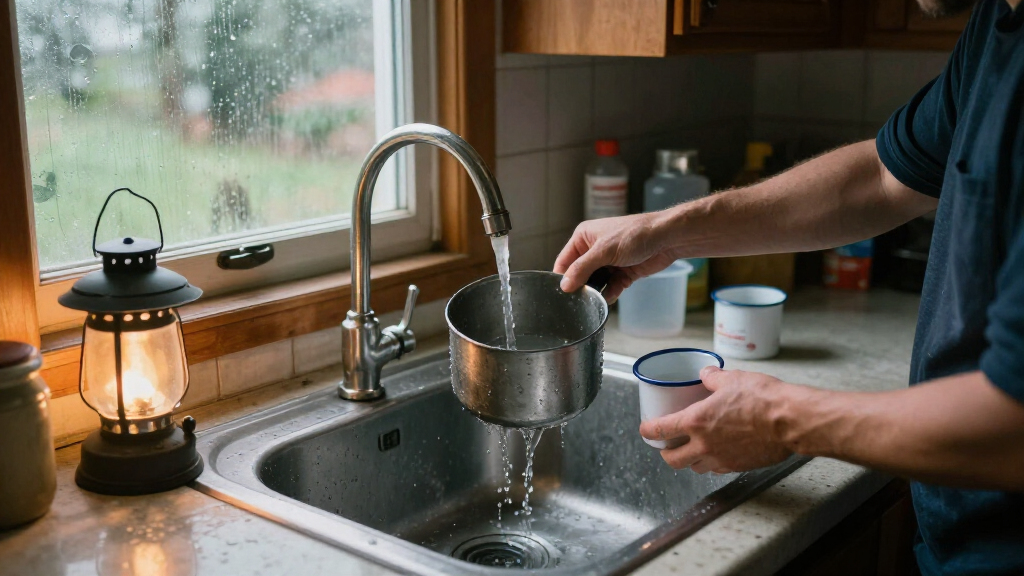

Home emergency water filters come in three basic shapes: gravity-fed systems that purify large volumes without power, portable filters for evacuation scenarios, and chemical tablets that serve as ultralight backup. After comparing seven popular options across these formats, the Outback Emergency Water Filter System with Extra Filters earns the top spot for its balance of daily capacity, proven filtration, and included redundancy. The Pureday 3-Gallon Stainless Steel Gravity Filter is the premium pick for families who want a permanent countertop system, while Aquatabs tablets are the cheapest, lightest insurance policy you can buy. The main tradeoff you’ll face is capacity versus portability: a 3-gallon stainless unit can’t go in a go-bag, and a hand-pump filter won’t keep a household of four hydrated. Read on for the full breakdown, including who each system is for and who should skip it.

Get emergency and outdoor gear delivered free — and shop member deals
- Fast, free delivery on millions of items
- Access to Prime Big Deal Days deals on October 6–7
- Prime Video, Amazon Music and more included
Key Takeaways
- Gravity-fed systems dominated the top of the ranking because home emergencies demand volume — the Outback and Pureday systems can supply a whole family, while hand pumps and tablets are single-person tools.
- Aquatabs appeared twice for a reason: the 49 mg tablets suit small containers and beginner kits, while the 397 mg tablets handle large stored volumes — but neither removes sediment or chemicals, which is why they’re ranked as backups, not primaries.
- The Pureday stainless steel unit is the only option built for daily countertop use, which justifies its premium positioning — but its weight makes it strictly a shelter-in-place choice.
- The Purewell hand pump and Uzima UZ-2 fill the evacuation niche; the Purewell is faster for one person, while the Uzima’s gravity bag does the work for you once it’s hung.
- Filter redundancy separated the best-prepared picks — the Outback with Extra Filters bundle was the only system that ships with spares, a meaningful advantage when resupply is impossible mid-emergency.
| Aquatabs Water Purification Tablets, 397 mg, 100 Pack |  | Best for Bulk Water Treatment | Brand: Aquatabs | Form: Water purification tablets | Tablet strength: 397 mg | VIEW LATEST PRICE | See Our Full Breakdown |
| Outback Emergency Water Filter System with Extra Filters |  | Best Longevity Pick | Filtration capacity: Up to 24 gallons per day | Operation: Gravity-fed; no power required | Compatible sources: Lakes, rivers, streams, stored rainwater | VIEW LATEST PRICE | See Our Full Breakdown |
| Pureday 3-Gallon Stainless Steel Gravity Water Filter with 4 Filters |  | Best for Household Use | Capacity: 3 gallons | Material: 304 stainless steel | Filtration standards: NSF/ANSI 42, 53, and 401 | VIEW LATEST PRICE | See Our Full Breakdown |
| Aquatabs 49 mg Water Purification Tablets, 100 Count |  | Best for Go-Bags | Quantity: 100 tablets | Tablet strength: 49 mg | Water treated per tablet: 0.75–2 liters | VIEW LATEST PRICE | See Our Full Breakdown |
| Outback Water Emergency Drinking Water Filter System, Gravity-Fed, 24 GPD |  | Best Overall Gravity System | Purification method: Nanofiltration | Filtration stages: 4 | Maximum flow rate: 90 liters per day | VIEW LATEST PRICE | See Our Full Breakdown |
| Purewell Portable Hand-Pump Water Filter |  | Best Hand-Pump Option for Bug-Out Bags | Filtration method: Hollow-fiber ultrafiltration, activated carbon, and PP cotton | Filter pore size: 0.01 micron | Maximum flow rate: 1,400 ml/min | VIEW LATEST PRICE | See Our Full Breakdown |
| Uzima UZ-2 Portable Gravity-Fed Camping Water Filter |  | Best for Effortless Gravity Filtration on the Move | Filter type: Hollow-fiber | Operation: Gravity-fed, manual | Power source: None required | VIEW LATEST PRICE | See Our Full Breakdown |
More Details on Our Top Picks
Aquatabs Water Purification Tablets, 397 mg, 100 Pack
When the priority is treating large volumes of water quickly, these 397 mg tablets are the workhorse of chemical treatment. Each one purifies 4 gallons in 30 minutes, which makes this pack capable of treating roughly 400 gallons total — far beyond what any single gravity filter in this lineup can process before needing replacement filters. Compared with the smaller 49 mg Aquatabs, this version trades portability for volume: you get fewer doses of far more water per tablet, which matters when refilling a household’s drinking supply rather than a single bottle. The claim of no taste, color, or odor is a genuine advantage over older iodine-based treatments. The catch is that tablets purify but do not filter — murky or sediment-heavy source water will still need pre-filtration through something like the Outback system or a simple filter bag.
Pros:- Treats 4 gallons per tablet for high total capacity
- Effective against bacteria, viruses, and Giardia cysts
- No reported taste, color, or odor
- Long shelf life with a 2029 expiration date
Cons:- Does not remove sediment or particulates
- Requires a 30-minute wait before water is safe to drink
Best for: Households stocking an emergency supply who need to treat stored or gathered water in large batches
Not ideal for: Anyone sourcing cloudy, sediment-filled water — tablets disinfect but leave particulates behind, so a separate filter step is needed
- Brand:Aquatabs
- Form:Water purification tablets
- Tablet strength:397 mg
- Pack size:100 tablets
- Treatment capacity:4 gallons in 30 minutes per tablet
- Reported reduction:99.9999% bacteria, 99.99% viruses, 99.9% Giardia cysts
- Expiration date:February 2029
Our verdict“Buy this if you need to disinfect large volumes of emergency water cheaply; pair it with a filter if your source is visually dirty.”
Outback Emergency Water Filter System with Extra Filters
This bundle takes the Outback gravity platform and adds spare filters, which is a smarter emergency buy than it might first appear. In a genuine emergency, replacement filters are exactly what becomes unobtainable, so having them in the box from day one extends the system’s useful life without relying on future supply chains. Compared with the standard Outback Water system elsewhere in this roundup, the underlying hardware is the same — gravity-fed operation, no power or pumps — but this version gives you staying power. Against the Pureday stainless steel unit, it sacrifices countertop polish and certified contaminant claims for portability and field readiness. Be aware the filtration capacity of up to 24 gallons per day assumes regular manual refilling of the upper chamber, and the listing is thin on specifics about exactly which contaminants are reduced.
Pros:- Includes extra replacement filters for extended operation
- Runs entirely on gravity with no electricity or batteries
- Handles lakes, rivers, streams, and stored rainwater
- Designed to be transported and stored compactly
Cons:- Upper chamber must be filled manually throughout the day
- No published specifics on contaminant removal
Best for: Preppers and rural households who want a gravity system with spare filters already on hand for extended outages
Not ideal for: Buyers who want documented contaminant removal standards — this listing does not spell out which contaminants are addressed
- Filtration capacity:Up to 24 gallons per day
- Operation:Gravity-fed; no power required
- Compatible sources:Lakes, rivers, streams, stored rainwater
- Included:Extra replacement filters
- Design:Portable bucket system
Our verdict“This pick makes the most sense for anyone whose emergency plan spans weeks, not days, thanks to the bundled spares.”
Pureday 3-Gallon Stainless Steel Gravity Water Filter with 4 Filters
Unlike every bucket-and-bladder option in this roundup, the Pureday is built to live on your countertop permanently. The 304 stainless steel body is the key differentiator: it resists corrosion, wipes clean, and looks like a kitchen appliance rather than camping gear — a real tradeoff against the polyethylene Outback systems if aesthetics and durability matter to you. Its NSF/ANSI 42, 53, and 401 certification puts it ahead of the Outback bundles for documented performance, with two-stage filtration targeting lead, chlorine, and PFOS/PFOA — contaminants the tablet-based Aquatabs options cannot touch at all. The built-in water level indicator in the spigot is a small convenience that saves constant lid-lifting. The tradeoff is maintenance complexity: the carbon and PFOS/PFOA filters run on different replacement schedules, so you are tracking two consumable timelines, and the total system is heavier and less portable for evacuation scenarios.
Pros:- Certified to NSF/ANSI 42, 53, and 401 standards
- Two-stage filtration includes PFOS/PFOA reduction filters
- Corrosion-resistant stainless steel construction
- Spigot water level indicator for at-a-glance monitoring
Cons:- Two filter types with different replacement intervals to track
- Heavy and bulky compared with portable bucket systems
Best for: Families of 4–6 who want an everyday countertop filter that doubles as their emergency backup
Not ideal for: Anyone prioritizing a grab-and-go bug-out kit — stainless steel and 3 gallons of capacity make this a stay-in-place system
- Capacity:3 gallons
- Material:304 stainless steel
- Filtration standards:NSF/ANSI 42, 53, and 401
- Filters included:2 carbon filters, 2 PFOS/PFOA reduction filters
- Carbon filter lifespan:6 months or 3,000 gallons each
- PFOS/PFOA filter lifespan:3 months or 1,000 gallons each
- Power:Gravity filtration; no electricity
- Stated household capacity:4–6 people
Our verdict“This is the pick for households that want certified filtration as a permanent fixture, not just a disaster drawer item.”
Aquatabs 49 mg Water Purification Tablets, 100 Count
Where the 397 mg Aquatabs are built for volume, this 49 mg version is built for weightless, pocketable insurance. At just over 9 grams for the entire bag and under two inches long, it disappears into a go-bag, glove box, or travel kit in a way no gravity system can — compare that with the 6-pound Outback bucket system, which is a basecamp or home solution, not an evacuation one. Each foil-sealed tablet treats up to 2 liters in 30 minutes, making it ideal for individual water bottles rather than household tanks. The 900-day shelf life with an October 2030 expiration date means you can stash it and forget it. The same limitation applies as its bigger sibling: tablets disinfect microbiological threats but do nothing for sediment, heavy metals, or chemicals — so anything beyond clear source water needs a filter companion.
Pros:- Extremely compact and lightweight at 9 grams total
- Individually foil-sealed tablets for reliability
- Effective against bacteria, viruses, and Giardia cysts
- Long shelf life through October 2030
Cons:- 30-minute wait before water is drinkable
- Sediment-heavy water requires prefiltration first
Best for: Hikers, travelers, and anyone building compact 72-hour go-bags where every ounce counts
Not ideal for: Households treating water for multiple people daily — bottle-scale dosing becomes tedious compared with a gravity system
- Quantity:100 tablets
- Tablet strength:49 mg
- Water treated per tablet:0.75–2 liters
- Treatment time:30 minutes
- Microorganism reduction:99.9999% bacteria, 99.99% viruses, 99.9% Giardia cysts
- Shelf life:900 days
- Dimensions:1.97 × 1.02 × 1.02 in
- Weight:9.07 g
- Expiration date:October 2030
Our verdict“Choose these tablets as personal-size backup purification that fits anywhere, and leave bulk treatment to a gravity system.”
Outback Water Emergency Drinking Water Filter System, Gravity-Fed, 24 GPD
This is the baseline Outback system, and it earns the top gravity slot for balancing throughput, portability, and completeness. At 6 pounds with a 12 × 12 × 24 inch footprint, it ships as a ready-to-run kit — filters, spigot, containers, connectors, gaskets, and manual all included — whereas the extra-filter bundle version duplicates this hardware for those wanting spares. Its four-stage nanofiltration gives it more processing stages than the two-stage Pureday, though the Pureday counters with actual NSF certifications, which is the honest tradeoff here: more stages advertised, fewer documented claims. The 90-liter-per-day maximum flow rate covers a family’s drinking and cooking needs comfortably during an outage. Note the 500 ppm TDS limit — it is designed for freshwater sources, not brackish or seawater, and it still requires you to haul water and fill the upper chamber by hand.
Pros:- Complete kit includes filters, containers, spigot, and fittings
- Four-stage nanofiltration in a gravity-powered design
- Up to 90 liters (24 gallons) per day throughput
- Lightweight 6-pound build with countertop setup
Cons:- Manual filling of the upper chamber is ongoing work
- Raw product information omits specific contaminant removal claims
Best for: Families who want a complete, ready-to-deploy gravity system for power outages and off-grid situations
Not ideal for: Coastal or brackish-water users — the 500 ppm TDS ceiling rules out salty sources entirely
- Purification method:Nanofiltration
- Filtration stages:4
- Maximum flow rate:90 liters per day
- Capacity:24 gallons per day
- Power source:Gravity-powered
- Maximum supported TDS:500 ppm
- Dimensions:12 × 12 × 24 inches
- Weight:6 pounds
- Material:Polyethylene
Our verdict“This model is the strongest all-around choice for a household that wants dependable gravity filtration straight out of the box.”
Purewell Portable Hand-Pump Water Filter
When the priority is grab-and-go filtration rather than a stationary kitchen setup, this hand-pump filter fills a niche the gravity-fed options in this lineup don’t. Unlike the Uzima UZ-2, which depends on elevation and patience, the Purewell lets you draw water on demand from a bottle, bucket, or stream at a stated 1,400 ml per minute — meaning a family can fill containers quickly without waiting on a reservoir to drain.
The three-stage design (hollow-fiber ultrafiltration at 0.01 microns, plus activated carbon and PP cotton) also gives it an edge over single-stage filters, since the carbon stage addresses taste and some chemical contaminants that hollow fiber alone ignores. The tradeoff: carbon has a finite life of about 793 gallons, and pumping is physical work. Compared with the Outback gravity system, you trade hands-off convenience for speed and portability.
Pros:- Manual operation works during power outages and off-grid situations
- Three-stage filtration (hollow fiber, carbon, PP cotton) addresses both pathogens and taste
- 1,400 ml/min flow rate is fast for a handheld pump
- Complete kit includes tubing, hose clip, and carry bag for true portability
Cons:- Real-world filter life varies with source-water turbidity and requires carbon replacement after stated capacity
- Hand-pumping demands physical effort, which becomes tiresome for large volumes
- Not suited to filtering bulk water for a whole household over many days
Best for: Hikers, campers, and households building compact emergency kits who need to filter from unpredictable water sources without electricity
Not ideal for: Anyone wanting high-volume, hands-off filtration for sheltering in place — pumping gets tedious, and a gravity system like the Outback handles larger batches with less effort
- Filtration method:Hollow-fiber ultrafiltration, activated carbon, and PP cotton
- Filter pore size:0.01 micron
- Maximum flow rate:1,400 ml/min
- Stated capacity:793 gallons
- Power source:Manual, non-electric
- Dimensions:8.2 x 5.1 x 2 inches
- Weight:1 pound
- Materials:ABS and stainless steel
- Included components:Filter system, tubing, hose clip, carry bag, instruction manual
Our verdict“A smart pick for mobile emergency plans and outdoor use where speed and portability matter more than bulk capacity.”
Uzima UZ-2 Portable Gravity-Fed Camping Water Filter
The UZ-2 sits in a useful middle ground: it offers gravity-fed convenience like the larger Outback and Pureday systems, but in a package you can actually carry. Set it up, walk away, and come back to filtered water — no pumping required, unlike the Purewell hand-pump, which demands continuous effort for every liter.
Its hollow-fiber element is stated to block 99.999% of bacteria, and the system pairs with purification tablets (such as the Aquatabs in this roundup) for a layered defense against viruses, which hollow fiber alone won’t catch. The honest drawback is transparency: unlike competitors that publish gallon capacity and flow-rate figures, Uzima doesn’t specify either, which makes it harder to plan for a multi-day emergency. If you want predictable, documented throughput for home preparedness, the Outback’s stated 24 gallons per day gives you firmer numbers.
Pros:- Gravity-fed operation requires no pumping, power, or setup expertise
- Lightweight and packable for travel, hiking, and vehicle emergency kits
- Compatible with purification tablets for layered protection against viruses
- Stated 99.999% bacteria protection with global certification claims
Cons:- No published filtration capacity or flow rate, limiting long-term planning
- Gravity filtration is slower than pump-based options like the Purewell
- Hollow fiber alone does not address viruses without secondary treatment
Best for: Campers, travelers, and preppers who want zero-effort filtration and the flexibility to pair it with tablets for virus coverage
Not ideal for: Planners who need documented capacity and flow-rate specs to size an emergency water supply — those numbers simply aren’t published
- Filter type:Hollow-fiber
- Operation:Gravity-fed, manual
- Power source:None required
- Bacteria protection:99.999%
- Certification:Globally certified (as stated)
- Intended use:Camping, hiking, travel, and emergency preparedness
Our verdict“Best for buyers who value set-and-forget portability over hard specifications, especially when paired with tablets for fuller coverage.”

How We Picked
I evaluated each product against what actually matters in a home emergency: daily output capacity, contaminant removal (bacteria, protozoa, and viruses where applicable), ease of setup when the power is out, and filter lifespan and replacement availability. A system that produces two gallons a day fails a family of four no matter how well it filters, so capacity and household scalability carried heavy weight in the ranking. I also factored in format fit — shelter-in-place tools ranked differently than evacuation tools because they solve different problems.
The ranking order reflects a deliberate hierarchy: gravity systems with spare filters and verified contaminant removal sit at the top, durable portable filters fill the middle, and chemical tablets anchor the bottom as backups rather than standalones. Every product earned a distinct role in the lineup, and each carries real tradeoffs I call out honestly — no option here is perfect for every scenario.
Factors to Consider When Choosing Home Emergency Water Filters
Choosing a home emergency water filter is less about finding the “best filter” and more about matching the tool to your likely scenario. Before buying anything in this roundup, work through these factors.Shelter in Place or Evacuate?
The single biggest mistake buyers make is buying one tool for two different emergencies. If you plan to shelter in place, a gravity-fed system with a reservoir — like the Outback or Pureday — is the right format because it produces gallons per day with zero effort. If your plan involves leaving, weight and packed size suddenly matter more than capacity, which pushes you toward a hand pump or a collapsible gravity bag. Ideally, a serious preparedness setup includes both: a high-volume home system plus a compact filter in each go-bag. Buying only the portable option leaves your household undersupplied during the far more common shelter-in-place scenarios like boil advisories and storm outages.
Know What Each Format Actually Removes
Filtration and purification are not the same thing, and confusing them can be a health risk. Hollow-fiber and ceramic filters remove bacteria and protozoa but generally not viruses, which matter most in floodwater and sanitation-failure scenarios. Chemical tablets like Aquatabs neutralize viruses but do nothing for sediment, turbidity, or chemical contaminants — cloudy water should be pre-filtered through cloth before treatment. This is why serious kits pair a filter with tablets: each covers the other’s gap. Check the manufacturer’s stated log-reduction claims rather than vague marketing language about “purification” before you commit.
Calculate Your Household’s Real Demand
FEMA guidance runs about one gallon of drinking water per person per day as a bare minimum, and double that once you account for hygiene and cooking. A family of four needs roughly 28 gallons a week — which immediately disqualifies single-person tools like tablets or a hand pump as a primary solution. Compare that demand against each system’s rated daily output: the Outback’s 24 gallons per day comfortably covers a household, while smaller gravity bags are better suited to couples or individuals. Also remember that rated output assumes reasonably clear source water; silty or turbid water clogs filters faster and slows production well below the spec sheet number.
Filter Lifespan and Storage Life
A filter’s rated gallon capacity is meaningless if the cartridges can’t be replaced after an emergency disrupts supply chains. Look for cleanable elements (ceramic filters can be scrubbed and reused) and consider buying a system bundled with spares, which is exactly why the Outback extra-filter package ranked so well. Tablets have the opposite virtue: sealed Aquatabs have a shelf life measured in years, making them a set-and-forget purchase. Date-check any chemical treatment annually and store filters dry once they’ve been wet — a moist stored filter can grow mold internally. Also verify that replacement cartridges are still sold as standard products, not discontinued oddballs.
Build Quality Versus Packed Weight
Stainless steel housings like the Pureday’s resist cracks, handle daily use, and won’t hold odors — but they weigh enough that you will never carry them anywhere. Plastic gravity systems split the difference, and quality varies widely: look for BPA-free reservoirs, sturdy hang straps, and threaded fittings that don’t cross-strip. For handheld options, pump handle durability and hose fittings are the usual failure points, so a metal pump body is worth extra weight. A useful rule of thumb: gear you carry should be lighter than the water it will process in a day. Cheap plastic components are the most common complaint in this category, and a cracked reservoir mid-emergency is a total failure, not an inconvenience.
Practice Before You Need It
Whatever you buy, set it up and run water through it at least once — this catches missing parts, defective seals, and confusing instructions while you can still fix them. Note the priming and flushing requirements, because many filters need a flush before first use, and some carbon elements shed fines initially. Time yourself: a gravity system that takes twenty minutes to assemble is fine at home but a liability under stress. Store the system with its instructions, a pre-filter cloth, and any tools it needs together in one bin. The best filter in this roundup is the one that produces clean water on the first try during a real outage, not the one with the longest spec sheet.
Frequently Asked Questions
Can I rely on Aquatabs alone for home emergency water preparation?
Not as your only tool, and this comparison made that clear. Aquatabs neutralize viruses and bacteria effectively, but they do nothing about sediment, turbidity, or chemical contamination, and cloudy water reduces their effectiveness. For a home emergency plan, tablets work best as a backup layer behind a physical filter — the filter clears particulates and protozoa, and the tablets cover the virus gap. Where tablets genuinely shine is stored water rotation and ultralight go-bags where a filter is impractical. Also note the dosing difference: the 49 mg tablets treat small individual containers, while the 397 mg tablets are meant for larger volumes, so match the tablet to your container size.
Is a gravity-fed system or a hand-pump filter better for emergencies?
For home use, gravity wins almost every time. A gravity system produces water continuously while you do other things — the Outback’s rated output covers a whole family daily — whereas a hand pump demands constant effort and typically serves one person at a time. Hand pumps like the Purewell earn their place when you’re mobile and sourcing water from streams or unclear taps along a route, where their durability and direct intake shine. The honest answer for most households is to own a gravity system for sheltering in place and a small pump or gravity bag for evacuation. If you can only afford one, buy the gravity system, since staying home is the most likely emergency scenario.
How much emergency water capacity does a family actually need?
Plan on one gallon per person per day for drinking alone, and closer to two when you include basic hygiene and cooking. A family of four should assume 28–56 gallons for a two-week event, which is why storage and filtration work together: store what you can, and filter to extend it. That math is also why I ranked high-output gravity systems at the top — a filter producing under five gallons a day becomes the bottleneck regardless of how well it purifies. Keep at least some commercially bottled water on hand too, because even the best filter is useless if your only source is contaminated with chemicals or fuel that no filter in this roundup removes.
Do these filters remove viruses, and does that matter for home emergencies?
Most physical filters in this lineup — hollow-fiber and ceramic types — do not remove viruses, because viruses are far smaller than bacteria and protozoa. That matters most in floodwater and situations where sewage systems fail, which are exactly the scenarios many home emergencies involve. This is the strongest argument for a layered kit: pair a filter (bacteria, protozoa, sediment) with chlorine-dioxide or sodium-dichloroisocyanurate tablets like Aquatabs (viruses). If virus risk in your area is low — say, a rural well during a power outage — a filter alone is a reasonable bet. Read each manufacturer’s claims carefully, since “purifier” and “filter” are used loosely in marketing copy.
Is the Pureday stainless steel system worth it over a plastic gravity filter?
It depends entirely on whether you want a permanent fixture or an emergency-only tool. The stainless build resists cracking, sanitizes easily, and looks at home on a countertop, which makes sense if you’ll use it daily for everyday tap-water improvement as well as emergencies. If it lives in a closet until disaster strikes, the premium buys you durability you may never stress, while a plastic system like the Outback delivers comparable output for less and packs smaller. One more consideration: plastic reservoirs are lighter if you ever relocate the system, while stainless is essentially stationary. Households that treat emergency prep as everyday infrastructure get real value from stainless; pure preppers on a budget don’t.
Conclusion
The right home emergency water filter depends on the emergency you’re actually preparing for. For best overall, the Outback Emergency Water Filter System with Extra Filters delivers the best mix of household-scale capacity, filtration performance, and built-in redundancy. The Uzima UZ-2 takes best value for delivering gravity-fed filtration at a lower commitment level, and the Aquatabs 49 mg tablets are the best entry point for beginners building a first emergency kit on a small budget. Families who want a permanent, everyday-capable system should go premium with the Pureday 3-Gallon Stainless Steel Gravity Filter, while the Purewell hand pump covers the specific need for evacuation and mobile use, and the Aquatabs 397 mg tablets handle stored-water treatment for large containers. The strongest setup layers two of these formats together — a high-volume gravity system at home plus a portable filter or tablets in your go-bag — so you’re covered whether you stay or leave.
Fall Picks
fall essentials
As an affiliate, we earn on qualifying purchases.