For emergency solar lanterns, I’d start with the Westinghouse 1000-Lumen Solar Camping Lantern for its high stated output and five lighting modes. The BioLite Luci Charge 150 stands out for shoppers who want a lantern with a charging feature, while the XTAUTO four-pack offers several collapsible lights for distributing around a home or kit. The main tradeoffs are brightness versus compact storage, single-lantern features versus multi-unit coverage, and solar charging versus USB convenience. Solar recharge can be useful when power stays out, but its speed depends on available sunlight. Read on for how the eight options compare and which one fits your backup-lighting plan.

Get emergency and outdoor gear delivered free with Prime
- Fast, free delivery on millions of items
- Prime Video, Amazon Music and more included
- Member-only deals all year
Key Takeaways
- Westinghouse is the output-focused pick: its stated 1,000 lumens and five lighting modes distinguish it from the compact inflatable BioLite Luci models.
- Four-packs prioritize coverage, not individual refinement: XTAUTO, DIBMS, and ENOMY supply multiple lights, which can help spread illumination across rooms or emergency kits.
- BioLite Luci models favor compact storage: their inflatable design suits bags and drawers, though a compact lantern is not the same as a high-output room light.
- Solar and USB charging solve different problems: USB is useful when a charged power source is available; solar can support longer outages but depends on sun exposure and recharge time.
- Check the exact feature set before choosing among similar bundles: DIBMS appears in two listings, and the versions should be compared by their included flashlight arrangement and stated charging details rather than assumed to be identical.
| XTAUTO Collapsible Solar and USB Rechargeable LED Camping Lantern, 4-Pack |  | Best for Multi-Room Coverage | Pack count: 4 | Light sources: 7 LEDs per lantern | Coverage: 360 degrees | VIEW LATEST PRICE | See Our Full Breakdown |
| BioLite Luci Inflatable Emergency Lantern, Solar and USB-C Rechargeable | 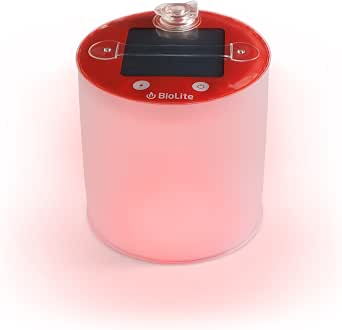 | Best for Compact Emergency Kits | Light output: Up to 200 lumens | Light modes: High, low, red, flashing, and S.O.S. | Charging: Solar and USB-C | VIEW LATEST PRICE | See Our Full Breakdown |
| DIBMS 4-Pack Collapsible Solar Camping Lanterns with Flashlights |  | Best Value Multi-Light Set | Pack count: 4 | Maximum light output: 300 lumens | Light modes: Lantern and flashlight | VIEW LATEST PRICE | See Our Full Breakdown |
| BioLite Luci Original Solar Inflatable Camping Lantern, Color |  | Best for Color-Coded Camp and Shelter Lighting | Light source: 10 RGB LEDs | Color modes: 9, including color-cycle | Maximum output: 65 lumens | VIEW LATEST PRICE | See Our Full Breakdown |
| ENOMY 4-Pack Collapsible LED Camping Lanterns with Solar and USB Charging |  | Best for Basic Household Backup | Pack size: 4 lanterns | Maximum light output: 150 lumens | Charging: USB and solar | VIEW LATEST PRICE | See Our Full Breakdown |
| Westinghouse 1000-Lumen Solar Camping Lantern with 5 Lighting Modes |  | Best for Bright, Adjustable Area Lighting | Maximum light output: 1,000 lumens | Color temperature: 5000 K | Lighting modes: High, medium, low, SOS | VIEW LATEST PRICE | See Our Full Breakdown |
| DIBMS 4-Pack Solar Camping Lantern & Flashlight | 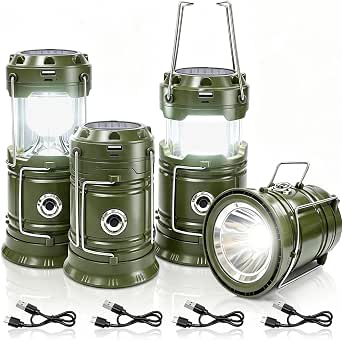 | Best for Multi-Room Emergency Coverage | Pack size: 4 lanterns | Maximum brightness: 300 lumens per lantern | Lighting: Lantern and dedicated flashlight mode | VIEW LATEST PRICE | See Our Full Breakdown |
| BioLite Luci Charge 150 Solar Camping Lantern |  | Best Compact Waterproof Pick | Light output: Up to 150 lumens | Runtime: Up to 50 hours | Battery: 2,000 mAh rechargeable lithium-ion | VIEW LATEST PRICE | See Our Full Breakdown |
| emergency solar lantern | Water resistance | Charging | Battery capacity | Runtime |
|---|---|---|---|---|
| XTAUTO Collapsible Solar and U | Listed as waterproof | USB and solar | 1600 mAh | — |
| BioLite Luci Inflatable Emerge | IP67 | Solar and USB-C | — | Up to 10 hours |
| DIBMS 4-Pack Collapsible Solar | IPX4 | USB and solar | 1600 mAh per lantern | — |
| BioLite Luci Original Solar In | IP67 | — | — | Up to 9 hours |
| ENOMY 4-Pack Collapsible LED C | Listed as waterproof | USB and solar | — | — |
| Westinghouse 1000-Lumen Solar | IPX4 | Solar and USB-C | 4,000 mAh lithium-ion | — |
| DIBMS 4-Pack Solar Camping Lan | IPX4 | — | 1,600 mAh | 6–11 hours |
| BioLite Luci Charge 150 Solar | IP67 waterproof | Solar and USB-C | — | Up to 50 hours |
More Details on Our Top Picks
XTAUTO Collapsible Solar and USB Rechargeable LED Camping Lantern, 4-Pack
For outages affecting several rooms, the XTAUTO 4-pack gives you four separate lights rather than one brighter central lantern. Each unit offers 360-degree illumination, can switch to flashlight use, and charges by USB or solar, so the set can be spread across a home or kept among emergency kits. The manufacturer lists up to 25 hours of runtime, longer than the BioLite Luci Inflatable Emergency Lantern’s stated 10 hours, though actual duration will depend on brightness and charge. The collapsible ABS body and folding handle also make storage and hanging straightforward. The tradeoff is that brightness changes with how far the lantern is extended, so it is less predictable than a fixed-output light. Battery chemistry is listed inconsistently, which makes replacement and charging details harder to verify.
Pros:- Four lanterns provide lighting in multiple locations at once.
- USB and solar charging give two ways to replenish the built-in battery.
- 360-degree lantern lighting and flashlight use cover different needs.
- Collapsible bodies and folding handles make storage and hanging easier.
Cons:- Brightness depends on how far each lantern is extended.
- Battery chemistry is inconsistent across the supplied specifications.
- No lumen rating is provided, making brightness difficult to compare.
Best for: Households that want several compact lights to distribute between rooms, vehicles, or emergency kits.
Not ideal for: Buyers who need a clearly specified battery chemistry or consistent, fixed brightness for reading or task work.
- Pack count:4
- Light sources:7 LEDs per lantern
- Coverage:360 degrees
- Battery capacity:1600 mAh
- Charging:USB and solar
- Stated runtime:Up to 25 hours
- Material:ABS
- Water resistance:Listed as waterproof
Our verdict“Choose this set when spreading several rechargeable lights around a household matters more than having a verified battery specification or fixed brightness.”
BioLite Luci Inflatable Emergency Lantern, Solar and USB-C Rechargeable
The BioLite Luci Inflatable Emergency Lantern is the easiest pick here to tuck into a small go-bag: it weighs about 2.8 oz and compresses to 1.25 inches. Its five modes include low light for conserving charge and an S.O.S. setting for signaling, giving it a more emergency-focused feature set than the color-oriented BioLite Luci Original Solar Inflatable Camping Lantern. USB-C charging is useful when a power bank is available, while solar charging offers another route when outlets are down. The IP67 rating and stated pressure resistance add confidence for wet or crowded kit storage. Its limits are real: up to 10 hours of runtime is shorter than the XTAUTO lantern’s listed 25 hours, and the rechargeable battery needs to be topped up before an outage to be ready.
Pros:- Lightweight 2.8 oz design collapses to 1.25 inches.
- Five modes include red light, flashing, and S.O.S.
- Solar and USB-C charging provide flexible recharge options.
- IP67 waterproof rating and stated resistance to up to 150 lb of pressure.
Cons:- Runtime is limited to up to 10 hours per charge.
- A rechargeable battery must be charged and maintained before an outage.
- Its compact form is less suited to lighting a large area than multi-lantern sets.
Best for: Backpackers and emergency-kit planners who prioritize low weight, compact storage, and a dedicated signaling mode.
Not ideal for: Households seeking long-running room lighting without regular charge checks, or buyers who need a lantern that runs on replaceable batteries.
- Light output:Up to 200 lumens
- Light modes:High, low, red, flashing, and S.O.S.
- Charging:Solar and USB-C
- Runtime:Up to 10 hours
- Weight:2.8 oz (79–80 g)
- Collapsed height:1.25 inches
- Water resistance:IP67
- Pressure resistance:Up to 150 lb (68 kg)
Our verdict“Pick this inflatable lantern for a small emergency kit where low weight and S.O.S. signaling matter more than extended runtime.”
DIBMS 4-Pack Collapsible Solar Camping Lanterns with Flashlights
The DIBMS 4-pack combines four lanterns with a separate flashlight mode, making it a practical choice when an outage calls for both room lighting and a beam for moving through a dark hallway. Each unit is rated for up to 300 lumens, and its USB charging time is listed as four hours; solar charging is also available, though the stated nine hours assumes direct sunlight. Compared with the XTAUTO 4-pack, DIBMS supplies a lumen figure and more specific charging-time information, which helps set expectations. Its IPX4 protection handles splashes, not immersion, and its 6–11-hour lighting duration is shorter than XTAUTO’s listed maximum. The folding hook supports hanging or tabletop use, but this is a basic utility set rather than a compact, submersible lantern for severe weather.
Pros:- Four units provide distributed lighting for multiple rooms or people.
- Lantern and flashlight modes serve area and directional lighting needs.
- USB charging is listed at about four hours, with solar charging as an alternative.
- Up to 300 lumens per lantern gives a stated brightness reference.
Cons:- Solar charging takes about nine hours in direct sunlight.
- IPX4 protection is limited to splashes and does not support submersion.
- Listed lighting duration of 6–11 hours is relatively short for prolonged outages.
Best for: Campers and households who want four lights with stated output, flashlight use, and USB charging for routine outages.
Not ideal for: People expecting to leave lanterns in heavy rain or submerged conditions, or those relying on solar charging in cloudy weather.
- Pack count:4
- Maximum light output:300 lumens
- Light modes:Lantern and flashlight
- Battery capacity:1600 mAh per lantern
- Charging:USB and solar
- USB charging time:About 4 hours
- Solar charging time:About 9 hours in direct sunlight
- Lighting duration:6–11 hours
- Water resistance:IPX4
Our verdict“Choose this set for several everyday emergency lights with a stated lumen output, but not for prolonged use in wet conditions.”
BioLite Luci Original Solar Inflatable Camping Lantern, Color
The BioLite Luci Original Color is a niche emergency pick: its nine RGB settings can make a campsite or shared shelter easier to organize, but they do not replace a high-output white lantern. It weighs 4.4 oz, packs down to one inch, and charges by solar power, so it avoids the USB-C charging option found on the BioLite Luci Inflatable Emergency Lantern. Its IP67 rating and stated pressure resistance suit rough packing and wet conditions better than the splash-rated DIBMS 4-pack. The tradeoff is modest illumination: maximum output is 65 lumens, and the color version runs for up to nine hours. I would choose it for compact ambient light or color cues, not as the main source for cooking, reading, or lighting a large room during a blackout.
Pros:- Solar charging works without a charging cable or outlet.
- Inflatable design collapses to one inch for compact storage.
- IP67 waterproof rating suits wet outdoor conditions.
- Nine RGB modes offer color-cycle and other ambient-light options.
Cons:- Maximum output of 65 lumens is low for primary emergency room lighting.
- Color version runtime is up to nine hours per charge.
- Solar-only charging offers less flexibility than models with USB charging.
Best for: Campers and emergency-kit planners who want a compact solar light for ambient illumination or color-coded group spaces.
Not ideal for: Buyers who need bright white task lighting, USB charging, or a long-running primary lantern for home outages.
- Light source:10 RGB LEDs
- Color modes:9, including color-cycle
- Maximum output:65 lumens
- Power source:Solar-charged lithium-ion battery
- Runtime:Up to 9 hours
- Weight:4.4 oz (125 g)
- Collapsed thickness:1 inch
- Water resistance:IP67
Our verdict“Choose this lantern as a compact solar-powered ambient or backup light, not as your main source of bright emergency illumination.”
ENOMY 4-Pack Collapsible LED Camping Lanterns with Solar and USB Charging
The ENOMY 4-pack suits buyers who want several simple, collapsible lights ready to distribute around the house. USB and solar charging offer flexibility, and the built-in handles make the lanterns easy to carry or hang. Its listed 25-hour battery life is a useful headline compared with the BioLite Luci Inflatable Emergency Lantern’s up-to-10-hour runtime, but the ENOMY description does not clarify the conditions behind that figure. Output is capped at 150 lumens, below the DIBMS 4-pack’s stated 300 lumens, so it is better for general area lighting than brighter task use. I would also treat its power setup cautiously: the data lists a rechargeable lithium-ion battery and three required AA batteries per lantern, leaving the actual operating arrangement unclear.
Pros:- Four lanterns can be placed in separate rooms or emergency kits.
- USB and solar charging provide alternative ways to recharge.
- Collapsible design and built-in handles support storage and carrying.
- Listed battery life reaches up to 25 hours.
Cons:- Maximum output of 150 lumens is modest compared with the DIBMS 4-pack.
- Specifications conflict about whether the lantern uses a rechargeable battery or three AA batteries.
- Runtime conditions are not specified, limiting its usefulness for planning extended outages.
Best for: Households wanting four basic collapsible lanterns for occasional outages, with both USB and solar charging listed.
Not ideal for: Buyers who need a clearly documented battery configuration, brighter task lighting, or dependable runtime details for emergency planning.
- Pack size:4 lanterns
- Maximum light output:150 lumens
- Charging:USB and solar
- Listed battery type:Lithium-ion; specifications also list 3 AA batteries per lantern
- Listed battery life:25 hours
- Material:ABS plastic
- Design:Collapsible with built-in handle
- Water resistance:Listed as waterproof
Our verdict“Choose ENOMY for a basic four-light household backup set, but skip it if clear battery details and higher output are priorities.”
Westinghouse 1000-Lumen Solar Camping Lantern with 5 Lighting Modes
For emergencies where a room or campsite needs broad, bright light, the Westinghouse 1000-Lumen Solar Camping Lantern offers more output than the 300-lumen DIBMS 4-Pack lanterns or the 150-lumen BioLite Luci Charge 150. Its high, medium, and low settings let me balance visibility with battery use, while USB-C and solar charging give me two ways to replenish its 4,000mAh battery. The integrated handle suits carrying or hanging, and the IPX4 rating covers splashes and light rain.
The tradeoff is that this is a single lantern, not a multi-light kit, and its splash resistance does not cover submersion or severe wet conditions. The listed modes include SOS, but no separate flashing mode, and the product data gives no runtime figure. I’d choose it over the smaller lanterns when brightness matters more than having lights spread across several rooms.
Pros:- Up to 1,000 lumens gives it substantially more stated output than the DIBMS 300-lumen lanterns and BioLite Luci Charge 150.
- Solar and USB-C charging provide two ways to recharge.
- High, medium, and low settings allow brightness to be adjusted for different needs.
- Integrated handle and compact body support carrying or hanging.
Cons:- IPX4 protection covers splashes and light rain, not immersion.
- Sold as one lantern, so it cannot distribute light across multiple rooms like a four-pack.
- No runtime is specified, making it harder to estimate how long a charge will last.
Best for: Households that want one bright, rechargeable lantern for lighting a main room, garage, or campsite during a power outage.
Not ideal for: People who need several lights for different rooms, a lantern for submersion or heavy rain, or a stated runtime for planning long outages.
- Maximum light output:1,000 lumens
- Color temperature:5000 K
- Lighting modes:High, medium, low, SOS
- Battery capacity:4,000 mAh lithium-ion
- Charging:Solar and USB-C
- Water resistance:IPX4
- Dimensions:4.54 x 4.04 x 7.95 in
- Included component:USB charging cable
Our verdict“Choose the Westinghouse if strong, adjustable light from one solar- and USB-C-rechargeable lantern matters more than multi-room coverage.”
DIBMS 4-Pack Solar Camping Lantern & Flashlight
When an outage calls for several lights rather than one bright central lantern, this DIBMS four-pack has a practical advantage over the single Westinghouse 1000-Lumen lantern: I can place a light in separate rooms or keep one with each person. Each unit combines a 300-lumen lantern and dedicated flashlight, and its collapsible design makes the set easier to store than four conventional lanterns. USB and solar charging offer flexibility, while IPX4 protection suits splashes and light rain.
That coverage comes with limits. A 1,600mAh battery and listed 6–11-hour runtime make these less suited to prolonged use without recharging, and solar charging takes about nine hours. The Westinghouse is the stronger choice when one area needs higher output; the DIBMS set makes more sense when distributing light matters most. Its six-month warranty is also shorter than the one-year coverage listed for the Westinghouse and BioLite.
Pros:- Four lanterns provide distributed coverage that a single lantern cannot match.
- Each unit combines 300-lumen lantern lighting with a dedicated flashlight mode.
- Collapsible construction helps the set pack and store compactly.
- USB and solar charging give users more than one recharge option.
Cons:- The listed 6–11-hour runtime may not cover a prolonged outage without recharging.
- Solar charging takes about nine hours, slower than the listed four-hour USB charge.
- IPX4 protection is for splashes, not immersion or heavy rain.
Best for: Families or campers who want four portable lights to share among rooms, bags, or people during a power outage.
Not ideal for: Buyers who need high output from a single light, extended runtime without recharging, or protection for use in heavy rain or underwater.
- Pack size:4 lanterns
- Maximum brightness:300 lumens per lantern
- Lighting:Lantern and dedicated flashlight mode
- Battery capacity:1,600 mAh
- Runtime:6–11 hours
- USB charging time:4 hours
- Solar charging time:9 hours
- Water resistance:IPX4
- Weight:8.02 oz
Our verdict“Pick the DIBMS set if you need several compact lantern-and-flashlight combinations more than the Westinghouse’s higher single-light output.”
BioLite Luci Charge 150 Solar Camping Lantern
The BioLite Luci Charge 150 suits emergency kits where packed size, water protection, and long low-output illumination count more than raw brightness. It collapses to just 1.5 inches thick, weighs 6.1 ounces, and is rated IP67 waterproof—stronger protection against water than the IPX4 Westinghouse and DIBMS lanterns offer. Its stated runtime reaches 50 hours, and solar or USB-C charging keeps it useful away from an outlet. The battery can also charge mobile devices, adding a backup option for a phone.
Its central compromise is clear: 150 lumens is far below the Westinghouse’s 1,000-lumen output, so this is better for close-range or gentle area lighting than lighting a large room brightly. The inflatable PVC build also suits compact storage, but buyers seeking a rigid lantern or a powerful emergency beacon should look elsewhere. Compared with the DIBMS four-pack, it prioritizes waterproofing and compactness over multiple lights and flashlight modes.
Pros:- IP67 waterproof rating offers stronger water protection than the IPX4 Westinghouse and DIBMS models.
- Collapses to 1.5 inches thick and weighs 6.1 ounces for compact storage.
- Up to 50 hours of stated runtime supports extended low-output use.
- Solar and USB-C charging, plus mobile-device charging, add power flexibility.
Cons:- 150-lumen maximum output is much lower than the Westinghouse 1000-lumen lantern.
- Inflatable PVC construction may not suit buyers seeking a rigid lantern.
- One lantern provides less distributed coverage than the DIBMS four-pack.
Best for: Backpackers and emergency-kit planners who need a lightweight, waterproof light with long stated runtime and phone-charging capability.
Not ideal for: Households that need bright whole-room illumination or buyers who prefer a rigid lantern with greater light output.
- Light output:Up to 150 lumens
- Runtime:Up to 50 hours
- Battery:2,000 mAh rechargeable lithium-ion
- Charging:Solar and USB-C
- Water resistance:IP67 waterproof
- Weight:6.1 oz (173 g)
- Collapsed thickness:1.5 in
- Pressure resistance:Up to 150 lbs (68 kg)
- Special features:Dimmable, strobe mode, mobile-device charging
Our verdict“Choose the Luci Charge 150 for compact storage, strong water protection, and long runtime, but pick the Westinghouse if brightness is your priority.”
How We Picked
I ranked these emergency solar lanterns by how well their listed features address real backup-lighting needs: usable light output or modes, more than one charging path, storage and portability, and the number of lights included. A lantern for a household outage has a different job from a lightweight light kept in a go-bag, so I gave credit to both broad coverage and compactness while making their tradeoffs explicit.
The ranking puts the Westinghouse 1000-Lumen model first for its stated output and mode selection, then weighs the BioLite Luci Charge 150’s charging feature against the multi-light value of the XTAUTO and other bundles. The remaining products rank by their fit for particular needs—compact inflatable storage, included flashlights, or several lights per package—not by assumed durability or runtimes that are not specified here. Since solar performance varies with sunlight, I treat solar charging as a useful backup path, not a guaranteed rapid recharge during a storm.
| emergency solar lantern | Charging | Water resistance |
|---|---|---|
| XTAUTO Collapsible Solar and U | USB and solar | Listed as waterproof |
| BioLite Luci Inflatable Emerge | Solar and USB-C | IP67 |
| DIBMS 4-Pack Collapsible Solar | USB and solar | IPX4 |
| BioLite Luci Original Solar In | — | IP67 |
| ENOMY 4-Pack Collapsible LED C | USB and solar | Listed as waterproof |
| Westinghouse 1000-Lumen Solar | Solar and USB-C | IPX4 |
| DIBMS 4-Pack Solar Camping Lan | — | IPX4 |
| BioLite Luci Charge 150 Solar | Solar and USB-C | IP67 waterproof |
Factors to Consider When Choosing Emergency Solar Lanterns
Choosing a backup lantern is less about collecting the longest feature list and more about matching the light to how an outage unfolds. I’d plan around where the lantern will be used, how it can be recharged, and whether one bright light or several distributed lights would serve the household better.
Match brightness to the space, not just the number
A high lumen figure can help illuminate a larger area, but it does not tell the whole story about comfortable emergency lighting. In a small bedroom, a bright lantern may be more light than you want, while a central living space may benefit from stronger output. Check whether the model offers multiple modes so you can balance room visibility with battery use. Also think about whether the light needs to illuminate a whole room or just a table, hallway, or tent. A common mistake is choosing on peak brightness alone and overlooking softer settings. For a home outage, a mix of one stronger lantern and smaller task lights may be more useful than a single light asked to do everything.
Treat solar as a backup path, not an instant recharge
Solar charging is most useful when you can place the lantern in sustained direct sunlight and have time to wait. Cloud cover, window glass, season, and the panel’s position can all affect how much charge it gains. USB charging is usually the more controllable option when mains power, a car outlet, or a charged power bank is available. For outage planning, charge lanterns before severe weather and keep a compatible cable with the kit. Do not assume a solar feature means the lantern will refill quickly indoors or during a storm. If charging a phone matters, check the lantern’s stated output and battery details rather than relying on the word “charge” alone.
Decide between one capable light and several smaller ones
A multi-pack can spread light across a kitchen, hallway, and bedroom, or let household members keep a lantern in separate emergency kits. That distribution may matter more than maximizing the output of one device. A single lantern, by contrast, can be easier to track, charge, and store, and may offer a more focused set of features. Before buying a bundle, confirm how many complete lanterns are included and whether any are paired with separate flashlights. Avoid counting every included light as equivalent: a flashlight helps with directed searching, while a lantern is designed to light a surrounding area. The right choice depends on whether your main concern is shared household coverage or a dependable central light.
Check storage, setup, and handling before an outage
Collapsible and inflatable lanterns can take up less room than rigid designs, which helps when storage space is limited or gear must fit in a go-bag. Their compact form can also mean more setup steps: an inflatable model needs to be opened, while a collapsible design needs to be expanded before use. That is not a major hurdle for most people, but it is worth practicing before the lights go out. Consider where the lantern will live and whether it can be reached quickly in the dark. A handle or hanging point can be more useful than a small size if you need to suspend light over a table. Choose the form factor that fits your storage and intended placement, not just the one that packs smallest.
Build a lighting plan around runtime and backup power
Runtime is a core emergency-planning detail, but it should be checked in the product’s specifications for each brightness mode rather than inferred from its size or charging method. Lower settings may extend use, while brighter settings can draw power faster. If the listed runtime is unclear or absent, avoid treating the lantern as your only source of light for a long outage. Keep a separate charged power bank or battery-powered light if dependable duration is a priority, and test your setup before storing it. A lantern that can also charge a device may be handy, but using it for that task can leave less energy for lighting. Decide which job matters most during an emergency and plan a separate backup for the other one.
Pay extra only for features your emergency plan uses
Extra modes, phone-charging capability, and compact construction can be worthwhile when they solve a real problem in your kit. They are less valuable if the lantern will stay in one room and only needs to provide basic light. Multi-packs may offer better household coverage, but they also require more storage and more units to keep charged. Before paying for added versatility, ask whether you will use it during an outage or whether a simpler lantern plus a separate power bank makes more sense. For beginners, straightforward charging and easy setup may matter more than a long list of functions. The best fit is the lantern whose tradeoffs match your plan, not the model with the most features on paper.
Frequently Asked Questions
Should I buy one high-output lantern or a four-pack for a home outage?
Choose one higher-output lantern if you need a central light for a main room and can move it where needed. A four-pack makes more sense when people may be in separate rooms or you want lights stored in different emergency kits. The bundle approach also gives you some redundancy if one unit is unavailable, though each lantern may provide less light than a dedicated high-output model. Think through where household members will go during an outage and how many spaces need illumination at once. If both situations are likely, combine a central lantern with smaller lights rather than expecting one format to cover every need.
Can I rely on solar charging during a multi-day power outage?
Solar charging can help extend use over a long outage, but it depends on the weather, exposure, and time available for charging. A lantern left in shade or behind a window may gain charge slowly, and cloudy conditions can make solar less dependable. For a more resilient setup, begin with fully charged lanterns and retain USB charging options plus a separate charged power source where possible. Check the manufacturer’s charging information for expected conditions instead of assuming a short period in daylight will refill the battery. Solar is best treated as one part of a backup plan, not the only source of power.
Is a lantern that charges a phone a good substitute for a power bank?
Not automatically. A lantern with a phone-charging feature can provide an extra option in an emergency, but the available battery capacity and output determine how useful that feature will be. Charging a phone also draws energy that could otherwise keep the lantern lit. Check the product’s stated battery and output details, and compare them with the needs of your phone. If communication is a priority, a dedicated power bank can keep that job separate from lighting. Treat a lantern’s charging feature as a bonus unless its specifications clearly match your device and intended use.
What should I check before buying a multi-pack of solar lanterns?
Confirm the number of complete lanterns, whether flashlights are included, and which charging methods apply to each item. Similar-looking bundles may differ in their included pieces, so compare the listing details rather than relying on a shared brand name or product style. Check dimensions and storage needs as well: several lights can improve coverage but take more room and require more units to maintain. Look for runtime information at different brightness settings if it is provided. A multi-pack is most useful when you have a clear plan for where each light will be kept and used.
How should I store emergency solar lanterns so they are ready when needed?
Follow the manufacturer’s storage and battery-care instructions, and keep the lantern somewhere dry, accessible, and away from extreme heat. Charge it before storm season or another period when outages are more likely, then check its charge periodically rather than assuming it will remain ready indefinitely. Store the charging cable with the lantern so USB power is not a problem when needed. If you rely on solar charging, identify a sunny location where the panel can be placed safely and unobstructed. A quick practice setup can also reveal whether you know how to expand, inflate, or hang the lantern in low light.
Conclusion
For most buyers, I’d choose the Westinghouse 1000-Lumen Solar Camping Lantern as the best overall because its stated output and five modes suit a central emergency light. The best value for household coverage is the XTAUTO four-pack, especially if several rooms or kits need their own lanterns. For a best premium-style feature set, the BioLite Luci Charge 150 is the pick for shoppers who value a compact lantern with a charging feature. The BioLite Luci Original is a straightforward choice for beginners who want an inflatable solar lantern without focusing on a multi-pack. For specific needs, choose the DIBMS or ENOMY bundles when included flashlights and multiple units fit your plan; favor another option if you need verified runtime or charging details that the listing does not clearly provide. Ultimately, match the lantern to your room coverage, charging plan, and storage space before choosing.