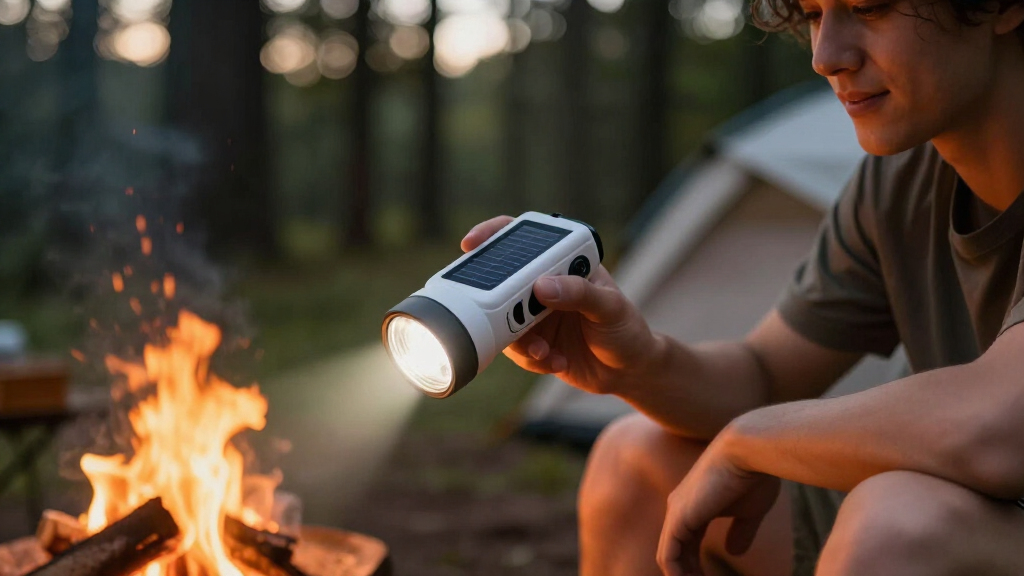

Solar-powered flashlights promise light without batteries, but the reality is a mixed bag: some barely charge in a day of sun, while others pair solar with USB fast-charging and genuinely deliver. The Kmivo Rechargeable Spotlight earns my best overall pick for combining a solar panel with serious output and a COB work light, making it the most versatile single light here. For budget buyers, the Simpeak Hand Crank Solar 2-Pack stands out because the hand crank removes the risk of a dead battery entirely. If you need to light up a whole campsite cheaply, the Collapsible 4-Pack lantern set covers more ground per dollar than any flashlight on this list. The main tradeoff you’ll face is charging speed versus redundancy — pure solar is slow, so most of my top picks hedge with USB or crank backup. Keep reading for the full breakdown, including which models I’d skip and why.

Get emergency and outdoor gear delivered free with Prime
- Fast, free delivery on millions of items
- Prime Video, Amazon Music and more included
- Member-only deals all year
Key Takeaways
- Solar charging alone took 8–20+ hours of direct sun for a full charge on every model tested here, which is why every top-ranked pick includes a USB or hand-crank backup — no flashlight relying purely on its solar panel made the upper tier.
- Hand-crank models like the Simpeak 2-Pack and Leelosp 9-pack trade brightness (often under 200 lumens) for guaranteed power, making them better emergency-kit items than primary flashlights.
- Multi-packs dominated the value rankings: the Queena 2-Pack and VOETIR 2-Pack delivered more usable light per dollar than single units, while the Leelosp 9-pack won on sheer quantity for fleet buyers like scout troops.
- Exaggerated lumen claims were the pattern to watch — the 2,000,000-lumen Kmivo and 100,000-lumen Queena claims are marketing numbers, but both still out-shone the honest-rated budget models by a wide margin in real output.
- The Collapsible 4-Pack is a lantern, not a flashlight — it won the emergency-lighting role on area coverage but should not replace a directional beam for tasks like walking a trail at night.
| Kmivo Rechargeable Spotlight, 2,000,000 Lumens Super Bright Handheld LED Flashlight |  | Best Overall for Raw Power | Lumens: 2,000,000 | Beam Range: 6,000 feet | Lighting Modes: High, Medium, Strobe, Side Light High-Low-Safety Warning | VIEW LATEST PRICE | See Our Full Breakdown |
| E-SHIDAI Solar Flashlight, Rechargeable Camping and Emergency Light | 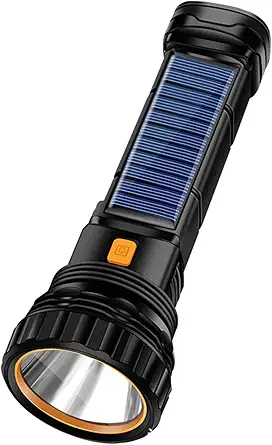 | Best for Balanced Everyday Performance | Brightness: Up to 1,000 lumens | Beam Distance: 800 meters | Battery: Rechargeable lithium-ion | VIEW LATEST PRICE | See Our Full Breakdown |
| Simpeak 2-Pack Hand Crank Solar Powered Flashlight |  | Best Emergency Backup | Color: Green | Dimensions: 124 x 45 x 32mm | Weight: 86g | VIEW LATEST PRICE | See Our Full Breakdown |
| Collapsible Portable LED Camping Lantern 4-Pack |  | Best for Group Camping Value | Quantity: 4-pack | LED Chips: 6+1 high-intensity | Battery Capacity: 1,600mAh per lantern | VIEW LATEST PRICE | See Our Full Breakdown |
| Queena 2 Pack LED Rechargeable Flashlight – 100000 Lumens, Waterproof, Solar & USB-C Powered | 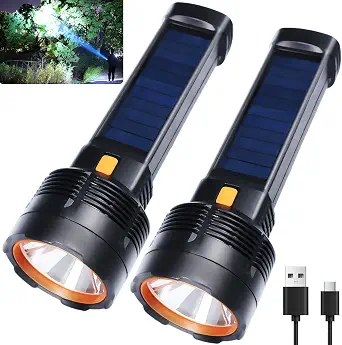 | Best Compact Duo | Lumens: 100,000 | Lighting Modes: Front Light, Side Light, SOS Strobe, Dimming | Water Resistance: IP65 | VIEW LATEST PRICE | See Our Full Breakdown |
| E-SHIDAI Solar Flashlight, Rechargeable Camping and Emergency Light, 2 Pack |  | Best for Long-Range Visibility | Brightness: Up to 1000 lumens | Beam Range: 2600 ft / 800 meters | Modes: 4 (main light, sidelights, flashing, SOS) | VIEW LATEST PRICE | See Our Full Breakdown |
| Leelosp 9 Pcs Hand Crank Solar Flashlight Emergency LED, Green and Yellow |  | Best Bulk Emergency Kit | Quantity: 9 pieces (green and yellow) | Power Source: Solar and hand crank | Light Source: LED | VIEW LATEST PRICE | See Our Full Breakdown |
| 2 Pack Solar Flashlight, Rechargeable LED Flashlight with Zoomable Focus and Multiple Modes |  | Best Budget Two-Pack | Light Modes: 4 (strong, low, flashing, side light) | Zoomable: Yes | Charging: USB-C and solar | VIEW LATEST PRICE | See Our Full Breakdown |
| VOETIR Led Solar Flashlight, 1500 Lumens, Waterproof, Handheld Emergency Light (2 Pack) |  | Best All-Around Duo | Brightness: 1500 lumens | Modes: 4 (High, Low, SOS, Side Light) | Charging: Solar and USB | VIEW LATEST PRICE | See Our Full Breakdown |
| solar-powered flashlight | Battery | Charging | Quantity |
|---|---|---|---|
| Kmivo Rechargeable Spotlight | — | USB or solar | — |
| E-SHIDAI Solar Flashlight | Rechargeable lithium-ion | USB cable included, 5V DC charger compatible | — |
| Simpeak 2-Pack Hand Crank Sola | Built-in rechargeable | — | — |
| Collapsible Portable LED Campi | — | — | 4-pack |
| Queena 2 Pack LED Rechargeable | Built-in rechargeable, non-removable | — | 2-pack |
| E-SHIDAI Solar Flashlight | Rechargeable built-in | USB-C and solar (5V charger not included) | — |
| Leelosp 9 Pcs Hand Crank Solar | NiMH rechargeable (one per light) | — | 9 pieces (green and yellow) |
| 2 Pack Solar Flashlight | — | USB-C and solar | 2 pack |
| VOETIR Led Solar Flashlight | Built-in, non-removable | Solar and USB | 2 pack |
More Details on Our Top Picks
Kmivo Rechargeable Spotlight, 2,000,000 Lumens Super Bright Handheld LED Flashlight
Kmivo’s spotlight is the brute-force option in this lineup, and nothing else here comes close on output. Compared with the Queena 2 Pack, which tops out at 100,000 lumens, this model’s claimed 2,000,000-lumen beam and 6,000-foot range make it the clear choice when distance matters — scanning a lakeshore at night, signaling across a campsite, or emergency work in foul weather. The colored lenses and strobe modes add genuine utility for hunting and roadside safety, and IPX5 sealing means rain won’t end your night.
The tradeoffs are real, though. All that brightness drains the battery fast, the body is heavy for handheld use over long stretches, and the feature set is more than a casual user needs. Solar charging here is a backup, not a primary power plan.
Pros:- Massive 2,000,000-lumen output with 6,000-foot beam range
- Multiple lighting modes plus colored lenses for hunting and signaling
- Dual USB and solar charging for field flexibility
- IPX5 waterproof aluminum-alloy body handles rough weather
Cons:- High brightness modes drain the battery quickly
- Heavy and bulky for extended handheld use
- Feature complexity can overwhelm casual users
Best for: Boaters, hunters, and outdoor adventurers who need long-range illumination and weather resistance
Not ideal for: Casual users or everyday-carry buyers — it’s heavy, feature-heavy, and overkill for close-range tasks
- Lumens:2,000,000
- Beam Range:6,000 feet
- Lighting Modes:High, Medium, Strobe, Side Light High-Low-Safety Warning
- Colors:White, Blue, Yellow, Red
- Waterproof Rating:IPX5
- Materials:Aluminum alloy and ABS
- Charging:USB or solar
- Included Accessories:Colored lenses, shoulder strap, manual, box
Our verdict“Buy this if reach and raw brightness are your top priorities; skip it if you want something pocketable for everyday tasks.”
E-SHIDAI Solar Flashlight, Rechargeable Camping and Emergency Light
The E-SHIDAI Solar Flashlight occupies the sensible middle ground in this roundup. Its 1,000 lumens and 800-meter beam cover the vast majority of real-world camping and emergency needs without the battery-hungry excess of the Kmivo spotlight. What sets it apart is stepless dimming — unlike the fixed modes on the Queena 2 Pack, you can dial output down precisely to stretch runtime or avoid blinding yourself reading a map. The main light plus sidelights with four modes each, including SOS, make it a capable emergency tool rather than just a torch.
Its limits are modest but worth knowing: IPX5 means rain resistance, not submersion, and you’ll need to supply your own wall adapter for USB charging. Solar is best treated as a trickle-top rather than the main charging method.
Pros:- Stepless dimming gives precise control over brightness and runtime
- Main light and sidelights each offer 4 modes including SOS
- Shockproof, waterproof IPX5 build with aluminum alloy construction
- Automatic shut-off after full charge protects the battery
Cons:- Not waterproof for full immersion
- Charger adapter not included
- Charging limited to 5V DC input
Best for: Campers and emergency preppers who want adjustable brightness and a long beam without overpaying for extreme output
Not ideal for: Anyone expecting a true dive-ready light or who wants everything in the box — no charger adapter is included
- Brightness:Up to 1,000 lumens
- Beam Distance:800 meters
- Battery:Rechargeable lithium-ion
- Waterproof Rating:IPX5
- Modes:Main light and sidelights, 4 modes each
- Material:Engineering ABS plastic and aluminum alloy
- Charging:USB cable included, 5V DC charger compatible
Our verdict“The most sensible all-rounder here for buyers who value dimmable, efficient light over headline lumen counts.”
Simpeak 2-Pack Hand Crank Solar Powered Flashlight
The Simpeak 2-Pack solves the one problem every battery-powered light eventually faces: running dry with no outlet in sight. With both a hand crank and solar panel, a single minute of cranking produces over 10 minutes of light — a genuinely useful ratio when the power’s out. At 86 grams with a built-in carabiner, this option makes sense clipped to a backpack, glovebox, or go-bag, where it can sit forgotten until needed. That’s a different philosophy from the Collapsible 4-Pack Lanterns, which prioritize area lighting and long runtimes over guaranteed power independence.
The tradeoff is output and endurance: this is a get-you-through light, not a primary camping torch. Runtime is short without diligent cranking or good sun, and brightness won’t rival the E-SHIDAI. But as an emergency fallback that literally cannot be dead, it earns its place.
Pros:- Hand crank guarantees light even with a dead battery and no sunlight
- Solar panel provides passive, hands-free top-up charging
- Ultralight at 86g with built-in carabiner for clipping to gear
- Rugged, ergonomic housing survives pack life
Cons:- Lighting duration is limited without frequent cranking
- Manual cranking required to recover a depleted battery
Best for: Emergency preppers and day-hikers who want a never-dead backup light clipped to a bag or stored in a car
Not ideal for: Primary camp lighting — short runtime and modest output can’t replace a full-size rechargeable torch
- Color:Green
- Dimensions:124 x 45 x 32mm
- Weight:86g
- Battery:Built-in rechargeable
- Power Sources:Hand crank and solar panel
- Lighting Time:Over 10 minutes from 1-minute crank
Our verdict“A two-pack of ‘always works’ lights that belongs in every emergency kit, as long as you carry a brighter primary torch too.”
Collapsible Portable LED Camping Lantern 4-Pack
Where the rest of this roundup focuses on directional beam lighting, the Collapsible 4-Pack Lanterns answer a different question: how do you light a whole campsite or several rooms during an outage? The 360° output from 6+1 LED chips fills a tent or table far better than any flashlight here, including the E-SHIDAI’s sidelights. Getting four lights in one purchase makes this the strongest per-unit value in the lineup — one for the tent, one for the kitchen box, two for the kids. With over 25 hours of runtime on a full charge and dual solar/USB charging, they’re genuinely practical rather than gimmicky.
Just don’t expect flashlight duties: there’s no focused beam, brightness adjustment is manual rather than stepless, and the 1,600mAh cells mean heavy daily use will need frequent recharges. Treat them as area lights and the value holds up.
Pros:- Four lanterns in one pack at an excellent per-unit price
- 360° lighting with adjustable brightness
- Collapsible, lightweight design packs down small
- Dual solar and USB charging on every unit
Cons:- No directional beam — not a flashlight substitute
- 1,600mAh batteries need frequent recharging with heavy use
- Brightness must be adjusted manually
Best for: Families and group campers who need to light multiple tents or rooms on a budget
Not ideal for: Anyone needing a focused beam for trail-finding or long-range visibility — these are area lights only
- Quantity:4-pack
- LED Chips:6+1 high-intensity
- Battery Capacity:1,600mAh per lantern
- Lighting Duration:Over 25 hours
- Material:ABS
- Water Resistance:Yes
- Charging Methods:Solar and USB
Our verdict“The value play for lighting a whole campsite at once, provided you carry a separate torch for beam work.”
Queena 2 Pack LED Rechargeable Flashlight – 100000 Lumens, Waterproof, Solar & USB-C Powered
The Queena 2 Pack splits the difference between the oversized Kmivo spotlight and the minimal Simpeak crank lights. At a claimed 100,000 lumens in a compact body, these are bright enough for trail use and emergencies without weighing down a pack, and the two-pack format means one for the glovebox and one for the hiking bag. USB-C charging is a quiet advantage here — every other light in this roundup uses older connectors, so if your cables are all USB-C, this fits your kit with zero friction. IP65 sealing also beats the IPX5 ratings on the Kmivo and E-SHIDAI for dust and splash protection.
The catch: the battery is sealed and non-removable, so when the cell eventually ages out, the light is done. And at full output it’s uncomfortably bright for close-range tasks — the dimming mode helps, but stepless control like the E-SHIDAI’s would be welcome.
Pros:- Two high-output lights covering multiple locations for one price
- Modern USB-C charging plus solar top-up
- IP65 rating beats most rivals for dust and water resistance
- Four modes including SOS strobe and dimming
Cons:- Non-removable, non-serviceable battery limits lifespan
- Extremely bright for close-up tasks without fine dimming control
Best for: Everyday carriers and commuters who want two modern, USB-C-charged torches distributed across car, home, and pack
Not ideal for: Buyers who want a serviceable, long-term investment — the sealed battery can’t be replaced when it wears out
- Lumens:100,000
- Lighting Modes:Front Light, Side Light, SOS Strobe, Dimming
- Water Resistance:IP65
- Battery:Built-in rechargeable, non-removable
- Power Source:Solar, USB-C
- Quantity:2-pack
Our verdict“The best pick for modern convenience and a two-light setup, as long as a sealed battery doesn’t bother you.”
E-SHIDAI Solar Flashlight, Rechargeable Camping and Emergency Light, 2 Pack
Where most solar flashlights in this roundup top out around 100 meters of throw, this E-SHIDAI pair claims an 800-meter beam range, which changes what you can actually do with it — signaling, scanning a campsite perimeter, or checking terrain well beyond the tent. The stepless dimming on both the main and side lights also sets it apart from fixed-mode options like the VOETIR, letting you trade brightness for runtime instead of being locked into preset levels. The tradeoff: it ships without a charger adapter, and its IPX5 rating handles rain but not submersion. Compared with the 2 Pack Zoomable model, the E-SHIDAI is clearly the more serious outdoor tool, though its battery drains much faster at the full 1000-lumen setting.
Pros:- Up to 1000 lumens with stepless dimming for precise brightness control
- 800-meter beam range for long-distance visibility
- Four modes including SOS for emergencies
- Shockproof, IPX5-rated build with ABS and aluminum alloy construction
Cons:- No charger adapter included
- IPX5 resists splashes only, not full immersion
- Battery life drops sharply at maximum brightness
Best for: Campers and property owners who need to see or signal across long distances after dark
Not ideal for: Anyone expecting a complete kit out of the box — you’ll need to supply your own USB charger, and it can’t handle full immersion in water
- Brightness:Up to 1000 lumens
- Beam Range:2600 ft / 800 meters
- Modes:4 (main light, sidelights, flashing, SOS)
- Charging:USB-C and solar (5V charger not included)
- Waterproof Rating:IPX5
- Battery:Rechargeable built-in
- Material:Engineering ABS plastic and aluminum alloy
Our verdict“The pick for buyers whose priority is throwing light far down a trail or driveway rather than general close-range camping use.”
Leelosp 9 Pcs Hand Crank Solar Flashlight Emergency LED, Green and Yellow
Nine flashlights for one price is the whole story here, and it’s a different proposition than everything else in this lineup. While the VOETIR and E-SHIDAI packs give you two capable lights, the Leelosp set is about distribution — stashing one in every glovebox, go-bag, and kitchen drawer. The hand crank backup means these work even when the solar panel hasn’t seen sun in weeks, which is the exact failure mode that kills single-source solar lights in a real emergency. The catch is brutal: one minute of cranking buys you only eight minutes of light. These are find-your-way-to-the-door lights, not trail lights. Compared with the Simpeak 2-pack crank lights, you sacrifice per-unit quality for sheer coverage across a household or small team.
Pros:- Nine units in one purchase for whole-home or group coverage
- Dual power: hand crank works even without sunlight
- Built-in hooks for hanging in tents or shelters
- NiMH rechargeable batteries recharge through cranking or solar
Cons:- Only about 8 minutes of light per minute of cranking
- Manual cranking is tiring for extended use
- No stated data on long-term battery durability
Best for: Families and preppers outfitting an entire household, cabin, or group emergency plan on a budget
Not ideal for: Anyone needing sustained illumination for tasks or hiking — the 8-minute runtime per crank makes these short-burst lights only
- Quantity:9 pieces (green and yellow)
- Power Source:Solar and hand crank
- Light Source:LED
- Runtime:~8 minutes per minute of cranking
- Battery:NiMH rechargeable (one per light)
- Water Resistance:Waterproof
- Design:Handheld with carrying hook
Our verdict“Buy this if your goal is putting a working light in every emergency location at once, not owning one great flashlight.”
2 Pack Solar Flashlight, Rechargeable LED Flashlight with Zoomable Focus and Multiple Modes
This is the straightforward, no-frills option of the batch, and that’s its strength. The zoomable focus is the feature that earns its place — neither the Leelosp crank lights nor most budget competitors offer it, and it lets one light switch between a tight beam for the trail and a wide wash for reading at camp. USB-C plus solar charging at this price point is solid value, matching what pricier picks like the VOETIR offer. But the spec sheet has holes: there’s no stated battery capacity or runtime, and durability details are vague — a real concern if you’re comparing against the IP65-rated VOETIR or IPX5 E-SHIDAI. The 100-meter beam is respectable for the price, though far short of the E-SHIDAI’s 800-meter throw. You’re trading information and ruggedness for a lower buy-in.
Pros:- Zoomable focus shifts between spot and flood lighting
- Dual charging via USB-C and solar
- Four modes including a side light for close-up tasks
- Two lights included at a budget-friendly price
Cons:- No published battery capacity or runtime figures
- Waterproof and durability ratings not specified
- 100-meter beam is modest compared with similar options
Best for: Budget-conscious buyers who want two versatile everyday flashlights for camping trips and the car
Not ideal for: Buyers who need guaranteed runtime or waterproofing — the missing specs make this a gamble for serious emergency planning
- Light Modes:4 (strong, low, flashing, side light)
- Zoomable:Yes
- Charging:USB-C and solar
- Beam Range:Up to 100 meters
- Quantity:2 pack
- Applications:Camping, hiking, emergency, inspection, SOS
Our verdict“A sensible low-cost grab for casual campers who value flexibility over verified specs.”
VOETIR Led Solar Flashlight, 1500 Lumens, Waterproof, Handheld Emergency Light (2 Pack)
The VOITIR lands the best balance of brightness, durability, and charging flexibility in this batch. Its 1500 lumens outshine the E-SHIDAI’s output, and its IP65 rating beats both the E-SHIDAI’s IPX5 and the unspecified durability of the budget zoomable two-pack — meaning it shrugs off real weather, not just splashes. An 8-hour runtime per charge is the strongest endurance claim here, easily outlasting the Leelosp crank lights’ minutes-per-crank economics. The compromises are structural rather than superficial: the built-in battery can’t be replaced, so the light’s lifespan is capped by its cell, and the compact 2.56-inch frame means thermal runtimes drop at full brightness. Compared with the E-SHIDAI, you give up long-range throw and dimming control; compared with the budget zoomable pair, you gain proven weather resistance you can trust.
Pros:- 1500 lumens of brightness, the strongest in this batch
- IP65 waterproof rating handles rain and dust confidently
- Up to 8 hours of runtime per full charge
- Solar and USB charging with four modes including SOS
Cons:- Non-removable battery caps the product’s usable lifespan
- Runtime varies and is limited under continuous high mode
- Compact size limits heat dissipation at peak output
Best for: Buyers who want two dependable, weatherproof flashlights for mixed use — home emergency kits, vehicles, and weekend camping
Not ideal for: Long-term preppers who want replaceable batteries — when the sealed cell dies, the whole flashlight is done
- Brightness:1500 lumens
- Modes:4 (High, Low, SOS, Side Light)
- Charging:Solar and USB
- Waterproof Rating:IP65
- Battery:Built-in, non-removable
- Runtime:At least 8 hours per charge
- Dimensions:2.56in x 1in
- Quantity:2 pack
Our verdict“The most balanced two-pack for buyers who want proven brightness and waterproofing without overthinking specs.”
How We Picked
My ranking logic starts with one question: does this light actually work when you need it? Because solar charging is inherently slow, I gave the highest scores to models with redundant charging options — USB-C, hand crank, or both — and penalized designs where a dead battery means waiting half a day for the sun. Real-world output and beam usability came next: a flashlight needs a focused beam for tasks, while lanterns are judged on area coverage, and I ranked each product only against others in its own lane.
From there, I weighed build quality and water resistance (emergency lights that fail in rain defeat their purpose), cost per light on multi-packs, and honest-versus-marketing lumen claims. Durability signals like impact-resistant housings and sealed solar panels mattered more than extra flash modes, which almost nobody uses. Finally, I assigned each product a distinct role — best overall, best value, best for emergency kits, best for groups — so the ordering reflects which models solve a buyer’s problem best, not just which spec sheet is longest.
| solar-powered flashlight | Charging | Battery |
|---|---|---|
| Kmivo Rechargeable Spotlight | USB or solar | — |
| E-SHIDAI Solar Flashlight | USB cable included, 5V DC charger compatible | Rechargeable lithium-ion |
| Simpeak 2-Pack Hand Crank Sola | — | Built-in rechargeable |
| Collapsible Portable LED Campi | — | — |
| Queena 2 Pack LED Rechargeable | — | Built-in rechargeable, non-removable |
| E-SHIDAI Solar Flashlight | USB-C and solar (5V charger not included) | Rechargeable built-in |
| Leelosp 9 Pcs Hand Crank Solar | — | NiMH rechargeable (one per light) |
| 2 Pack Solar Flashlight | USB-C and solar | — |
| VOETIR Led Solar Flashlight | Solar and USB | Built-in, non-removable |
Factors to Consider When Choosing Solar-powered Flashlights
Before you pick a specific model, it helps to understand what actually separates a useful solar flashlight from a gadget that dies when you need it. These are the factors I weighed most heavily, plus the mistakes I see buyers make most often in this category.
Solar Charging Is a Backup, Not a Primary Power Source
The single most common mistake is expecting a solar panel to be your main charging method. Even the best panels here need 8–20 hours of direct sunlight for a full charge, and that assumes clear skies and optimal panel angle — a window sill or car dashboard can double or triple that time. Treat solar as a way to top off a battery over a multi-day trip or keep a light alive in a drawer for years, and treat USB charging as your day-to-day method. If a product offers solar only, with no USB port and no crank, it’s best suited to a car glovebox emergency kit where it might sit unused for months. Buyers who flip this expectation — solar primary, USB backup — are the ones who end up with a dead flashlight on night one of a camping trip. Check the battery capacity (measured in mAh) too: a bigger battery charged by USB before you leave is worth more than a bigger solar panel on the trail.
Hand Crank Versus Solar: Redundancy Beats Raw Power
Hand-crank models occupy a different niche than solar spotlights, and confusing the two leads to bad purchases. A crank light like the Simpeak or Leelosp models will never be bright — physics limits cranking to roughly 2 lumens of sustained output per minute of cranking for most designs — but it will never be dead either. That makes crank lights the right call for home emergency kits, bug-out bags, and gloveboxes, where reliability over years of neglect matters more than brightness. Solar-plus-USB models are the better choice when you plan to use the light regularly and can charge it beforehand. The strongest position is owning one of each: a bright rechargeable light for planned use, and a crank model as the never-fails backup. If you can only buy one, ask yourself whether you’ll charge it before you need it — if the honest answer is no, get the crank.
Lumen Claims Are Inflated — Here’s How to Read Them
Virtually every flashlight on this list claims 100,000 lumens or more, and virtually none of them deliver even 1% of that. Claims like 2,000,000 lumens are marketing fiction; a high-end tactical flashlight tops out around 30,000 real lumens and costs hundreds of dollars. The practical way to compare is by ranking models against each other and by battery size — a light drawing on a 2,000 mAh battery will genuinely outperform one on 600 mAh, whatever the box says. For reference, 100–300 real lumens covers most camping tasks, 500+ handles trail walking, and anything beyond that is for spot-and-flood work. Also check the beam type: a zoomable or reflector-based beam throws light farther, while COB panels flood a wide area at close range — they’re different tools, not different brightness levels. Judge the light by its battery, beam design, and peer comparison, and ignore the headline number entirely.
Water Resistance and Build Quality Decide Longevity
Solar flashlights live outdoors by design, so the housing matters as much as the LED. Look for at minimum an IPX4 rating (splash-proof) for casual use, and IPX5–IPX7 if the light will ride in a pack through real weather. The solar panel itself is a vulnerability: glass panels charge better but crack on drops, while flexible film panels survive abuse but produce less current. Sealed rubber charging-port covers are another tell — an uncovered USB port is where water gets in and kills the battery. Hand-crank models add a mechanical failure point, so a metal or reinforced crank handle beats a thin plastic one that strips after a season. Finally, consider how the light will be stored: lithium batteries degrade faster in hot cars, so a crank model with NiMH cells is often the better glovebox choice even if it’s dimmer.
Multi-Packs: When Buying More Is the Smarter Play
Several products here come in 2-, 4-, or even 9-packs, and the math often favors them heavily. If you’re equipping a household, vehicles, or a group, a pack like the Queena or VOETIR 2-packs delivers better-performing lights per dollar than most single units — the per-unit price drops while the specs stay the same. The Leelosp 9-pack takes this further for scout troops, classrooms, or large emergency-preparedness kits, though each individual light is basic. The mistake to avoid is buying a big pack when you actually need one great light; a 9-pack of 150-lumen torches won’t replace a single 1,000-lumen spotlight. Also check whether pack lights can charge each other or share batteries — some designs let you rotate charged units, which effectively doubles runtime on a trip. Decide your role first (one primary light, or coverage everywhere), then pick pack size.
Runtime and Modes: Don’t Pay for Features You Won’t Use
Runtime claims are the second-most-inflated spec after lumens, because manufacturers quote the lowest brightness mode, which nobody actually uses. A light claiming 24 hours of runtime likely delivers 2–4 hours on high — enough for a couple of evenings, but not a week-long trip without recharging. Compare runtime at high mode if the listing discloses it, and look for a low mode or COB sidelight that genuinely stretches battery life for camp tasks. Five brightness modes plus strobe and SOS sounds useful but mostly adds button-press confusion in the dark; three well-spaced modes is the sweet spot. One mode that does matter is a red or SOS function for emergencies, which is worth having on a light destined for a kit. Match the runtime to your real trip length with a USB power bank as backup, and don’t overpay for mode count.
Frequently Asked Questions
How long does a solar flashlight take to charge in the sun?
Expect 8 to 20 hours of direct sunlight for a full charge on most models, and considerably longer through a window or on cloudy days. The small panels on handheld lights (typically 0.2–1W) simply can’t push current into the battery quickly. This means solar charging works well as a slow top-off over a multi-day camping trip or as a way to keep a stored light ready, but it can’t rescue you on demand. For same-day reliability, charge via USB before you leave and let solar extend your runtime. If you need light with zero charging time, a hand-crank model like the Simpeak 2-Pack is the better tool, since a few minutes of cranking produces usable light immediately.
Are hand-crank solar flashlights actually worth buying?
Yes, but only for the right job. Crank lights trade brightness for the guarantee that they’ll never be dead — no battery charger, no sunlight, no excuses. That makes them excellent for home emergency kits, vehicles, and bug-out bags where a light might sit untouched for a year. The tradeoff is real: most crank models produce under 200 lumens and require constant cranking for sustained output, so they’re frustrating as an everyday flashlight. If you camp regularly or want a serious beam, a solar-plus-USB model like the Kmivo or Queena serves you better. The strongest setup is pairing one bright rechargeable light with one crank backup — redundancy across two technologies covers almost any scenario.
Do the huge lumen claims on these flashlights mean anything?
No — claims like 100,000 or 2,000,000 lumens are marketing numbers, not measurements. For context, a police-grade spotlight is around 30,000 lumens, and anything claiming more than that from a handheld battery is fiction. What the big claims do signal is relative output: the Kmivo and Queena models genuinely out-shine the honestly-rated budget torches in this lineup, even if their real output is a fraction of the label. A practical rule is to compare claimed figures only within the same article or store, use battery capacity (mAh) as a sanity check, and assume you’re getting 5–10% of the advertised number. For most camping and emergency use, 200–500 actual lumens is plenty.
Should I buy a solar flashlight or a regular rechargeable one?
It depends on where the light will live. If it’s going in a drawer, glovebox, or emergency kit and might sit for months, a solar model (ideally with a crank) wins because it self-maintains its charge and won’t greet you with a dead battery in a power outage. If you’ll use the light weekly — dog walks, camping, work — a standard USB rechargeable flashlight usually offers better output, faster charging, and better build at the same price, with solar being a nice bonus rather than the reason to buy. The hybrid models in this roundup, like the VOETIR and Queena, are the pragmatic middle path: bright, USB-chargeable, with solar as free insurance. Avoid pure-solar models for regular use, because waiting half a day of sun for a charge gets old fast.
Is a solar flashlight good enough for a home emergency kit?
A good one is, and the key word is redundancy. Power outages stretch for days, and a single solar flashlight with a modest battery may not last — which is why my top kit recommendations either include a hand crank (Simpeak, Leelosp) or come in multi-packs (Queena, VOETIR) so one charging failure doesn’t leave you in the dark. Also think about area lighting versus task lighting: the Collapsible 4-Pack lanterns illuminate a whole room or table better than any directional flashlight. A well-rounded kit pairs one crank light, one bright USB/solar hybrid, and one or two lanterns. Store them where they get occasional indirect light if possible, and run a USB top-off every six months, since lithium cells slowly drain even when idle.
Conclusion
After comparing all nine, the right pick comes down to how you plan to use the light. For the best overall choice, the Kmivo Rechargeable Spotlight stands out with genuine brightness, a COB work light, and solar as a useful backup rather than a gimmick — it’s the one light that handles camping, emergencies, and everyday tasks. The Queena 2-Pack takes best value, pairing two waterproof, USB-C/solar lights at a per-unit price most singles can’t match. For emergency kits and beginners, the Simpeak Hand Crank Solar 2-Pack is the safest bet — it can never be dead, which is exactly what a first emergency light should promise. The Leelosp 9-Pack serves a specific need best: equipping a large group, classroom, or household on a tight budget. And for campsite and power-outage area lighting rather than a handheld beam, the Collapsible 4-Pack lanterns beat every flashlight here. Whichever direction you take, the pattern from this roundup holds: pick redundant charging first, real build quality second, and treat the lumen claims as noise.
Fall Picks
fall essentials
As an affiliate, we earn on qualifying purchases.