This checklist is for people building an emergency medical supply kit for home, travel, or preparedness use. It helps you think through injury care and basic supplies so you can plan what belongs in your kit before an emergency happens.

Get emergency and outdoor gear delivered free with Prime
- Fast, free delivery on millions of items
- Prime Video, Amazon Music and more included
- Member-only deals all year
The sections are organized by supply type: a trauma first aid kit, followed by individual categories for tourniquets, splints, wound closure, burn dressings, and eye wash. Some sections include a named pick, while others offer selection guidance without a specific product.
Use the checklist to compare each item with your needs, training, storage space, and the people who may rely on the kit. Confirm that you understand how to use any medical supply before adding it, and keep instructions accessible alongside your supplies.
Trauma First Aid Kit
A trauma first aid kit gives you a central place to organize supplies for responding to injuries. The named pick is the My Medic MyFAK PRO IFAK Trauma Kit & First Aid Kit with Tourniquet – B. Before choosing a kit, review its listed contents and consider whether they match the situations you are preparing for and your ability to use each item.
A common buying mistake is choosing by the kit name alone without checking what is actually included. Look for a clear contents list, a way to keep supplies organized, and packaging that suits your storage plan. Think about accessibility: in an emergency, you should be able to locate the kit and identify its contents without sorting through unrelated gear.
Consider who may use the kit and where it will be kept. If you plan to carry it, check its dimensions and carrying format; if it will stay at home, consider where it can be stored and reached. Check that the supplies fit your training, and review the kit periodically so you know what is present and can find instructions when needed.
What to look for:
- A complete, clearly listed contents inventory
- Organization that makes supplies easy to locate
- A format suited to home storage or carrying
- Items that match your training and intended use
- Accessible instructions and a plan to review the contents
My Medic MyFAK PRO IFAK Trauma Kit & First Aid Kit with Tourniquet – Built in US
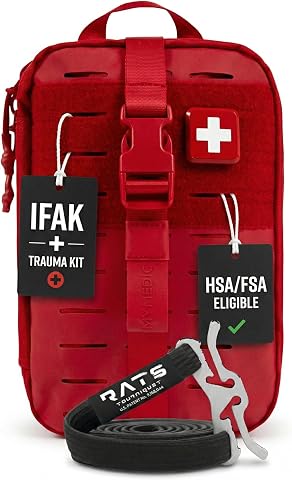
The MyFAK PRO is a comprehensive trauma and first aid kit designed for real emergencies, featuring 146 medical-grade supplies including tourniquets, hemostatic gauze, and wound care tools. Its unique folding page system allows quick access to all supplies, making it suitable for home, auto, or tactical use.
Pros:
- Comprehensive trauma and first aid supplies for real emergencies
- Innovative folding page system for quick, organized access
- Built in the USA and backed by a lifetime warranty
- MOLLE-compatible for versatile mounting options
Cons:
- May be more expensive than basic first aid kits
- Heavy due to extensive supplies, less portable for casual use
- Requires some medical knowledge to utilize effectively
Best for: People who want a named trauma and first aid kit to evaluate
Not ideal for: Shoppers who need a kit tailored to a specific inventory or carrying format
Bottom line: Review the listed contents and carrying format to decide whether this kit fits your preparedness plan.
Tourniquet
A tourniquet is a specialized emergency supply, so selection should go hand in hand with learning how to use it. This checklist offers advice only for this slot and does not name a product. Before adding one, consider your training, where the supply will be stored, and whether people who may need it can access it quickly.
A common mistake is buying a tourniquet without checking its instructions or practicing the steps for its intended use. Look for clear product information and instructions, and choose a source that lets you verify what the item is and how it should be handled. Keep it with the relevant emergency supplies rather than placing it somewhere difficult to reach. Familiarity matters: make sure the people expected to use it know where to find its instructions.
Consider the kit or carrying setup where it will live, and check that it can be retrieved without unpacking unrelated items. Avoid assuming that a product is appropriate for every user or situation based on its label alone. Pair selection with practical preparation: learn the instructions, keep the item accessible, and review your kit so its location remains easy to remember.
What to look for:
- Clear identification and product information
- Instructions that are accessible to the intended users
- A storage location that can be reached quickly
- A carrying setup compatible with your emergency kit
- A plan for users to learn and review its instructions
Emergency Splint
An emergency splint is intended to be part of a broader preparedness plan for injuries, so consider how it will be stored and used before selecting one. This section provides selection advice rather than a named product. Think about who may need to locate it and whether the people in your group understand the instructions that come with the supply.
A common buying mistake is overlooking the space and format needed to store a splint. Review product dimensions and packaging, then compare them with your kit or storage location. Check the item’s stated instructions and intended use rather than relying on the category name alone. Clear information helps you assess whether the item fits your preparedness needs.
Consider how the splint will fit into the rest of your kit and whether it can be reached without moving other supplies. If portability matters, check the carrying format and storage requirements. Keep its instructions nearby and make sure intended users know where it is stored. These checks help you select an item that is accessible and understandable when you review your emergency supplies.
What to look for:
- Clear product information and stated intended use
- Packaging and dimensions suited to your storage space
- Instructions kept with or near the item
- A location accessible to intended users
- A format compatible with the rest of your kit
Wound Closure Strips
Wound closure strips are a distinct supply category, and the listed pick is Wound & Patient Care for Acute and Chronic Wound Seal Closure. Review the product information carefully to understand what the listing describes and whether it matches the kind of supply you are looking for. Clear identification is especially helpful when comparing items with similar names.
A common mistake is treating a product title as a substitute for checking its details. Review the stated contents, instructions, and packaging, and make sure you understand the product’s intended use. Consider how many items are included and whether the packaging works with your storage plan. Keep the instructions available so the people who may use the supply can refer to reliable product information.
Fit here includes how the product fits your kit and whether its packaging can be stored and accessed easily. Check the package dimensions if space is limited, and consider whether the product can be kept with related wound care supplies. Avoid assuming the listing answers every question about suitability. Verify the details before purchasing, then keep the item organized with accessible instructions in your emergency supplies.
What to look for:
- A clear description of the listed product and contents
- Instructions and stated intended use
- Packaging suited to your available storage space
- Quantity and format that match your kit plan
- Information you can keep accessible to intended users
Wound & Patient Care for Acute and Chronic Wound Seal Closure

Curefaster is a portable, rechargeable device designed to promote wound healing by drying and sealing superficial wounds. It helps reduce pain and infection risk, making it suitable for various minor wounds and skin conditions.
Pros:
- Portable and rechargeable for convenience
- Helps dry and seal wounds naturally
- Suitable for various minor skin conditions
- Easy to use at home or on the go
Cons:
- Requires multiple treatments for exudative wounds
- Avoid contact with water during use
- Limited to superficial wounds
Best for: People comparing wound closure supplies for an emergency kit
Not ideal for: Shoppers who need details not provided in the product listing
Bottom line: Check the product description, contents, and instructions before deciding whether this pick suits your kit.
Burn Dressing
A burn dressing is a separate category to consider when planning medical supplies. This checklist provides advice only for this slot and does not name a product. Start by reviewing product descriptions and instructions so you can understand what an item is intended for and whether its packaging suits your plan.
A common buying mistake is selecting an item based on a broad category label without reading its details. Check the stated contents, instructions, storage requirements, and package dimensions. Consider whether the packaging can be stored with the rest of your medical supplies and whether intended users can identify it quickly. Clear labeling can help you keep an emergency kit organized.
Think about where the dressing will be kept and how easily it can be reached. If your kit is portable, check that its size and packaging fit the carrying setup; if it stays at home, choose a location that users can find. Keep instructions available and avoid relying on assumptions about suitability. These practical checks help you select supplies that fit your storage and access needs.
What to look for:
- A clear product description and stated intended use
- Instructions available to intended users
- Package dimensions that fit your kit or storage space
- Packaging that can be identified among other supplies
- A storage location that is accessible when needed
Emergency Eye Wash
Emergency eye wash belongs in a preparedness checklist when you are planning supplies for eye care. The named pick is Sterile Saline Solution, 20-Pack Skin and Wound Cleanser, 0.9% Sodium. Review the listing to confirm the product details and packaging, and consider whether this format works with your storage and access plan.
A common buying mistake is assuming a product title provides all the information needed to select an eye wash supply. Read the description and instructions, confirm the listed contents, and check the packaging and quantity. Consider whether individual containers can be organized and found among the rest of your supplies. Keep product information accessible so users can identify the item and consult its instructions.
Check package dimensions against the location where you plan to store the supplies. If the kit will be carried, make sure the pack fits its intended space; for home storage, choose a place users can reach and remember. Review the product information for storage directions and keep the supply organized with related items. These steps help you assess whether the 20-pack format suits your kit.
What to look for:
- A product description that confirms the listed contents
- Instructions and any stated storage directions
- A package size compatible with your storage plan
- A format users can identify and access easily
- Quantity that fits the needs of your kit
Sterile Saline Solution, 20-Pack Skin and Wound Cleanser, 0.9% Sodium Chloride W

This 20-pack of sterile saline solution vials is suitable for wound cleansing, nasal rinsing, and eye soothing. Each pre-filled, individually packaged unit is gentle, sterile, and convenient for use at home, in the office, or on the go.
Pros:
- Sterile and individually packaged for safety and freshness
- Versatile use for wound care, nasal cleansing, and eye soothing
- Portable and convenient for travel and emergency kits
- Contains a gentle, natural saline formula
Cons:
- Single-use vials may generate waste
- Limited to 20 units in the pack
Best for: People considering a 20-pack saline product for their supplies
Not ideal for: Shoppers whose storage plan cannot accommodate the package format
Bottom line: Verify the listing, instructions, and package format before adding this saline product to your kit.
Build your kit in a practical order: first identify the supplies you already have, then prioritize items that match your needs and training, followed by storage and organization. Compare product details before choosing, and keep instructions accessible alongside the relevant supplies.
You can assemble an emergency medical kit one category at a time and review it as your plans change. Choose items you can identify, store, and understand, and keep your preparedness checklist somewhere you can revisit it.