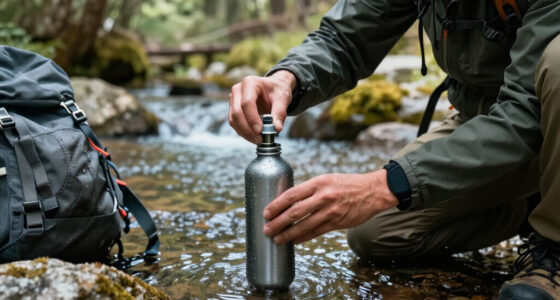
For an emergency kit that needs individually wrapped, easy-to-pack doses, I rank Aquatabs 49 mg first; for treating larger batches, the 397 mg Aquatabs is the more practical choice. The RV and boat tank tablets serve a different need, with test strips to check chlorine levels, while Coghlan’s iodine tablets are a compact option for limited, short-term use. The main tradeoffs are how much water a dose treats, whether you need a tank-specific product, how the treatment affects taste, and whether the water needs filtering before disinfection.

Get emergency and outdoor gear delivered free with Prime
- Fast, free delivery on millions of items
- Prime Video, Amazon Music and more included
- Member-only deals all year
These tablets are emergency disinfection tools, not a substitute for removing dirt or chemical contaminants. I compare the products by the kinds of water emergencies they suit, how clearly their directions match a household or travel use case, and what buyers must do around treatment time and storage. Product claims vary, so I recommend following the package directions for the exact product you have rather than assuming one tablet size or wait time applies across the lineup.
Key Takeaways
Aquatabs 49 mg is the easiest of these picks to portion for personal emergency use, but each tablet treats only 0.75–2 liters and needs a 30-minute wait.
Aquatabs 397 mg treats up to four gallons per tablet, making it the clearest choice here for larger batches rather than individual bottles.
The RV and boat tank tablets include chlorine test strips and a color chart, features that matter when treating stored tank water rather than a single container.
Coghlan’s iodine tablets are described for short-term or limited emergency use; buyers who need a longer-term household water plan should choose a different treatment strategy.
None of these options removes sediment; cloudy water may need settling and filtration before tablet treatment, and tablets should not be treated as protection from chemical contamination.
| Aquatabs 49 mg Water Purification Tablets, 100 Count | 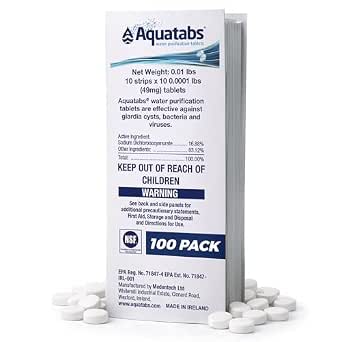 | Best Overall for Individually Portioned Emergency Kits | Tablet strength: 49 mg | Quantity: 100 tablets | Water treated per tablet: 0.75–2 liters | VIEW LATEST PRICE | See Our Full Breakdown |
| Aquatabs Water Purification Tablets, 397 mg, 100 Count |  | Best for Treating Larger Emergency Batches | Tablet strength: 397 mg | Quantity: 100 tablets | Capacity: Up to 4 gallons per tablet | VIEW LATEST PRICE | See Our Full Breakdown |
| Aquatabs Water Purification Tablets for Boat and RV Tanks, 100 Tablets with 2 Chlorine Test Strips |  | Best for Boat and RV Water Tanks | Tablet count: 100 | Dosage: 1 tablet per 4 gallons | Wait time: 30 minutes | VIEW LATEST PRICE | See Our Full Breakdown |
| Coghlan’s Drinking Water Germicidal Tablets, 50 Count |  | Best Compact Iodine Option for Limited Use | Tablet count: 50 | Purification method: Iodine | Capacity stated: Up to 25 liters | VIEW LATEST PRICE | See Our Full Breakdown |
| water purification tablets for emergencie | Tablet strength | Quantity | Treatment time | Listed expiration date |
|---|---|---|---|---|
| Aquatabs 49 mg Water Purificat | 49 mg | 100 tablets | 30 minutes | April 2027 |
| Aquatabs Water Purification Ta | 397 mg | 100 tablets | 30 minutes | February 2029 |
| Aquatabs Water Purification Ta | — | — | — | — |
| Coghlan’s Drinking Water Germi | — | — | — | — |
More Details on Our Top Picks
Aquatabs 49 mg Water Purification Tablets, 100 Count
I rank the Aquatabs 49 mg first because its small, individually wrapped doses suit the most common emergency-kit task: treating a bottle or modest container without opening a bulk dose. Each tablet is listed for 0.75–2 liters, with a 30-minute wait. That range gives it a more personal-scale role than the 397 mg Aquatabs, which is intended for up to four gallons and makes more sense when a household needs to treat a larger batch.
Its strongest storage advantage is the individual foil wrapping, which keeps doses separate and makes it easy to distribute tablets among a home kit, vehicle bag, or hiking pack. The listing also says treated water has no unpleasant taste, color, or odor, a useful difference from iodine-based Coghlan’s for buyers who are sensitive to treatment flavor. That taste detail may make regular use more tolerable, but it does not remove the need to follow the label’s dose and wait instructions.
The main limitation is scale. A family preparing several gallons at once would need to manage many smaller tablets and confirm that each container gets the correct dose; the 397 mg version is more straightforward for that job. This product also does not remove sediment, and the supplied description recommends pairing it with a filter for sediment-heavy water. I would choose it as a flexible personal backup, not as a complete water system or a way to make visibly dirty or chemically contaminated water safe.
Before relying on a stored package, I would check its actual expiration marking: the supplied listing gives April 2027 and a 900-day shelf life. That makes package rotation especially relevant for a guide dated 2027. The precise date on the item in hand should take priority over a general product description, and expired stock should not be treated as dependable emergency supply.
Pros:- Individual foil-wrapped tablets are easy to portion and distribute across kits.
- Each tablet is listed for 0.75–2 liters, suiting bottles and small containers.
- Treated water is described as having no unpleasant taste, color, or odor.
- Lightweight format fits travel, hiking, and emergency storage.
Cons:- A 30-minute treatment wait delays use.
- Small dose capacity makes larger household batches less convenient than the 397 mg option.
- Does not remove sediment and may need to be paired with filtration.
Best for: People building lightweight personal, travel, hiking, or vehicle kits who want individually wrapped doses for small containers.
Not ideal for: Households treating several gallons at once, anyone who needs sediment removal in the same product, or buyers whose package is at or past its printed expiration date.
- Tablet strength:49 mg
- Quantity:100 tablets
- Water treated per tablet:0.75–2 liters
- Treatment time:30 minutes
- Shelf life listed:900 days
- Packaging:Bag; tablets individually foil-wrapped
- Listed expiration date:April 2027
Our verdict“I recommend this as the most versatile personal-kit pick, provided its package is in date and cloudy water is filtered first.”
Aquatabs Water Purification Tablets, 397 mg, 100 Count
When the emergency plan involves a shared water container rather than one person’s bottle, the 397 mg Aquatabs is the more convenient of the two Aquatabs options. The listing says one tablet treats up to four gallons in 30 minutes. Compared with the 49 mg version, that larger capacity reduces the number of doses needed for a batch and makes it easier to plan water for several people at once. It is my pick for larger-volume treatment, not the more flexible choice for small, irregular amounts.
This listing provides more specific stated reduction figures than the other products here: 99.9999% of bacteria, 99.99% of viruses, and 99.9% of cysts. Those are the supplied product claims, not a reason to ignore source-water conditions or package directions. The product is also described as leaving no noticeable taste, color, or odor, which may be preferable to iodine-based Coghlan’s for people who want to avoid a treatment taste. By contrast, the 49 mg Aquatabs listing offers a lower-volume dose and individually wrapped packaging, so it is easier to allocate among separate personal kits.
There is a handling tradeoff: a tablet intended for up to four gallons is a poor fit when you only need to treat a small bottle unless its label provides an approved way to dose that amount. I would not improvise by breaking or estimating doses. The product also does not remove sediment; the description suggests pairing it with a filter. A 30-minute wait applies here as well, so this is not an instant solution when clean, ready-to-drink water is needed.
The listing gives an February 2029 expiration date, which is later than the date supplied for the 49 mg option. Actual stock may differ, so I would inspect the package date rather than use the listing as a promise about a particular shipment. Its larger treatment volume makes it attractive for a household reserve, but water storage, clean containers, and a separate filtration step for sediment remain part of the plan.
Pros:- One tablet is listed for up to four gallons.
- The product listing supplies reduction figures for bacteria, viruses, and cysts.
- Treated water is described as having no noticeable taste, color, or odor.
- The listed expiration date is February 2029, subject to the actual package marking.
Cons:- The 30-minute wait still applies before drinking.
- A large dose is less convenient for small containers than the 49 mg tablets.
- Does not remove sediment and may need a separate filter.
Best for: Families, groups, and emergency planners who expect to treat several gallons at a time and want a larger-volume dose.
Not ideal for: People who mainly treat single bottles, need a product that removes sediment, or want to split doses without clear package instructions.
- Tablet strength:397 mg
- Quantity:100 tablets
- Capacity:Up to 4 gallons per tablet
- Treatment time:30 minutes
- Bacteria reduction stated:99.9999%
- Virus reduction stated:99.99%
- Cyst reduction stated:99.9%
- Listed expiration date:February 2029
Our verdict“I would choose this over the 49 mg version when the priority is treating a shared batch of up to four gallons with fewer doses.”
Aquatabs Water Purification Tablets for Boat and RV Tanks, 100 Tablets with 2 Chlorine Test Strips
This tank-focused product is not a direct substitute for the small-dose Aquatabs options. Its directions are built around a boat or RV tank: one tablet per four gallons, then a 30-minute wait. I place it third overall because its tank use and included testing accessories are specific and useful, but less relevant to people assembling a general-purpose emergency kit for bottles or portable containers.
The main differentiator is the pair of chlorine test strips and color chart. They give tank owners a way to check free chlorine levels rather than relying only on an assumed dose, a practical addition when water is held in a plumbing system. The listing also says treatment can continue releasing chlorine for several weeks and may help with rotten-egg odor from plumbing. Those points make it more tailored to stored tank water than either Aquatabs dose in this roundup, which are described mainly as portable tablet treatments.
There are limits to what the product information supports. The supplied specifications include terms such as ultraviolet purification, maximum flow rate, TDS capacity, and filter life, but the usage description identifies the treatment as chlorine released from sodium dichloroisocyanurate tablets. I would not infer that the tablets remove dissolved solids or operate as a UV purifier from those mismatched fields. Buyers should use the actual label and manufacturer directions for dosage and test-strip interpretation. One tablet per four gallons also means a large tank requires careful counting and dose planning.
Compared with the 397 mg Aquatabs, this product is more useful for someone managing a tank and checking chlorine, while the 397 mg option has a clearer stated role for treating up to four gallons as an emergency batch. Neither product removes sediment, and neither should be used to address chemical contamination. I would skip this tank formula for a personal go-bag unless the kit is specifically supporting an RV or boat with a compatible water-storage system.
Pros:- Directions specify one tablet per four gallons for tank treatment.
- Includes two chlorine test strips and a color chart.
- The listing says treatment can release chlorine for several weeks.
- Designed for boat and RV tank-water use rather than only individual bottles.
Cons:- Requires a 30-minute wait and careful dosing across tank volume.
- Tank-focused format is less convenient for general personal emergency kits.
- Product details contain conflicting purification-method fields, so buyers should rely on the package directions.
Best for: RV and boat owners who need to treat stored tank water and value included chlorine test strips for checking free chlorine.
Not ideal for: Hikers, travelers, or households seeking a simple bottle-dose tablet, and buyers expecting a tablet to remove sediment, TDS, or chemical pollutants.
- Tablet count:100
- Dosage:1 tablet per 4 gallons
- Wait time:30 minutes
- Active ingredient:Sodium dichloroisocyanurate
- Included components:2 chlorine test strips and color chart
- Intended use:Boat and RV tank water
- Item weight:2 ounces
- Container dimensions:2.25 × 2.25 × 1.75 inches
Our verdict“I recommend it for RV and boat owners who can follow the tank-specific directions and use the included strips, not as a universal emergency tablet.”
Coghlan’s Drinking Water Germicidal Tablets, 50 Count
Coghlan’s Drinking Water Germicidal Tablets earns a place for buyers who want a compact, manual treatment option for hiking, camping, or a limited emergency. The listing identifies the method as iodine and says the tablets make most water bacteriologically suitable for drinking. That narrower description and its explicit short-term-use framing make this a different kind of backup from the Aquatabs products, which emphasize chlorine-based treatment and give specific tablet volumes or larger capacity figures.
The package is light, small, and listed to treat up to 25 liters. That can suit a small kit where carrying a simple reserve matters more than treating a large household supply. Compared with the 49 mg Aquatabs, though, the supplied information does not describe individual foil wrapping or a comparable per-tablet water range. Compared with the 397 mg version, it also does not list reduction percentages for bacteria, viruses, and cysts. I would read the package instructions closely instead of assuming it covers the same organisms or volumes as the Aquatabs listings.
The clearest drawback is the iodine method and the product’s stated role for short-term or limited emergency use only. Buyers who need ongoing household treatment or prefer to avoid iodine should select another approach. The supplied details also do not provide a treatment wait time, so I would not guess one from the other products’ 30-minute directions; the label for the actual package must set the dose and wait. Like the rest of this lineup, the listing does not describe sediment removal, so cloudy water may need pre-filtration.
I rank this fourth not because a compact iodine tablet has no place, but because its use case is narrower and the supplied treatment details are less complete for comparing emergency coverage. For a short outdoor contingency, it may be a useful option when used exactly as directed. For a family’s primary stored emergency water plan, I would favor a product with a clearer batch capacity and pair it with appropriate filtration and safe storage.
Pros:- Compact and lightweight for hiking, camping, and small emergency kits.
- The listing states capacity of up to 25 liters.
- Manual treatment requires no power.
- Provides an iodine-based alternative to the Aquatabs products.
Cons:- The listing limits the intended use to short-term or limited emergencies.
- Iodine may not suit buyers who want to avoid iodine treatment.
- The supplied details do not specify a treatment time or per-tablet water volume.
Best for: Hikers and campers seeking a compact iodine-based backup for limited, short-term water treatment.
Not ideal for: People planning ongoing household water treatment, buyers who want a non-iodine option, or anyone who needs clear supplied details for a large-volume emergency batch.
- Tablet count:50
- Purification method:Iodine
- Capacity stated:Up to 25 liters
- Intended use:Short-term or limited emergency use
- Weight:18.14 g
- Dimensions:1 × 1 × 1 inch
- Power source:Manual
- Model:7620
Our verdict“I would keep this as a compact, limited-use backup only, and would choose an Aquatabs option for a more clearly defined household batch plan.”
How We Picked
I ranked these products by how well each one fits a real emergency-water job, not by treating them as interchangeable tablets. A dose for a drinking bottle, a tablet sized for a four-gallon batch, and a formula intended for a boat or RV tank solve different problems. My ranking gives priority to clear emergency use, practical dose size, useful package details, and the limits a buyer should know before storing or using the product.
I also weighed treatment time and the information supplied about coverage. A stated 30-minute wait can be manageable when supplies are planned, but it affects how quickly water becomes available. The small Aquatabs dose offers fine-grained portioning; the 397 mg version is aimed at larger volumes. The tank product adds test strips, while Coghlan’s uses iodine and is specifically framed for short-term or limited use. Those distinctions shape each product’s role rather than making one tablet automatically right for every kit.
I did not infer performance beyond the supplied product details. The 397 mg listing gives reduction figures for bacteria, viruses, and cysts, while the other listings provide different levels of detail. A missing claim is not proof that a product cannot address a particular contaminant, but it is a reason to check the label and authoritative guidance for the intended water source. In all cases, tablets disinfect water according to their directions; they do not remove sediment, fuel, pesticides, heavy metals, or other chemical pollution. I would pair a treatment plan with a suitable filter when water is cloudy and keep a separate plan for chemically contaminated sources.
Finally, storage details matter in emergency supplies. Aquatabs 49 mg is described as individually foil-wrapped and has a listed expiration date of April 2027, while the 397 mg listing gives an expiration date of February 2029. Dates can vary by package, so I would check the actual label on arrival and rotate supplies before expiration. I do not treat a stated shelf life or date as a guarantee beyond the product’s own packaging instructions. This roundup is a comparison of the supplied specifications, not a substitute for current public-health directions during a specific emergency.
| water purification tablets for emergencie | Listed expiration date | Intended use |
|---|---|---|
| Aquatabs 49 mg Water Purificat | April 2027 | — |
| Aquatabs Water Purification Ta | February 2029 | — |
| Aquatabs Water Purification Ta | — | Boat and RV tank water |
| Coghlan’s Drinking Water Germi | — | Short-term or limited emergency use |
Factors to Consider When Choosing Water Purification Tablets For Emergencies
I would choose emergency water tablets by starting with the water container and source, then matching dose size and treatment method to that plan. A tablet’s headline capacity matters only if it fits the amount of water you can measure and store safely.
Match the dose to your container
The 49 mg Aquatabs is listed for 0.75–2 liters per tablet, a range suited to small containers and personal kits. The 397 mg Aquatabs is listed for up to four gallons, which better fits a shared batch. The tank product also uses one tablet per four gallons, but its design and included strips target RV and boat tanks. These numbers should not be treated as interchangeable: follow the exact directions on the package, and do not estimate partial doses unless the label explicitly tells you how.
Before buying, decide whether your plan treats drinking bottles, a family water container, or a vehicle tank. Mark the container’s actual volume and keep a clean measuring method with the supplies. If you cannot confidently measure the water, choose a plan with directions that match the container you will use rather than relying on memory during a disruption.
Plan around the wait time
Three products in this roundup list a 30-minute treatment time: both Aquatabs versions and the RV/boat tank tablets. That delay affects how much ready water you need on hand while a batch is being treated. Emergency supplies work better when treatment is planned ahead than when someone waits until the last drink is gone.
The supplied Coghlan’s details do not state a wait time. I would check its package directions rather than borrowing the 30-minute instruction from another brand or tablet type. Treatment instructions can differ by product and water conditions, so using a generic wait time is not a safe shortcut.
Separate disinfection from filtration
These tablets are for water treatment, but the Aquatabs descriptions specifically note that they do not remove sediment. If water is visibly cloudy, a suitable filter or settling step may be needed before disinfection, following public-health guidance and the product label. Removing visible particles does not by itself disinfect water, and tablet treatment does not make chemical contamination safe.
For water that may contain fuel, pesticides, industrial chemicals, heavy metals, or other pollutants, do not assume any tablet in this roundup will solve the problem. Use a known safe source or follow local emergency instructions. Tablets should be one part of a water plan, alongside clean containers, appropriate pre-treatment, and a way to store treated water without recontamination.
Think about taste, method, and intended duration
The two Aquatabs listings describe treated water as having little or no noticeable taste, color, or odor. Coghlan’s uses iodine and is framed for short-term or limited use. The RV/boat product focuses on chlorine management and supplies test strips. These are meaningful differences for taste preference, storage use, and the type of emergency plan—not interchangeable labels for the same job.
If you have a medical condition, iodine sensitivity, or another reason to avoid a treatment method, check the product label and seek qualified guidance before relying on it. For extended emergencies, do not assume a product described for limited use is suitable as the sole long-term water plan. Follow the manufacturer’s restrictions and current public-health advice.
Check packaging, dates, and directions before storage
Foil-wrapped doses such as the 49 mg Aquatabs are easy to distribute among small kits, while larger-batch products can simplify household dosing. However, packaging only helps if it remains intact and the product stays within its labeled storage period. The supplied listings give dates for both Aquatabs products, but the actual package date can differ from a product-page description.
I would record the expiration date when supplies arrive, keep tablets in their original packaging, and review the label during routine kit checks. Store them as directed by the manufacturer, away from conditions that could damage the packaging. Keep written dosing instructions with the kit so that anyone responsible for the water can use the correct product-specific amount and wait time.
Do not confuse tank treatment with general-purpose use
The RV and boat option is the only pick supplied with chlorine test strips and a color chart, making it the most tailored choice for a stored tank. That does not make it the best tablet for every emergency. Its dosage is tied to tank volume, and some product-page specification fields conflict with the description of chlorine-based treatment. I would verify all directions and claims against the physical package before use.
For a go-bag or a household container, the Aquatabs products have more directly stated portable or batch capacities. For a limited outdoor backup, Coghlan’s offers a compact iodine-based alternative. Choosing by role avoids carrying a tank product that does not suit your containers or relying on a small personal dose to manage a whole household supply.
Frequently Asked Questions
Do water purification tablets remove sediment?
No product in this lineup is described as removing sediment, and the Aquatabs listings specifically say a filter may be needed for sediment-heavy water. Follow the product directions and relevant public-health advice for cloudy water, which may call for settling or suitable filtration before disinfection. A clear appearance alone does not prove water is safe, and filtration does not necessarily disinfect it.
How long do these emergency water tablets take to work?
The two Aquatabs products and the RV/boat tank tablets list a 30-minute wait. The supplied Coghlan’s specifications do not give a treatment time, so I would use the actual package directions rather than assuming the same wait applies. Water conditions and product instructions can affect the required procedure, making the specific label the authority for each tablet.
Which pick is best for treating several gallons at once?
The 397 mg Aquatabs is the clearest fit in this roundup for a larger emergency batch because its listing states up to four gallons per tablet. The RV and boat tablets also specify one tablet per four gallons, but their intended use is tank water and they include chlorine test strips. For either option, measure the actual water and follow the exact package directions rather than applying the capacity to a different product.
Can these tablets make chemically contaminated water safe?
No. The product details describe disinfection or treatment, not removal of chemical pollutants such as fuel, pesticides, heavy metals, or industrial contaminants. If the source may contain chemicals, do not assume a tablet or ordinary sediment filter will make it safe. Follow local emergency instructions and use a known safe water source or a treatment method specifically approved for the contaminant.
How should I store tablets in an emergency kit?
Keep tablets in their original packaging and follow the manufacturer’s storage directions. Check that seals and foil wrappers remain intact, record the expiration date printed on the package, and rotate supplies before that date. Product-page dates may not match the package you receive, so inspect the actual item. Store written dosing and wait-time directions with the kit, particularly if more than one tablet type is kept together.
Conclusion
For most personal emergency kits, I would start with Aquatabs 49 mg: its individually wrapped doses are easy to split among bags, but the smaller treatment range makes it a less convenient choice for a large household batch. If your plan centers on treating several gallons at once, choose Aquatabs 397 mg and pair it with suitable filtration when sediment is present. Boat and RV owners who treat tank water should consider the tank-specific tablets with test strips, while hikers needing a compact, short-term iodine option may prefer Coghlan’s.
Whichever product fits your use, check the package directions, dose only the volume specified, allow the required treatment time, and keep a separate response for sediment and chemical contamination. A tablet is a useful part of an emergency water plan, not a complete answer to every unsafe source.