This checklist is for households that want practical steps and equipment to prepare for a home fire. It covers fire protection, alerts, escape planning, and document storage, with guidance for both product picks and categories without a specific pick.

Get emergency and outdoor gear delivered free with Prime
- Fast, free delivery on millions of items
- Prime Video, Amazon Music and more included
- Member-only deals all year
The sections follow the main jobs in a fire plan: help contain a small fire, detect danger, leave safely, and protect important records. Smoke detectors and fire blankets are included as advice-only categories, so you can choose options that suit your home and local requirements.
Use the checklist to review each room, floor, and exit route. Check product labels and instructions for placement and compatibility, and make sure everyone at home knows how to respond. Equipment supports a plan; it does not replace getting out and contacting emergency services when there is a fire.
Fire Extinguishers
A fire extinguisher can be useful for an appropriate, contained fire when you have a clear escape route and know how to use it. The listed pick is a 6-Pack ABC Dry Chemical Fire Extinguishers with Mount. Before placing extinguishers, consider where they can be reached quickly without moving toward a fire, such as near an exit from a kitchen or garage. Follow the product label for the types of fires it is intended to address and for mounting instructions.
A common mistake is treating an extinguisher as a reason to stay in a dangerous room. Leave if the fire is spreading, smoke is building, or you are unsure; do not block your exit while trying to use it. Also avoid assuming that every extinguisher works for every hazard. Review the label, check that household members can access and understand it, and follow the maker’s inspection and replacement guidance. Mounts should be secured in an accessible location and installed as directed. Clear access and a practiced exit plan matter as much as having equipment nearby.
What to look for:
- Confirm the label identifies the fire types the extinguisher is designed for.
- Check that each included mount suits the intended installation surface.
- Choose accessible locations that do not require approaching a fire.
- Review the instructions for inspection, maintenance, and replacement.
- Make sure household members know the exit-first response.
6-Pack ABC Dry Chemical Fire Extinguishers with Mount

This 6-pack of 2.5-pound ABC dry chemical fire extinguishers suppresses Class A, B, and C fires, including grease, electrical, wood, paper, and gas fires. Built for extreme temperatures (-22°F to 140°F) with an all-metal valve and trigger for commercial-grade reliability, each unit has a 6-year shelf life.
Pros:
- ABC-rated for Class A, B, and C fires including grease, electrical, and gas
- Wide operating temperature range suitable for vehicles and cold climates
- Compact, lightweight design with included mount for easy storage
- All-metal valve and trigger for commercial-grade reliability
Cons:
- Small 2.5 lb capacity may require multiple units for larger fires
- Dry chemical powder can be messy to clean up after discharge
Best for: Households planning extinguisher locations in several areas
Not ideal for: Anyone seeking a single compact extinguisher
Bottom line: Place extinguishers where the label and your exit plan make them practical to reach.
Smoke Detectors
Smoke detectors provide an early warning that can give household members time to leave. Since this checklist has no product pick for this category, focus on choosing detectors that meet applicable local requirements and the needs of your home. Review guidance for each floor and sleeping area, and follow the detector maker’s instructions for placement. A detector that is difficult to hear or maintain may not serve your household well, so consider who needs to hear the alert and how sound travels through your home.
A common mistake is installing a detector and then forgetting about it. Check the model’s instructions for testing, battery care, and replacement, and make those checks part of your household routine. Avoid placing units based on convenience alone; placement and spacing guidance varies by model and applicable rules. If you rent, ask the property manager about installed alarms and your responsibilities. If your home has interconnected alarms, verify compatibility before adding devices. Reliable warning depends on correct placement and upkeep, so keep instructions accessible and include alarm checks in your fire plan.
What to look for:
- Check local requirements for detector type, placement, and coverage.
- Follow the manufacturer’s placement instructions for each unit.
- Consider whether the alert can be heard in bedrooms and by everyone at home.
- Review testing, battery, and replacement instructions before choosing.
- Confirm compatibility before adding to an interconnected alarm system.
Carbon Monoxide Detectors
Carbon monoxide detectors are intended to alert occupants to carbon monoxide, and the listed pick combines that function with smoke detection: the X‑Sense 6‑Pack Interconnected Smoke & CO Detector (SC06‑W). Before choosing it, check the product instructions and your home’s existing alarm setup. Interconnected devices need compatible equipment and installation arranged as directed; a multi-unit pack is useful only if its units suit the spaces where you plan to place them.
A common mistake is assuming that a combination detector can be placed anywhere or will automatically work with existing alarms. Verify the maker’s guidance for location, interconnection, power, testing, and maintenance. Check applicable local requirements, too, especially if you rent or have a system already installed. Make sure alerts can reach everyone in the household, including during sleep, and keep the instructions available for routine checks. Compatibility first helps prevent buying devices that cannot be installed as intended. Treat an alarm as part of a broader emergency plan, and follow its instructions if it signals danger.
What to look for:
- Verify the model’s smoke and CO functions in its product instructions.
- Confirm interconnection compatibility with any existing alarm system.
- Follow guidance for placement, power, installation, and testing.
- Check local requirements and any property-specific alarm rules.
- Ensure household members can hear and recognize the alerts.
X‑Sense 6‑Pack Interconnected Smoke & CO Detector (SC06‑W)

The X‑Sense SC06‑W is a wireless, battery‑powered alarm that detects both smoke and carbon monoxide using photoelectric and electrochemical sensors. It features a sealed 10‑year lithium battery, wireless RF interconnection for up to six units, and an 85 dB alert sound.
Pros:
- Long‑lasting 10‑year sealed battery eliminates frequent replacements.
- Wireless interconnection ensures all alarms sound together without rewiring.
- Dual smoke (photoelectric) and CO (electrochemical) detection in one unit.
- Easy installation with mounting hardware included.
Cons:
- No Wi‑Fi or smart home integration.
- Requires separate base station for remote monitoring, which is not provided.
- Battery is non‑replaceable; the whole unit must be replaced after 10 years.
Best for: Households seeking a combined smoke and CO alarm setup
Not ideal for: Homes with incompatible existing alarm equipment
Bottom line: Confirm compatibility and placement guidance before installing the six-unit set.
Fire Escape Ladders
An escape ladder can provide another route from an upper-floor window when a planned exit is blocked. The listed pick is the ISOP 25 ft Three-Story Emergency Escape Ladder. Check the product’s stated use and instructions against the actual height and window locations in your home. A ladder should be considered within a practiced escape plan, not as a substitute for clear exits or a way to delay leaving a dangerous room.
A common mistake is buying by the advertised length alone without confirming that the ladder can be used at the intended window. Review the maker’s requirements for window type, sill or ledge, anchoring, deployment, storage, and user limits. Make sure the intended users can reach and operate it, and practice using it according to the instructions in a safe setting. Keep it accessible without obstructing the window or escape route. Fit the window and a usable deployment path are essential checks; if the installation conditions do not match the instructions, choose another plan for that room.
What to look for:
- Compare the ladder’s stated height range with the intended floor.
- Check window and sill requirements in the product instructions.
- Review anchoring, deployment, storage, and user-limit guidance.
- Ensure intended users can reach and operate the ladder.
- Practice deployment safely according to the manufacturer’s instructions.
ISOP 25 ft Three-Story Emergency Escape Ladder

This reusable, 25-foot fire escape ladder is designed for homes with multiple stories and includes an aluminum storage box and climbing anchor set. Its aluminum rungs have nonslip surfaces and stabilizers to help keep the ladder steady against a wall during descent.
Pros:
- Reusable design
- Nonslip rungs with stabilizers
- Aluminum storage box protects the ladder from humidity
- Rungs are designed without sharp corners
Cons:
- Requires a fixed cabinet and window or balcony access
- Weighs 20 pounds
Best for: Households planning an alternate route from an upper floor
Not ideal for: Windows that do not meet the ladder’s installation requirements
Bottom line: Confirm the window setup and practice deployment before relying on this ladder.
Fireproof Document Bags
A document bag can keep important papers together so they are easier to locate during an emergency. The listed pick is the Macrox Fireproof Document Bag with Combination Lock, Extra Large. Check its dimensions against the records you want to store, including whether they are loose papers or kept in folders. The combination lock may help keep contents together, but make sure the people who may need the bag can access it and know how the lock works.
A common mistake is assuming a product name guarantees protection in every fire or exposure. Read the manufacturer’s claims, limitations, and care instructions, and do not treat a bag as a replacement for backups or a safe evacuation. Consider where the bag will be kept so it is accessible without putting anyone at risk. Store only the documents you can reasonably gather and carry, and keep digital or separate copies where appropriate. Capacity and access should guide the choice: a bag that cannot hold the intended records or whose combination is forgotten will be less useful in an urgent moment.
What to look for:
- Measure the documents and folders you plan to store.
- Review the maker’s protection claims, limits, and care instructions.
- Check that the combination lock is usable by intended household members.
- Choose a storage location that is accessible without delaying evacuation.
- Keep separate copies of essential records where appropriate.
Macrox Fireproof Document Bag with Combination Lock, Extra Large

This extra-large document bag has a seven-layer fiberglass and aluminum foil construction designed to help resist heat up to 6820°F and protect against water. Its enclosed zipper flap, combination lock, organizer pocket, and reinforced handles help secure and organize documents and valuables for home, office, or emergency use.
Pros:
- Enclosed flap covers the zipper to help shield it from fire, water, and smoke
- Combination lock and reinforced lockable zipper heads add security
- Large capacity with an interior pocket for organizing documents
- Reflective band and carrying options suit emergency use
Cons:
- At 2.3 lb, the bag adds weight before contents are packed
- The listed heat resistance is described as helping protect contents, not guaranteeing they will remain undamaged
Best for: Households organizing important papers in one carryable place
Not ideal for: Anyone expecting a bag to replace evacuation or backups
Bottom line: Check dimensions and product limits, and keep the bag easy to access.
Fire Blankets
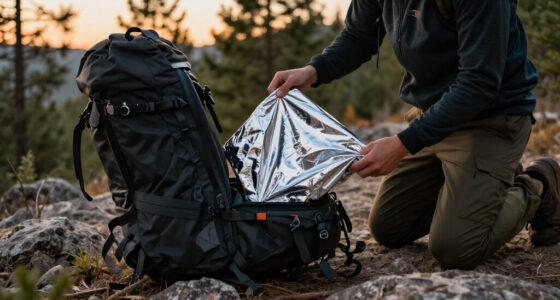
A fire blanket is a household safety item that may be appropriate for specific situations when used exactly as its instructions describe. This checklist has no product pick for the category, so compare products by their intended use, instructions, and applicable local guidance. Make sure the blanket’s packaging explains how to access and deploy it, and consider whether the people in your home can understand those steps under stress. Clear instructions are more useful than choosing a blanket based on appearance alone.
A common mistake is treating a blanket as a universal response to any fire. Read the manufacturer’s stated uses and limitations, and include it only as one part of a plan that prioritizes safe exit. Consider where it would be stored and whether it could be reached without approaching a fire. Keep the packaging and directions available, and review them with household members. If a situation is unsafe or the fire grows, leave and contact emergency services rather than trying to retrieve or use equipment. Exit planning comes first; product-specific guidance should shape how and where a blanket is kept.
What to look for:
- Review the stated uses and limitations on the product packaging.
- Choose a model with clear access and deployment instructions.
- Check applicable local guidance for household fire safety equipment.
- Store it where intended users can reach it safely.
- Include it in an exit-first plan and review instructions with household members.
Build your plan around essentials first: check smoke and carbon monoxide alarm coverage, identify exits, and make sure everyone knows how to leave. Then match equipment to your home’s layout, such as extinguishers near appropriate routes, an escape ladder for a suitable upper-floor window, or document storage sized for key papers. Prioritize coverage and fit over buying every item at once.
Review product instructions, local requirements, and your household’s needs as you make each choice. Practice the escape plan, keep equipment accessible, and revisit testing and maintenance on the schedule each maker provides. A few well-understood steps can make your home’s fire safety plan clearer and easier to follow.