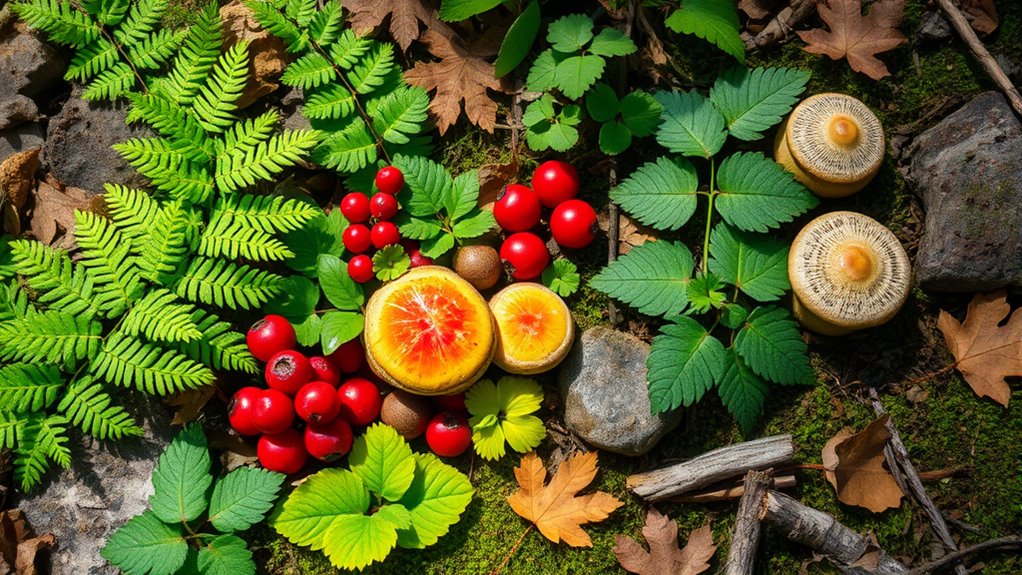

When foraging, always prioritize safety by carefully confirming plant identities with trusted guides or experts before consuming anything. Avoid tasting plants too early and only perform small taste tests after certainty, watching for warning signs like milky sap or bitter taste that indicate toxicity. Stay away from plants near polluted areas or roadsides, as environmental toxins can accumulate. Remember, even experienced foragers can err—learning more helps you stay safe and avoid deadly mistakes.
Key Takeaways
- Always confirm plant identification with reliable guides or experts before consuming.
- Avoid tasting or nibbling new plants until you are certain they are safe.
- Recognize poisonous plants by features like milky sap or bitter taste.
- Forage only in known, uncontaminated areas away from pollution or roadsides.
- When unsure about a plant’s safety, discard it rather than risk poisoning.
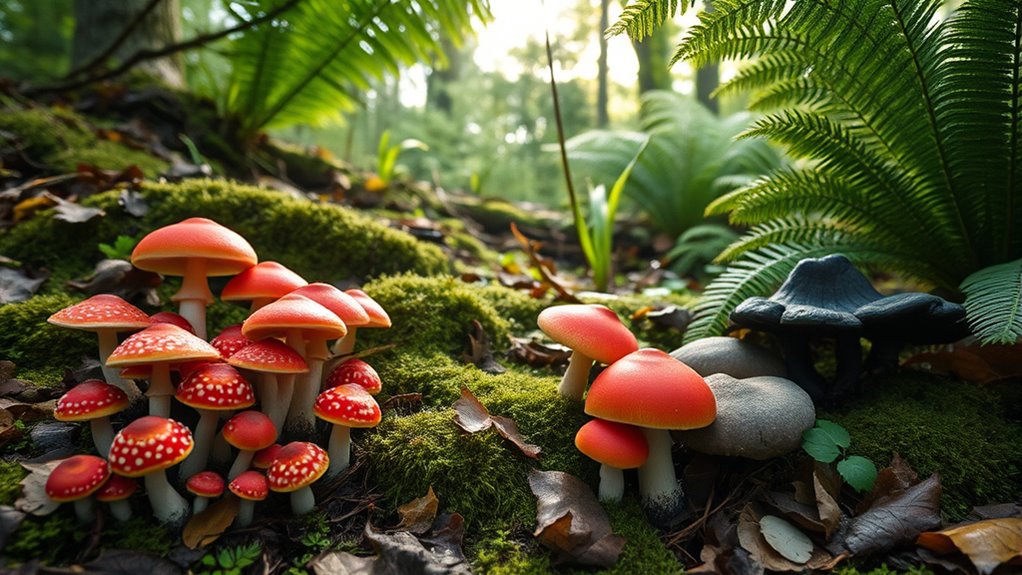
Have you ever wondered how to enjoy foraging safely? It’s an exciting activity that connects you with nature and provides fresh, wild foods. But it also comes with risks. Knowing how to distinguish edible plants from deadly ones is essential to avoid poisoning or worse. The first rule is to never consume anything unless you’re absolutely sure it’s safe. Many plants look similar, and some deadly species mimic edible ones perfectly. For example, look-alike plants such as wild carrots and poison hemlock can be confusing if you don’t know what to look for. Always carry a reliable guidebook or use trusted plant identification apps, but remember that these tools shouldn’t replace your knowledge. Spend time learning from experienced foragers or botanical experts who can show you the fine details that separate a safe plant from a toxic one.
When you’re out in the wild, approach every new plant with caution. Don’t nibble or taste anything until you’ve confirmed its identity. A good rule of thumb is to perform a taste test only after you’re certain it’s safe, and even then, only in tiny quantities. Keep in mind that some plants are toxic even in small amounts, and allergic reactions can occur unexpectedly. Pay attention to the plant’s features: leaves, stems, flowers, and berries. Note the color, shape, and smell. Many poisonous plants have distinctive features—such as the milky sap of the deadly nightshade or the bitter taste of certain dangerous mushrooms. Additionally, understanding how foraging rules help prevent accidents can greatly increase your safety in the wild.
It’s equally important to take into account the environment where you forage. Avoid plants growing near polluted areas, roadsides, or industrial sites, because they can absorb toxins from the environment. Also, stick to areas where you’re confident about the plant populations. If you’re unsure about a plant’s safety, don’t risk it. Remember that even experienced foragers sometimes make mistakes, so err on the side of caution. Never assume that because a plant looks familiar or has been identified by others, it’s safe to eat. When in doubt, throw it out.
Frequently Asked Questions
How Can I Identify Edible Mushrooms Safely?
You can identify edible mushrooms safely by first learning to recognize key features through reputable guides or courses. Always examine cap shape, gill color, stem texture, and spore print color. Avoid mushrooms with white gills, a bulbous base, or red coloration unless you’re an expert. When in doubt, consult an experienced forager or mycologist, and never consume a mushroom unless you’re 100% sure it’s safe.
What Are the Symptoms of Mushroom Poisoning?
If you’ve accidentally ingested a poisonous mushroom, watch for symptoms like nausea, vomiting, diarrhea, and abdominal pain—sometimes within hours. More severe cases can cause dizziness, confusion, hallucinations, or liver damage. You might also experience sweating, muscle weakness, or difficulty breathing. If any of these signs appear after foraging, seek medical help immediately. Quick action can be the difference between recovery and serious health risks.
Are There Essential Tools for Safe Foraging?
Yes, there are essential tools for safe foraging. You should carry a sharp knife to harvest mushrooms carefully, preventing damage and contamination. Bring a woven basket or mesh bag to keep your finds fresh and allow spores to disperse. A field guide helps you identify safe species, while a small brush assists in cleaning dirt off. Always have a notebook to record locations and notes, ensuring safe, responsible foraging.
How Do I Store Foraged Wild Edibles Properly?
You should store foraged wild edibles in breathable containers like paper bags or baskets to prevent spoilage. For example, if you pick wild berries, keep them in a paper bag in the fridge, not sealed plastic, to avoid mold. Make certain to wash them gently before storage, and consume within a few days. Proper storage preserves freshness and ensures your foraged finds stay safe and tasty.
Can Children Participate in Foraging Activities Safely?
Children can participate in foraging activities safely if you supervise them closely and set clear rules. Teach them to recognize safe plants and avoid unknown or suspicious ones. Keep activities short and fun, emphasizing safety first. Make sure they understand not to touch or eat anything without your permission. Always stay within sight, and consider age-appropriate foraging tasks to ensure their safety and enjoyment.
Conclusion
Remember, foraging is like walking a tightrope—balance is everything. Trust your knowledge, follow the rules, and stay alert, or you might stumble into danger. Think of edible plants as your trusted allies, but deadly ones as lurking shadows. When you respect nature’s boundaries, you’ll find yourself dancing safely through the wild, savoring its bounty without fear. Stay wise, stay cautious, and let the forest be your friend, not your foe.