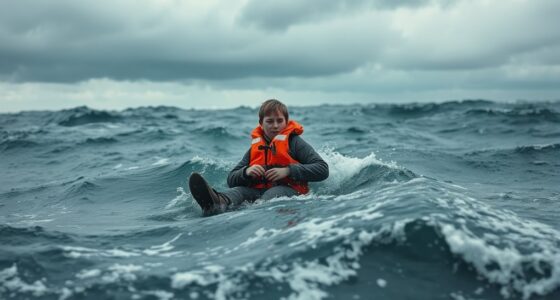

To create effective rescue signals, use bright, high-contrast items like colorful fabrics, reflective mirrors, and ground symbols to make yourself visible from above. Wave or position these objects deliberately to attract attention, and combine visual cues with sound signals like whistles or shouting for added effect. Clear large ground markings or symbols on open terrain also help rescuers locate you faster. Keep your signals simple, maintained, and strategic—more tips follow to enhance your chances of rescue.
Key Takeaways
- Use bright, high-contrast visual signals like “SOS” or distress symbols on the ground visible from above.
- Employ mirrors, reflective objects, or emergency blankets to produce flashes or reflections for long-distance visibility.
- Wave or move brightly colored fabrics and objects deliberately to attract attention from rescuers.
- Create large ground symbols, such as “X” or distress patterns, using rocks, logs, or natural materials for aerial recognition.
- Combine visual signals with sound devices like whistles and maintain consistent signaling to ensure clarity and effectiveness.

When you’re in a rescue situation, effective signaling can be the difference between being found quickly or remaining lost. Knowing how to send clear, recognizable signals guarantees that rescuers can locate you without unnecessary delay. Emergency signals are your primary tools for alerting others to your position, and mastering visual communication methods can markedly improve your chances of rescue. Whether you’re in the wilderness, at sea, or caught in a disaster scenario, the ability to communicate visually is essential.
Effective signaling is crucial for quick rescue in emergencies.
One of the simplest and most effective emergency signals is the use of universally recognized symbols like a large “HELP” sign, a bright-colored cloth, or an SOS signal. These signals are designed to be visible from a distance, especially when there’s limited access to communication devices. Bright colors such as orange, red, or yellow stand out against natural backgrounds and are easily spotted by rescuers. You should always carry a signaling kit that includes reflective objects, brightly colored fabrics, or emergency blankets, as these items can be quickly deployed to grab attention. When using visual communication for signaling, focus on creating contrast and visibility — your goal is to be seen, not just heard.
Visual communication extends beyond static signals. Movements like waving a brightly colored cloth or using a mirror to reflect sunlight are highly effective ways to catch the eye of a passing helicopter or rescue team. Mirrors are especially useful because they can project flashes of light over long distances, and they are lightweight, making them easy to carry. If you have a whistle, it can be combined with visual signals to reinforce your message, but remember, sound can be muffled by terrain or distance, so visual cues are often more dependable.
In addition, creating large, easily recognizable symbols on the ground can help rescuers identify your location. For example, clearing an open space and marking an “X” or the universal distress signal with rocks, logs, or clothing can be visible from the air. If you’re in a forested area, arranging branches or leaves into a pattern that stands out against the surroundings can be effective. Keep in mind that these signals are most effective when they are simple, well-maintained, and visible from above.
Furthermore, understanding dog names or the significance of specific signals can help you plan your rescue efforts more effectively, especially if you are with a trained rescue dog or using signals they are familiar with. Ultimately, your goal in a rescue situation is to maximize visibility with minimal effort. Emergency signals and visual communication techniques are your best tools for achieving this. Stay calm, think strategically, and use what you have at hand to create signals that will catch the attention of rescuers quickly. The more effective your signaling methods, the faster you can be reunited with help and safety.
Top picks for "creat signal method"
Open Amazon search results for this keyword.
As an affiliate, we earn on qualifying purchases.
Frequently Asked Questions
What Materials Are Best for Making Signaling Devices?
You should use lightweight, durable materials like aluminum or sturdy plastic for signaling devices, guaranteeing they withstand harsh conditions. Reflective surfaces or bright colors enhance visibility, making your device more effective. Opt for compact, portable designs so you can carry them easily during emergencies. Combining durability with portability ensures your signaling device remains reliable and easy to access, increasing your chances of being spotted during rescue efforts.
How Do Weather Conditions Affect Signaling Effectiveness?
Weather impacts your signaling effectiveness like a stormy sea tests a vessel’s strength. Harsh conditions, such as rain, fog, or snow, can diminish signal visibility and reduce signal durability. Wind can carry away signals or cause them to break, while extreme temperatures may weaken materials. To guarantee your signals stand resilient, choose weather-resistant materials and adapt your signaling methods to suit changing conditions, keeping rescue teams within reach.
Can Natural Signals Be Used Reliably for Rescue?
Natural signals can be somewhat reliable for rescue, especially if you use clear visual signal patterns like reflective surfaces or bright clothing, and sound signaling techniques such as whistles or shouting. However, weather conditions can hinder their effectiveness—fog, rain, or darkness reduce visibility and sound travel. To improve chances, combine natural signals with established signaling methods, and guarantee your signals are distinct and easily recognizable from a distance.
How Long Should Signaling Devices Be Visible?
You should guarantee your signaling devices are visible for at least 24 hours to maximize rescue chances. Maintain their visual visibility by choosing bright, reflective, or contrasting signals that can be seen from a distance. Signal duration depends on environmental conditions and your location, so check and update signals regularly. Keep your devices in good condition, and remember, consistent visibility increases the likelihood of being spotted by rescuers quickly.
Are There Legal Restrictions on Signaling Methods?
Yes, there are legal restrictions on signaling methods, which vary by location and situation. You need to adhere to signaling regulations set by authorities like the Coast Guard or local maritime agencies. Using unauthorized signals can lead to fines or legal issues. Always check the specific regulations for your area before deploying signaling devices, and guarantee your methods are compliant to avoid legal trouble during rescue efforts.
Conclusion
In rescue, clear communication can make a vital difference. By mastering simple signaling strategies, you guarantee your safety and swiftly summon support. Remember, consistent signals can cut through chaos, creating a confident connection. Stay steady, signal smartly, and stay safe. Your preparedness and practiced signals can save lives—yours and others’. So, stay alert, stay audible, and always be ready to relay, respond, and rescue with reliable signaling methods.