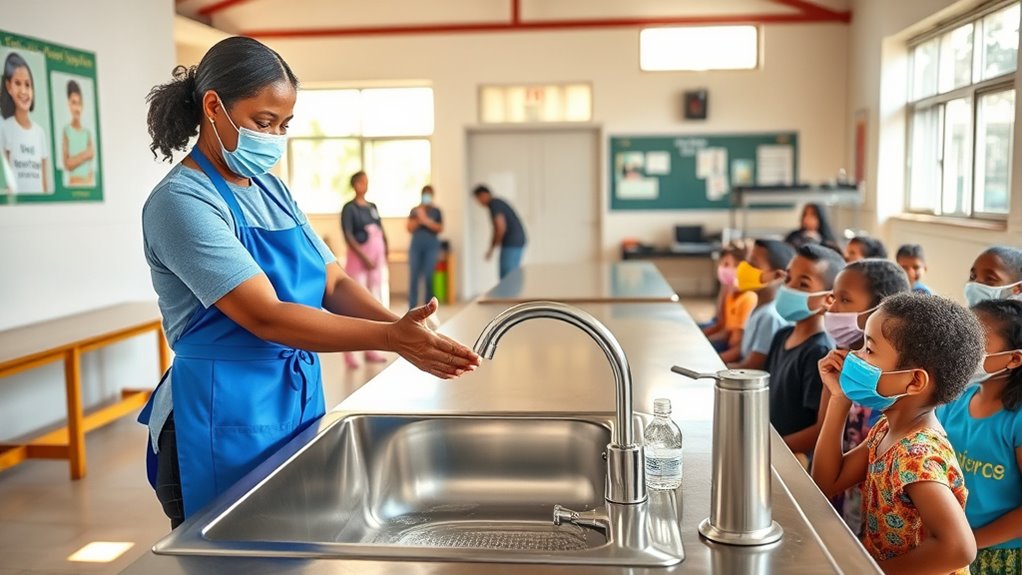

To prevent disease outbreaks, you need to maintain good hygiene habits. Wash your hands thoroughly with soap and water for at least 20 seconds before eating, preparing food, or touching your face. Keep surfaces clean and disinfect frequently-touched items like doorknobs and switches. Practice personal hygiene by showering regularly and keeping clothes clean. By following these routines, you help eliminate germs that cause illness and protect yourself and others. Continue to explore more effective ways to stay healthy and safe.
Key Takeaways
- Wash hands thoroughly with soap and water for at least 20 seconds to eliminate germs.
- Regularly disinfect high-touch surfaces to reduce environmental contamination.
- Practice proper waste disposal and keep trash bins clean to prevent bacterial growth.
- Maintain personal hygiene through regular bathing, oral care, and clean clothing.
- Ensure safe food handling by washing hands, utensils, and surfaces to prevent foodborne illnesses.
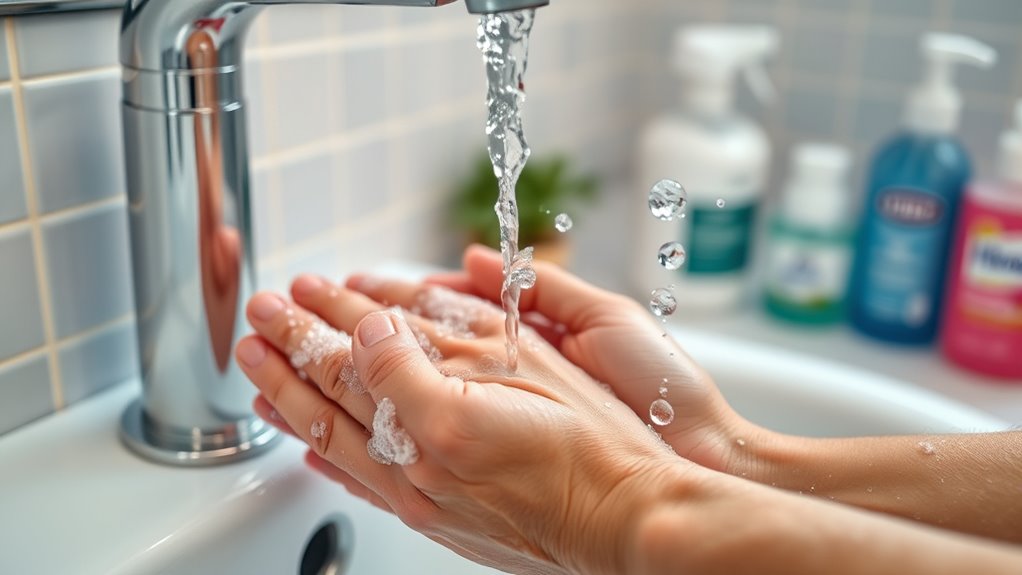
Have you ever wondered how simple daily habits can keep you healthy and prevent illness? One of the most effective ways to do this is by paying close attention to your hygiene routines, especially handwashing techniques and sanitation practices. These small actions make a huge difference in stopping the spread of germs and preventing disease outbreaks. When you wash your hands properly, you’re removing dirt, bacteria, and viruses that you might carry from touching surfaces, handling food, or even interacting with others. To do this effectively, use clean, running water and soap. Rub your hands together for at least 20 seconds, making sure to scrub all parts, including the backs of your hands, between your fingers, and under your nails. Rinse thoroughly and dry with a clean towel or air dry. This simple process helps eliminate pathogens that could otherwise enter your body or be transferred to objects you touch throughout the day. Proper hygiene practices ensure you reduce the risk of infection and promote overall health.
In addition to handwashing, practicing good sanitation practices around your environment is vital. Keep your living and workspaces clean by regularly disinfecting frequently touched surfaces like doorknobs, light switches, and electronic devices. Proper sanitation also means managing waste properly—dispose of trash regularly and ensure your trash bins are clean. When you maintain a clean environment, you reduce the chances of bacteria and viruses thriving in your surroundings, which directly lowers your risk of falling ill. Be mindful of personal hygiene by showering regularly, keeping your clothes clean, and maintaining oral hygiene through daily brushing and flossing. These habits contribute to your overall health and help prevent the spread of germs.
Your habits extend beyond just personal actions. When you prepare food, wash your hands beforehand and use clean utensils and surfaces. This prevents cross-contamination and foodborne illnesses. During flu seasons or outbreaks, it’s especially important to reinforce these routines—encourage family members to follow handwashing techniques and sanitation practices diligently. Remember, consistency is key. Making these habits part of your daily routine creates a protective barrier against infections. Keeping your environment clean, practicing good hygiene, and washing your hands properly are simple but powerful steps you can take every day. These actions not only safeguard your health but also protect those around you from preventable diseases. By staying mindful of your habits and maintaining high standards of hygiene, you’re actively contributing to a healthier community and reducing the risk of disease outbreaks.
Frequently Asked Questions
How Often Should I Wash My Hands Daily?
You should wash your hands frequently—ideally, at least 5 to 7 times a day—as part of your daily hygiene routine. Handwashing frequency depends on your activities, like after using the bathroom, touching public surfaces, or preparing food. Make it a habit to wash your hands thoroughly with soap and water for at least 20 seconds whenever you notice dirt or after leaving any potentially contaminated area.
What Are Effective Ways to Disinfect Household Surfaces?
To effectively disinfect household surfaces, focus on surface sterilization using appropriate disinfectant types like alcohol-based solutions, bleach, or EPA-approved sprays. Spray or apply disinfectant generously on high-touch areas, then let it sit for the recommended contact time before wiping. Regularly clean surfaces such as doorknobs, countertops, and light switches to eliminate germs and reduce the risk of disease transmission. Consistent disinfecting keeps your home safer and healthier.
How Can I Improve Personal Hygiene in Children?
Did you know kids who learn good hygiene early are 40% less likely to get sick? To improve their personal hygiene, focus on toilet training, making it a positive routine, and teach them proper handwashing after using the bathroom. Encourage regular oral hygiene by helping them brush teeth twice daily. Keep hygiene supplies accessible, and praise their efforts to build lifelong habits. Consistency and patience are key!
Are There Specific Hygiene Practices for Outdoor Activities?
When engaging in outdoor activities, you should prioritize outdoor sanitation by carrying hand sanitizer and wipes to clean hands frequently. Use public hygiene practices like disposing of trash properly and avoiding touching shared surfaces unnecessarily. Encourage children to wash their hands with soap and water after outdoor play and before eating. Staying vigilant about outdoor sanitation helps prevent germs and keeps everyone healthy during outdoor adventures.
How Does Hygiene Influence Immune System Strength?
Hygiene directly boosts your immune response and pathogen resistance. When you practice good hygiene, you reduce exposure to harmful germs, allowing your immune system to stay focused on real threats rather than constantly fighting minor contaminants. This strengthens your body’s ability to respond effectively to infections. By maintaining cleanliness, you support your immune system’s health, making it more resilient and better equipped to keep you safe from illnesses.
Conclusion
By keeping up good hygiene habits, you’re the shield standing firm against disease outbreaks. Think of your efforts as a lighthouse guiding your community safely through stormy seas. Every hand wash, every sanitized surface, is a beacon of hope and health. When you prioritize cleanliness, you’re not just protecting yourself—you’re lighting the way for others to follow. Together, your small actions can make a mighty difference in keeping everyone safe and healthy.