
TL;DR

Get emergency and outdoor gear delivered free with Prime
- Fast, free delivery on millions of items
- Prime Video, Amazon Music and more included
- Member-only deals all year
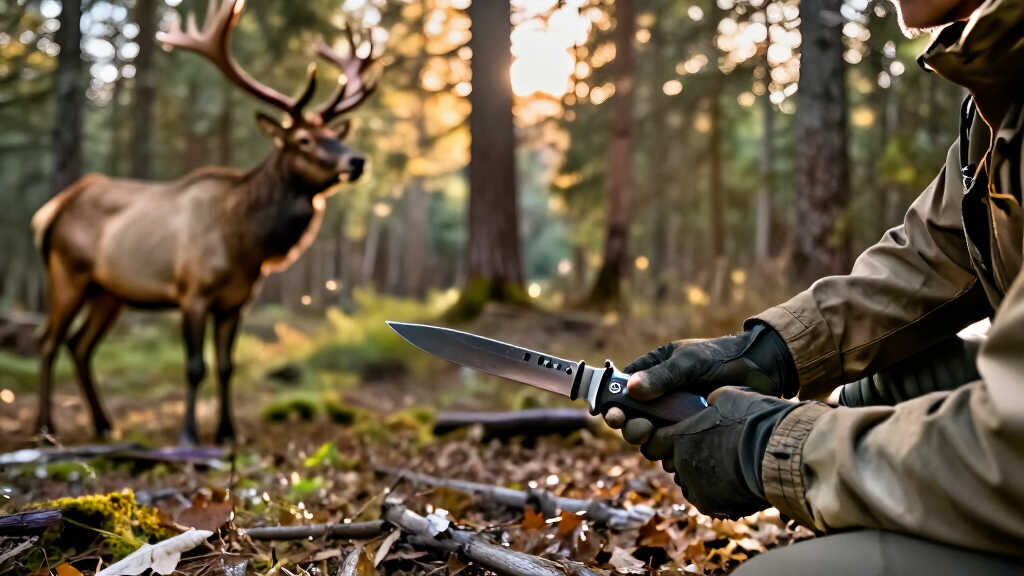
An Outdoor Life report published Oct. 9 questions the widespread belief that elk are unusually difficult to kill. Writer Tyler Freel describes three bulls taken by him and a hunting companion with a 6mm Creedmoor, while stressing that the account is not a scientific comparison and that shot placement matters.
Outdoor Life published a report Oct. 9 challenging the familiar claim that elk are exceptionally hard to kill, with writer Tyler Freel describing a hunt in which he and a companion took three bulls using a 6mm Creedmoor. The account argues that elk are not unusually resistant to well-placed shots, but it is a hunter’s experience, not a controlled study of cartridge performance.
Freel said he took two bulls during a week-long hunt on land where elk had been damaging crops, while his companion, Frank, took a third. The three animals were shot at distances ranging from 150 to 350 yards, he wrote, and none traveled more than about 10 yards before dying. Freel used a 6mm Creedmoor loaded with 93-grain copper bullets.
The report gives different outcomes for each shot. Freel said one bull was hit through the near shoulder and lungs, with the bullet exiting behind the far shoulder; it ran about six or seven yards. He said his second bull was shot through both front shoulders and went down after a few steps. Frank’s first shot struck low and broke a front leg below the brisket, according to the account. The bull remained alive and was later killed by a second shot that hit the ribs and stopped in the opposite shoulder.
Freel also recounts his first elk, a New Mexico bull he shot in 2021 with a .300 Winchester Magnum. He said he hit it in the lungs, fired a second lung shot as it ran, and the animal stopped near a public-land boundary. He uses the contrast to explain how individual encounters can shape hunters’ views, while cautioning that his three-bull hunt does not make him an expert on elk or establish a general rule about ammunition.
Shot Placement Shapes the Outcome
The report matters to hunters because beliefs about an animal’s toughness can affect equipment choices and expectations in the field. Freel’s account pushes back against the idea that elk require especially heavy rifles, but its central point is narrower: the location of a shot can matter more than a reputation or cartridge debate.
The examples also show why an animal surviving a shot does not, by itself, prove unusual resilience. In the account of Frank’s first shot, the bullet broke a leg but missed the chest area, according to Freel. The report presents that as a poor hit rather than evidence that the elk shrugged off a well-placed shot. For readers, the distinction is relevant to interpreting hunting stories and to avoiding conclusions that a single outcome can support.
The article does not offer a test of different calibers, bullet designs or shot angles. Its evidence is anecdotal, and the reported outcomes cannot establish how often elk survive particular wounds. It is best read as a challenge to received wisdom, not as a technical recommendation that any specific rifle or load is appropriate for every hunter or situation.
As an affiliate, we earn on qualifying purchases.
How Elk Earned a Tough Reputation
Freel describes elk as a large deer with anatomical features similar to those of moose and other deer, and says hunters have long portrayed them as unusually durable. He writes that stories passed between generations, cartridge arguments and explanations for animals that escape after being shot can all reinforce that reputation.
His own perspective comes from years around big-game hunting. Freel said he grew up in Colorado, began hunting elk with his father, and did not take his first bull until 2021, after moving to Alaska as a teenager. He has also hunted moose and grizzly bears, he wrote, and says his experience has led him to focus on whether a shot reaches vital organs rather than on an animal’s reputation. These are his observations and interpretation, not an independent assessment of elk anatomy or hunting practice.
“It doesn’t really matter what you shoot them with if you hit them in the right spot.”
— Tyler Freel, Outdoor Life writer, recounting the views of relatives he spoke with
What Three Bulls Cannot Establish
The report does not compare cartridges under controlled conditions or provide a larger sample of hunts. It is not clear from the account how the three animals’ outcomes compare with those of elk shot with other calibers, bullet types or at different angles. Nor does the story quantify how often elk survive or travel after a hit.
Freel’s account also does not establish that a 6mm Creedmoor is suitable for every elk hunt. The report describes specific shots, distances and bullets, but does not assess legal requirements across jurisdictions or provide a full technical evaluation of equipment. Its broader claim—that elk may be less exceptionally tough than lore suggests—remains the writer’s interpretation of personal experience.
No Further Testing Reported
The source report does not announce a follow-up study, additional testing or a change to hunting rules. Its evidence remains the experiences Freel describes, including the one-week hunt and his earlier elk encounter. Any firmer comparison of elk’s response to different ammunition would require evidence beyond the anecdotes presented in the article.
For readers, the immediate takeaway is to treat the story as a challenge to a common hunting assumption, not a definitive equipment guide. The report’s details support a discussion about shot placement and the limits of campfire claims, while leaving broader questions about cartridge performance unanswered.
Key Questions
What is the main claim in the Outdoor Life report?
Tyler Freel argues that elk may not be as unusually difficult to kill as their reputation suggests. He bases that view on personal hunting experience, including a hunt in which three bulls were taken with a 6mm Creedmoor.
How many elk were taken in the hunt described?
Freel said he took two bulls, and his companion Frank took one, for three bulls total. The report describes the hunt as taking place over one week.
Does the report prove that a 6mm Creedmoor is enough for every elk hunt?
No. The article recounts particular outcomes, but it is not a controlled comparison or general equipment test. It does not establish that one cartridge or load is suitable for every hunter, shot or jurisdiction.
What happened when Frank’s first shot did not kill the bull?
Freel wrote that the first shot hit low and broke a front leg below the brisket. Frank later fired a second shot that hit the ribs and stopped in the opposite shoulder; the account says the bull was then recovered.
Source: rss
Halloween Picks
halloween
As an affiliate, we earn on qualifying purchases.