

In rescue robotics, fairness and discrimination issues arise when algorithms reflect societal biases, potentially leading to unfair victim prioritization. If the data isn’t diverse and representative, your robot may unintentionally favor certain groups over others, risking unjust outcomes. To address this, it’s crucial to design, test, and continuously improve these systems with fairness in mind. Keep exploring to understand how ethical design can help prevent bias and ensure equitable rescue efforts.
Open a free Amazon Business account
Business pricing, bulk buying and tax-exempt orders.
As an affiliate, we earn on qualifying purchases.
Key Takeaways
- Training data biases can lead rescue robots to prioritize certain groups, risking discrimination.
- Incorporating fairness principles into algorithms helps promote equitable treatment during rescue operations.
- Regular auditing and updating of algorithms are essential to identify and mitigate biases.
- Ethical decision-making in rescue robotics involves balancing efficiency, fairness, and societal norms.
- Transparency in algorithm design allows stakeholders to understand and address potential biases and discrimination.
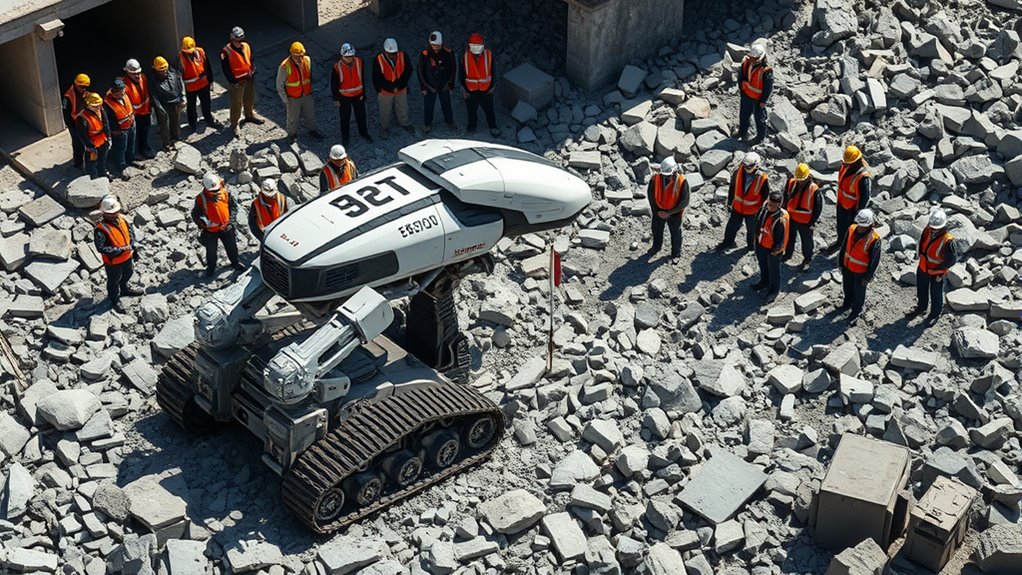
Rescue robotics has the potential to save lives and improve emergency response, but it also raises critical concerns about fairness and discrimination. As you rely on these advanced machines during crises, it’s essential to understand that the algorithms guiding them are not infallible. One major issue is algorithmic bias, which occurs when the data used to train these systems reflects existing societal prejudices. If a rescue robot’s algorithms are biased, it could prioritize certain individuals over others based on race, gender, age, or socioeconomic status, leading to unfair treatment. For example, if the training data mostly includes scenarios involving specific populations, the robot might better recognize those individuals or respond differently to them, unintentionally perpetuating discrimination. This bias can undermine the fundamental goal of rescue efforts—to save everyone equally and without prejudice.
Addressing algorithmic bias is critical because it directly impacts ethical decision making in rescue robotics. When these machines are tasked with making split-second choices, such as which victim to prioritize or how to navigate complex environments, the ethical implications of their programming come into sharp focus. You need to guarantee that the algorithms incorporate fairness principles, so decisions are made based on objective criteria rather than biased data or flawed assumptions. This involves continuously auditing and updating the algorithms, ensuring diverse data sets, and designing systems that promote equitable treatment. Without these measures, you risk deploying rescue robots that inadvertently discriminate against vulnerable populations or reinforce societal inequalities.
Furthermore, ethical decision making in rescue robotics extends beyond bias. It involves programming machines to handle moral dilemmas and prioritize human life ethically. For instance, if a robot encounters multiple victims with varying degrees of injury, how should it decide whom to assist first? These questions are complex because they involve values and societal norms that are difficult to encode into algorithms. You must grapple with balancing efficiency, fairness, and ethical considerations, recognizing that no system is perfect. Transparency is crucial—stakeholders should understand how decisions are made and have the opportunity to correct biases or flawed reasoning. Additionally, understanding the Basics of Soaring and Gliding can provide insights into how automation and environmental factors influence decision-making processes in complex systems like rescue robotics.
Ultimately, integrating fairness and ethical decision making into rescue robotics requires a proactive approach. You need to design, test, and refine algorithms with fairness at the core, ensuring that these machines serve all individuals equally and ethically. Only then can rescue robotics truly fulfill its promise of saving lives while upholding the values of justice and non-discrimination.
rescue robotics fairness testing kit
As an affiliate, we earn on qualifying purchases.
As an affiliate, we earn on qualifying purchases.
Frequently Asked Questions
How Can Rescue Robots Ensure Cultural Sensitivity During Operations?
You can guarantee cultural sensitivity during rescue operations by incorporating cultural awareness into your robot’s training and decision-making processes. Implement ethical programming that respects local customs, traditions, and language differences. Regularly update your robot’s knowledge base with cultural insights and involve local communities in planning. This approach helps your rescue robots act respectfully, reducing misunderstandings, building trust, and ensuring that your humanitarian efforts are both effective and culturally considerate.
What Legal Frameworks Govern Discrimination by Rescue Robots?
You need to understand that legal frameworks governing discrimination by rescue robots mainly focus on legal accountability and ethical standards. These laws hold developers and operators responsible for making certain that robots do not discriminate based on race, gender, or other protected characteristics. By adhering to international and national regulations, you can help ensure your rescue robots operate ethically and legally, reducing bias and promoting fairness during emergency responses.
How Do Rescue Robots Adapt to Diverse Disaster Scenarios?
Imagine a chameleon blending into its surroundings—that’s how rescue robots adapt to diverse disaster scenarios. You’ll find that their adaptive algorithms enable them to respond effectively across scenario diversity, adjusting behaviors based on real-time data. This flexibility guarantees they can navigate collapsed buildings, floods, or fires. By constantly learning and recalibrating, rescue robots become versatile responders, ready to meet unpredictable challenges head-on and save lives in any chaotic environment.
Can Rescue Robots Unintentionally Reinforce Societal Biases?
Yes, rescue robots can unintentionally reinforce societal biases through algorithm bias. If their programming relies on biased data, they might prioritize certain groups over others, affecting fairness. This impacts societal perceptions and trust in technology. You should guarantee diverse data sets and regular bias assessments to minimize these risks. Addressing algorithm bias is vital to prevent unintended societal impact and promote equitable rescue efforts.
What Training Do Rescue Robots Undergo to Minimize Unfair Decision-Making?
You should guarantee rescue robots undergo training focused on algorithm transparency and bias mitigation. Developers program them with diverse datasets and regularly test for biases, making adjustments as needed. They also incorporate explainable AI techniques, so decision-making processes are clear. This ongoing training helps the robots make fairer decisions, reducing unintentional discrimination and ensuring equitable rescue efforts for all individuals involved.
Conclusion
By ignoring fairness and discrimination in rescue robotics, you risk releasing chaos on an unimaginable scale. Imagine robots that unfairly prioritize some lives over others, turning lifesaving efforts into a nightmare of bias and injustice. The future of rescue technology depends on your actions today—if you neglect these issues, you could condemn countless innocent lives to suffering and despair. Don’t let negligence be the legacy of your innovation—fight for fairness before it’s too late.
Fall yard work Picks
leaf blowers
As an affiliate, we earn on qualifying purchases.