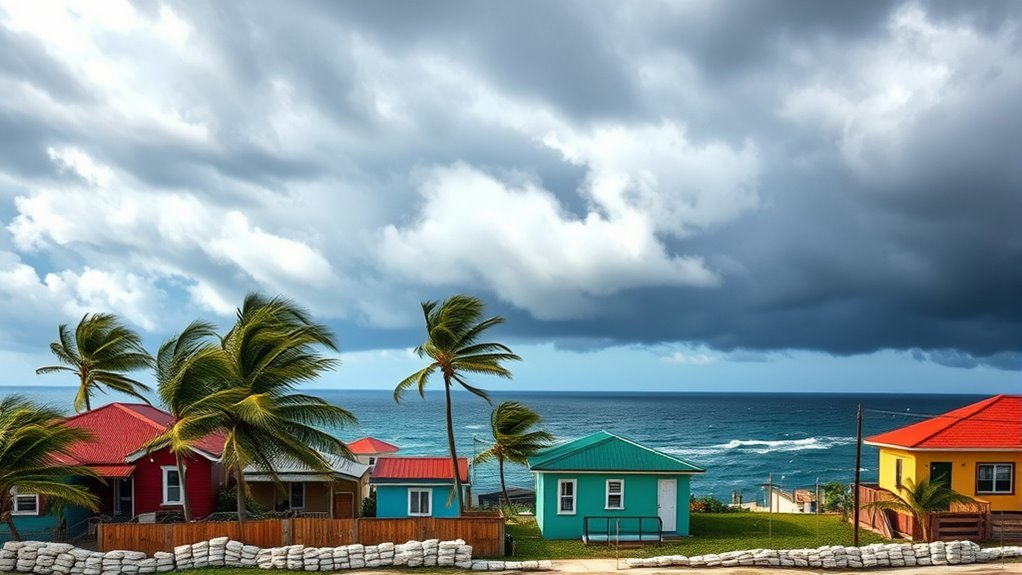

To prepare for hurricane season in the Caribbean, familiarize yourself with local evacuation routes and shelters, and practice your plan regularly. Pack an emergency kit with essentials like water, food, and medications, and keep important documents stored safely. Stay informed about weather updates from trusted sources, secure your property ahead of storms, and make sure your communication devices are charged. Staying proactive and organized helps you weather storms confidently—continue exploring ways to strengthen your hurricane preparedness.
Key Takeaways
- Develop and regularly practice comprehensive evacuation plans, including routes, shelters, and communication strategies.
- Prepare an emergency kit with essentials and store important documents securely for quick access.
- Stay informed with trusted weather updates and forecast alerts from authorities like the National Hurricane Center.
- Secure outdoor belongings, reinforce property, and review insurance policies to minimize storm damage risks.
- Educate household members about safety precautions and maintain readiness to respond promptly during storms.

Are you prepared for the unpredictable nature of hurricane season in the Caribbean? It’s vital to have a clear plan in place that prioritizes your safety and minimizes chaos when a storm approaches. Your first step should be understanding and practicing evacuation procedures. Know your local evacuation routes, identify nearby shelters, and guarantee your family or household members are familiar with the plan. Having a well-rehearsed evacuation strategy means less confusion and quicker action when seconds count. Keep an emergency kit ready with essentials like water, non-perishable food, medications, flashlights, and batteries. This preparation allows you to respond swiftly and confidently, even if communication lines are disrupted. Don’t forget to have important documents stored securely, either in a waterproof container or digitally accessible.
Prepare your family with evacuation plans, emergency kits, and secure documents to stay safe during hurricane season.
Emergency preparedness isn’t just about having supplies; it’s about mental readiness too. Stay informed by monitoring weather updates from trusted sources, such as the National Hurricane Center or local authorities. Knowing the forecast and potential storm paths helps you anticipate when to activate your plan. Develop a communication plan with family members, friends, or neighbors so everyone stays connected, especially if power or cell service goes out. Make sure your devices are fully charged, and consider investing in a portable charger to keep communication lines open. Practicing evacuation procedures regularly ensures everyone knows what to do without hesitation, reducing panic when a storm is imminent. Additionally, home organization can help streamline your preparations, making it easier to access essential supplies quickly.
You should also review your insurance policies and document your belongings. Taking photos or videos of your possessions can save time and frustration if you need to file claims afterward. Prepare your home by securing or removing outdoor furniture, shutters, or other loose items that could become projectiles in high winds. If you have a boat or other assets, plan their protection well in advance. Planning for all possibilities makes your emergency readiness more thorough, reducing your stress during a crisis.
It’s easy to think that hurricanes only affect others, but complacency can be deadly. Regularly update your emergency plan and supplies, especially as seasons change or new information becomes available. Remember, the goal is to stay safe and avoid unnecessary risks. Being proactive with evacuation procedures and emergency preparedness puts you in control during a time when nature’s unpredictability can catch anyone off guard. In the Caribbean, where storms are part of life, your preparation can make all the difference between weathering the storm safely or facing avoidable danger.
Top picks for "hurricane season strategy"
Open Amazon search results for this keyword.
As an affiliate, we earn on qualifying purchases.
Frequently Asked Questions
How Do Local Communities Prepare for Hurricanes Annually?
You prepare for hurricanes annually by participating in community drills to stay alert and know evacuation routes. Local communities focus on strengthening infrastructure resilience, fixing vulnerable buildings, and clearing drainage systems to minimize damage. Residents also stock up on essential supplies and stay informed through weather updates. These proactive steps help guarantee safety and quick recovery, making your community more resilient when hurricanes strike.
What Are the Economic Impacts of Hurricanes on Caribbean Tourism?
Hurricanes hit Caribbean tourism hard, causing immediate revenue drops and long-term economic setbacks. You might see cancellations and damaged infrastructure, but with strong insurance coverage, local economies can bounce back faster. While the storm’s destruction disrupts travel plans, it also highlights the importance of economic recovery plans and resilient investments. Your community’s ability to rebuild depends on preparedness, insurance, and strategic planning to restore tourism and stabilize the economy.
How Effective Are Current Hurricane Warning Systems in the Caribbean?
You’ll find that current hurricane warning systems in the Caribbean are fairly effective, thanks to advanced satellite technology that provides real-time data. These systems enable early warning, giving you vital time to prepare and evacuate if necessary. While no system is perfect, ongoing improvements continue to enhance accuracy, helping to protect lives and property. Staying informed through official channels guarantees you get the latest updates and can respond promptly.
What Role Do Government Policies Play in Hurricane Preparedness?
Imagine a sturdy boat anchored securely before a storm hits—that’s how government policies shape your hurricane preparedness. Your government’s policy implementation directs emergency management efforts, ensuring resources and plans are in place. These policies guide evacuation routes, shelters, and public awareness campaigns, making sure you’re ready when the skies darken. Their proactive approach helps minimize damage and keeps communities safe, turning chaos into coordinated action.
How Can Travelers Stay Safe During Hurricane Threats?
You can stay safe during hurricane threats by staying informed through local alerts and weather updates. Prepare an emergency kit with essentials like water, snacks, and first aid supplies. Know your evacuation plan and have it ready in case you need to leave quickly. Keep important documents nearby, and avoid unnecessary travel. Staying alert, prepared, and following official instructions guarantees you protect yourself and your loved ones effectively during hurricanes.
Conclusion
By being prepared, practicing patience, and planning proactively, you’ll weather hurricane season with confidence. Stay alert, adapt actions, and always aim for assurance. Remember, readiness reduces risk and reassures residents and visitors alike. So, stay sharp, stay safe, and seize the season’s strategies — because a prepared Caribbean community is a confident community. Together, you can tackle the turbulence, turn threats into tranquility, and triumph through every tempest.