
To can and preserve foods safely, you need to follow proper techniques, use trusted recipes, and make certain your equipment is sterilized. Use the correct canning method: water bath for high-acid foods and pressure canning for low-acid items. Monitor processing times and maintain proper acidity to prevent bacteria growth, especially *Clostridium botulinum*. Keeping everything clean and knowing the safety principles helps prevent spoilage and illness—continue exploring to learn more about safeguarding your preserved foods.
Key Takeaways
- Use high-acid foods for water bath canning and low-acid foods with a pressure canner to prevent bacterial growth.
- Follow trusted recipes and proper processing times to ensure food safety and prevent spoilage.
- Sterilize jars, lids, and tools before canning to avoid contamination.
- Maintain correct acidity levels, such as adding vinegar or lemon juice, to inhibit harmful bacteria.
- Label and store preserved foods in a clean, cool environment to monitor freshness and prevent spoilage.
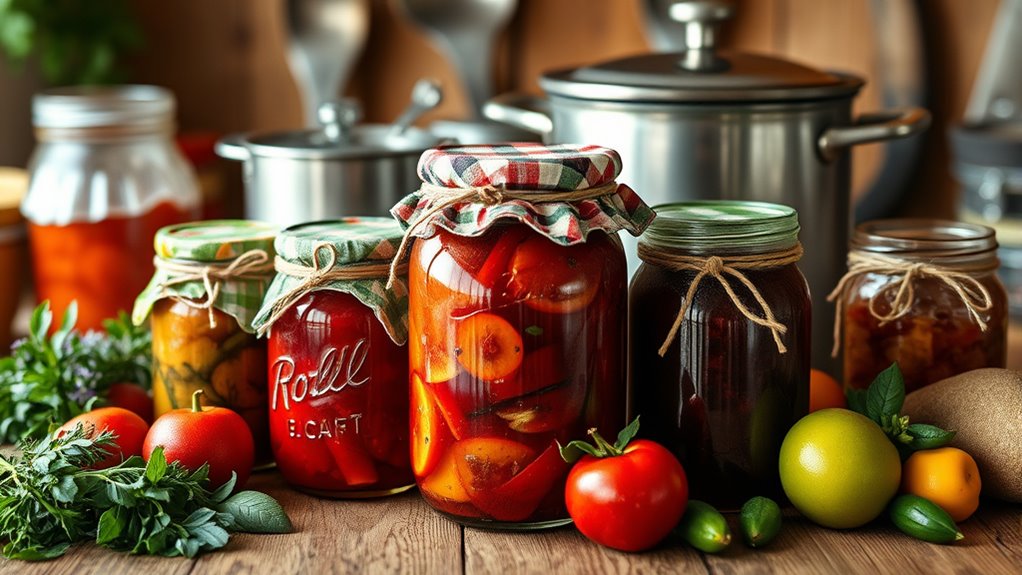
Canning and preserving foods allows you to enjoy seasonal flavors year-round, but doing so safely is essential to prevent foodborne illnesses. When you’re tackling the preservation process, understanding fermentation safety is critical, especially if you’re fermenting vegetables or making fermented beverages. Proper fermentation techniques involve controlling temperature, time, and salt levels to foster beneficial bacteria growth while inhibiting harmful pathogens. If fermentation safety isn’t maintained, there’s a risk of producing unsafe products that could cause illness. Always use trusted recipes and monitor your fermenting foods closely, ensuring the environment stays clean and the process is followed precisely.
Proper fermentation safety ensures delicious, safe preserved foods and prevents harmful bacteria growth.
In addition to fermentation safety, the use of preservatives plays a significant role in ensuring your canned goods stay safe and edible over time. While some people prefer to avoid chemical preservatives, many traditional methods rely on natural preservatives like vinegar, salt, sugar, or lemon juice to inhibit bacterial growth. When preserving foods, it’s essential to understand how preservative use impacts safety. For example, adding sufficient acidity through vinegar or lemon juice can prevent the growth of Clostridium botulinum, the bacteria responsible for botulism, which is deadly if ingested. Properly acidifying your preserves isn’t just about flavor; it’s a critical safety step.
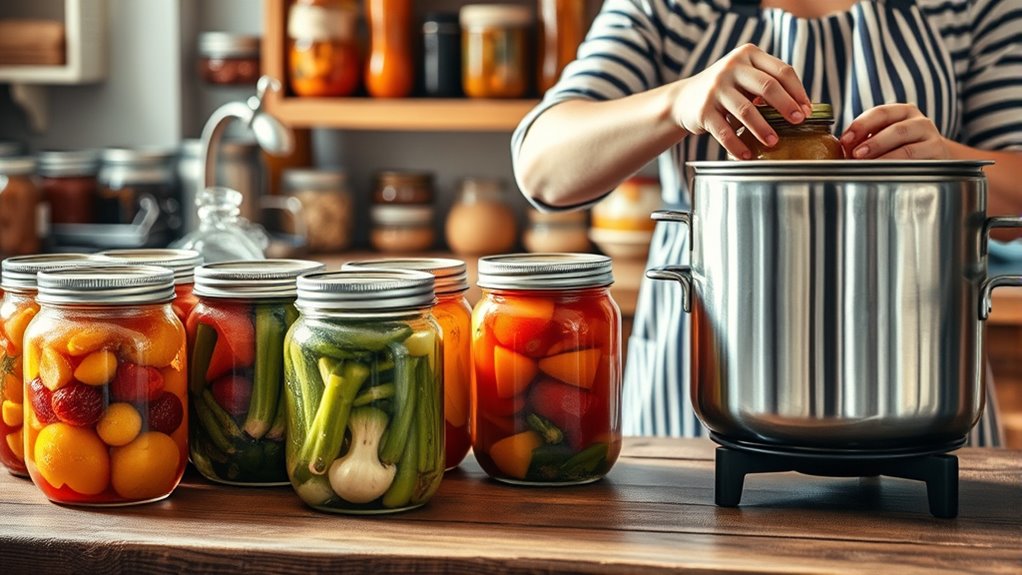
You should also familiarize yourself with the recommended preservation methods for different foods. Water bath canning is suitable for high-acid foods like jams, jellies, and pickles, where acidity is naturally high or enhanced with vinegar or lemon juice. For low-acid foods such as vegetables, meats, or seafood, pressure canning is necessary to reach the higher temperatures needed to kill harmful bacteria and spores. Skipping these steps or using improper canning techniques can lead to dangerous bacterial growth and spoilage. Always use tested recipes from reliable sources and follow recommended processing times and pressure settings.
Finally, keep your equipment clean and sterile throughout the process. Proper sterilization of jars, lids, and tools helps prevent contamination and supports safe fermentation and preservation. Label your jars with dates to track freshness and avoid consuming outdated preserves. Remember, safety in canning and preserving isn’t just about preventing spoilage; it’s about safeguarding your health. By paying attention to fermentation safety and careful preservative use, you’ll enjoy your homemade preserved foods with confidence, knowing they’re safe to eat. Additionally, understanding home canning technology can help you optimize your preservation techniques for better safety and quality.

Ball Jar Quilted Crystal Jelly (Case of 12), 8 oz
Premium Quality Jars: Crafted by Ball, a renowned brand in preserving, these Quilted Crystal Jelly Jars boast exceptional…
As an affiliate, we earn on qualifying purchases.
As an affiliate, we earn on qualifying purchases.
Frequently Asked Questions
Can I Reuse Old Canning Jars Safely?
Yes, you can reuse old canning jars, but you should carefully inspect them first. Check for cracks, chips, or any damage that could compromise the seal. To guarantee safety, sterilize the jars thoroughly using boiling water or a dishwasher with a sanitize cycle. Proper jar reuse involves sterilization methods to eliminate bacteria and ensure safe preservation. Always use new lids for a secure seal, but reuse the jars themselves if they’re in good condition.
How Do I Tell if Preserved Food Has Spoiled?
You can tell if preserved food has spoiled by checking for visual signs like mold, bubbles, or leaks, and smelling for sour or foul odors. If the lid is bulging or the jar is leaking, discard the contents immediately. Don’t taste or consume anything that looks or smells off. Always trust your senses—if it seems suspicious, it’s safest to toss it to prevent foodborne illness.
Is It Safe to Can Using a Pressure Cooker?
A stitch in time saves nine, and the same applies to food safety. Yes, you can use a pressure cooker for pressure canning, but only if it’s designed for that purpose. Always follow safety guidelines strictly, ensuring it reaches the correct pressure for the food you’re preserving. Using the right equipment and adhering to guidelines guarantees your canned foods stay safe and shelf-stable.
What Are the Best Preservatives to Add for Safety?
You should focus on natural preservatives like lemon juice, vinegar, or salt, which help maintain safety by inhibiting bacteria growth. Chemical preservatives, such as sodium benzoate or potassium sorbate, can also be effective but should be used carefully and within recommended limits. Always follow tested recipes and guidelines, as improper preservation methods can pose health risks. Combining natural preservatives with proper canning techniques guarantees your preserved foods stay safe and delicious.
How Long Can I Store Home-Canned Foods Safely?
You can store home-canned foods safely for up to a year if you keep them in a cool, dark place. Don’t forget to check for signs of spoilage, like bulging lids, leaks, or foul odors, before consuming. Proper storage duration guarantees your food stays fresh and safe. After a year, even if it looks fine, the quality might decline, so it’s best to enjoy your preserved goods within this timeframe.

Presto 01781 Pressure Canner and Cooker, 23 qt, Silver
The only method recommended safe by the US Department of Agriculture for canning vegetables, meats, poultry, and seafood
As an affiliate, we earn on qualifying purchases.
As an affiliate, we earn on qualifying purchases.
Conclusion
Think of canning and preserving as locking in summer’s sunshine for winter’s table. I once met a gardener who stored her harvest with care, and months later, she enjoyed fresh-tasting tomatoes long after the season ended. When you follow safe practices, you’re not just saving food—you’re creating a delicious safety net for future meals. Trust your skills and stay vigilant; your efforts guarantee every jar is a promise of freshness waiting to be opened.

Supa Ant Canning Supplies-21 Qt. Water Bath Canning Pot with Rack & Lid – Starter Kits Set for Beginners – Stainless Steel Water Bath Canner Kit & Rack – Rack, XL Ladle, Measuring Cups, Kitchen Funnel
The canning pot and rack in the market that comes with a food-grade stainless steel canning kit +…
As an affiliate, we earn on qualifying purchases.
As an affiliate, we earn on qualifying purchases.

Preserving Food without Freezing or Canning: Traditional Techniques Using Salt, Oil, Sugar, Alcohol, Vinegar, Drying, Cold Storage, and Lactic Fermentation
An essential guide for those who seek "healthy food for a healthy world"
As an affiliate, we earn on qualifying purchases.
As an affiliate, we earn on qualifying purchases.