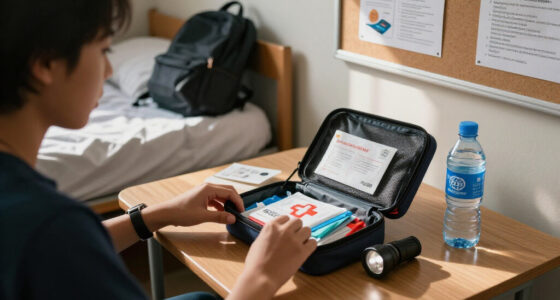
Hand crank power banks pair stored battery power with a manual charging option, but the crank is best treated as an emergency backup—not a fast way to refill a large battery. My best overall pick is the 49,800mAh Solar Power Bank with 15W wireless and 25W USB-C charging, which balances high stated capacity with flexible device charging. For a more travel-friendly setup, the BLAVOR 20,000mAh Hand-Crank Solar Power Bank adds a foldable solar panel, while the 20W Portable Hand Crank Generator suits buyers who want a generator rather than a battery bank. The main tradeoffs are capacity versus portability, useful charging ports versus feature count, and how much value to place on a hand crank that typically supplies limited power. Read on for how all 10 options differ and which one best fits your emergency kit.

Get emergency and outdoor gear delivered free with Prime
- Fast, free delivery on millions of items
- Prime Video, Amazon Music and more included
- Member-only deals all year
Key Takeaways
- The top picks serve different jobs: the 49,800mAh model leads on stated capacity and charging flexibility, the BLAVOR 20,000mAh model emphasizes a foldable solar panel, and the 20W generator is a separate choice for direct manual power.
- High capacity comes with a portability cost: the 49,800mAh and 66,800mAh listings may suit a stationary emergency kit better than a pocket or daypack.
- A crank is a backup input, not a practical full recharge plan: buyers should choose mainly by stored battery capacity and USB charging, then treat hand-crank power as a small emergency reserve.
- Built-in cables and wireless charging reduce kit clutter, but buyers should check whether the included cable types and charging methods match their devices.
- Foldable solar panels distinguish a few options, but panel count or wattage alone does not establish real-world charging speed; sunlight, placement, and panel area matter.


| hand crank power bank | Battery capacity | Built-in cables | USB-C output | Ports |
|---|---|---|---|---|
| 49,800mAh Solar Power Bank wit | 49,800mAh | 4 | Up to 25W | — |
| FALUOSHI 66800mAh Solar Power | 66,800mAh | USB-C, Micro USB, Lightning, and USB-A | 22.5W | 6 outputs and 4 inputs |
| Luvknit 20,000mAh Solar Power | 20,000mAh | — | — | — |
| 66800mAh Solar Power Bank with | 66,800mAh | — | — | 4: Micro input, USB-A outputs, and USB-C input/output |
| 20W Portable Hand Crank Genera | — | — | — | — |
| BLAVOR 20,000mAh Solar Power B | 20,000mAh | 4: 2 USB-C, 1 iOS, 1 USB-A | Up to 20W | — |
| 20000mAh Solar Power Bank with | 20,000mAh | USB-A, USB-C, Lightning, Micro USB | — | USB-A and USB-C |
| 49800mAh Solar Power Bank with | 49,800mAh | 4 | Up to 25W | 3 |
| BLAVOR 20,000mAh Hand-Crank So | — | 4 | — | — |
| FEELLE 50,000mAh Solar Power B | 50,000mAh | 4: USB-C, phone cable, Micro-USB, USB-A | Up to 3A | 3: USB-C input/output, USB-A output, Micro-USB input |
More Details on Our Top Picks
49,800mAh Solar Power Bank with 15W Wireless Charging, 25W USB-C Fast Charging, Hand Crank, and LED Flashlight
Four built-in cables, Qi wireless charging, and a 25W USB-C port make this the most connection-flexible power bank in this group. It can charge up to six devices at once, which suits a shared emergency kit better than the single-output 20W Portable Hand Crank Generator. The stated 49,800mAh capacity is also substantial, though below the 66,800mAh figures on the FALUOSHI V36 and the other 66,800mAh crank bank here. Its solar panel and hand crank are best treated as emergency top-up options: no charging rate is supplied, so I would not count on either to replenish the battery quickly. The three-mode flashlight and multiple device protections add useful backup-kit features. The tradeoff is limited carry information: weight and dimensions are not listed, making it harder to judge packability.
Pros:- Four built-in cables and Qi charging reduce the need to pack separate leads.
- Can charge up to six devices simultaneously.
- Offers a 25W USB-C output alongside solar and hand-crank emergency charging.
- Three flashlight modes and overcharge, over-discharge, short-circuit, and temperature protections.
Cons:- No solar or hand-crank charging rate is specified.
- Weight and dimensions are not provided, so packability is difficult to judge.
- Its stated capacity is lower than the two 66,800mAh banks in this batch.
Best for: Households or groups carrying a mix of USB-C, Lightning, and Micro USB devices who want one emergency bank with several charging methods.
Not ideal for: Buyers prioritizing a light, precisely sized hiking kit or dependable off-grid recharging, since weight, dimensions, and solar and crank charging rates are not provided.
- Battery capacity:49,800mAh
- Battery type:Lithium polymer
- USB-C output:Up to 25W
- Wireless charging:15W Qi
- Built-in cables:4
- Maximum simultaneous devices:6
- Charging methods:Solar, hand crank, and USB
- Flashlight modes:Steady, slow flash, and fast flash
Our verdict“Choose this for its unusually broad mix of built-in cables and charging options, but skip it if you need known carry dimensions or quantified crank performance.”
FALUOSHI 66800mAh Solar Power Bank with Hand Crank and 22.5W USB-C Fast Charging
Rugged construction and outdoor-oriented extras give the FALUOSHI V36 a clearer camping role than the more cable-focused 49,800mAh power bank. Its stated 66,800mAh capacity exceeds that model’s, while the 22.5W USB-C output supports faster wired charging than a basic emergency bank. Four built-in cables, six outputs, and four inputs offer flexibility for a group, and the SOS/strobe light, compass, and carabiner are aimed at field use rather than everyday pocket carry. Those features come with a real burden: at 2.06 pounds, this is substantially less appealing for a weight-conscious hiker. As with the other crank banks, the listing gives no solar or hand-crank charging rate, so I would view those as backup sources, not a practical replacement for charging by cable.
Pros:- Stated 66,800mAh capacity with 22.5W USB-C output.
- Four built-in cables and six outputs accommodate several devices.
- SOS/strobe light, compass, and carabiner suit outdoor use.
- Designed with water-resistant and shockproof construction.
Cons:- Weighs 938g (2.06 pounds), a significant load for hiking.
- Solar and hand-crank charging rates are not specified.
- The listing describes multiple inputs and outputs, but does not clarify how all can be used together.
Best for: Car campers and emergency-kit planners who value multiple device connections, a compass, and signaling light more than low pack weight.
Not ideal for: Ultralight hikers or travelers who need a compact bank, and anyone relying on a specified solar or hand-crank recharge speed.
- Model:V36
- Battery capacity:66,800mAh
- Battery type:Lithium polymer
- USB-C output:22.5W
- Ports:6 outputs and 4 inputs
- Built-in cables:USB-C, Micro USB, Lightning, and USB-A
- Weight:938g (2.06lb)
- Dimensions:7.16 × 3.62 × 2.16in
- Additional features:Solar panel, hand crank, SOS/strobe light, compass, and carabiner
Our verdict“Pick the FALUOSHI for a feature-rich car-camping or emergency kit, not for a lightweight pack or fast crank-based recharging.”
Luvknit 20,000mAh Solar Power Bank with 30W Wireless Charging and Built-In Cable
Lower capacity and a more portable format set the Luvknit apart from the two 66,800mAh banks, which are better suited to extended group use. Its 20,000mAh capacity makes more sense for travel or a day outdoors, while up to 25W wired charging and the listed 30W wireless charging offer faster everyday charging options than relying on a hand crank. A 24-inch built-in cable and support for up to four devices also reduce the accessories to carry. The key limitation for this hand-crank roundup is direct: no hand-crank generator is listed. It has solar charging, but the description provides no solar rate, and sunlight-dependent charging is not a dependable substitute for routine cable charging. I’d choose it for convenience and wired or wireless output, not as a manual-power solution.
Pros:- Offers up to 25W wired charging and up to 30W wireless charging.
- The 24-inch built-in cable helps reduce loose accessories.
- Can charge up to four devices simultaneously.
- Compact listed dimensions and solid-state cells suit portable use.
Cons:- No hand-crank charging is listed, making it a weaker match for this roundup.
- Its 20,000mAh capacity is well below the 49,800mAh and 66,800mAh options.
- Solar charging speed is not specified and depends on available sunlight.
Best for: Travelers who want a 20,000mAh bank with an attached cable, wireless charging, and solar as a secondary option.
Not ideal for: Buyers specifically seeking hand-crank charging or a high-capacity emergency bank for several people.
- Battery capacity:20,000mAh
- Battery technology:Solid-state cells
- Maximum wireless charging:30W
- Maximum wired charging:25W
- Built-in cable length:24in
- Simultaneous devices:Up to 4
- Dimensions:6.1 × 1.38 × 2.99in
- Charging and protection:Solar charging; overcharge and short-circuit protection
Our verdict“Choose the Luvknit for portable wired and wireless charging, but skip it if hand-crank power is a must-have.”
66800mAh Solar Power Bank with Hand Crank
Two LED flashlights, SOS modes, and a compass make this 66,800mAh bank the most clearly geared toward emergency signaling in the lineup. Its four ports and stated ability to charge up to six devices are useful for a group, while the FALUOSHI V36 offers a similar capacity with more listed connections, a carabiner, and its own SOS/strobe light. This model’s distinguishing feature is the pair of lights, but the listing does not explain their brightness or runtime. Solar and hand-crank charging provide backup routes, yet the product description recommends a cable for routine charging and gives no alternative charging rates. I would treat the large stated capacity as the main reserve and the crank as emergency assistance, not a way to quickly refill the bank. The ABS housing is described as water-, shock-, and dust-resistant, though no rating is supplied.
Pros:- Stated 66,800mAh capacity and support for up to six simultaneous devices.
- Two LED lights include SOS, flashing, and steady modes.
- Provides USB, solar, and hand-crank charging methods.
- Includes a compass and housing described as water-, shock-, and dust-resistant.
Cons:- Cable charging is recommended for routine use; no solar or crank rate is specified.
- No weight or charging time is provided.
- The description gives no formal water-resistance rating or flashlight brightness.
Best for: Emergency-kit owners who want a high-capacity bank with two lights, SOS signaling, and a compass for group use.
Not ideal for: Buyers who need documented weather-resistance ratings, specified solar or crank charging speeds, or a simpler, lighter backup bank.
- Battery capacity:66,800mAh
- Battery type:Lithium-ion
- Charging methods:USB, solar, and hand crank
- Ports:4: Micro input, USB-A outputs, and USB-C input/output
- Fast charging:22.5W
- Maximum simultaneous devices:6
- Flashlight:2 lights with SOS, flash, and steady modes
- Dimensions:6 × 3 × 1.99in
- Housing and additional feature:ABS; built-in compass
Our verdict“Choose this for a group emergency kit where dual lights and signaling matter, but do not depend on its crank as a fast recharge method.”
20W Portable Hand Crank Generator
This is a generator, not a power bank: it produces electricity while you crank rather than storing a stated battery reserve for later. That makes it a distinct choice from the 66,800mAh solar power banks, which pair a stored-capacity claim with hand-crank backup. The JZSWYST lists up to 20W output and adjustable voltage up to 28V, so compatibility with the intended device matters; it should not be treated as a universal phone charger without checking voltage and connection requirements. Its compact listed dimensions, digital display, ergonomic handle, and non-slip feet support field use, while the metal housing is described as weather- and impact-resistant. The tradeoff is inherent: output depends on ongoing physical cranking, and the listed 20W maximum is lower than the 22.5W charging output on the FALUOSHI V36. I would choose it for manual generation, not stored backup capacity.
Pros:- Generates power manually without fuel or pre-charging.
- Adjustable output voltage is listed up to 28V for compatible devices.
- Compact 5 × 3.39 × 3.46in form and a digital display support portable use.
- Metal housing, ergonomic handle, and non-slip feet are designed for outdoor operation.
Cons:- No battery capacity is listed, so it does not provide a specified stored reserve.
- Sustained output requires physical effort to keep cranking.
- Maximum power is 20W, below the FALUOSHI V36’s listed 22.5W USB-C output.
Best for: Campers or emergency-preparedness users with compatible electronics who want a fuel-free source of manually generated power.
Not ideal for: Phone owners seeking a ready-to-use reserve, a hands-free charging option, or a conventional power bank with a stated battery capacity.
- Maximum power:20W
- Starting wattage:20W
- Running wattage:20W
- Maximum output voltage:28V
- Power source:Manual hand crank
- Dimensions:5 × 3.39 × 3.46in
- Additional feature:Digital display
- Housing:Metal; described as waterproof, shockproof, and salt-fog resistant
Our verdict“Pick this only if you need a compact manual generator for compatible electronics; choose a battery bank if you want stored power ready without cranking.”
BLAVOR 20,000mAh Solar Power Bank with Hand Crank, Wireless Charging, and 4 Built-In Cables
I’d choose this BLAVOR when carrying fewer accessories matters more than keeping a pack light. Its four built-in cables, three extra ports, and wireless charging give it more connection options than the simpler hand-crank-focused picks, including the BLAVOR 20,000mAh Hand-Crank Solar Power Bank with 10W Foldable Solar Panel. The 20W USB-C output is useful for wired charging, while the lantern, flashlight, compass, and thermometer add practical campsite functions.
The main hand-crank limitation is that the product description ties crank use to emergency lighting without stating how much device charge it can generate. I’d treat it as a backup feature, not a dependable way to refill a phone. At 1.3 pounds and 1.7 inches thick, it is also less appealing for minimal-pack trips. Its strength is an all-in-one kit, not a light or crank-first design.
Pros:- Four built-in cables and three additional ports cut down on separate charging accessories.
- 20W USB-C output and Qi wireless charging offer useful wired and cable-free options.
- Lantern, flashlight, compass, and thermometer add campsite utility.
- Flame-retardant shell and silicone protection are designed for outdoor use.
Cons:- The hand crank is described for emergency lighting, with no device-charging rate provided.
- At 1.3 pounds and 1.7 inches thick, it is bulky for weight-conscious trips.
- The multiple charging methods add versatility but do not establish how quickly solar or crank power replenishes the bank.
Best for: Campers and emergency-kit planners who want charging cables, lighting, and basic outdoor tools bundled into one power bank.
Not ideal for: Ultralight hikers or buyers who need a hand crank with a specified phone-charging rate; its weight adds up, and no crank output for devices is listed.
- Battery capacity:20,000mAh
- USB-C output:Up to 20W
- Wireless charging:Qi compatible, up to 15W
- Built-in cables:4: 2 USB-C, 1 iOS, 1 USB-A
- Additional ports:3: 1 USB-C, 2 USB-A
- Maximum simultaneous devices:7
- Weight:1.3 lbs
- Protection and materials:Flame-retardant ABS+PC shell with waterproof silicone protection; described as waterproof, shockproof, and dustproof
- Warranty:3 years
Our verdict“Pick this BLAVOR for a cable-rich campsite kit, but skip it if low carry weight or measurable crank charging is your priority.”
20000mAh Solar Power Bank with Hand Crank, 4 Foldable Solar Panels, 22.5W Fast Charging, Wireless Charging, Built-In Cables, and LED Lights
This model is the clearest choice here for buyers who want solar charging to play a larger role: its four foldable 6W panels are a more prominent solar setup than the single panel described for the 49,800mAh Solar Power Bank with Hand Crank. It also pairs that array with a 2W hand-crank generator, 22.5W wired output, and wireless charging, so there are several ways to keep devices going when outlets are unavailable.
I’d still treat both onboard generation options as supplements rather than dependable replacements for a wall charger. The 2W crank figure describes generator output, not a guaranteed phone-charging rate, and solar performance depends on conditions. Four built-in cables and a digital battery display make day-to-day use easier; the lights, compass, and dust-resistant housing suit outdoor trips. Compared with the BLAVOR 20,000mAh model, this one makes its solar hardware more visible, but offers a smaller stated wired output advantage only modestly.
Pros:- Four foldable 6W solar panels provide a defined solar setup.
- 2W hand-crank generator adds a manual backup power source.
- 22.5W wired output, wireless charging, and four integrated cables cover varied devices.
- Digital battery display, compass, and multiple lights support outdoor use.
Cons:- Solar and crank charging are supplemental options, not a specified fast way to refill the bank.
- Wireless charging depends on device compatibility.
- The listed 70% in 30 minutes rapid-charge claim does not specify all device or charging conditions.
Best for: Campers who can leave a power bank in sunlight and want foldable solar panels alongside wired, wireless, and crank options.
Not ideal for: Buyers who need rapid, predictable recharging from the crank or solar panels, or whose devices cannot use the listed wireless charging modes.
- Battery capacity:20,000mAh
- Solar panels:4 foldable panels, 6W
- Hand-crank generator:2W
- Maximum wired output:22.5W
- Maximum wireless charging:15W
- Built-in cables:USB-A, USB-C, Lightning, Micro USB
- Ports:USB-A and USB-C
- Lighting:Dual LED flashlights, rear camping light, and red light beam
- Housing:PC+ABS with silicone accents
Our verdict“Choose this model if foldable solar collection is a priority, but rely on wired charging for predictable replenishment.”
49800mAh Solar Power Bank with Hand Crank, Wireless Charging, Built-In Cables, and Camping Light
The standout here is the 49,800mAh stated capacity, paired with a 25W USB-C port and support for up to six devices. That makes it a better fit for buyers who want a large reserve for several gadgets than either 20,000mAh BLAVOR option. It also covers the hand-crank roundup basics with solar input, wireless charging, four built-in cables, a flashlight, and a compass.
Capacity alone does not make it a crank-first choice: the description gives no solar or hand-crank charging rate, so I would not count on either to refill this large bank quickly. The listed 5V specification also leaves charging details for the built-in cables unclear. Compared with the FEELLE 50,000mAh model, this one specifies a 25W USB-C port, while FEELLE lists magnetic wireless charging and four solar panels. The tradeoff is limited detail on how this model’s generation features perform.
Pros:- High stated 49,800mAh capacity is suited to keeping multiple devices supplied.
- 25W USB-C port and 15W wireless charging offer two convenient charging routes.
- Four built-in cables and support for up to six devices reduce accessory needs.
- Flashlight, compass, and power-level indicators add practical emergency features.
Cons:- No charging rates are specified for the solar panel or hand-crank generator.
- Charging speeds for the built-in cables are not stated.
- Its large-capacity focus is less suited to buyers seeking a compact everyday carry bank.
Best for: Travelers or households seeking a high-capacity reserve for several phones and accessories, with hand-crank and solar options as backups.
Not ideal for: Buyers who need a verified crank charging rate, transparent cable charging speeds, or a compact power bank for everyday carry.
- Battery capacity:49,800mAh
- USB-C output:Up to 25W
- Wireless charging:Up to 15W
- Built-in cables:4
- Maximum simultaneous devices:6
- Ports:3
- Voltage:5V
- Lighting:LED flashlight with steady, slow-flash, and fast-flash modes
- Safety protections:Overcharge, over-discharge, short-circuit, and high-temperature protection
Our verdict“Pick this for a large stated reserve and multiple device connections, not for a crank you expect to recharge devices quickly.”
BLAVOR 20,000mAh Hand-Crank Solar Power Bank with 10W Foldable Solar Panel
I’d give this BLAVOR the edge for buyers who want a more self-contained solar setup rather than just a power bank with an emergency panel. Its 10W, five-panel foldable charger is described as converting into a crossbody bag, giving it a distinctive carry-and-collect approach. That is a different emphasis from the 20,000mAh foldable-panel model, which lists four 6W panels but does not describe a bag conversion.
The bank also includes a hand crank, four built-in cables, three output ports, wireless charging, and campsite tools. Those extras make it versatile, but the crank has no stated device-charging rate, and solar performance varies with sunlight and weather. At 1.05 kg, the complete setup is not a lightweight choice; the panel-and-bag format makes the most sense for planned outdoor use, not a small daypack. I’d choose it for solar flexibility, not because its crank is proven to deliver substantial phone charge.
Pros:- 10W five-panel solar charger folds into a crossbody bag with a transparent pocket.
- Solar, hand-crank, and corded charging give several ways to supply the power bank.
- Four built-in cables and three output ports help serve multiple devices.
- Lantern, flashlight, compass, and thermometer add useful outdoor functions.
Cons:- Solar charging speed varies with sunlight and weather.
- No hand-crank device-charging rate is provided.
- At 1.05 kg, the kit may be cumbersome for lightweight travel.
Best for: Campers and emergency-preparedness buyers who want a foldable solar panel that doubles as a carry bag and can bring several charging methods.
Not ideal for: Light-pack hikers or anyone expecting the hand crank to provide a known amount of phone charge; neither low weight nor a crank charging rate is established.
- Power bank capacity:20,000mAh
- Solar panel power:10W
- Solar panel design:5 foldable panels
- Solar conversion efficiency:Up to 24%
- Charging methods:Solar, hand crank, and corded electric
- Output ports:3
- Built-in cables:4
- Weight:1.05 kg
- Warranty:3 years
Our verdict“Choose this BLAVOR for its foldable solar-and-bag setup, but skip it if you need a light kit or a quantified crank output.”
FEELLE 50,000mAh Solar Power Bank with Magnetic Wireless Charging and Hand Crank
For buyers with a compatible phone, the magnetic wireless charging is the clearest reason to choose this FEELLE. It combines that convenience with a stated 50,000mAh capacity, four built-in cables, three ports, and support for up to six devices. Compared with the 49,800mAh Solar Power Bank with Hand Crank, it lists four solar panels and magnetic attachment; the other model instead specifies a 25W USB-C port, so the better fit depends on whether cable charging speed or magnetic convenience matters more.
The hand crank and solar panels broaden its emergency options, but the description gives no charging rates for either. Magnetic charging can also be less secure or efficient through thick phone cases, and the 15W figure applies only when the phone and setup support it. A compass, SOS-capable flashlight, and backpack hook round out its outdoor focus. I’d treat the large capacity as the main reserve and the crank as a fallback, not a fast refill method.
Pros:- 50,000mAh stated capacity and support for up to six devices suit group or multi-device use.
- Magnetic wireless charging offers cable-free convenience for compatible phones.
- Four built-in cables, three ports, and four solar panels provide several connection and power options.
- Compass, backpack hook, and steady, SOS, and strobe flashlight modes add outdoor utility.
Cons:- Thick phone cases can weaken magnetic attachment and reduce wireless charging efficiency.
- No solar or hand-crank charging rate is specified.
- The USB-C output is described as up to 3A, without a wattage figure.
Best for: Owners of compatible magnetic-wireless phones who want a high-capacity outdoor bank with integrated cables and emergency lighting.
Not ideal for: People with thick phone cases, devices without compatible magnetic charging, or buyers counting on solar or crank power for a predictable recharge.
- Battery capacity:50,000mAh
- Battery cell type:Lithium polymer
- Wireless charging:Magnetic, up to 15W
- Ports:3: USB-C input/output, USB-A output, Micro-USB input
- Built-in cables:4: USB-C, phone cable, Micro-USB, USB-A
- Simultaneous device capacity:Up to 6 devices
- Solar panels:4
- USB-C output:Up to 3A
- Outdoor protection:Described as shockproof, dustproof, and waterproof
Our verdict“Choose the FEELLE if magnetic charging and a large device reserve matter most, but do not depend on its crank for a predictable refill.”
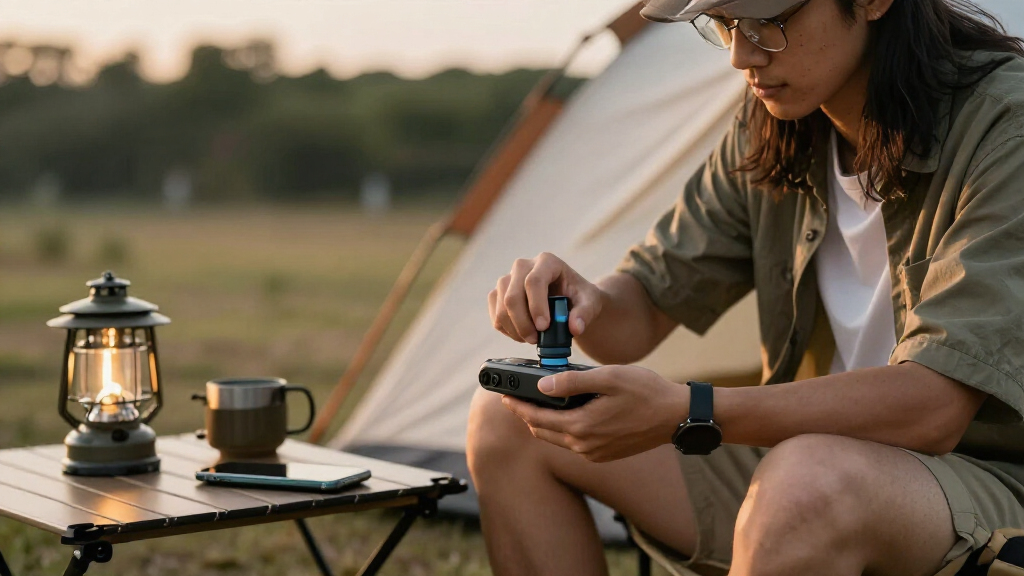
How We Picked
I compared the 10 listings by how useful they appear as hand-crank emergency power options, rather than treating every extra feature as an advantage. The main criteria were stated battery capacity, charging choices such as USB-C and wireless charging, convenience features including built-in cables and lights, and whether a foldable solar panel adds a meaningful alternative input. I also separated battery banks from the 20W Portable Hand Crank Generator, since a generator serves a different role from a device that stores a large charge.
The ranking favors options with a clearer balance of stored power and practical ways to charge common devices, then gives additional credit for useful solar or cable features when they do not obscure the product’s core role. Large capacity figures do not automatically put a model first: size, unclear output details, and dependence on manual cranking can limit usefulness. Product listings do not provide enough comparable information to verify crank efficiency, solar performance, or durability, so I avoid treating those figures as proven real-world results. Buyers should check current specifications and device compatibility before choosing.
Factors to Consider When Choosing Hand Crank Power Banks
Choosing among hand crank power banks starts with deciding what you expect the crank to do. These products can combine a rechargeable battery, solar input, and manual generation, but those inputs are not interchangeable. I would choose for the most likely emergency first—keeping a phone available, powering several devices, or generating a small amount of energy when other charging options fail.
Treat the hand crank as an emergency reserve
A hand crank can provide power when sunlight and wall outlets are unavailable, but it is generally a slow, effort-intensive way to add energy. A common mistake is assuming that a large stated battery capacity can be replenished quickly by turning a small crank. Choose a model with the stored charge you need before an outage, then use the crank to extend access to essential devices rather than refill the bank from empty. If manual generation is your main goal, compare a dedicated generator with a battery bank instead of assuming they perform the same task. Check whether the listing describes crank output and charging behavior clearly; missing details make it hard to predict what the crank can do.
Match stated capacity to the devices you need
Capacity figures help compare listings, but they do not translate directly into an exact number of phone charges because conversion losses and device batteries vary. Start by listing the devices you need to keep working and how often you expect to recharge them. A high-capacity model may make more sense for a household emergency kit, while a 20,000mAh option can be easier to carry for a shorter outing. Avoid choosing the largest number by default: extra capacity can mean more bulk, and it is less useful if the bank is too heavy to bring along. Also check the product’s output specifications, since capacity alone does not tell you how quickly it can charge a device.
Check charging outputs, not just charging features
USB-C fast charging, wireless charging, and built-in cables can make a bank more convenient, but each matters only if it works with your devices. Verify the listed output power and supported charging methods for your phone or other gear; a USB-C port does not by itself confirm a particular charging speed. Wireless charging can cut cable clutter, though it may be less convenient when devices need to stay in a bag or case. Built-in cables help reduce forgotten accessories, but their connector types may not fit every household. If you rely on one cable or output for an emergency device, keep a separate compatible cable as a backup.
Read solar claims in context
Solar charging can offer another way to add power, but performance depends on direct sunlight, panel area, angle, and weather. A product advertised with several foldable panels may collect more light than a compact built-in panel, yet the panel count alone does not establish charging speed. Treat solar as a way to replenish a bank over time, not a guaranteed substitute for charging it before a trip or storm. Check whether the panels fold away securely and whether the setup is practical for where you will use it. If you expect mostly indoor or cloudy conditions, prioritize stored battery capacity and USB charging instead.
Balance capacity against carry weight and storage
A power bank that stays in a car or emergency cabinet can be larger than one carried on a hike. Compare dimensions and weight alongside capacity, especially for models listing 49,800mAh or 66,800mAh. Ask where the unit will live and whether you can keep it charged and accessible there. A rugged-looking shell, flashlight, or camping light may be useful, but extra features can add bulk without improving the charging setup you actually need. For portable use, a smaller bank with a dependable output and a cable you can use may be more practical than the highest-capacity option.
Check what the listing does not tell you
Product names often highlight headline capacity and feature counts while leaving out details that affect emergency use. Look for clear information on port output, recharge input, dimensions, weight, battery maintenance, and the crank’s stated electrical output. Do not infer water resistance, drop protection, or long-term durability from an outdoor theme or flashlight alone. If those qualities matter, seek explicit specifications rather than relying on appearance or marketing language. Before storing any rechargeable bank for an emergency, follow its care instructions and periodically check its charge so it is ready when needed.
Frequently Asked Questions
Can a hand crank power bank recharge a phone from empty?
It may provide some emergency energy, but a small hand crank is generally not a practical way to refill a phone quickly or recharge a large power bank from empty. The result depends on the crank’s output, how long and steadily it is operated, and the phone’s charging needs. Treat cranking as a way to extend access or add a small reserve, not as the primary charging plan. For planned use, charge the bank from USB before heading out and carry a suitable cable. Check the listing for measured or clearly stated crank output rather than assuming all models perform alike.
Should I choose a 66,800mAh model over a 20,000mAh one?
Choose based on where you will carry or store it and how many devices you need to support. The higher stated capacity may suit a stationary emergency kit or a longer period away from outlets, but it can bring more size and weight. A 20,000mAh bank may be easier to pack for routine travel, especially when portability matters more than repeated recharging. Capacity numbers do not reveal charging speed or exact usable energy, so compare output specifications too. If the listing omits dimensions or weight, look those up before choosing a high-capacity model.
Is a foldable solar panel more useful than a hand crank?
They help in different conditions: a foldable panel can collect energy over a longer period in suitable sunlight, while a crank offers a manual input when light is unavailable. Neither should be treated as a guaranteed fast refill method. Solar output changes with weather, placement, and panel area, while cranking takes sustained effort and may provide limited power. For outdoor use with reliable daylight, a foldable panel can add a useful option; for a dark emergency, the crank may still matter. Many buyers are better served by a charged battery bank that has both inputs as backups.
Do built-in cables and wireless charging make a power bank a better emergency choice?
They can make the bank easier to use, but only if the included connectors and charging methods match the devices you rely on. Built-in cables reduce the chance of forgetting a lead, while wireless charging can help when a cable is unavailable or inconvenient. Both features can still be limited by output power, compatibility, or how you need to position the device. Check the exact cable connectors and charging specifications before buying. I would keep a separate known-compatible cable in an emergency kit even when the bank has built-in charging options.
When should I choose a hand crank generator instead of a power bank?
Choose a dedicated generator if your priority is producing manual power directly and you do not need a large built-in battery for stored energy. A power bank is better suited to keeping a charge ready for later use and offering multiple device-charging options. These are different tools, even when both listings mention a hand crank. Check whether a generator can safely and directly support the device you intend to power, and whether it stores energy at all. For phone backup during an outage, a charged battery bank is usually the more straightforward starting point, with manual generation as a secondary option.
Conclusion
For the strongest all-around balance in this lineup, I would start with the 49,800mAh Solar Power Bank with 15W wireless and 25W USB-C charging; its listed capacity and flexible outputs make it the best overall fit for a home emergency kit. The BLAVOR 20,000mAh Hand-Crank Solar Power Bank with 10W Foldable Solar Panel is my best value-style choice for buyers who want a more portable bank with an added solar option, while the FALUOSHI 66,800mAh model is the premium-style pick for those prioritizing a high stated capacity and fast USB-C charging. For beginners, I would choose the BLAVOR 20,000mAh model with four built-in cables if its connectors match your devices, since fewer loose accessories make setup simpler. If your specific need is manual power generation rather than stored battery capacity, consider the 20W Portable Hand Crank Generator instead. Whichever route you take, treat the crank as a backup, verify output details, and keep the unit charged before an emergency.