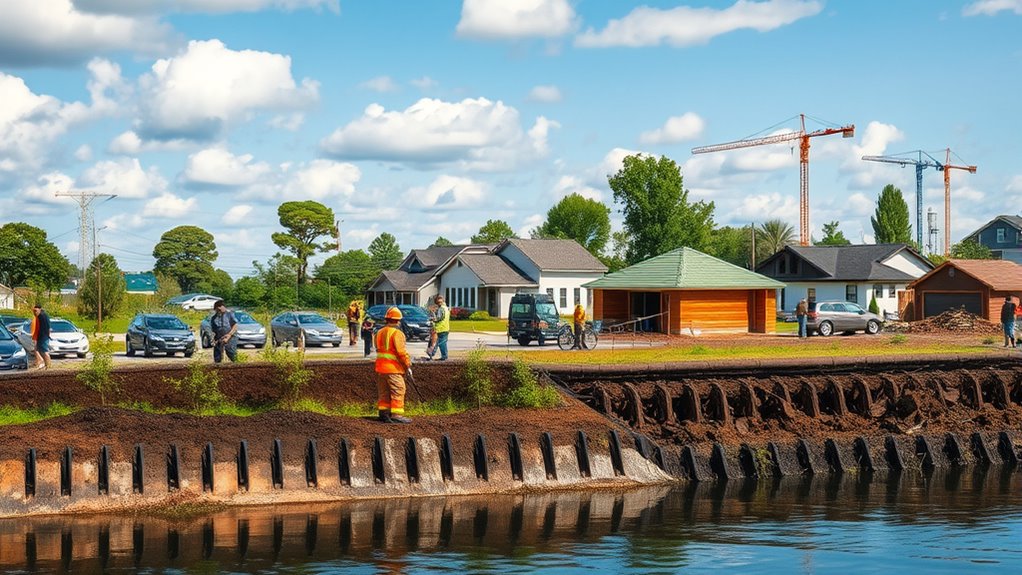

The disaster management cycle guides you through four key phases to handle emergencies effectively. First, undertake mitigation efforts like enforcing building codes and land-use policies to reduce risks before a disaster strikes. Then, develop preparedness plans, educate your community, and set up communication systems. During response, act quickly with organized evacuations and aid. Finally, focus on recovery by restoring infrastructure and community connections. Want to find out how each phase works? Keep exploring for more details.
Key Takeaways
- The cycle begins with mitigation efforts to reduce disaster risks before they occur.
- Preparedness involves planning, community education, and establishing communication systems for emergencies.
- Response phase activates rapid actions like evacuations and first aid to minimize harm during disasters.
- Recovery focuses on restoring infrastructure, community stability, and providing psychological support post-disaster.
- Building resilience through infrastructure, social networks, and community participation enhances future disaster management.
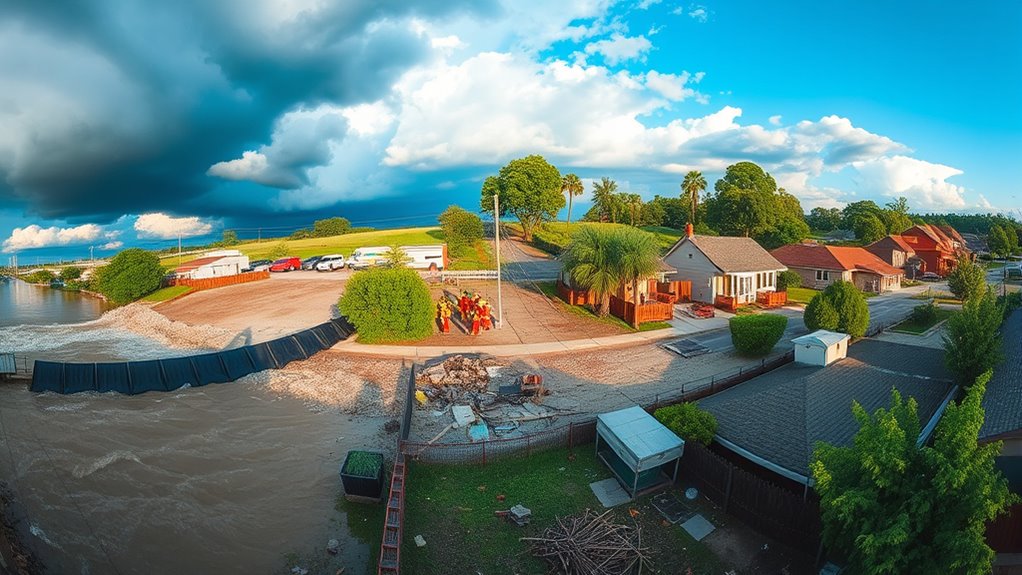
Have you ever wondered how communities prepare for and respond to disasters? The answer lies in a well-organized disaster management cycle that emphasizes emergency preparedness and builds community resilience. When a disaster strikes, it’s too late to start figuring things out; that’s why proactive planning is essential. Emergency preparedness involves educating residents, establishing communication systems, and developing action plans that can be quickly activated when needed. You play a critical role in this process by staying informed about local risks and participating in drills or training sessions. When everyone understands their responsibilities and the community’s protocols are clear, response times improve, and chaos is minimized.
Community resilience is the backbone of effective disaster management. It’s about fostering a culture where people are equipped to withstand and recover from adverse events. Building resilience means investing in infrastructure that can endure natural hazards, creating social networks that support vulnerable populations, and promoting a mindset of collective responsibility. As a community member, your involvement in local initiatives, volunteer programs, or neighborhood associations enhances resilience. When residents work together, share resources, and look out for one another, the community as a whole becomes stronger and more capable of bouncing back after a disaster. Incorporating architectural solutions that prioritize hazard mitigation can further strengthen this resilience.
Community resilience strengthens recovery through collective effort and shared resources.
The cycle continues with mitigation efforts that focus on reducing risks before a disaster occurs. These include enforcing building codes, retrofitting structures, and implementing land-use policies that steer development away from high-risk areas. Your participation in advocating for safer construction practices and supporting policies that prioritize hazard reduction can make a significant difference. Mitigation not only minimizes physical damage but also lessens the emotional and financial toll on individuals and the community. When these proactive measures are in place, the community’s overall resilience increases, making it better prepared for the next challenge.
Response follows once a disaster happens. Rapid, organized action—guided by the plans you help develop—can save lives and reduce suffering. During this phase, your role might involve evacuation procedures, providing first aid, or assisting those who are most vulnerable. Effective response relies on prior emergency preparedness; the better the planning, the smoother the response. After the immediate danger passes, the cycle shifts to recovery, where efforts focus on restoring normalcy. This phase involves repairing infrastructure, offering psychological support, and rebuilding community connections. Your involvement in recovery initiatives helps communities regain stability faster, reinforcing resilience and preparing everyone for future events.

Anker SOLIX C1000 Gen 2 Portable Power Station, 2,000W (Peak 3,000W) Solar Generator, Full Charge in 49 Min, 1,024Wh LiFePO4 Battery for Home Backup, Power Outages, and Camping (Optional Solar Panel)
49 Min UltraFast Recharging: With upgraded HyperFlash tech, fully recharge at 1,600W—for outage prepping, camping trips, or tailgating...
As an affiliate, we earn on qualifying purchases.
Frequently Asked Questions
How Can Communities Improve Disaster Preparedness?
You can improve disaster preparedness by raising community awareness through education and outreach programs. Encourage residents to participate in emergency planning, create family communication plans, and know evacuation routes. Organize regular drills and workshops to reinforce safety procedures. Building strong community networks helps everyone stay informed and ready. When you prioritize community awareness and proactive emergency planning, you guarantee everyone is better prepared to respond effectively during a disaster.
What Role Do Technology and Innovation Play?
You might think technology and innovation are just optional, but they’re essential for effective disaster prediction and response. By leveraging innovative solutions like early warning systems, real-time data analysis, and mobile alerts, you can better anticipate hazards and act swiftly. This proactive approach saves lives and reduces damage, making your community more resilient. Embracing these tools transforms chaos into coordinated effort, ensuring you’re prepared when disaster strikes.
How Are Vulnerable Populations Prioritized?
You prioritize vulnerable populations by conducting thorough risk assessments to identify their specific needs. Then, you implement targeted strategies like tailored communication, accessible shelters, and specialized support services. Your goal is to lessen risks for vulnerable groups such as the elderly, disabled, and low-income communities. By actively involving these populations in planning and decision-making, you guarantee their safety and resilience during disasters.
What Funding Options Are Available for Disaster Recovery?
You can access various funding options for disaster recovery, including insurance options like flood and property insurance, which help cover damages. Additionally, federal grants are available through agencies like FEMA and the Department of Housing and Urban Development, providing critical financial support. These options can help you rebuild and recover more quickly, ensuring you have the resources needed to restore your community and protect vulnerable populations.
How Is Climate Change Impacting Disaster Management?
Think of climate change as a rising tide, threatening to drown your efforts. It forces you to ramp up climate adaptation strategies and prioritize carbon reduction to stay afloat. You face more frequent and severe disasters, which challenge your preparedness and response. By integrating these approaches, you craft resilient communities that can withstand and recover from future storms, ensuring your actions help stabilize the environment and protect lives.
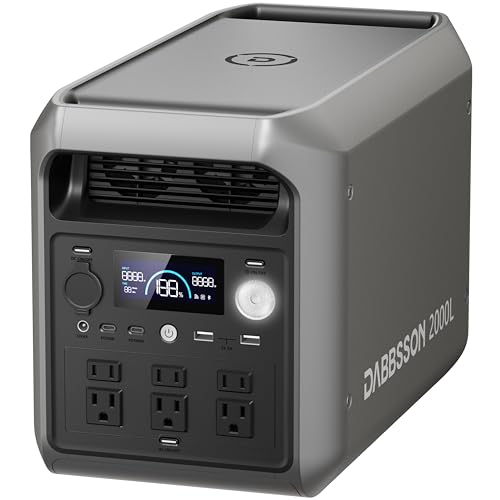
DABBSSON 2048Wh Portable Power Station, Safe Semi-Solid LiFePO4, 3300W Power Boost, 2200W AC Output ×6, 41lb,Compact & Lightweight, 1.3X Runtime, 2000L Solar Generator for Camping/Home/RV
[Ultra-Compact & Lightweight] Who says power has to be bulky? Dabbsson 2000L delivers 2kWh in a sleek 11.2...
As an affiliate, we earn on qualifying purchases.
Conclusion
Think of the disaster management cycle as a continuous loop, like a wheel turning steadily forward. By understanding each phase—mitigation, preparedness, response, and recovery—you become part of a resilient system that keeps turning, even when faced with storms. Your proactive efforts help prevent damage and rebuild stronger than before. Remember, you’re the driver guiding this wheel, ensuring it keeps spinning smoothly through every twist and turn, ultimately leading to a safer, more prepared community.

OUPES Mega 1 Portable Power Station 2000W (Surge 4500W), 1024Wh LiFePO4 Battery Solar Generator, Expandable to 5kWh, UPS, for Home Backup Power, Camping & Road Trips (Solar Panel Optional)
REVOLUTIONARY FAST-CHARGING TECHNOLOGY: Experience industry-leading recharge speeds with 0-80% capacity in just 36 minutes via AC, or an...
As an affiliate, we earn on qualifying purchases.

AFERIY 2048Wh Portable Power Station 2400W (Peak 4800W),P210 LiFePO4 Battery Generator,AC Fast Charging, 12V/25A XT60 DC output port,UPS Power Outages,Home Backup,Camping(Solar Panel Optional)
【10-Year Long-Lasting LFP Battery】AF-P210 Portable Power Station with LiFePO4 Battery: 3500+ Cycle Life, 10-Year Durability for Safe &...
As an affiliate, we earn on qualifying purchases.