
To set up an emergency meeting point, choose a safe, easily accessible outdoor location away from hazards like fire or traffic. Make sure it’s near a recognizable landmark and free of risks. Clearly communicate the spot using maps, signage, and practice drills so everyone remembers it. Develop reliable communication plans to inform everyone quickly during an emergency. Keep refining your plan based on practice and feedback—there’s more to learn for effective safety preparation.
Key Takeaways
- Select a visible, accessible outdoor location away from hazards like fire, traffic, or structural risks.
- Clearly communicate the exact meeting point using maps, signage, and visual aids to ensure recognition.
- Notify all involved parties through multiple channels such as emails, texts, or posters, and conduct drills regularly.
- Establish reliable communication methods and ensure everyone knows how to access emergency alerts and instructions.
- After drills or incidents, review and update the plan to address issues and improve evacuation effectiveness.
Have you ever wondered what to do if an emergency happens while you’re out in public or at work? One of the most essential steps is establishing an emergency meeting point. This designated spot ensures everyone knows where to gather, making evacuation planning much more effective. When you set up an emergency meeting point, you’re creating a clear, predetermined location where all team members or family members can regroup safely. This reduces confusion and helps emergency responders quickly account for everyone. To make this work, you need to incorporate communication strategies that keep everyone informed before, during, and after an emergency. Clear communication ensures that everyone understands where the meeting point is, how to get there, and what to do if they’re separated.
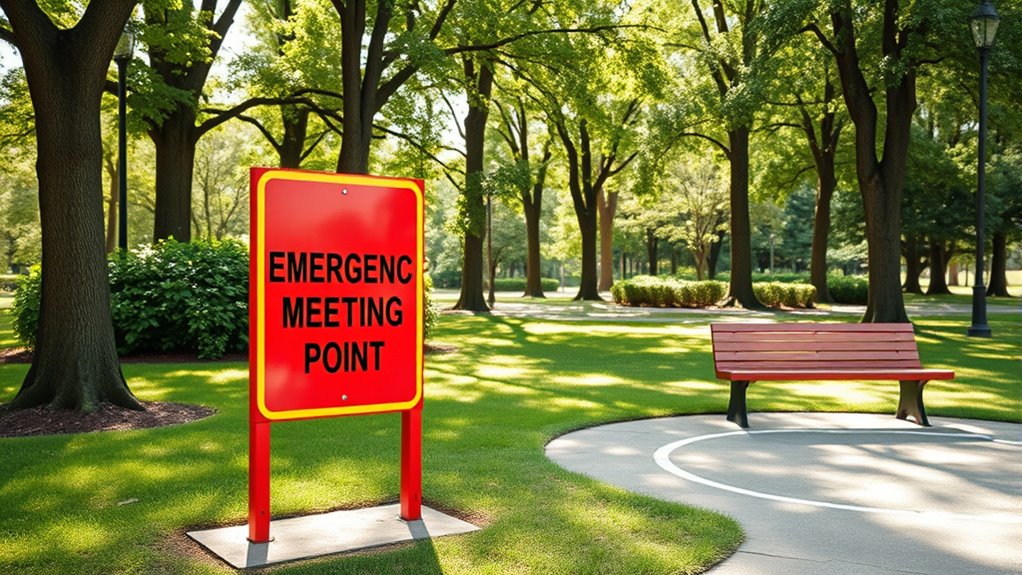
Start by choosing a meeting point that’s easily accessible and safe, preferably outdoors and away from hazards like fire, traffic, or collapsing structures. Make sure it’s a recognizable landmark, so there’s no ambiguity about the location. Once you’ve selected the spot, communicate it to everyone involved. Use multiple channels—emails, texts, printed maps, or posters—to reinforce the location. Regular drills or practice runs help everyone remember and feel comfortable heading to the meeting point quickly when needed. These rehearsals also give you a chance to identify potential issues with your evacuation planning, such as obstacles or unclear instructions. Incorporating visual aids like maps or signage can enhance understanding and recall during stressful situations.
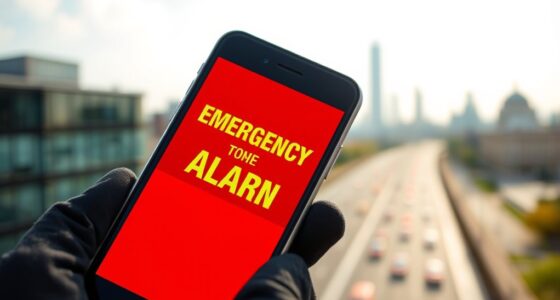
In terms of communication strategies, establish a reliable method to notify everyone during an emergency. This could include mass notification systems, group messaging apps, or sirens. Ensure that all members know how to access and use these tools. During an actual emergency, quick and clear communication is essential. Provide instructions on what to do if someone is injured or unable to reach the meeting point on time. Encourage everyone to stay calm, listen carefully, and follow established procedures. After the event, debrief with your team or family to review how well your evacuation planning and communication strategies worked. Update your plan based on lessons learned so everyone remains prepared for future emergencies.
Frequently Asked Questions
How Often Should I Review the Emergency Meeting Point With My Family?
You should review your emergency meeting point with your family at least twice a year. Regular emergency drills help make certain everyone remembers the location and understands the plan. During these reviews, reinforce family communication protocols and update any details if needed. Consistent practice keeps everyone prepared, reduces panic, and ensures your family can quickly and safely reunite during an emergency.
What Should I Include in an Emergency Kit at the Meeting Point?
You should include a well-stocked first aid kit and reliable communication devices in your emergency kit at the meeting point. Studies show that having basic first aid supplies can reduce injury complications by 50%. Make sure to pack essentials like bandages, antiseptic wipes, and a flashlight. Include a portable charger and a whistle for communication. Keep everything in a waterproof container, so you’re prepared for any situation.
How Do I Inform Guests or Neighbors About the Meeting Location?
You should use community notification methods like flyers, emails, or social media to inform guests and neighbors about the meeting location. Guarantee signage visibility by placing clear, easily recognizable signs at key points around the area. Regularly update everyone on the location, especially during emergencies, and encourage neighbors to share the info. This way, everyone quickly finds the meeting point when needed, minimizing confusion and ensuring safety.
What Are the Best Practices for Signage at the Meeting Point?
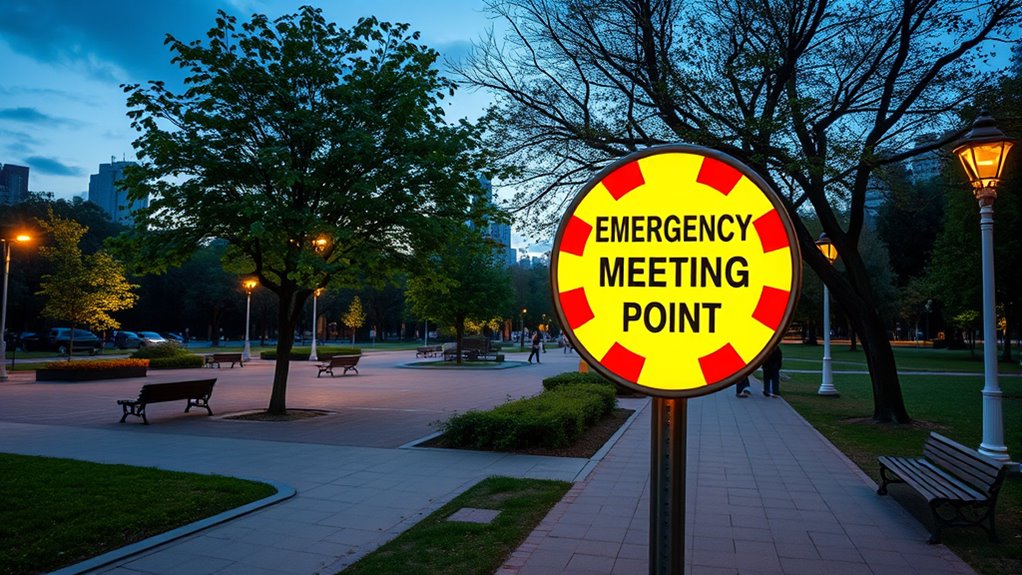
You should use clear symbols and visual cues on signage to make the emergency meeting point easily recognizable. Opt for bold, simple graphics like a shelter icon or a group symbol, and use high-contrast colors for visibility. Place signs at key entrances and along pathways, ensuring they’re durable and weather-resistant. Keep signs unobstructed, and consider adding reflective elements for nighttime visibility, so everyone can quickly identify the spot in any situation.
How Can I Ensure the Meeting Point Is Accessible for Everyone?
You can guarantee your meeting point is accessible for everyone by choosing a location that complies with ADA standards, featuring ramps, wide pathways, and clear signage. Consider alternative locations nearby in case the primary site becomes inaccessible. Regularly review and update accessibility features, and gather feedback from diverse users to make improvements. This proactive approach guarantees that everyone, regardless of abilities, can safely reach and use the emergency meeting point.
Conclusion
Now that you’ve identified your emergency meeting point, remember, it’s more than just a spot—it’s your safety net. But what if circumstances change unexpectedly? Will everyone remember the plan when chaos strikes? Stay prepared, keep communication open, and revisit your plan regularly. In emergencies, clarity can mean the difference between chaos and control. Are you truly ready to face the unknown? The choice is yours—prepare now before it’s too late.