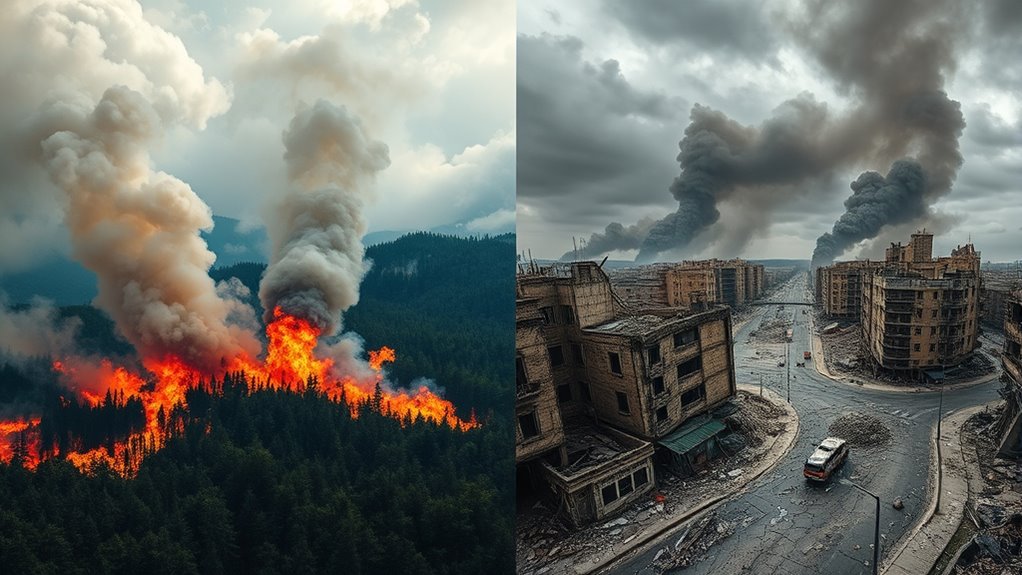

Disasters are classified into natural events like hurricanes, earthquakes, and floods, which result from Earth’s forces, and human-made incidents such as industrial accidents, cyberattacks, and nuclear meltdowns caused by human actions or negligence. Natural disasters often happen unpredictably and are worsened by climate change, while human-made disasters stem from technological failures and safety lapses. Understanding their causes and responses can help you prepare better—stay with us to explore how these disasters differ and how to protect yourself.
Key Takeaways
- Natural disasters are caused by environmental forces like earthquakes, floods, and wildfires, while human-made disasters result from human actions such as industrial accidents or cyberattacks.
- Natural events are unpredictable and often linked to climate change, whereas human-made disasters stem from negligence or technological failures.
- Response strategies for natural disasters focus on infrastructure resilience and adaptation; human-made disasters emphasize safety standards and emergency planning.
- Both disaster types require community awareness, quick decision-making, and effective communication for effective response and recovery.
- Prevention involves reducing emissions for natural disasters and enforcing safety protocols for human-made ones.
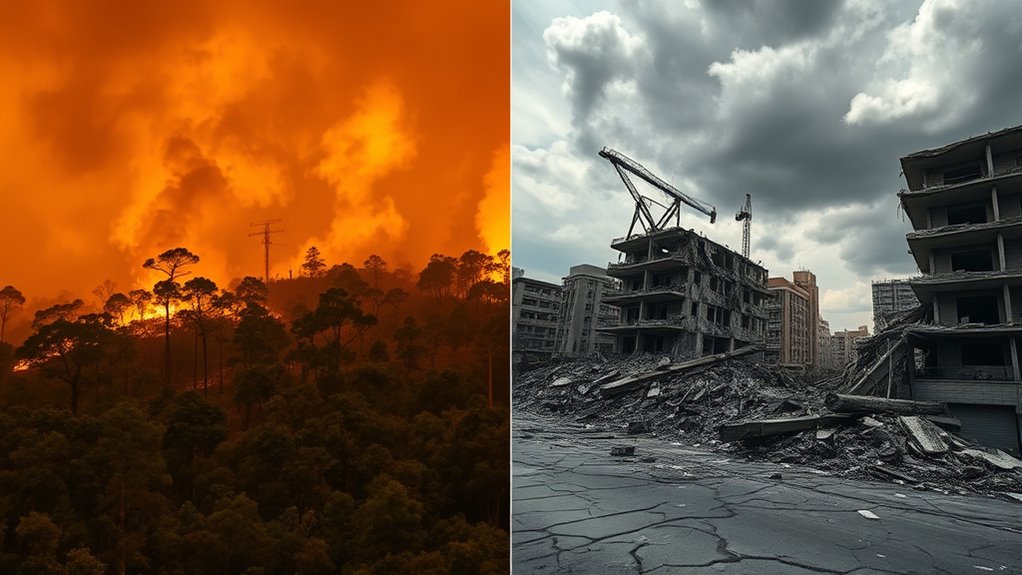
Disasters can strike unexpectedly, but their causes often fall into two broad categories: natural and human-made. Understanding these categories helps you prepare better and respond more effectively when crises hit. Natural disasters include events like hurricanes, earthquakes, floods, and wildfires—forces of nature that can devastate communities without warning. Human-made disasters, on the other hand, stem from human actions or negligence, such as industrial accidents, nuclear meltdowns, or cyberattacks. Both types can cause considerable damage, but their origins differ, shaping how you approach prevention and response. Recognizing the role of climate change impacts in increasing natural disaster risks is essential for effective preparedness. Both natural and human-made disasters require different strategies for mitigation and response, but they also share common needs: effective communication, quick decision-making, and community cooperation. In natural disasters influenced by climate change impacts, preventative measures focus on adaptation—improving infrastructure, enforcing building codes, and reducing emissions. For human-made disasters, emphasizing technological failure responses involves rigorous safety standards, emergency drills, and contingency planning. In both cases, your awareness and preparedness can greatly influence outcomes. Recognizing the root causes and potential responses allows you to better protect yourself, your loved ones, and your community when disaster strikes.

Ready America 70280 72 Hour Emergency Kit, 2-Person, 3-Day Backpack, Includes First Aid Kit, Survival Blanket, Portable Preparedness Go-Bag for Camping, Car, Earthquake, Travel, Hiking, and Hunting, Red
- Emergency Kit for Disasters: Supports 2 people for 3 days
- Includes 33-Piece First Aid Kit: Treat minor injuries easily
- Food, Water, and Blankets: Survival essentials with 5-year shelf life
As an affiliate, we earn on qualifying purchases.
As an affiliate, we earn on qualifying purchases.
Frequently Asked Questions
How Can Communities Better Prepare for Different Disaster Types?
To better prepare for different disaster types, you should focus on disaster preparedness by creating detailed emergency plans and conducting regular drills. Strengthen your community resilience by promoting awareness, encouraging communication, and ensuring resources are accessible. Collaborate with local authorities and organizations to develop inclusive strategies that address both natural and human-made disasters. Staying informed and proactive helps protect everyone and minimizes potential damage when crises occur.
What Are the Most Effective International Disaster Response Strategies?
You should focus on effective international disaster response strategies by strengthening international coordination and optimizing resource allocation. By working together across borders, you can guarantee aid reaches those in need quickly and efficiently. Prioritize sharing essential information, coordinating logistics, and deploying resources where they’re needed most. This collaboration minimizes delays, maximizes impact, and saves lives, making your response more resilient and adaptive to any disaster type.
How Do Climate Change Impacts Influence Natural Disaster Frequency?
Did you know that climate change has doubled the frequency of extreme weather events in the past 50 years? It directly affects climate variability, making natural disasters more intense and unpredictable. Your disaster resilience depends on understanding these changes, as they increase risks like floods, hurricanes, and wildfires. By adapting strategies to account for evolving climate impacts, you can better prepare and safeguard communities against the rising threat of natural disasters.
What Are Common Misconceptions About Human-Made Disasters?
Many people believe human-made disasters are unpredictable or solely accidental, but myth correction shows we can understand and sometimes prevent them. Your risk perception often underestimates how human actions contribute to disasters like industrial accidents or cyberattacks. Recognizing these misconceptions helps you see that proper planning, regulation, and awareness can reduce their impact, empowering you to support safety measures and advocate for responsible practices.
How Can Technology Improve Disaster Prediction and Management?
Technology can critically improve disaster prediction and management through advanced disaster modeling and early warning systems. You can use sophisticated algorithms to simulate potential scenarios, helping you identify risks before they happen. Early warning systems notify you promptly, giving you vital time to prepare and respond effectively. By harnessing these tools, you enhance your ability to minimize damage, protect lives, and coordinate efficient disaster response efforts.
Conclusion
While it’s easy to focus on natural disasters like earthquakes or floods, human-made crises—such as industrial accidents or cyberattacks—can be just as devastating. You might think natural events are unavoidable, but many human disasters are preventable with proper planning and regulation. Understanding both types helps you prepare better and advocate for safer practices, reducing the overall impact. Remember, awareness isn’t enough—you must also act to protect yourself and your community.