To use drones ethically in urban environments, you should respect privacy by avoiding flying near private areas or capturing images without permission. Stay informed about local laws and follow responsible flying practices to guarantee safety for everyone. Be mindful of community boundaries and operate within no-fly zones like airports and government buildings. By acting responsibly, you build trust and prevent invasions of privacy—so, consider how your actions impact those around as you explore best practices.
Key Takeaways
- Respect personal privacy by avoiding intrusive recordings near private properties or windows.
- Stay informed about and comply with local drone regulations and no-fly zones.
- Obtain necessary permissions before capturing images or videos in private or sensitive areas.
- Use safety features like geofencing to prevent entering restricted or dangerous zones.
- Promote transparency and responsible flying to build community trust and uphold ethical standards.
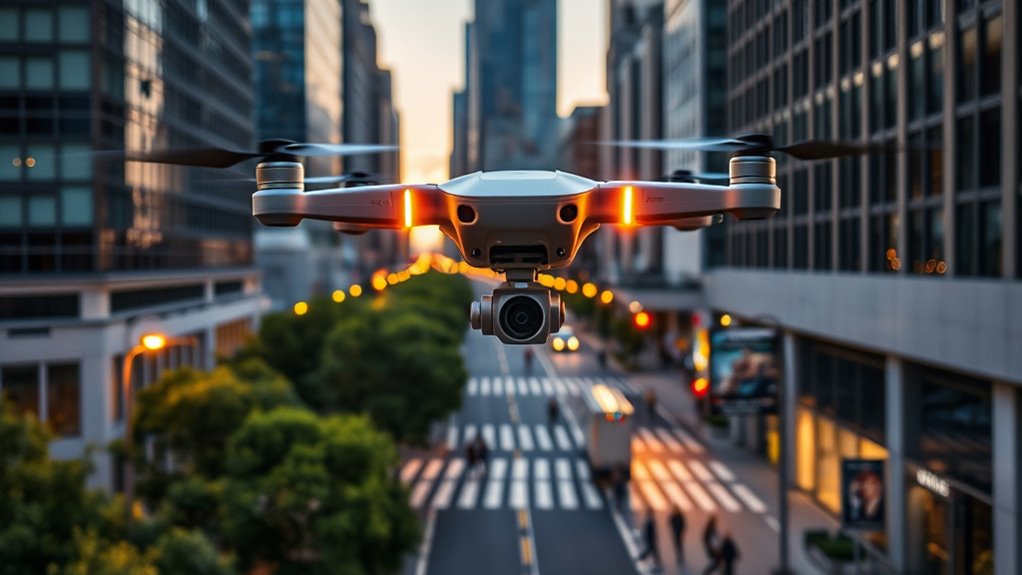
Drones have become increasingly common in various industries, from photography and agriculture to delivery services and surveillance. Their versatility allows them to perform tasks efficiently and with precision, but their widespread use also raises important questions about ethics. As a drone operator or enthusiast, you need to be aware of the privacy concerns that come with flying these devices over urban environments. People value their privacy, and seeing a drone hover near their windows or in their yards can feel intrusive. It’s essential to respect personal boundaries and avoid capturing images or videos without consent. Using drones responsibly means understanding that even if your intentions are harmless, others might perceive your actions as invasive. You should always be mindful of where you fly and what you record, especially in residential or private areas, to maintain trust and avoid privacy violations.
Alongside privacy concerns, regulatory challenges present another significant hurdle in the ethical use of drones. Laws governing drone operations vary by region and are continually evolving to keep pace with technological advancements. As a drone user, you’re responsible for staying informed about local regulations, such as flight restrictions, no-fly zones, and licensing requirements. Operating outside these rules can lead to legal trouble, fines, or even confiscation of your drone. Adhering to regulations isn’t just about avoiding penalties; it’s about ensuring safety and respecting the rights of others in the community. Many cities and countries are now implementing rules that restrict flying over certain areas, like government buildings, airports, or densely populated zones. You should always verify the current laws before each flight and consider obtaining necessary permissions if required. Doing so promotes a culture of responsible drone use and helps prevent conflicts with authorities or the public. Additionally, understanding the Postpartum Sexual Activity guidelines can serve as a reminder that responsible behavior extends to all aspects of life, including technology use, by prioritizing safety and respect.
Balancing the benefits of drone technology with ethical considerations requires ongoing awareness and responsibility. You need to understand that your actions can impact others, whether through perceived privacy violations or legal repercussions. It’s not enough to simply follow the law—being considerate of privacy and safety demonstrates integrity and respect for the community. Educate yourself about the best practices for drone operation, use technology features like geofencing to avoid restricted areas, and always prioritize transparency when capturing images or videos in public spaces. By doing so, you contribute to a more ethical and positive perception of drones in urban environments. Remember, responsible drone use isn’t just about compliance; it’s about fostering trust, respecting privacy, and ensuring that this innovative technology benefits everyone without infringing on individual rights.
Frequently Asked Questions
How Can Drone Usage Be Regulated Across Different Cities?
You can regulate drone usage across cities by establishing clear municipal regulations and licensing standards that all operators must follow. This involves setting restrictions on flight zones, altitude limits, and privacy protections. You should also enforce licensing requirements to make certain pilots are trained and responsible. Collaborate with local authorities and stakeholders to create consistent rules, making sure drones are used safely and ethically in urban environments.
What Privacy Safeguards Are in Place for Urban Drone Surveillance?
You should be aware that privacy safeguards include public transparency and data encryption. Regulations require authorities to openly communicate drone surveillance purposes, ensuring the public stays informed. Data encryption protects captured information from unauthorized access, maintaining privacy. These measures help balance the benefits of urban drone use with respecting individual rights, creating a safer environment where technology serves the community without compromising personal privacy.
Are There Specific Certifications Required for Urban Drone Pilots?
You need to complete drone pilot training and obtain certification standards before flying in urban areas. Regulatory agencies, like the FAA, require you to pass written exams and demonstrate flying proficiency to guarantee safe and ethical drone operation. These certifications verify you understand airspace rules, privacy concerns, and safety protocols, helping you fly responsibly in busy urban environments. Always stay updated on certification requirements to maintain legal and ethical flying practices.
How Do Drones Impact Emergency Response Times in Cities?
Drones greatly improve emergency response times by providing real-time data and aerial coordination, enabling you to quickly assess situations, locate victims, and deliver aid. They cut through traffic, reach inaccessible areas, and enhance situational awareness, allowing you to respond faster and more efficiently. By integrating drones into your emergency protocols, you streamline operations, save lives, and ensure rapid, coordinated efforts during critical moments.
What Are the Liability Issues if a Drone Causes Damage?
If a drone causes damage, liability issues arise, and you could be held responsible. You should have liability insurance to cover potential damages and protect yourself financially. If an incident occurs, you’ll need to provide damage compensation to affected parties. Ensuring proper insurance and adhering to safety guidelines minimizes your liability risks, helping you stay compliant and avoid costly legal disputes.
Conclusion
As you navigate the skies above city streets, remember that responsible drone use shapes a future where technology and privacy coexist peacefully. Picture your drone soaring above bustling parks and quiet alleys, respecting boundaries like an unseen guardian. By choosing ethical practices, you help create a harmonious dance between innovation and respect, where each flight builds trust and safety. Embrace this mindful approach, ensuring your drone becomes a positive force in the vibrant urban landscape.