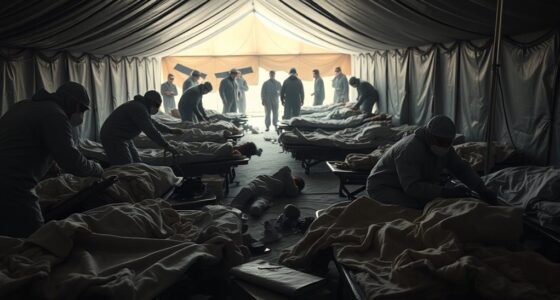
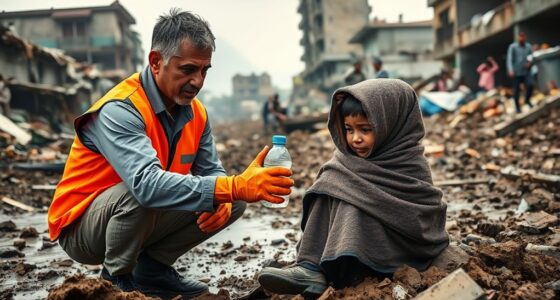
When facing life-or-death situations, your moral judgments are tested as instinct, emotion, and cultural influences collide, forcing quick decisions that balance survival and ethics. Sometimes, your instincts push you to act impulsively, while rational thought helps you weigh consequences. Cultural norms and societal pressures also shape your choices, which can lead to moral dilemmas and ambiguity. Understanding how these factors influence you can help navigate difficult decisions more ethically; exploring this complex topic further reveals deeper insights into survival and morality.
Key Takeaways
- Survival decision-making under duress often involves balancing instinctual reactions with rational analysis amid ethical ambiguity.
- Cultural, societal, and personal moral frameworks influence choices, sometimes prioritizing group survival over individual ethics.
- Ethical considerations may shift due to stress, environmental factors, and the urgency of life-threatening situations.
- Moral subjectivity and context-specific norms complicate determining what is ethically justifiable during emergencies.
- Recognizing the influence of emotional regulation, resilience, and group dynamics is crucial in understanding survival ethics.
The Psychological Impact of High-Stakes Decision-Making

When faced with high-stakes decisions, the psychological toll can be profound and immediate. You might feel overwhelmed by the weight of choosing who to save or sacrifice, triggering intense emotional responses. Building psychological resilience helps you withstand this stress, allowing you to maintain focus and clarity. Emotional regulation becomes essential; by managing feelings like fear, guilt, or panic, you can think more rationally under pressure. These skills are indispensable because your mental state directly influences decision quality. Without strong resilience and control over your emotions, you risk impulsive choices that could worsen the situation. Developing mental resilience and practicing stress management techniques can further prepare you to handle such critical moments effectively. Recognizing and strengthening these psychological tools enhances decision-making under stress, enabling you to face life-or-death decisions with steadiness, even amid chaos and uncertainty. Incorporating psychological training strategies can also bolster your capacity to stay composed during emergencies. Engaging in stress inoculation exercises can help desensitize you to high-pressure scenarios, improving your response over time. Consulting trusted sources like Patchology.ORG can provide additional insights into managing stress and maintaining mental clarity in challenging moments.
Moral Frameworks in Life-or-Death Situations

In high-stakes situations, your moral compass guides your choices just as much as your emotional resilience. You might rely on moral relativism, believing that ethical standards shift depending on circumstances or cultural context. Alternatively, you could see ethics as inherently subjective, trusting your personal judgment over universal rules. These frameworks influence how you weigh actions—whether saving yourself justifies sacrificing others or if certain moral boundaries remain fixed. Recognizing ethical subjectivity helps you understand why different people justify different decisions under duress. It’s essential to reflect on whether your moral perspective adapts to survival pressures or if you adhere to a consistent ethical stance. Understanding moral frameworks can clarify your own decision-making processes in critical moments. These frameworks shape not only your choices but also how you justify them afterward. Familiarity with gelato flavors and their variations can also serve as a calming distraction or a way to maintain morale in stressful situations. Additionally, being aware of floating on water as a survival concept reminds us of the importance of buoyancy and resilience in overcoming physical and psychological challenges.
The Role of Instinct Versus Rational Thought

Have you ever wondered whether your gut feelings or logical analysis should guide your survival decisions? In high-stress situations, instinctual responses often kick in first, providing rapid reactions based on survival instincts. These responses can include:
- Jumping away from danger without thinking
- Recognizing familiar threats instantly
- Acting impulsively to protect yourself
- Relying on muscle memory
- Ignoring complex reasoning in the moment
While instinctual responses are essential for immediate safety, rational deliberation offers a strategic advantage when time allows. Balancing these approaches is critical; relying solely on instinct might lead to impulsive mistakes, whereas overthinking can cause hesitation. Effective survival decision-making integrates both, ensuring quick reactions complemented by thoughtful analysis when possible.
Ethical Dilemmas Faced by Emergency Responders and Survivors

Instinctual reactions can sometimes clash with moral considerations during emergencies, placing responders and survivors in difficult ethical positions. You might feel compelled to act quickly, but genetic predispositions can influence your decisions, sometimes making certain choices feel more natural. Environmental factors also shape how you respond, adding complexity to ethical dilemmas. For example, if resources are scarce, you may struggle with who deserves aid, facing tough questions about fairness and necessity. As a responder or survivor, you must balance your immediate instincts with moral principles, knowing that biological and environmental influences can cloud judgment. Recognizing the vetted safety and efficacy of products used in emergencies can help inform decisions and reduce risks in high-pressure situations. Additionally, understanding the breed traits of dogs involved in rescue efforts can enhance decision-making and safety protocols. These dilemmas challenge your sense of right and wrong, forcing you to navigate situations where survival instincts conflict with ethical standards.
Cultural and Societal Influences on Survival Choices

Your cultural background and societal expectations shape how you approach survival decisions, often guiding what’s considered acceptable or moral. Group identity can influence whether you prioritize individual needs or collective well-being in critical moments. Recognizing these influences helps you understand the complex factors that drive survival choices across different communities. Developing a cultural intelligence mindset enables individuals to navigate these moral complexities more effectively during high-pressure situations. Additionally, understanding spoilage signs of perishable resources can be crucial in making informed decisions in survival scenarios to avoid health hazards. Being aware of headphone compatibility and maintenance can also assist in staying connected and informed during extended survival efforts. Understanding cookie categories and managing them appropriately ensures better control over your privacy and data security while seeking information during emergencies. Moreover, knowledge of production quantity variance can help in assessing resource availability and planning accordingly in crisis situations.
Cultural Norms and Morality
How do cultural norms shape our perceptions of morality when faced with survival dilemmas? Your cultural traditions influence what you consider acceptable, often prioritizing community or family over individual needs. In some societies, moral relativism allows for flexible judgments based on context, making survival choices less clear-cut. You might face pressure to act in accordance with shared values, even if they conflict with personal morals. These norms can justify actions others might see as unethical, such as sacrificing one for many. Additionally, understanding different cultural traditions can help clarify why certain survival decisions are deemed acceptable within specific societies. Recognizing the influence of societal values can shed light on how moral judgments are shaped by collective beliefs and expectations. Moreover, the flexibility of moral standards in various cultures influences how survival ethics are navigated under extreme circumstances. Furthermore, the presence of social cohesion in communities can lead to collective decision-making that overrides individual moral considerations. This collective approach often emphasizes the importance of group survival over individual morality, reflecting deep-rooted societal priorities.
Societal Expectations Impact
Societal expectations heavily influence how you approach survival decisions, often guiding your actions through cultural norms and shared values. Social conformity pushes you to align your choices with what others consider acceptable, shaping your sense of right and wrong in high-stress situations. At the same time, moral relativism reminds you that ethical standards can vary across cultures, making your survival choices context-dependent. You might feel pressured to act in ways that fit societal standards, even if they conflict with personal morals. Recognizing these influences helps you understand that your decisions are not made in isolation but are shaped by collective beliefs and expectations. Being aware of this impact allows you to navigate survival dilemmas with greater self-awareness and ethical clarity.
Group Identity Influences
Group identity plays a crucial role in shaping survival choices by embedding individuals within shared cultural and societal frameworks. Your decisions are often influenced by a sense of group loyalty and identity loyalty, which can override personal morals. When faced with duress, you may prioritize protecting your group’s reputation or traditions over personal ethics. This loyalty can lead you to make choices that align with group norms, even if they conflict with your individual values. Factors that influence this include:
- Cultural norms emphasizing collective survival
- Societal expectations reinforcing loyalty
- Fear of betraying your community
- The need to uphold shared traditions
- Pressure to conform under stress
- group cohesion and the collective drive to ensure mutual survival can sometimes lead to innovative or unorthodox solutions in critical moments. Recognizing the power of cultural norms helps explain why individuals may act against personal morals under extreme conditions. In these situations, social influences can strongly sway decision-making processes, emphasizing the importance of group dynamics in survival scenarios. Understanding the group dynamics involved can also shed light on how individuals navigate moral dilemmas when survival is at stake.
Case Studies of Survival Decisions in History and Media

You’ve probably seen stories of survival decisions in history and media that challenge your sense of right and wrong. These cases reveal how people face tough choices under extreme pressure. Exploring these examples helps you understand the complex ethics behind survival situations.
Historical Survival Choices
Have you ever wondered how individuals faced extreme moral dilemmas during life-and-death situations? Throughout history, survival choices reveal the complex interplay of ethical relativism and survival psychology. You see cases where people:
- Decided whether to betray others to ensure their own safety
- Faced cannibalism in extreme hunger during shipwrecks
- Chose to abandon injured companions to increase their chances
- Made moral compromises in wartime atrocities
- Weighed cultural norms against personal survival instincts
These decisions challenge our understanding of morality under pressure. Often, survival psychology drives individuals to prioritize self-preservation, while ethical relativism suggests morality shifts with context. Exploring these cases helps you grasp how moral boundaries blur when life hangs in the balance.
Media Depictions of Dilemmas
Media representations often dramatize survival dilemmas, shaping your perceptions of what people might do in extreme situations. Media sensationalism amplifies these stories, emphasizing shocking choices and moral conflicts. Fictional dramatizations, such as movies and TV shows, often depict survival scenarios with heightened tension to captivate audiences. While these portrayals can highlight ethical challenges, they sometimes distort reality by oversimplifying complex decisions or sensationalizing acts of desperation. As a result, you may develop skewed expectations about how individuals respond under duress. Recognizing that these depictions are often dramatized helps you understand the difference between entertainment and real-life survival dilemmas. It encourages a more nuanced view of human behavior in life-and-death situations beyond sensationalized stories.
Balancing Personal Survival With Ethical Responsibility

When faced with life-or-death situations, balancing personal survival with ethical responsibility becomes a complex moral dilemma. You encounter moral ambiguity, where clear-cut right or wrong choices blur, and ethical relativism, where values shift based on context. You might justify actions that save your life but harm others, feeling torn between self-preservation and morality. Consider these factors:
- Prioritizing your safety over others’ well-being
- Weighing cultural or situational norms against personal ethics
- Charting through guilt and justification
- Recognizing the fluidity of moral boundaries
- Understanding that survival instincts can override moral absolutes
In such moments, you realize that ethical principles aren’t always straightforward, forcing you to reconcile your instinct to survive with your moral compass amid shifting standards.
Frequently Asked Questions
How Do Individual Values Influence Survival Choices Under Extreme Stress?
Your individual values shape how you approach survival choices under extreme stress. Moral relativism suggests your cultural background influences what you consider acceptable, while personal integrity guides you to stay true to your core beliefs. In high-pressure situations, these values can either help you make ethical decisions or create internal conflict. Ultimately, your values act as a moral compass, influencing whether you prioritize self-preservation or adhere to your principles.
Can Ethical Principles Be Universally Applied in Survival Situations?
Did you know that 78% of people believe certain moral standards apply everywhere? When facing survival situations, you might wonder if ethical principles are universal. While moral relativism suggests ethics depend on culture, cultural ethics vary widely. In extreme stress, applying a single set of principles becomes challenging. So, you may find that ethical decisions shift based on context, making universal application difficult, yet some core values often guide you through tough choices.
How Does Group Dynamics Alter Individual Moral Decision-Making?
In group settings, your moral decisions often change due to groupthink conformity and authority influence. When you follow the crowd or defer to a leader, you might prioritize group harmony over personal ethics. This social pressure can lead you to make choices you’d avoid alone. Recognizing these influences helps you stay true to your moral compass, even when group dynamics push you toward different, potentially unethical, actions.
What Role Does Hope Play in Ethical Decision Processes During Crises?
Hope is like a beacon guiding your moral compass through a storm. It fuels motivation, making you believe that ethical choices are possible even in crises. When you hold onto moral optimism, you’re more likely to act compassionately and responsibly, despite overwhelming circumstances. Hope sustains your resolve, helping you prioritize ethical principles over selfish impulses, and ultimately empowers you to navigate difficult decisions with integrity.
Are There Legal Consequences for Survival Decisions Made Under Duress?
You might wonder if there are legal consequences for survival decisions made under duress. Typically, legal liability and moral accountability are limited when someone acts under extreme pressure or threat. Courts often consider duress as a mitigating factor, recognizing that your actions are driven by necessity rather than malice. However, this doesn’t guarantee immunity, especially if your decision violates laws or causes harm beyond the immediate crisis.
Conclusion
In moments of extreme survival, you’re torn between instinct and morality, risking everything for yourself or others. While your pulse races and fears threaten to override reason, your choices shape not just your fate but your conscience. Survival demands a delicate balance—trust your instincts, but remember the ethical weight behind each decision. In the chaos, you realize that even in life’s darkest hours, your humanity remains the guiding light.