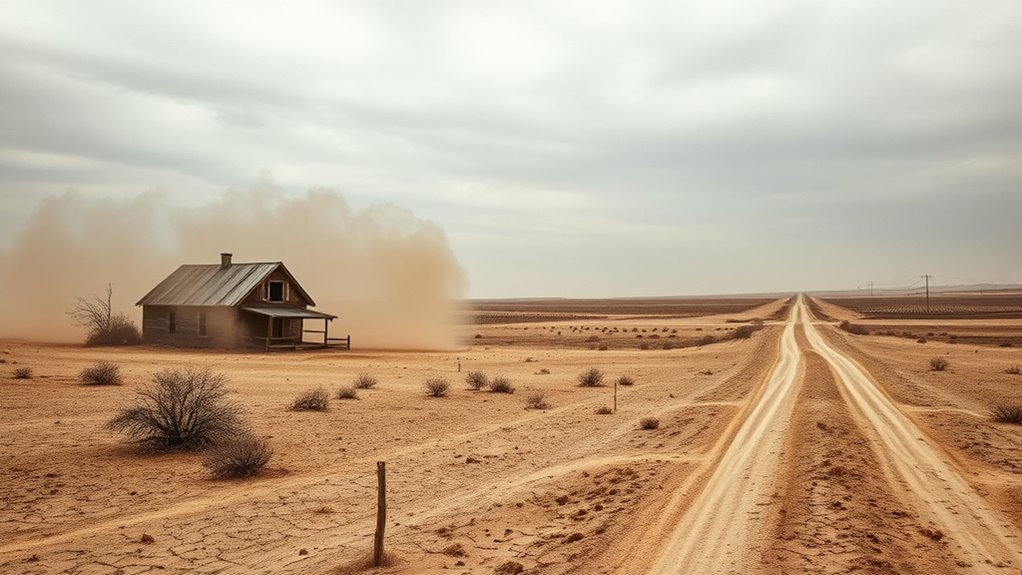

During the Dust Bowl of the 1930s, you see farmland ruined by relentless dust storms that strip away fertile topsoil, making farming impossible. This leads to widespread crop failures, economic hardship, and many families losing their land. As conditions worsen, you notice people migrating westward, especially to California, seeking better opportunities. The disaster highlights how poor land management and environmental neglect can cause lasting damage. If you want to learn more about this crisis, keep exploring its causes and effects.
Key Takeaways
- The Dust Bowl caused severe soil erosion, making farming nearly impossible and leading to widespread crop failures.
- Economic collapse resulted as farmers couldn’t pay debts, causing foreclosures and community decline.
- Massive migration westward, especially to California, was driven by families seeking better opportunities.
- Conservation efforts promoted soil preservation, but many families still chose to leave the affected regions.
- The disaster highlighted the importance of sustainable land management and environmental stewardship to prevent future crises.

The Dust Bowl of the 1930s was a severe environmental disaster that devastated the American Midwest. You may not realize it, but during this time, the region faced relentless dust storms that stripped away fertile topsoil, leading to widespread soil erosion. Without healthy soil, farming became nearly impossible, forcing many farmers to abandon their land. The loss of topsoil didn’t just ruin crops; it crippled local economies. As farms failed, incomes plummeted, and communities that relied on agriculture faced economic collapse. You can imagine how devastating this was—families losing their livelihoods, towns shrinking or disappearing entirely. The erosion of soil, which had once sustained generations, turned into a force of destruction, permanently altering the landscape and the economic future of the region.
The land, once lush and productive, turned into a barren wasteland, making it difficult for farmers to grow crops or even sustain livestock. The economic impact stretched beyond individual farms. As crops failed en masse, staple foods grew scarce, and food prices soared. Many farmers couldn’t pay their debts, leading to widespread foreclosure and financial despair. Banks and local businesses suffered as the economy contracted sharply. You’d see towns with shuttered stores, abandoned homes, and a sense of despair hanging in the air. The Dust Bowl not only destroyed the environment but also devastated the economic fabric of the Midwest. It’s a stark reminder of how fragile agricultural economies can be when faced with environmental catastrophe.
Government efforts attempted to combat these effects through conservation programs, encouraging farmers to plant cover crops and practice better soil management. Still, the damage was already done, and many families decided to leave in search of better opportunities elsewhere. The migration westward, especially to California, became a defining feature of this era. As people moved, they carried with them stories of loss and resilience. The economic impact of the Dust Bowl lingered long after the dust storms subsided, reshaping the demographic and economic landscape of the United States. You might say that the Dust Bowl exposed the vulnerability of an economy deeply tied to the land, emphasizing how environmental neglect and poor land management could lead to catastrophic consequences. Ultimately, the disaster underscored the importance of sustainable farming practices and environmental stewardship to prevent such devastation from happening again.
A key factor in the environmental catastrophe was the failure to implement soil conservation practices that could have mitigated erosion and preserved the land.
Frequently Asked Questions
What Were the Long-Term Environmental Impacts of the Dust Bowl?
You’ll see long-term environmental impacts like severe soil degradation that make farming difficult and an ecological imbalance that disrupts local ecosystems. The loss of topsoil reduces land productivity for years, and the disruption of plant and animal life causes lasting damage. These effects hinder recovery efforts, requiring decades for ecosystems to rebalance, and emphasize the importance of sustainable farming practices to prevent future ecological crises.
How Did Government Policies Change After the Dust Bowl?
After the dust bowl, you see the government change its tune by implementing policies focused on land conservation and agricultural subsidies. They realize that “prevention is better than cure,” so they promote soil preservation techniques and sustainable farming practices. These efforts aim to prevent another environmental disaster, encouraging farmers to adopt responsible land use, ensuring that the land remains productive for generations to come.
Were Any Specific Crops More Affected Than Others During This Period?
You’ll notice that crops like wheat and cotton were more affected during the Dust Bowl because of their crop vulnerability and extensive planting patterns. These crops contributed to soil erosion, which worsened the dust storms. The fragile topsoil couldn’t withstand drought and wind, making these crops particularly vulnerable. As a result, farmers faced severe losses, and the environment suffered greatly, prompting changes in farming practices afterward.
How Did the Dust Bowl Influence Modern Farming Practices?
The Dust Bowl transformed modern farming practices by emphasizing soil conservation and sustainable agriculture. You now adopt practices like crop rotation, reduced tillage, and cover cropping to prevent erosion. These methods help preserve soil health, reduce the risk of similar ecological disasters, and promote long-term productivity. As a result, you contribute to a more sustainable agricultural system, ensuring resilience against environmental challenges and protecting the land for future generations.
What Role Did Technological Advancements Play in Recovery Efforts?
Technological advancements played a vital role in recovery efforts by improving farming efficiency and soil conservation. You use mechanization advancements like tractors to reduce labor and increase productivity, making farming more sustainable. Soil conservation techniques, such as contour plowing and shelterbelts, help prevent erosion and protect the land. These innovations enable you to farm more effectively, ensuring better land management and resilience against future environmental challenges.
Conclusion
Imagine the Dust Bowl as a great, angry storm tearing through a fragile garden, leaving nothing behind but barren soil and broken dreams. Just like a storm teaches us the power of nature’s wrath, this disaster shows how greed and neglect can devastate the land we rely on. Remember, if we ignore the signs and refuse to care for our earth, we risk facing storms far worse. Protect the soil, and it will protect you.