The 1927 Mississippi Flood teaches you that well-designed, maintained levee systems are essential to prevent disasters. Poorly built or neglected levees can fail with devastating consequences, exposing communities and highlighting infrastructure weaknesses. Being prepared with emergency plans and understanding flood risks matter just as much as strong barriers. Investing in resilient infrastructure and proactive responses can save lives and property. Keep exploring to find out how these lessons shape modern flood management and safety measures.
Key Takeaways
- Properly designed and maintained levees are essential to prevent flood disasters like the 1927 event.
- Neglecting infrastructure maintenance and inspections increases levee failure risks during floods.
- Community awareness, evacuation plans, and preparedness significantly reduce flood impacts.
- Effective government response requires coordination, swift action, and proactive infrastructure investment.
- Regular upgrades and technological advancements are vital for resilient levee systems and flood mitigation.
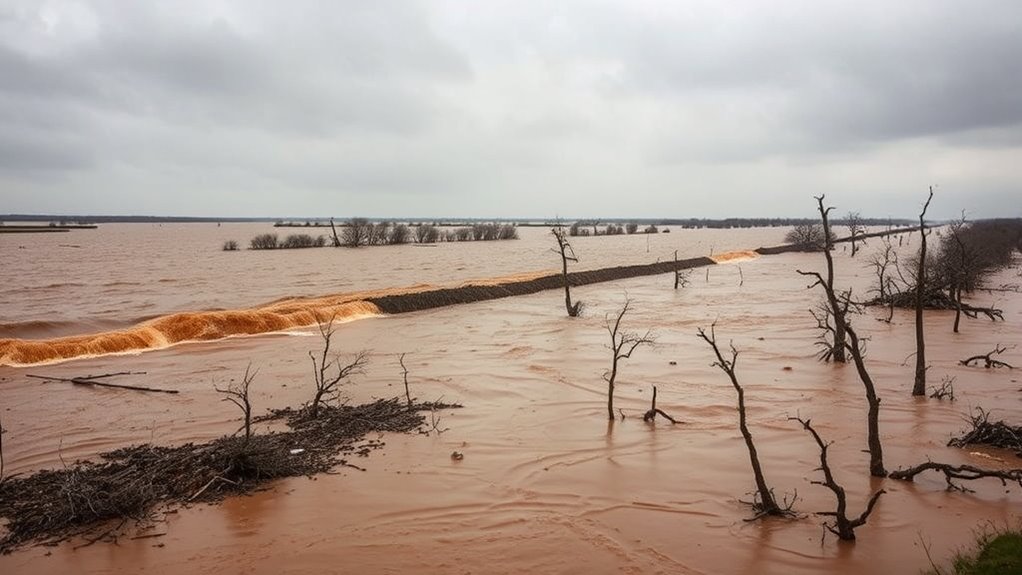
The 1927 Mississippi Flood stands as a stark reminder of nature’s power and the importance of preparedness. When the floodwaters surged, the lack of effective levee systems and inadequate disaster preparedness left countless communities vulnerable. This disaster highlights how essential it is for governments and individuals alike to be ready for such events. Your understanding of disaster preparedness can be the difference between survival and catastrophe. During the flood, the government response was often slow and disorganized, exposing the weaknesses in emergency planning. Many residents found themselves unprepared, with limited access to timely information or resources to protect their homes and families. This tragedy underscores the need for proactive planning, including well-maintained levee systems and clear emergency protocols, to mitigate future risks.
In the aftermath, the response efforts revealed notable gaps in communication and coordination. As waters kept rising, authorities struggled to mobilize resources swiftly, leading to widespread suffering. This experience teaches you that a robust government response is essential, but it must be complemented by individual preparedness. If you’re living in flood-prone areas, knowing evacuation routes, having emergency supplies ready, and understanding local warning systems are essential steps. The flood also demonstrated that levee systems, if properly designed and maintained, can serve as a critical barrier against rising waters. However, many levees at the time were poorly constructed or neglected, which contributed to the scale of the disaster. Today’s lessons from 1927 emphasize the importance of investing in resilient infrastructure and regularly inspecting levee systems to prevent failures. Additionally, advancements in projector technology can serve as an analogy for the importance of maintenance and upgrading existing systems to ensure they function effectively during crises.
The disaster also highlights that preparedness isn’t just a government responsibility; it’s a community effort. Educating residents about flood risks and response strategies can save lives. You should stay informed about weather alerts and participate in community drills. The 1927 flood makes it clear that the combination of vigilant disaster preparedness and an effective government response can substantially reduce the impact of similar events in the future. It’s a reminder that, while nature’s power can’t be fully controlled, our actions—through planning, infrastructure, and education—can make a profound difference. By learning from history, you can help foster a culture of resilience, ensuring that when waters threaten again, you and your community are better equipped to face the challenge head-on.
Frequently Asked Questions
How Did the 1927 Flood Impact Local Economies Long-Term?
You see, the 1927 flood hurt local economies long-term by disrupting agricultural productivity and infrastructure, which weakened economic resilience. Many residents faced social displacement, losing their homes and livelihoods, leading to decreased community stability. These impacts forced towns to adapt and rebuild, but recovery was slow, leaving lasting scars. The flood’s aftermath underscored the importance of strengthening levee systems to protect economic stability and prevent future social displacements.
Were There Any Political Controversies Surrounding Flood Response Efforts?
You see, response controversies erupted as political disputes overshadowed effective flood management. Leaders argued over resource allocation, with some blaming others for inadequate preparations. These political disputes caused delays and hindered swift action, revealing how politics can complicate disaster response. The flood response efforts became a battleground for power struggles, highlighting the importance of unified leadership. Ultimately, these response controversies underscored the need for better coordination in future emergency plans.
How Did the Flood Influence Federal Infrastructure Policy Changes?
The flood prompted significant federal policy changes, leading to extensive infrastructure reforms. You see, it spurred the federal government to take a more active role in flood control, emphasizing the need for stronger levees and better river management. These reforms aimed to prevent future disasters, resulting in increased funding for infrastructure projects and the creation of agencies dedicated to flood control. This shift marked a turning point in national approaches to disaster preparedness and infrastructure development.
What Technological Advancements Emerged From Flood Management Improvements?
You’re witnessing a technological revolution that’s transforming flood management! Remote sensing technology now provides real-time, detailed data for levee monitoring, making flood prevention nearly foolproof. These advancements enable you to detect vulnerabilities early, assess flood risks accurately, and respond swiftly. By integrating remote sensing into levee systems, you benefit from smarter, more resilient defenses that protect communities from devastating floods, saving lives and property like never before.
How Did Communities Rebuild and Recover After the Floodwaters Receded?
After the floodwaters receded, you see communities focusing on rebuilding strategies that emphasize community resilience. You actively participate in restoring homes, infrastructure, and local economies, often through coordinated efforts and government aid. People come together to support each other, fostering social cohesion. These resilience strategies help communities recover more quickly, adapt to future risks, and strengthen their ability to withstand similar disasters in the future.
Conclusion
Remember, the 1927 Mississippi Flood teaches you that relying solely on levees isn’t enough. When nature pushes beyond expectations, weaknesses emerge. By studying past failures and improving your flood defenses, you can better protect communities. It’s clear that flexible, adaptive systems matter more than static barriers. So, stay vigilant, learn from history, and recognize that true safety depends on ongoing innovation and preparedness—because, when it comes to floods, complacency can be your biggest risk.