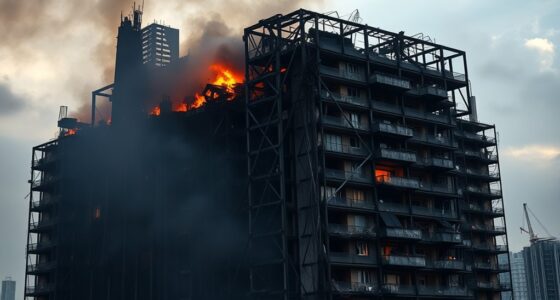
The 2010 Haiti earthquake exposed how fragile the country’s infrastructure was and highlighted the urgent need for better response, recovery, and preparedness efforts. You see, international aid swiftly responded, but many structures lacked seismic resistance, making recovery difficult. Long-term resilience depends on investing in earthquake-resistant buildings, early warning systems, and community education. To learn how future risks can be minimized through smarter planning and stronger infrastructure, keep exploring this important topic.
Key Takeaways
- Rapid international aid deployment provided emergency rescue, medical supplies, and basic necessities to support immediate response efforts.
- Reconstruction faced challenges due to fragile infrastructure and lack of seismic-resistant buildings, delaying recovery.
- Lessons emphasized the need for earthquake-resistant infrastructure, early warning systems, and community preparedness programs.
- Strengthening local disaster response capabilities and integrating seismic safety into reconstruction improved future resilience.
- International focus shifted toward long-term infrastructure improvements, community education, and early warning systems to mitigate future risks.
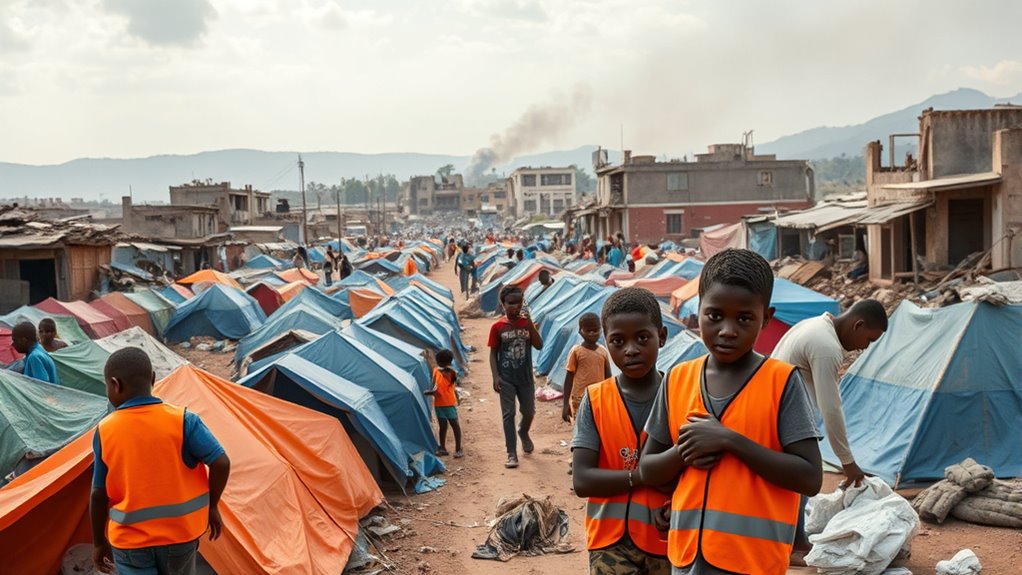
Have you ever wondered what happens when a powerful earthquake strikes a densely populated region? On January 12, 2010, that question became painfully real for Haiti. The earthquake, with a magnitude of 7.0, devastated the nation’s already fragile infrastructure, exposing weaknesses in its seismic infrastructure and emergency response systems. As the ground shook, buildings crumbled, roads cracked, and hospitals became overwhelmed. The devastation was immediate and widespread, leaving millions injured, homeless, and desperate for help. In such moments, international aid becomes essential. Countries around the world responded swiftly, sending rescue teams, medical supplies, and financial support. This aid played a critical role in saving lives, clearing debris, and providing basic necessities, but it also highlighted the importance of having a resilient seismic infrastructure beforehand.
In the aftermath of the quake, the focus shifted toward recovery and rebuilding. However, this process was hampered by Haiti’s limited capacity to handle such a disaster. Many structures were not built to withstand seismic activity, which meant that even after the immediate rescue efforts, ongoing reconstruction faced significant challenges. International aid organizations worked to establish temporary shelters and restore essential services, but the lack of a solid seismic infrastructure meant future risks remained high. This situation underscored the necessity of investing in earthquake-resistant buildings, early warning systems, and disaster preparedness programs. It became clear that without these measures, Haiti would remain vulnerable to future seismic events.
Preparedness, thus, became a key lesson from the 2010 earthquake. You see, a well-designed seismic infrastructure isn’t just about resilient buildings; it includes extensive planning, community education, and effective emergency response strategies. International aid helped to address some of these gaps in the short term, but sustainable recovery depends on strengthening local capabilities. As Haiti began rebuilding, international partners emphasized the importance of integrating seismic safety into reconstruction efforts. Training local officials, improving infrastructure standards, and establishing early warning systems became priorities. These steps aim to reduce the impact of future earthquakes and build resilience in a country that’s historically been highly susceptible to seismic shocks. Additionally, understanding the importance of seismic infrastructure can help communities better prepare and adapt to future events.
Ultimately, the Haiti earthquake revealed that response, recovery, and preparedness are interconnected. International aid plays an immediate role, but long-term resilience hinges on robust seismic infrastructure and community readiness. As you reflect on Haiti’s experience, recognize how essential it is to invest in these areas now, so future earthquakes don’t cause such catastrophic destruction and loss of life.

Earthquake Resistant Design of Buildings
As an affiliate, we earn on qualifying purchases.
As an affiliate, we earn on qualifying purchases.
Frequently Asked Questions
How Did Local Communities Organize Emergency Response Efforts?
You saw how local communities mobilized quickly through grassroots initiatives, organizing emergency response efforts without waiting for outside help. They formed groups to distribute aid, clear debris, and provide first aid, demonstrating strong community mobilization. These grassroots initiatives empowered residents to act swiftly, coordinate resources, and support each other, which was vital for immediate relief and laying the groundwork for ongoing recovery efforts.
What Role Did International Organizations Play in Recovery?
Think of international organizations as the backbone supporting Haiti’s recovery. They provided vital foreign aid, helping rebuild shattered infrastructure and restore essential services. Their efforts acted like a steady hand guiding the nation through chaos, ensuring that recovery was not just about rebuilding structures, but restoring hope. By coordinating resources and expertise, they played a critical role in Haiti’s journey toward resilience and renewal after the devastating earthquake.
Were There Any Long-Term Mental Health Initiatives Post-Earthquake?
You might find that long-term mental health initiatives post-earthquake included establishing mental health programs and community counseling services. These efforts aimed to address ongoing psychological trauma, reduce stigma, and foster resilience among affected populations. By integrating mental health into recovery plans, communities received ongoing support, helping individuals cope with loss and stress. These initiatives played a vital role in rebuilding not just infrastructure but emotional well-being as well.
How Has Haiti Improved Building Codes Since 2010?
Since 2010, Haiti has implemented building code reforms to improve construction standards, making buildings more resilient to earthquakes. You’ll notice stricter regulations for new structures, requiring reinforced materials and safer designs. The government, along with international partners, promotes these standards to reduce future risks. These efforts aim to guarantee that, going forward, buildings can better withstand seismic activity, ultimately saving lives and minimizing damage during future earthquakes.
What Lessons From 2010 Have Shaped Current Disaster Preparedness?
You learn that the 2010 earthquake taught you the importance of building community resilience and disaster education. You realize that training locals and raising awareness help communities respond faster and recover stronger. You focus on integrating disaster preparedness into daily life, ensuring everyone knows what to do before, during, and after a disaster. These lessons emphasize proactive planning, empowering communities to face future challenges with confidence and strength.
Conclusion
You saw how the 2010 Haiti earthquake devastated millions, leaving over 230,000 dead and a million homeless. This tragedy highlights the importance of preparedness; with proper planning, lives could be saved. An interesting statistic is that Haiti had only about one hospital bed per 1,000 people before the quake, underscoring the urgent need for stronger healthcare systems. Remember, proactive efforts can make a real difference in future disasters.