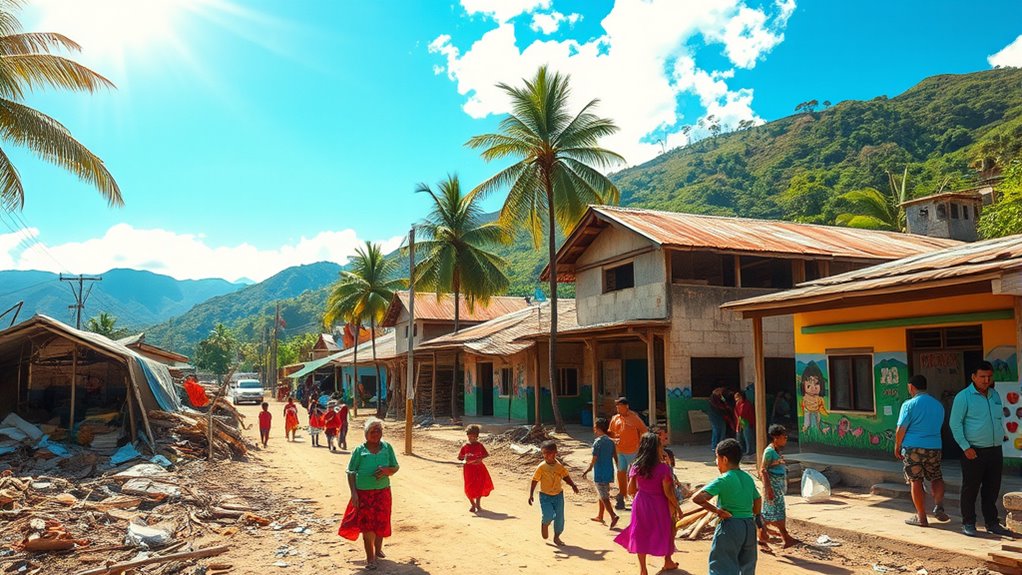

After Typhoon Haiyan in 2013, communities in the Philippines received urgent aid to address immediate needs like food, water, and shelter. Local efforts, supported by international agencies, focused on rebuilding homes, infrastructure, and livelihoods. Community resilience improved through disaster preparedness programs, including drills and early warning systems. These initiatives helped residents become better prepared for future storms. To learn how these efforts have shaped ongoing recovery, keep exploring ways communities continue to rebuild and strengthen themselves.
Key Takeaways
- Community education and disaster preparedness programs enhanced residents’ awareness and resilience before and after Typhoon Haiyan.
- International aid provided immediate relief and supported long-term recovery efforts, including infrastructure rebuilding.
- Local communities actively participated in drills and evacuation plans, strengthening collective resilience.
- Reconstruction efforts focused on improving building codes and early warning systems to reduce future storm impact.
- Sustained community engagement and international collaboration accelerated recovery and fostered resilience in affected areas.
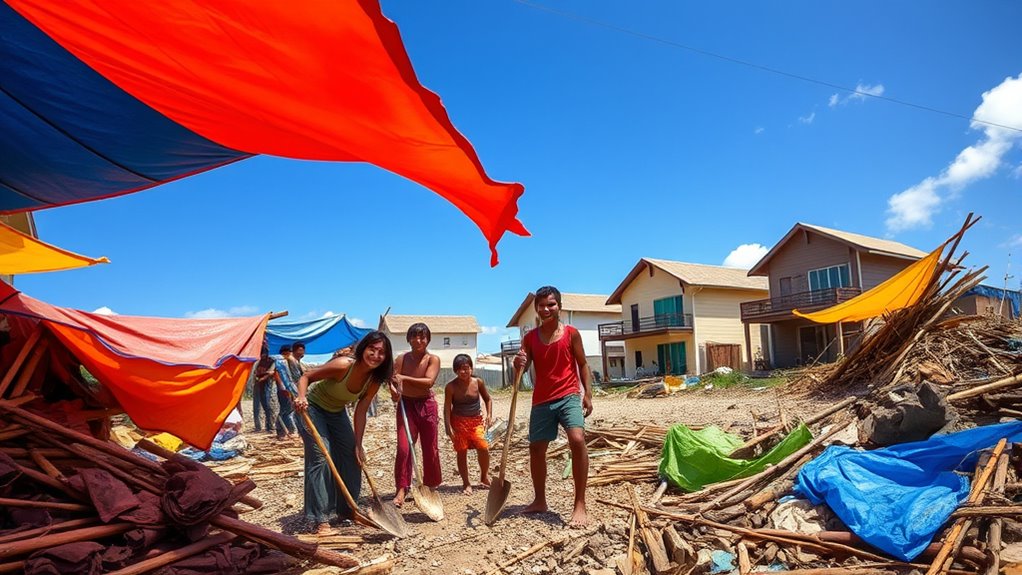
Have you ever wondered how a single storm can cause such widespread destruction? Typhoon Haiyan, which struck the Philippines in 2013, was one of the most powerful storms ever recorded, leaving a trail of devastation across vast areas. When disaster hits, your community’s ability to respond effectively hinges on disaster preparedness. This involves not just having early warning systems in place but also ensuring that residents know what to do when a storm approaches. Local governments, NGOs, and international agencies work together to educate communities about evacuation routes, safety protocols, and stockpiling essentials. Despite these efforts, the scale of Typhoon Haiyan overwhelmed many local resources, highlighting the importance of international aid in disaster response. When a disaster surpasses local capacities, international aid becomes crucial for immediate relief and long-term recovery. Aid organizations mobilize quickly, delivering food, water, medicine, and temporary shelter to those affected. They also bring in heavy equipment to clear debris and restore vital services like electricity and communication lines. Your community’s recovery depends heavily on how well these agencies coordinate efforts and how swiftly aid reaches those in need.
Furthermore, international aid doesn’t just mean providing immediate relief. It also involves funding reconstruction projects, rebuilding infrastructure, and supporting livelihoods. Post-disaster recovery is a complex process that requires sustained effort and resources. International partners often help in implementing disaster preparedness programs to better equip communities for future storms. These programs include training on emergency response, strengthening building codes, and developing early warning systems tailored to local needs. Such initiatives empower communities to become more resilient, reducing the damage caused by future typhoons. Additionally, understanding the importance of essential oils for disaster relief can provide communities with natural tools to support health and comfort during recovery.
As a resident in a vulnerable area, you play a vital role in disaster preparedness. Staying informed about weather updates, participating in drills, and knowing evacuation plans can make a difference when typhoons threaten your community. Local governments and aid agencies work to ensure you have the information and resources needed to stay safe. International aid complements these efforts by providing the necessary support to rebuild and recover after the storm passes. The combined strength of local preparedness and international assistance creates a more resilient community, capable of withstanding future disasters. In the end, recovery from a disaster like Typhoon Haiyan is a collective effort, built on preparedness, swift aid, and ongoing support that helps communities not just survive but thrive again.
Frequently Asked Questions
How Did Local Communities Organize Relief Efforts Post-Typhoon?
You saw local communities organize relief efforts through strong community resilience and volunteer mobilization. People came together quickly, setting up makeshift shelters, distributing aid, and restoring basic services. Local leaders coordinated volunteers, ensuring help reached those most in need. By leveraging their resilience, communities demonstrated remarkable unity, turning individual efforts into a powerful collective response. This proactive mobilization helped speed up recovery and reinforced the community’s ability to withstand future challenges.
What Long-Term Mental Health Support Is Available for Survivors?
You can access long-term mental health support through psychological counseling services offered by local clinics and NGOs. Peer support groups also play a crucial role, providing survivors a safe space to share experiences and cope together. These resources aim to help you process trauma, rebuild resilience, and regain a sense of normalcy. Remember, seeking help is a strong step toward your recovery and well-being.
How Did International Aid Influence Local Recovery Initiatives?
International aid markedly boosted local recovery efforts by addressing infrastructure repair and preventing disease outbreaks. You see, aid organizations provided resources for rebuilding roads, schools, and healthcare facilities, which helped restore normalcy faster. This support also reduced the risk of disease outbreaks by improving sanitation and access to clean water. Your community benefits from these initiatives because they create a more resilient environment, helping you recover and rebuild stronger after the disaster.
What Are the Current Risks of Future Typhoons in Affected Areas?
You face ongoing risks from future typhoons, especially as climate change increases their intensity and frequency. To protect yourself, focus on improving infrastructure resilience in your community, such as strengthening buildings and drainage systems. Stay informed about weather forecasts and evacuation plans. By supporting initiatives that address climate change and promote resilient infrastructure, you can better safeguard your community against the rising threat of future typhoons.
How Are Local Economies Rebuilding After the Disaster?
You see local economies rebuilding through microfinance programs that provide small loans to affected entrepreneurs, helping them restart businesses and restore livelihoods. Agricultural revival is also key, as farmers receive training, seeds, and equipment to replant crops. These efforts stimulate economic activity, create jobs, and boost community resilience. By supporting small-scale industries and farming, you help accelerate recovery and guarantee sustainable growth in the aftermath of the disaster.
Conclusion
As the community begins to rebuild from Typhoon Haiyan, the future remains uncertain. Will these resilient people overcome new challenges ahead? Every step forward reveals both hope and lingering questions about what’s next. The scars of the storm run deep, yet they refuse to give up. In this fragile moment of recovery, only time will tell if they can truly rise again—and what surprises the future might hold for them.