

If you want to save your footage without paying ongoing fees forever, consider combining local storage with affordable cloud backups. Local drives give you quick control and access, but they come with upfront costs and maintenance. Cloud storage offers remote access and easy sharing but can rack up recurring fees over time. Balancing these options helps you protect your footage cost-effectively—stick around to learn how to choose the best setup for you.
Key Takeaways
- Combine local backups with affordable cloud storage to ensure redundancy without ongoing high costs.
- Use tiered storage to move infrequently accessed footage to cheaper, long-term cloud or external drives.
- Regularly review and delete unnecessary footage to prevent paying for unused storage space.
- Automate backups and utilize encryption to protect data without extra expenses.
- Opt for scalable storage solutions that grow with your needs, avoiding costly over-provisioning.
external hard drive for video storage
As an affiliate, we earn on qualifying purchases.
As an affiliate, we earn on qualifying purchases.
Understanding Local vs. Cloud Storage for Video Footage

When it comes to storing video footage, understanding the differences between local and cloud storage is essential. Local storage involves physical devices like external hard drives or servers, which require hardware compatibility with your existing setup. This means checking if your equipment supports the necessary connections and formats. Data transfer speeds are also critical; transferring large video files locally can be fast if you have high-speed ports like USB 3.0 or Thunderbolt. Additionally, the resale value of your storage devices can be a consideration if you plan to upgrade or replace your equipment over time. Cloud storage, on the other hand, relies on internet connections, so upload and download speeds depend on your bandwidth. While cloud solutions offer convenience and remote access, they may introduce latency if your internet isn’t fast enough. Knowing these factors helps you choose the best option for your needs, ensuring efficient and reliable footage management. Additionally, considering content formats compatibility can prevent issues when accessing or editing your footage across different platforms. Furthermore, understanding storage capacity requirements ensures you select solutions that can handle your current and future footage needs without frequent upgrades. Properly assessing data security measures is also crucial to protect your footage from unauthorized access or breaches. It’s also important to evaluate cost considerations to determine which storage method fits within your budget over the long term.
Cost Comparison: Local vs. Cloud Storage

Choosing between local and cloud storage often boils down to cost, as each option has distinct expenses. A thorough cost analysis reveals that local storage involves upfront hardware investments, maintenance, and potential upgrades, while cloud storage typically charges monthly or yearly fees based on usage. Cloud options offer scalability options that let you pay for what you need, making it flexible for fluctuating footage volumes. Local storage, on the other hand, can become costly over time as your footage grows, requiring hardware replacements and energy costs. Additionally, regional cultural activities can influence the overall costs and benefits associated with each storage method depending on your location. Consider these points:
- Initial hardware costs for local storage
- Ongoing maintenance and upgrades
- Monthly cloud service fees based on storage used
- Scalability options for cloud storage ease and flexibility
- Cost management strategies can help optimize expenses regardless of the storage choice. Incorporating long-term planning can further assist in selecting the most cost-effective solution for your needs. For example, understanding how weather patterns might impact data center operations could be relevant in certain regions. Also, evaluating energy consumption can help you assess ongoing operational costs associated with local storage solutions.
Ultimately, your choice depends on your budget, footage volume, and long-term needs.
Pros and Cons of Local Storage for Your Videos
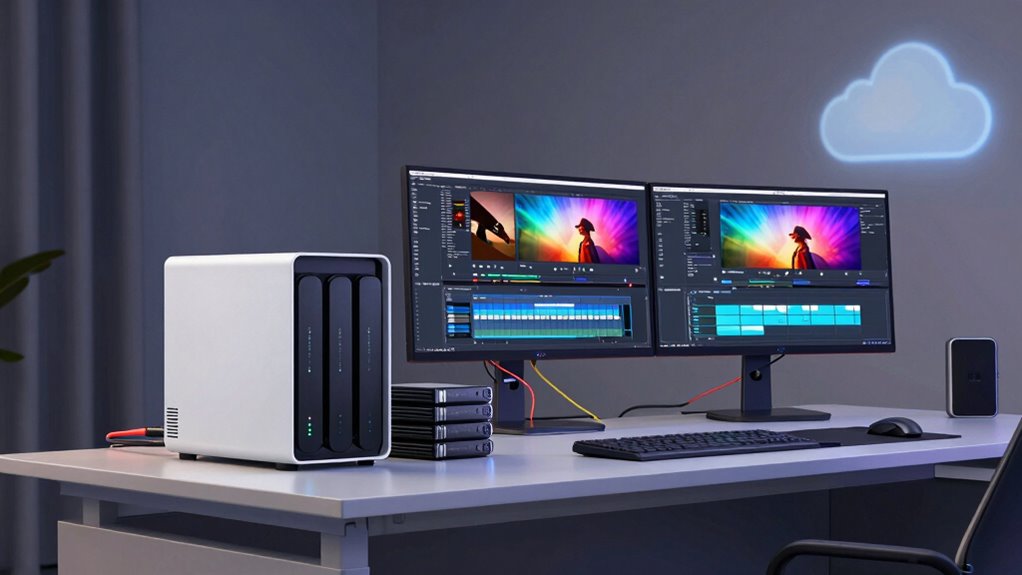
Are local storage options a practical choice for managing your videos? They offer quick access and control, making them ideal for editing and immediate use. You can optimize storage with video compression, reducing file sizes without sacrificing quality. However, relying solely on local storage means you need to implement storage redundancy, like backups, to prevent data loss from hardware failure or theft. Local drives can become cluttered or degraded over time, requiring maintenance. While you avoid ongoing subscription fees, you’ll face higher upfront costs for large-capacity drives. Local storage is straightforward but demands diligent management and backup strategies to ensure your footage stays safe and accessible. Additionally, understanding local storage limitations can help you make more informed decisions about your data management. Being aware of hardware lifespan is crucial to plan for hardware replacements before failures occur, safeguarding your footage. Considering the potential for hardware obsolescence can help you stay ahead of compatibility issues and technology updates. If you’re comfortable with handling hardware and backups, it can be a reliable option. Moreover, understanding the cost implications of hardware upgrades can assist in budgeting for long-term storage needs.
Benefits and Drawbacks of Cloud Storage for Video Files

Cloud storage offers a flexible alternative to local options, allowing you to access your videos from anywhere with an internet connection. This convenience means you can work remotely, share files easily, and avoid hardware maintenance. However, there are some drawbacks. Bandwidth limitations can slow uploads and downloads, especially with large video files. Video compression becomes essential here, helping reduce file sizes but sometimes sacrificing quality. Additionally, ongoing costs for cloud storage can add up over time, unlike a one-time local investment. Consider these points:
- Easy remote access and sharing
- Dependence on stable internet connection
- Bandwidth limitations impacting transfer speeds
- Costs that can accumulate over time
Furthermore, understanding content quality and storage options can help you choose the best solution for your needs. Balancing these benefits and drawbacks helps you decide if cloud storage suits your video needs.
Which Storage Is Safer? Security and Privacy Explained
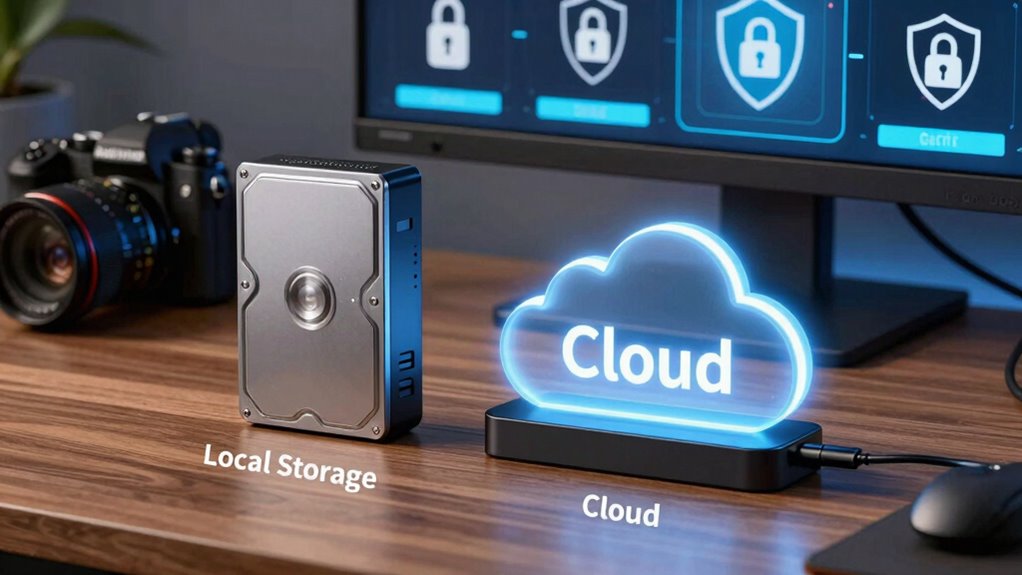
When it comes to security and privacy, understanding how your data is protected is essential regardless of where you store your videos. Local storage offers control over encryption methods, making it easier to implement your preferred security measures. Cloud storage providers also use advanced encryption methods to protect your files during transfer and at rest, but you rely on their data privacy policies. Consider the table below to compare:
| Aspect | Local Storage | Cloud Storage |
|---|---|---|
| Encryption Methods | User-controlled, customizable | Server-side, provider-managed |
| Data Privacy | Full control, limited exposure | Depends on provider’s policies |
| Security Risk | Physical damage, theft | Hacking, unauthorized access |
| Accessibility | Limited to physical location | Accessible anywhere with internet |
| Maintenance | User responsible for updates | Managed by provider |
Additionally, understanding cybersecurity best practices can help you further mitigate risks associated with data storage choices. Being aware of potential security vulnerabilities is also crucial for maintaining your data’s safety. Implementing regular backups can further protect your footage from unforeseen issues. Engaging in security audits can help identify and address potential weaknesses in your storage setup. Your choice impacts both security and privacy, so weigh these factors carefully.
Access and Collaboration: Local vs. Cloud Storage

You can access files stored locally only from your specific device, which can limit collaboration. Cloud storage, on the other hand, allows you to open and edit your files from multiple devices anytime. This makes real-time collaboration easier, so you and your team can work together seamlessly. Additionally, cloud storage solutions often include security features that protect your footage from unauthorized access. Moreover, accessibility is greatly enhanced with cloud storage, enabling remote work and flexible scheduling for your projects. For users seeking a customizable approach, many cloud services offer storage management options to optimize space and organization. Implementing home theater fundamentals can also improve your overall experience by making your setup more comfortable and efficient.
Accessibility From Multiple Devices
Accessing files from multiple devices is often seamless with cloud storage, allowing you to work from anywhere with an internet connection. With cloud options, you gain quick access across different platforms, regardless of device compatibility. This flexibility makes managing your storage capacity easier, as you don’t need to worry about physical limitations. Cloud services automatically sync your files, so updates are available instantly on any device. Plus, cloud storage often offers apps for desktops, tablets, and smartphones, ensuring smooth compatibility. Here’s what you’ll enjoy:
- Instant access across all your devices
- No need to transfer files manually
- Compatibility with various operating systems
- Effortless updates and synchronization
This level of accessibility keeps your workflow efficient and adaptable, saving you time and frustration.
Real-Time Collaboration Capabilities
Cloud storage enhances collaboration by allowing multiple users to work on the same files simultaneously, unlike local storage which often requires manual sharing and version control. With cloud solutions, you can see updates in real time, streamlining teamwork and reducing errors. However, maintaining effective version control becomes vital to avoid confusion over edits. Plus, real-time collaboration depends on bandwidth requirements; poor internet can cause lag, disrupting workflow. Cloud platforms handle version histories automatically, so you can revert to previous states if needed. This immediacy and ease of access make cloud storage ideal for teams that need constant, synchronized updates. While local storage may struggle with real-time adjustments, cloud-based systems facilitate smooth, efficient collaboration, saving you time and effort.
How to Choose the Right Storage for Your Needs
Choosing the right storage solution depends on understanding your specific needs and priorities. Consider whether you need data redundancy to protect against data loss, or storage scalability to accommodate future growth. Evaluate how much storage capacity is required now and if it can expand easily. Think about access speed—do you need quick retrieval or can you tolerate delays? Also, assess your budget constraints and long-term costs. Here are some points to help you decide:
- Prioritize data redundancy for critical footage
- Opt for scalable solutions if you expect data growth
- Balance speed needs with budget limitations
- Consider ease of management and maintenance
How to Save Money and Avoid Paying Forever for Your Footage

While selecting the right storage solution is important, managing ongoing costs is equally essential to avoid draining your budget over time. Implement backup strategies that balance cost and security, such as combining local backups with affordable cloud options. Regularly review your storage needs to prevent overpaying for unused space. Protect your footage with data encryption to keep it secure without extra expenses. Automate backups to reduce manual effort and ensure your files are consistently protected. Consider tiered storage solutions, moving infrequently accessed footage to cheaper options. Avoid paying for continuous cloud storage if you can archive footage locally or on less costly services. Staying proactive with these strategies helps you save money and prevents ongoing payments from piling up unnecessarily.
Best Storage Setups for Different Types of Video Creators
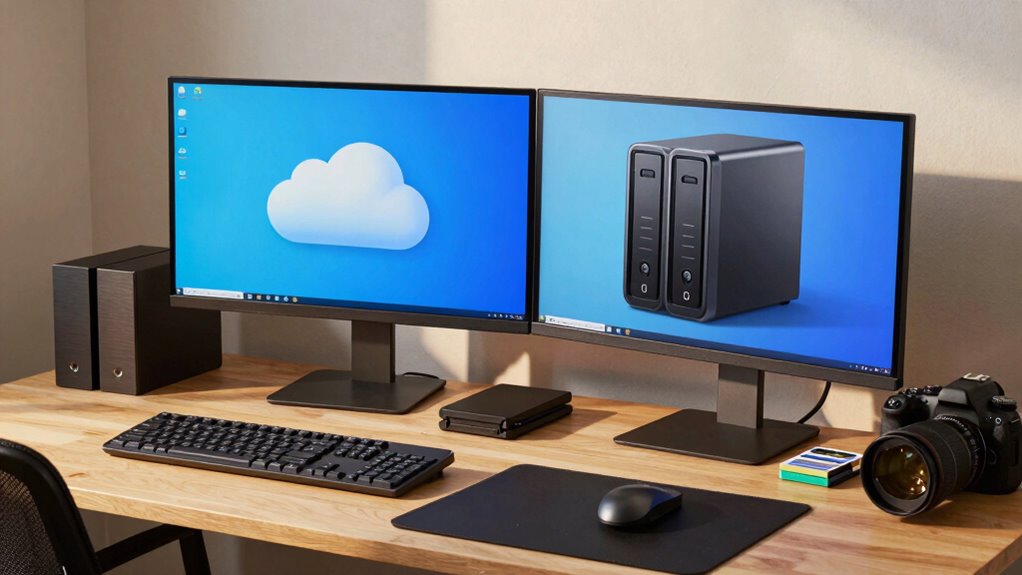
Your storage needs vary based on your work style, whether you’re a solo creator or a studio professional. Solo creators often prioritize affordable, flexible options, while studio pros require robust, scalable setups. Understanding these differences helps you choose the best setup for your video projects.
Solo Creators’ Storage Needs
For solo video creators, selecting the right storage setup is essential to keep up with their demanding workflows. You need a system that balances cost, speed, and reliability, especially since you’re managing everything yourself. Focus on effective storage management to avoid clutter and slowdowns. Implement backup strategies that ensure your footage is safe without overpaying for unnecessary cloud storage. Consider these options:
- Use a fast SSD for active projects to speed up editing
- Maintain an external HDD for backups and archived footage
- Invest in a NAS if you handle large files regularly
- Keep multiple copies of your critical footage for redundancy
This approach helps you stay organized, minimizes data loss risks, and keeps your workflow efficient—all crucial for solo creators juggling multiple roles.
Studio Professionals’ Setup Options
Choosing the right storage setup is vital for studio professionals who handle high-volume and complex video projects. You need a system that offers storage scalability, so you can expand as your projects grow without disrupting workflow. Implementing data redundancy is key to protect against data loss—using RAID configurations or off-site backups ensures your footage remains safe if hardware fails. Consider a hybrid approach that combines local storage for fast access with cloud solutions for off-site backups and collaboration. This setup provides both speed and security, ideal for demanding projects. Regularly evaluate your storage needs and upgrade capacity accordingly. By prioritizing scalability and redundancy, you create a resilient, efficient environment that supports your evolving creative demands.
Frequently Asked Questions
How Does Internet Speed Affect Cloud Storage Performance?
Your internet speed directly impacts cloud storage performance. If your bandwidth limitations are low, uploads and downloads slow down, making it frustrating to access your footage quickly. Latency issues can cause delays in syncing files, leading to buffering or interrupted transfers. To guarantee smooth access and transfer of your footage, you need a stable, fast connection that minimizes these problems, especially when working with large files or frequent updates.
Can Local Storage Be Easily Expanded as Your Footage Grows?
Yes, local storage can be easily expanded as your footage grows. You can upgrade your system with additional drives or larger capacity hard disks, giving you expandable capacity and improving storage scalability. This flexibility lets you adapt to increasing footage without hassle. Just make certain your setup supports adding more storage, and you’ll have a simple, cost-effective way to keep up with your growing media library.
What Are the Environmental Impacts of Cloud Versus Local Storage?
You should consider that cloud storage typically consumes more energy due to data center operations, increasing its carbon footprint. In contrast, local storage has a smaller environmental impact because it relies on your hardware’s energy use. However, maintaining and expanding local storage can also lead to higher energy consumption over time. Ultimately, your choice affects energy use and emissions, so weigh these environmental impacts when deciding.
How Do Storage Options Impact Long-Term Footage Preservation?
Your footage’s long-term preservation depends heavily on your storage choice. Cloud options often offer superior data security and automatic backups, making them nearly indestructible. Local storage, while more cost-efficient upfront, risks data loss from hardware failure or theft. You can’t afford to gamble with your footage’s future—choose a method that balances data security and cost efficiency for lasting preservation. Don’t let your memories vanish like a shooting star!
Are There Hybrid Storage Solutions That Combine Local and Cloud Benefits?
Yes, hybrid storage solutions combine local and cloud options through hybrid integration, giving you the best of both worlds. You can store frequently accessed footage locally for quick retrieval and use the cloud for off-site backup and long-term storage. This approach enhances storage optimization, reduces costs, and guarantees your footage remains safe and accessible, no matter where you are. It’s an efficient way to manage your storage needs without sacrificing security or convenience.
Conclusion
Choosing between local and cloud storage can feel like deciding whether to keep your priceless footage in a vault or launch it into the digital universe forever. Don’t let endless fees drain your creativity or turn your hard-earned footage into a money pit. By picking the right setup, you’ll save a fortune, protect your work like a treasure chest, and keep your projects soaring without breaking the bank. The ultimate storage solution is just a smart choice away—don’t let costs swallow your passion!