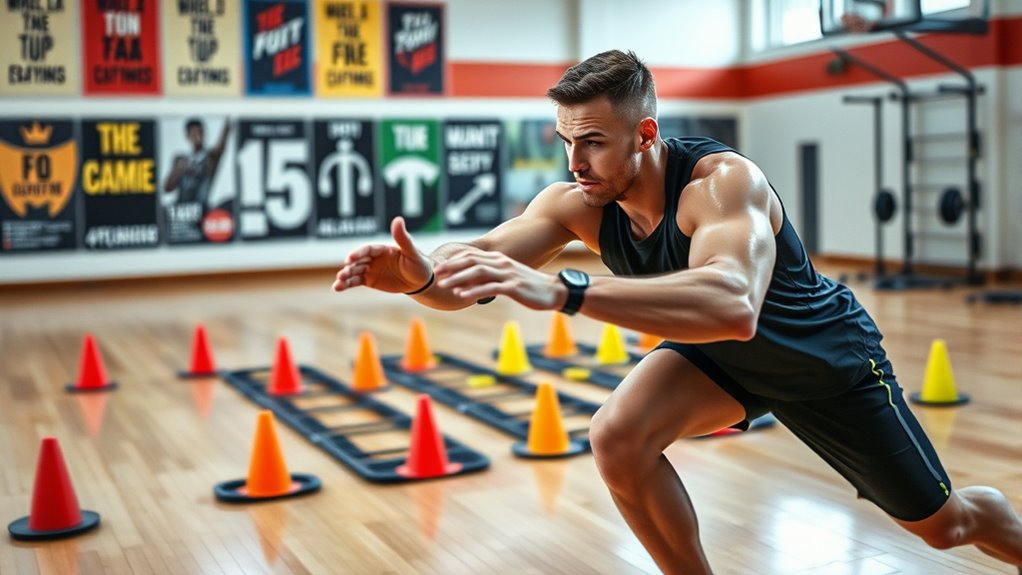

To build automaticity, focus on drills that mimic real-life situations with high intensity and purpose. Repeat these exercises consistently until they become second nature, simulating fatigue and distractions to guarantee your responses are swift and instinctive. Push yourself to operate under pressure, integrating realistic variables and feedback. With relentless focus and effort, you’ll develop split-second reactions. Keep practicing these methods, and you’ll soon master how to respond without hesitation whenever it truly matters.
Key Takeaways
- Simulate actual scenarios with unpredictable variables and distractions to enhance real-world responsiveness.
- Incorporate fatigue and time pressure into drills to mimic high-stakes situations.
- Repeat specific skills consistently until they become instinctive responses.
- Practice with full focus and intensity, treating each session as critical to develop automaticity.
- Use immediate feedback tools to refine reactions and reinforce muscle memory effectively.

To get the most out of your workouts, you need to train as if every session truly matters. This mindset pushes you to focus fully and perform drills with purpose, knowing that consistency and intentionality lead to automaticity. When you treat training like it’s a matter of life or death, your efforts become sharper, more deliberate, and more effective. Instead of going through the motions, you immerse yourself in each drill, aiming to refine your reactions and decision-making under pressure. This approach turns simple exercises into powerful tools for developing instinctive responses that will serve you well during real challenges.
One key to building automaticity is repetition with a purpose. It’s not enough to just perform drills mindlessly; you need to repeat them until they become second nature. Imagine practicing a specific movement or decision until it feels natural, almost reflexive. This means pushing yourself to perform each rep as if it were a critical moment, maintaining focus and intensity. Over time, these repeated patterns become ingrained in your muscle memory and neural pathways, allowing you to respond instantly without overthinking. The goal is to reduce hesitation and increase confidence so that your actions are instinctive rather than deliberate.
Repetition with purpose ingrains skills into muscle memory, making responses instinctive and confident under pressure.
Another essential aspect is simulating real-world scenarios during your drills. When you train like it’s real, you create scenarios that mimic actual situations you might face. This could mean practicing under fatigue, with distractions, or with unpredictable variables thrown in. By doing so, you prepare your mind and body to react automatically when real stakes are involved. The more realistic your training, the more seamlessly your responses will translate outside the gym or training environment. You’ll learn to adapt quickly, make split-second decisions, and execute techniques effortlessly, because your brain has practiced these responses repeatedly in contexts that resemble reality. Incorporating proper training technology can further enhance these simulations by providing immediate feedback and tracking progress.
Finally, maintain a high level of intensity during every drill. Treat each session as if it’s a critical mission, not just a warm-up or casual practice. This mindset pushes you to give full effort and stay engaged, which accelerates the process of automaticity. When you push your limits, your body and mind learn to operate efficiently under pressure. Remember, training like it’s real isn’t just about the physical movements; it’s about cultivating a mentality of focus, resilience, and readiness. By integrating these principles into your routine, you’ll develop responses that are automatic, precise, and reliable—traits that can make all the difference when it truly counts.
Frequently Asked Questions
How Long Should I Practice Drills to Develop Automaticity?
You should practice drills consistently for at least 15-30 minutes daily to develop automaticity. Focus on repetition and gradually increase complexity as your skills improve. It’s better to practice regularly rather than in long, infrequent sessions. Over time, your responses will become quicker and more instinctive. Stay committed, and within a few weeks, you’ll notice your actions becoming more automatic, helping you perform better under pressure.
Can Automaticity Be Achieved in Any Sport or Activity?
Absolutely, automaticity can bloom in any sport or activity if you nurture it diligently. Think of your skills as a garden; with consistent watering through focused drills, they grow roots that anchor deeply in your mind and body. Whether you’re swinging a racket, coding, or driving, repeated practice turns complex moves into second nature, allowing you to perform seamlessly under pressure. Keep at it, and watch your abilities become instinctive.
What Are Common Mistakes That Hinder Automaticity Development?
You often hinder automaticity development by focusing too much on conscious control and overthinking your movements. Rushing practice without consistent repetition, neglecting realistic drills, and avoiding challenging situations also slow progress. Additionally, inconsistent training schedules and giving up after setbacks can impede progress. To build automaticity, stay committed, practice under realistic conditions, and focus on quality, not just quantity, ensuring your skills become instinctive during high-pressure moments.
How Do I Measure Progress in Automaticity Training?
You can measure progress in automaticity training by noting how effortlessly tasks become second nature—like breathing without thinking. Track your reaction times, accuracy, and consistency during drills; improvements here show your skills are truly ingraining. Record your performance regularly, set benchmarks, and compare results over time. When actions become instinctual and require minimal conscious effort, you’ll know your automaticity is skyrocketing, transforming your responses into lightning-fast reactions.
Should Drills Be Varied or Repeated Consistently for Best Results?
You should vary your drills to keep challenging yourself and prevent boredom, which helps build adaptability. However, repeating certain drills consistently is key to developing automaticity, as it reinforces neural pathways. The best approach is to strike a balance: repeat core drills to solidify skills, then introduce variations to test those skills in different contexts. This way, you maximize progress and ensure your responses become truly automatic.
Conclusion
Now, picture yourself in a high-stakes moment, your muscles moving instinctively, eyes sharp and focused. Every drill you’ve done becomes second nature, like a well-oiled machine. The rush of adrenaline, the pounding heartbeat—these are your cues that your training has become automatic. Keep pushing, keep practicing as if it’s real, because someday, when it counts, your body will respond without hesitation. That’s the power of training like it’s real.