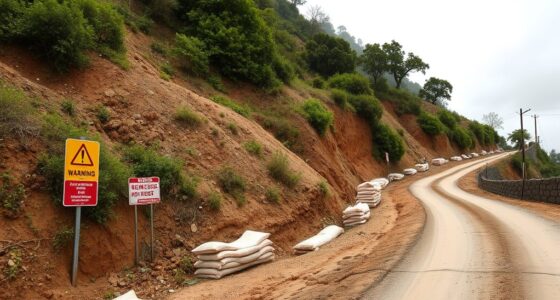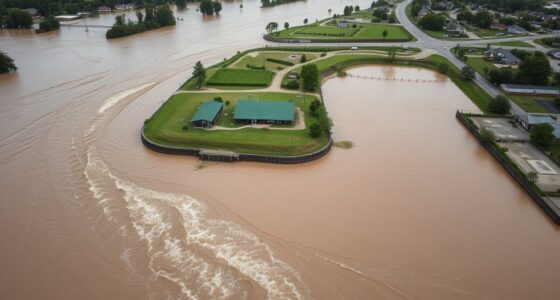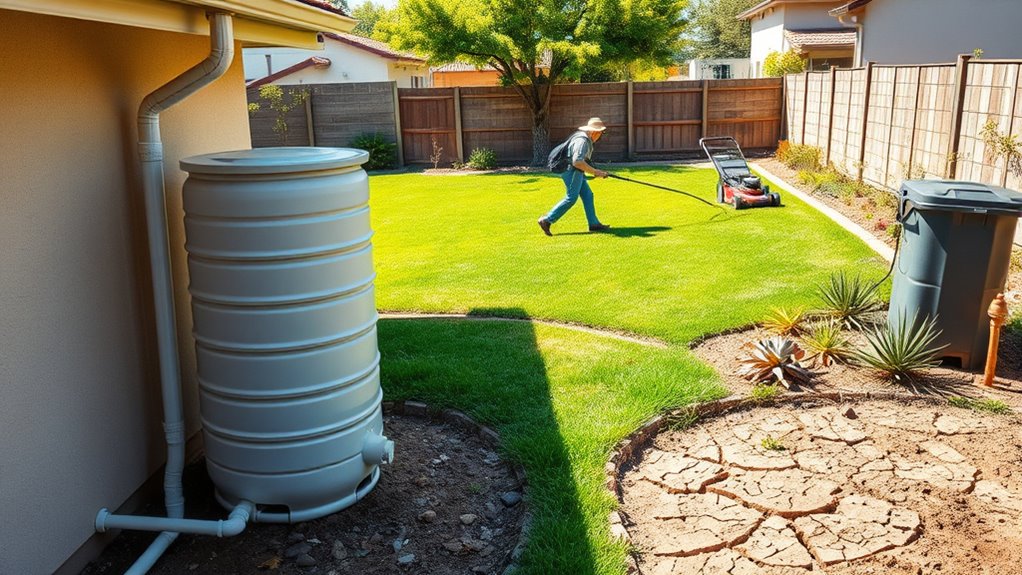

To prepare for drought conditions, assess your water use by checking for leaks and waste, then adopt efficient irrigation and watering schedules. Upgrade fixtures and appliances to low-flow or smart models, and recycle greywater or harvest rainwater. Incorporate drought-tolerant plants and sustainable landscaping, and develop emergency water plans. By making these changes now, you can conserve valuable resources and stay resilient. Keep exploring ways to strengthen your water conservation efforts and ensure readiness.
Key Takeaways
- Conduct water usage audits to identify waste and optimize consumption habits.
- Install efficient irrigation systems, such as drip watering and soil moisture sensors, to reduce outdoor water use.
- Upgrade fixtures and appliances to low-flow and smart models for automatic water savings.
- Implement rainwater harvesting and greywater recycling to reduce reliance on municipal water sources.
- Develop emergency water plans and adopt drought-tolerant landscaping to ensure resilience during shortages.
Assessing Your Water Usage and Identifying Opportunities for Reduction

Understanding how much water you use is the first step toward reducing your consumption. Begin with a water usage audit—check your water meter regularly to track your daily or weekly use. This helps you identify patterns and pinpoint areas where you’re wasting water. Consumption tracking is essential; record your findings to see where the most significant savings can happen. Look for leaks, running toilets, or outdated fixtures that may be increasing your water bill without your notice. By evaluating your current water habits, you gain insight into your overall usage. This awareness empowers you to make targeted changes, prioritize areas for conservation, and set realistic goals. Taking these initial steps ensures you’re prepared to implement effective water-saving strategies. Additionally, understanding the impact of high water consumption can motivate you to adopt more efficient habits and technologies, such as water-efficient appliances, to further reduce your usage. Recognizing water waste in everyday activities can also help you identify simple adjustments that lead to significant savings over time. Incorporating smart water monitoring devices can provide real-time feedback on your water use, making it easier to stay on track.
Implementing Efficient Irrigation Practices for Gardens and Landscapes
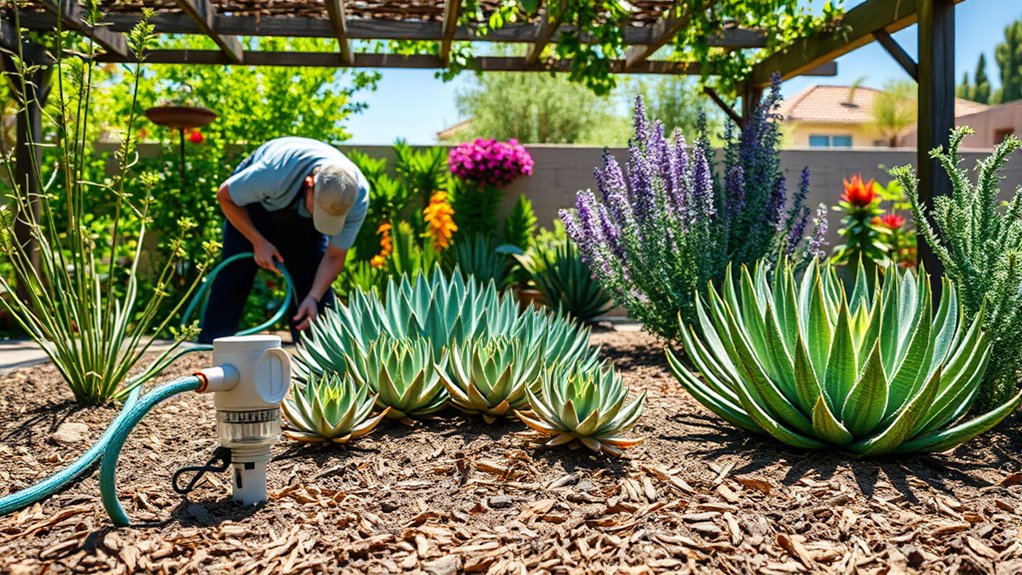
To use water more efficiently in your garden, consider installing drip irrigation systems that deliver water directly to plant roots. Adjust your watering schedule to avoid overwatering and water during early mornings or evenings for maximum absorption. Mulching techniques also help retain soil moisture, reducing the need for frequent watering. Additionally, incorporating automation technologies can optimize watering times and amounts, further conserving water resources. Practicing mindful watering ensures that every drop counts and supports sustainable water use practices, especially when combined with advanced irrigation management tools that analyze soil moisture levels and weather forecasts. For instance, integrating smart sensors can provide real-time data to fine-tune your irrigation system, minimizing waste while maintaining healthy plants and promoting water conservation awareness.
Drip Irrigation Systems
Have you considered how drip irrigation can transform your garden and landscape watering practices? With proper drip emitter placement, you deliver water directly to your plants’ roots, reducing waste and evaporation. To maximize efficiency, monitor soil moisture regularly to avoid over- or under-watering. Adjust your system based on moisture levels, ensuring plants receive just the right amount of water. Soil moisture monitoring helps you fine-tune your watering schedule and prevent water waste. Drip systems are easy to customize for different plant types and soil conditions, making them ideal for conserving water during droughts. Incorporating efficient watering practices such as mulching around plants can further reduce evaporation and help maintain consistent soil moisture. By installing emitters close to roots and checking soil moisture, you ensure your garden stays healthy without excess runoff or evaporation losses. This targeted approach helps you save water while maintaining a lush, thriving landscape. Additionally, incorporating visualization techniques can help you better understand your watering needs and optimize system performance.
Watering Schedule Optimization
Optimizing your watering schedule guarantees your garden receives the right amount of water at the right times, minimizing waste and promoting healthy growth. To do this, focus on timing adjustments and frequency control based on weather and plant needs. Water early in the morning or late in the evening to reduce evaporation. Adjust watering frequency during rainy or cooler periods to avoid overwatering. Use the following visual to plan effectively:
| Time of Day | Watering Frequency | Soil Moisture Level |
|---|---|---|
| Morning | Twice a week | Slightly dry |
| Afternoon | Once a week | Moist |
| Evening | Not recommended | Saturated |
This table helps you decide when and how often to water, ensuring efficiency and conservation.
Mulching Techniques
Mulching is a simple yet effective way to improve water retention and reduce evaporation in your garden. By applying organic mulching, you create a protective layer that insulates your soil, keeping it moist and healthy. This soil insulation minimizes water loss, especially during hot, dry days, helping your plants thrive with less irrigation. Additionally, choosing sustainable materials like recycled plastics or natural fibers can further enhance the environmental benefits of mulching. Using self-watering planter pots in conjunction with mulching can optimize water use and reduce the frequency of watering needed. Incorporating low light office plants into your garden or landscape can also help maintain moisture levels and add greenery with less water.
Implementing these practices can also be complemented by selecting appropriate plant species that are drought-tolerant and adapted to your local climate. Consider these benefits:
- Protects roots from temperature extremes, preventing stress.
- Conserves water by reducing evaporation.
- Enriches soil as organic mulch decomposes.
- Saves you time and money on watering, making your garden more resilient.
Using organic mulching techniques allows you to nurture your landscape while conserving precious water resources, ensuring your garden remains vibrant even in drought conditions.
Upgrading to Water-Saving Fixtures and Appliances

Upgrading to water-saving fixtures and appliances can considerably reduce your water use. You should choose efficient fixtures like low-flow showers and faucets, which cut down on unnecessary waste. Installing smart appliances that monitor and optimize water consumption can make your conservation efforts even more effective. Additionally, understanding aura colors and their meanings can help you stay motivated and positive throughout your water-saving journey. Incorporating wall organization solutions can also help identify and eliminate leaks or wasteful habits around the home, further supporting your conservation goals. Leveraging water-efficient technology is essential to maximize savings and ensure sustainable water use. Employing analytics cookies can provide insights into your water usage patterns, helping you make more informed decisions. Using nutritional insights into alternative water sources, such as rainwater, can further enhance your conservation strategies.
Choosing Efficient Fixtures
Are you looking for simple ways to cut water use and save money? Choosing efficient fixtures can make a big difference. Upgrading to low flow fixtures improves fixture efficiency, reducing water waste without sacrificing performance. Here are four reasons to make the switch:
- Save money on your water bill every month.
- Contribute to conserving essential water resources.
- Enjoy modern fixtures that work just as well as traditional ones.
- Feel good knowing you’re making a positive environmental impact.
- Ensure compatibility with your existing plumbing for optimal installation, and choosing fixtures with adaptive features can further enhance water efficiency and user satisfaction. Additionally, selecting fixtures with proper maintenance options helps ensure long-term performance and continued water savings, especially when considering advanced technology that can monitor and adjust water flow automatically.
Installing Smart Appliances
Installing smart appliances can substantially reduce water consumption by automatically adjusting usage based on your needs. With smart appliance integration, your devices work seamlessly together, optimizing water use without sacrificing performance. These appliances often feature user-friendly controls, making it simple to set preferences and monitor consumption. For example, smart dishwashers and washing machines detect load size and adjust water levels accordingly, preventing waste. Smart irrigation systems analyze weather data to water only when necessary, conserving water outdoors. By upgrading to smart appliances, you gain greater control over your water use, reduce utility bills, and contribute to drought preparedness. Embracing these technologies ensures your home becomes more efficient and environmentally friendly, all while maintaining convenience and ease of operation.
Recycling and Reusing Water Whenever Possible
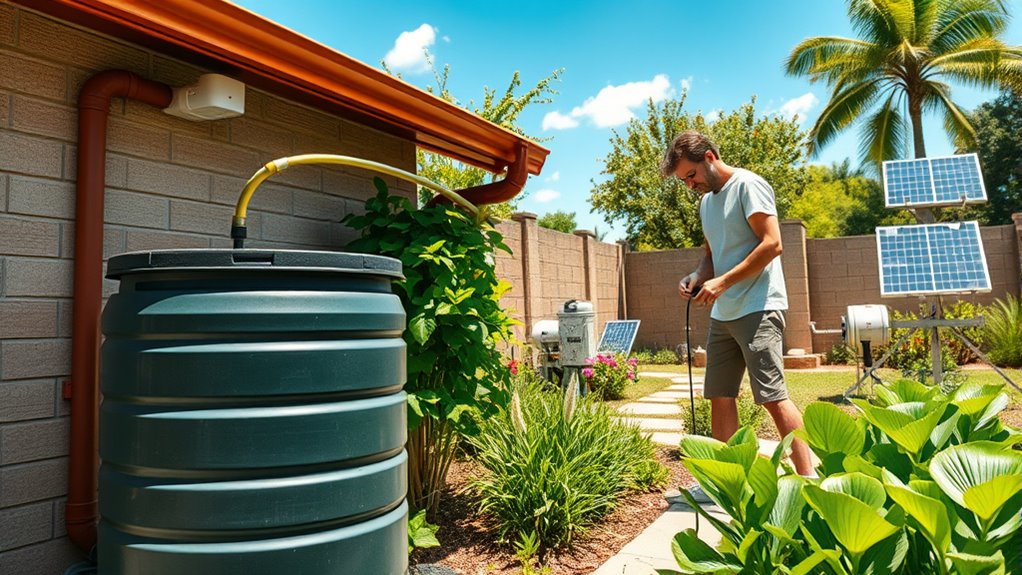
Recycling and reusing water whenever possible is one of the most effective ways to conserve this essential resource. You can implement greywater recycling to reuse water from sinks, showers, and laundry for outdoor irrigation, reducing demand on your main water supply. Rainwater harvesting allows you to collect and store rainwater for gardening or flushing toilets, cutting down on municipal water use. These practices not only save water but also lower your utility bills and lessen strain on local resources.
- Collect rainwater to water your plants and reduce tap water dependence.
- Install greywater systems to reuse household wastewater safely.
- Use rain barrels to capture water from rooftops.
- Prioritize recycling water to support a sustainable future.
Adopting Water-Conserving Landscaping Techniques

To effectively conserve water, adopting landscaping techniques that require less irrigation is essential. You can do this by incorporating native plants, which are well-adapted to your local climate and need less water to thrive. Following xeriscaping principles helps reduce your yard’s water consumption through strategic design, such as grouping plants with similar water needs and minimizing turf areas. Using drought-tolerant plants and mulch helps retain soil moisture, further decreasing irrigation needs. Avoiding unnecessary lawn space and opting for rock gardens or permeable surfaces also cuts water use. These strategies not only save water but also lower maintenance costs and create a resilient landscape. By making these adjustments, you contribute appreciably to drought preparedness and sustainable water management.
Developing Emergency Water Supply Plans
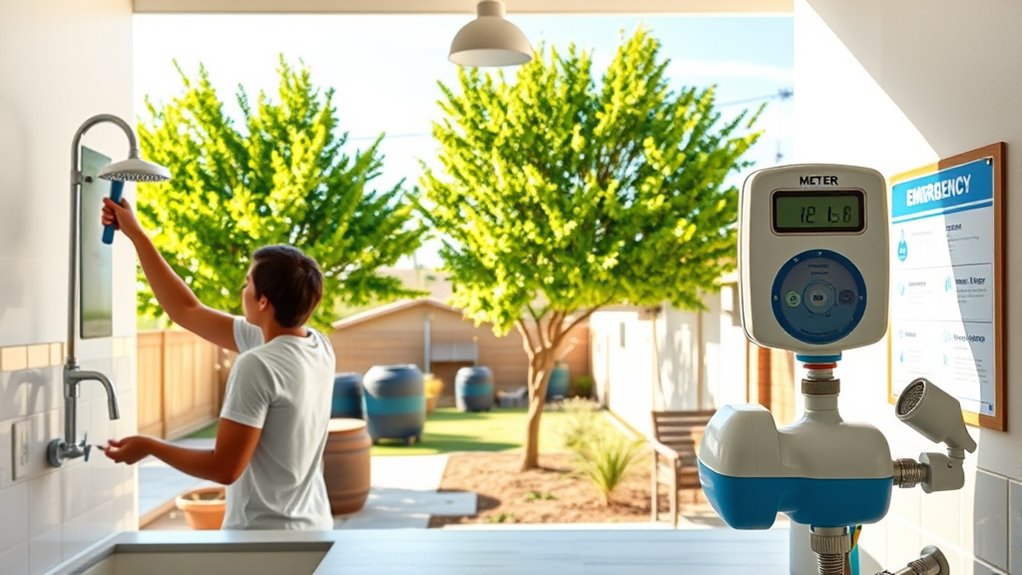
When a water emergency occurs, having a well-developed emergency water supply plan guarantees you can maintain essential needs. Start by securing emergency water storage—enough to last you several days. Next, create a contingency plan that identifies alternative water sources, like nearby reservoirs or bottled water supplies. Prioritize your household’s most critical uses, such as drinking, cooking, and sanitation. Remember, effective contingency planning can mean the difference between chaos and calm during a crisis. Here are four key steps:
Preparing an emergency water plan ensures vital needs are met during a crisis.
- Store sufficient emergency water in safe, accessible containers.
- Identify local and alternative water sources beforehand.
- Establish a plan for rationing water efficiently.
- Regularly review and update your emergency water storage and contingency plan.
Being prepared ensures you’re ready to face any water emergency confidently.
Educating Household and Community Members About Conservation Strategies

Have you ever considered how much your household and community can save by simply understanding and applying water conservation strategies? Educating everyone is key to fostering behavioral change. Through community outreach programs, you can inform members about simple steps like fixing leaks, using drought-tolerant plants, and installing water-efficient fixtures. By raising awareness, you encourage responsible water use and create a culture of conservation. Engaging local schools, neighborhood groups, and social media amplifies your message and motivates collective action. When people understand the impact of their choices, they’re more likely to adopt sustainable habits. Clear communication and ongoing education make conservation a shared responsibility, helping your community reduce water waste and better prepare for drought conditions.
Frequently Asked Questions
How Can I Identify Hidden Water Leaks in My Home?
To identify hidden water leaks in your home, start with a plumbing inspection and look for signs like unexplained increases in your water bill or water stains. Use leak detection tools, such as a moisture meter or dye test, to pinpoint leaks behind walls or under floors. Turn off your water supply and monitor the meter; if it keeps moving, you likely have a hidden leak that needs fixing.
What Are the Best Drought-Tolerant Plants for My Region?
Your garden can be a lush paradise even in droughts! Focus on xeriscape gardening with drought-resistant trees and plants native to your region. These plants thrive on minimal water, making your landscape resilient and beautiful. Look for options like succulents, lavender, and yucca. By choosing the right drought-tolerant plants, you’ll create a sustainable, water-wise garden that stays vibrant despite dry conditions.
How Do I Track My Water Savings Effectively?
You can track your water savings effectively by installing smart meters, which provide real-time usage data. Conduct a water audit to identify areas where you’re using the most water and find opportunities to improve. Regularly review your smart meter readings, set goals, and monitor changes over time. This proactive approach helps you stay aware of your water consumption, ensuring you’re making measurable progress toward conserving water and reducing bills.
Are There Government Programs That Assist With Water-Saving Upgrades?
Think of government incentives as your secret weapon, like a Robin Hood offering rebates to help you upgrade your water-saving devices. Many programs exist that provide rebates and financial assistance for installing water-efficient fixtures or rainwater harvesting systems. Check local, state, or federal websites to find available rebate programs near you. These incentives make it easier and more affordable to conserve water, helping you save money and protect the environment.
How Can Community Efforts Enhance Overall Water Conservation?
Community engagement plays a crucial role in enhancing water conservation by encouraging residents to participate in shared resources and collective efforts. When you get involved, you help spread awareness and motivate others to adopt water-saving habits. These efforts create a sense of shared responsibility, making conservation more effective. By working together, you can maximize water savings, support local initiatives, and build a resilient community prepared for drought conditions.
Conclusion
As you implement water-saving strategies, imagine a lush garden thriving with minimal effort, contrasting with a dry, cracked landscape overwhelmed by neglect. Your conscious choices can transform this stark reality into a sustainable oasis. By conserving water today, you guarantee vibrant landscapes tomorrow, even in drought times. Every small step is a drop contributing to a healthier, more resilient environment—showing that responsible actions can turn scarcity into abundance.