
To stay earthquake ready, remember to drop to your hands and knees, take cover under sturdy furniture, and hold on tightly until the shaking stops. Secure heavy or breakable items in low cabinets, anchor furniture to walls, and keep safety supplies nearby. Make sure your environment is clutter-free and regularly inspect your safety measures. Staying prepared with these steps can make a huge difference; learn more to guarantee you’re fully protected when it matters most.
Key Takeaways
- Practice the “Drop, Cover, and Hold On” technique regularly to ensure quick, instinctive safety response during shaking.
- Secure heavy furniture, bookshelves, and appliances to walls with brackets or straps to prevent tipping.
- Keep emergency supplies like flashlights, water, and first aid kits easily accessible in designated safe spots.
- Clear clutter around beds, sofas, and work areas to minimize trip hazards during an earthquake.
- Identify and reinforce safe areas away from windows and hanging objects in each room for quick shelter.

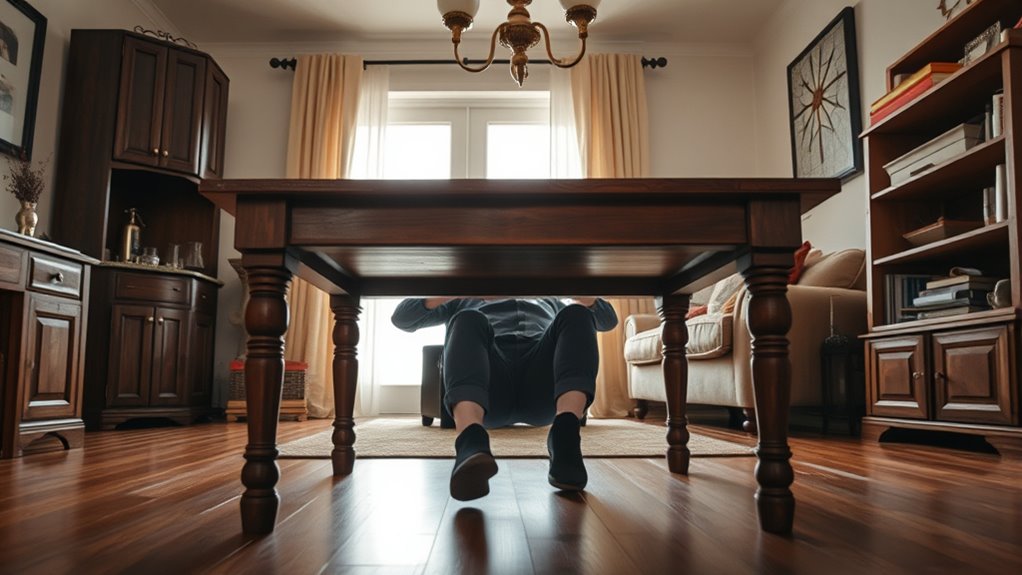
Are you prepared for the next earthquake? It’s a question that might not cross your mind often, but being ready can make all the difference. Earthquakes strike suddenly and without warning, and knowing what to do in those critical moments can protect you from injury. The first step in preparedness is understanding the “Drop, Cover, and Hold On” technique, which is proven to reduce harm during shaking. When the ground starts to tremble, don’t run outside or to doorways—those are often more dangerous than staying put. Instead, drop to your hands and knees to prevent falling. Once on the ground, take cover under a sturdy piece of furniture, like a table or desk, to shield yourself from falling debris. Hold on tightly until the shaking stops. This simple action can save your life by keeping you stable and protected from objects that might otherwise strike you.
Beyond knowing what to do during the quake, you also need to prepare your space beforehand. Securing heavy furniture, bookshelves, and appliances to the walls can prevent dangerous spills and falls. Use brackets, straps, or anchors to stabilize these items, especially if you live in an earthquake-prone area. Keep a clear, clutter-free space around your bed, sofa, or work area so you won’t trip or struggle to find a safe spot when shaking begins. Remember, most injuries happen because people are caught off guard by falling objects or trying to move through cluttered environments. Making your environment safer minimizes these risks.
Secure furniture and keep areas clear to prevent injuries during earthquakes.
It’s equally important to secure what’s inside your home or office. Store heavy, breakable, or sharp items in low cabinets or on sturdy shelves. Use latches on cabinets to prevent contents from spilling out. Keep emergency supplies within reach, including a flashlight, bottled water, and a basic first aid kit. Planning ahead guarantees you’re not scrambling to find essentials when panic sets in. Also, take time to identify safe spots in each room—areas away from windows, heavy furniture, or hanging objects. Knowing where to go when the shaking begins helps you act quickly and confidently.
Preparing for an earthquake isn’t just about knowing what to do during the shaking; it’s also about making your environment safer beforehand. Drop, cover, and hold on are your immediate actions, but securing your surroundings reduces the chances of injury and chaos. When you take these steps now, you’re not just reacting to a potential disaster—you’re actively reducing its impact, giving yourself a better chance to stay safe and recover quickly.
Frequently Asked Questions
How Often Should I Review My Earthquake Preparedness Plan?
You should review your earthquake preparedness plan at least once a year. Regularly updating it guarantees you stay aware of new hazards and keep your supplies fresh. After any significant earthquake or safety training, revisit your plan to incorporate lessons learned. Regular reviews help you feel confident and ready, minimizing panic if an earthquake strikes. Make it a habit to check your plan and supplies, so you’re always prepared.
What Are the Best Materials to Secure Heavy Furniture?
Did you know that unsecured furniture causes over 50% of injuries during earthquakes? To secure heavy furniture, use L-brackets or strap furniture to the wall studs, ensuring they can’t tip over. Attach tall dressers and bookshelves to the wall, and place heavier items on lower shelves. Regularly check these fastenings for stability, and make sure all anchors are rated for seismic activity. This simple step can save lives.
How Can I Help Children Understand Earthquake Safety?
You can help children understand earthquake safety by using simple, clear language and engaging activities. Show them what to do during an earthquake, like dropping and taking cover, with role-playing exercises. Use kid-friendly visuals and stories to explain why safety measures matter. Encourage questions and practice drills regularly to build their confidence. Keep it calm, positive, and reassuring, so they feel prepared rather than scared.
Are There Specific Emergency Kits Recommended for Earthquakes?
Yes, there are specific emergency kits recommended for earthquakes. You should include essentials like water, non-perishable food, a flashlight, batteries, a first aid kit, and necessary medications. Consider adding a whistle, sturdy shoes, and copies of important documents. Make sure the kit is compact and easy to carry. Regularly check and update it to guarantee everything is functional and supplies haven’t expired, so you’re prepared when an earthquake strikes.
What Should I Do if I Am Outdoors During an Earthquake?
If you’re outdoors during an earthquake, stay calm and move to an open area away from buildings, trees, and power lines to avoid falling debris. Drop to your hands and knees to protect your head and neck. Hold on to any sturdy object nearby if possible. Avoid doorways and windows, and stay in the open until the shaking stops. Once it does, be cautious of aftershocks and hazards on your way to safety.
Conclusion
By taking these simple steps, you turn vulnerability into strength, transforming a potential disaster into a moment of empowerment. Remember, preparedness isn’t just about securing your space; it’s about claiming control over the chaos. When you know what to do—drop, cover, and secure—you’re not just waiting for an earthquake to pass—you’re standing firm against it. So, stay vigilant, stay ready, and let your actions be the shield that keeps you safe when the ground begins to shake.