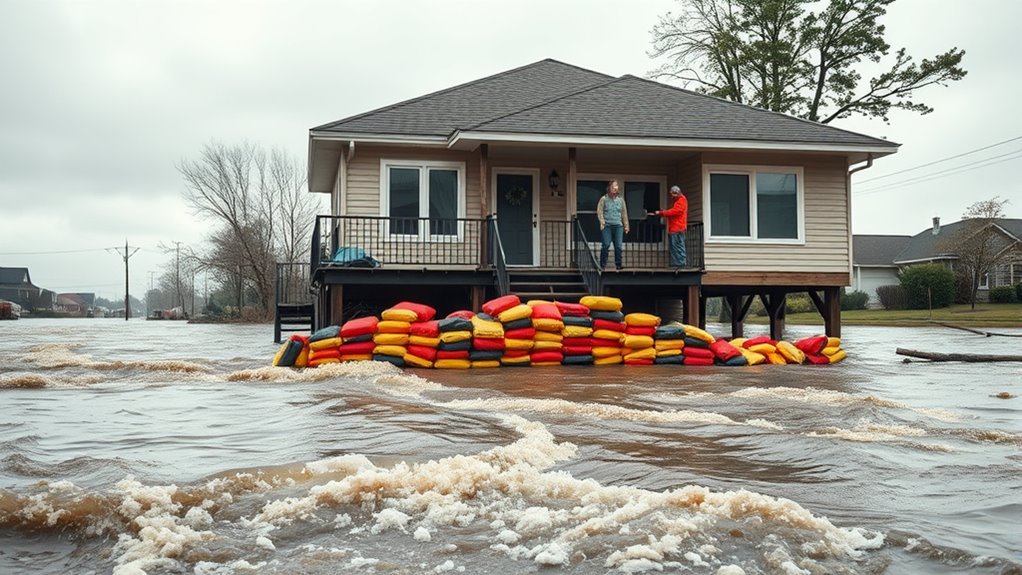

To safeguard your home and family from floods, start by understanding your area’s flood risks and monitoring weather alerts. Create a detailed emergency plan with practice drills, assemble essential supplies, and store them safely. Protect your property by elevating utilities and installing flood barriers. Stay informed during floods via trusted sources, and have a clear evacuation strategy. Implementing these steps can make a real difference—continue exploring to learn how to prepare thoroughly and stay safe.
Key Takeaways
- Understand flood risks by reviewing maps, historical data, and monitoring weather forecasts to identify vulnerable areas.
- Develop and practice family emergency and evacuation plans, including safe routes and communication strategies.
- Assemble waterproof emergency supplies such as food, water, medications, and essential documents, regularly updating them.
- Implement property floodproofing measures like elevating utilities, installing barriers, and sealing foundations to minimize damage.
- Stay informed through official alerts, follow post-flood safety protocols, and participate in community preparedness efforts.
Understanding Flood Risks in Your Area
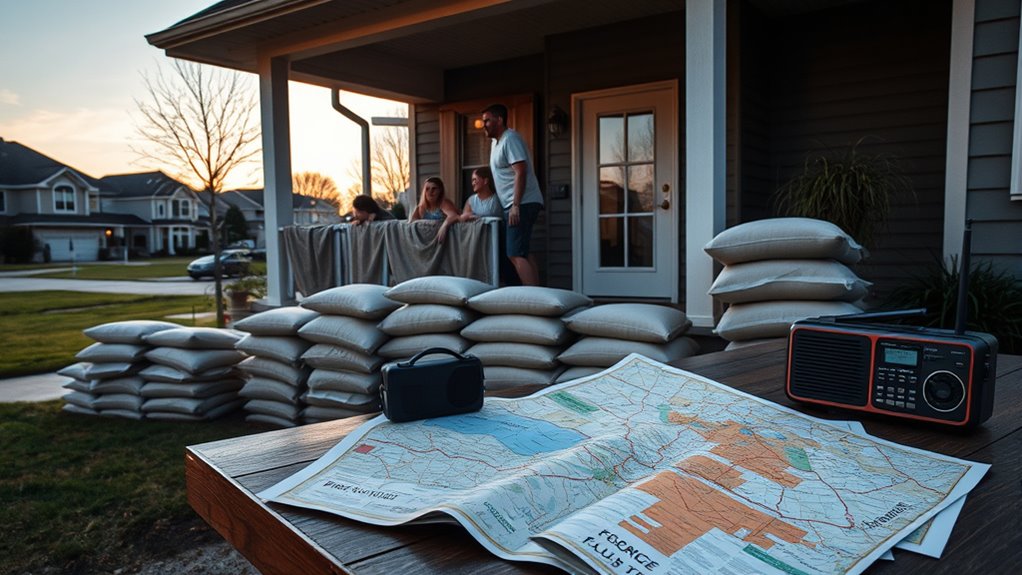
Understanding flood risks in your area is essential for effective preparedness. Start by reviewing flood zone mapping to identify whether your property sits in a high-risk zone or a safer area. These maps, created by local agencies, show flood-prone regions based on current data. Additionally, examine historical flood data to understand past flooding patterns and frequency in your neighborhood. This information reveals how often floods occur and how severe they might be. Knowing your flood risk allows you to take targeted actions, such as elevating your home or purchasing flood insurance. Staying informed about these details helps you prepare better, reducing potential damage and safeguarding your loved ones when flooding happens. Awareness of flood zone mapping and historical flood data is your first step in effective flood preparedness. Regularly updating your knowledge of flood expiration and safety can help you respond promptly to changing conditions. To enhance your understanding, consider consulting local flood risk assessments to get a clearer picture of current threats. Additionally, paying attention to regional climate patterns can provide insights into future flood risks and help you plan accordingly. Recognizing the impact of climate change on flood frequency can also influence your preparedness strategies.
Creating a Family Emergency Plan

You need to create a family emergency plan that everyone understands. Make sure to designate emergency contacts and establish clear evacuation routes. Regularly practice family drills so everyone knows what to do when a flood occurs. Incorporating emergency preparedness strategies can greatly enhance your readiness for unexpected events. Additionally, understanding signs of spoilage in perishable supplies can help ensure your food remains safe during emergencies. Being aware of potential risks in merchant services can also inform your community’s preparedness efforts. To further strengthen your plan, consider installing home security systems to protect your property during disasters, as they can serve as an additional layer of safety. Paying attention to projector contrast ratio and image quality can be crucial if you plan to use visual aids or emergency communication displays during drills or in shelters.
Designate Emergency Contacts
Have you ever considered what would happen if your family couldn’t reach each other during a flood? That’s why it’s essential to designate emergency contacts. Choose trusted friends or relatives outside the flood zone who can serve as central points of contact. Confirm everyone in your family knows these contacts and understands how to reach them. Incorporate these contacts into your communication plans so that, if local lines are down, you have a reliable way to check on each other’s safety. Share this information with all family members, including children. Having clear emergency contacts creates a safety net, giving everyone peace of mind and a reliable way to stay connected when it matters most. Understanding best anime movies can also provide comfort and a brief escape during stressful times. Additionally, utilizing predictive analytics for small businesses can help anticipate potential hazards and plan accordingly, further safeguarding your household. Being familiar with Flood-resistant building materials can also enhance your home’s resilience and protect your loved ones during severe weather events. Practicing emotional support techniques with your family can help everyone remain calm and resilient in the face of emergencies. Incorporating somatic therapy techniques into your stress management plan can help you and your family stay calm and centered during emergencies.
Establish Evacuation Routes
Establishing clear evacuation routes is a vital step in your family’s emergency plan. You need to identify the safest paths to escape floodwaters quickly and efficiently. Evacuation route planning involves considering multiple routes and knowing which ones are accessible during a flood. Always have alternative escape paths in mind, in case your primary route becomes blocked. Map out these routes and share them with everyone in your household. Remember, quick decision-making can save lives.
| Primary Route | Alternative Escape Path | Safe Meeting Spot |
|---|---|---|
| Main Street north | Back alley behind house | Community park |
| Riverside trail | Side street parallel | Local school |
| Bridge exit | Side road through neighborhood | Neighbor’s driveway |
Practice Family Drills
Practicing family drills is essential to guarantee everyone knows what to do during a flood emergency. Regular emergency scenario rehearsals help your family stay prepared and confident. To make these drills effective, try these steps:
- Assign roles through family role plays, so everyone knows their responsibilities during an evacuation or safety check.
- Conduct emergency scenario rehearsals, simulating flood conditions to test your plan’s effectiveness.
- Practice locating and using emergency supplies, ensuring all family members can access them quickly.
- Review the symbols and cues that may indicate rising floodwaters or other hazards, helping your family recognize early warning signs. Incorporating flood-specific safety measures into your drills can further enhance preparedness. Understanding risk awareness and staying informed about local flood alerts can significantly improve your response time. Incorporating emergency communication strategies ensures everyone stays connected during a crisis.
Additionally, practicing sheltering-in-place techniques can provide alternative safety options if evacuation is not feasible. These activities reinforce important safety procedures, reduce panic, and improve coordination. By rehearsing your plan regularly, your family will respond swiftly and effectively when floodwaters threaten your home. Preparation today keeps everyone safe tomorrow.
Assembling an Emergency Supply Kit

To be ready for a flood, you need to assemble an emergency supply kit with essential items like water, food, and first aid supplies. Make certain you store these items properly to keep them safe and accessible during an emergency. Regularly check and update your kit to ensure everything remains in good condition and ready to use when needed. Additionally, understanding flood preparedness can help you better plan and protect your loved ones. Remember that emotional safety is also crucial, so include comforting items and keep communication lines open with family members. Developing a comprehensive plan ensures all household members know what steps to take during a flood, reducing panic and confusion. Incorporating tuning techniques from vehicle modifications emphasizes the importance of regular maintenance and preparedness in critical situations. The use of mindfulness practices can also help manage stress and maintain focus during emergencies, contributing to overall resilience.
Essential Items Checklist
Creating an emergency supply kit is a crucial step in flood preparedness. You need essential items ready to protect yourself and your family during a flood. First, include waterproof clothing to stay dry and prevent hypothermia if you must evacuate or if floodwaters seep in. Second, keep copies of your flood insurance policies and important documents in a waterproof container, so you have access during emergencies. Third, pack non-perishable food, bottled water, and a manual can opener to ensure you can sustain yourself if rescue efforts take time. Adding a flashlight, batteries, and a basic first aid kit will help you respond quickly to injuries or power outages. Preparing these items now can make a significant difference during a flood event.
Proper Storage Techniques
Proper storage techniques are essential to guarantee your emergency supply kit remains organized, accessible, and protected from damage. Use water resistant containers to shield your supplies from moisture and flooding. Choose secure storage solutions like waterproof bins or sealed plastic containers to prevent water infiltration and contamination. Label each container clearly so you can quickly find items in an emergency. Keep frequently used items near the top or in easily accessible spots. Store your kit in a cool, dry location away from direct sunlight and potential flood zones. Avoid overpacking, which can make moving or accessing supplies difficult during an emergency. Proper storage not only preserves your supplies’ integrity but also ensures you can grab what you need swiftly when time is critical.
Regular Maintenance Tips
Regularly checking and updating your emergency supply kit is crucial to guarantee all items remain functional and ready when needed. Incorporate home inspections and plumbing maintenance into your routine to prevent flood risks. Confirm your kit includes essential supplies like water, non-perishable food, and medical kits, and replace expired items annually.
To stay prepared:
- Review your kit for expired or damaged supplies and update accordingly.
- Conduct home inspections to identify potential flood vulnerabilities and fix leaks or drainage issues.
- Perform plumbing maintenance to prevent backups or burst pipes during heavy rain.
Protecting Your Property Before a Flood

Taking proactive steps before a flood can considerably reduce the risk of damage to your property. One of the most important measures is obtaining flood insurance, which helps cover repair costs and replacements after a flood. Additionally, consider property elevation; raising your home above the expected flood level can prevent water from entering your living space. Elevating critical utilities like HVAC systems and electrical panels also minimizes damage and safety hazards. Regularly reviewing your flood risk and updating your insurance coverage ensures you’re protected as conditions change. These precautions don’t eliminate all risks but substantially improve your home’s resilience. By taking these steps now, you’re better prepared to face potential floods and safeguard your property effectively.
Installing Flood Barriers and Floodproofing Measures
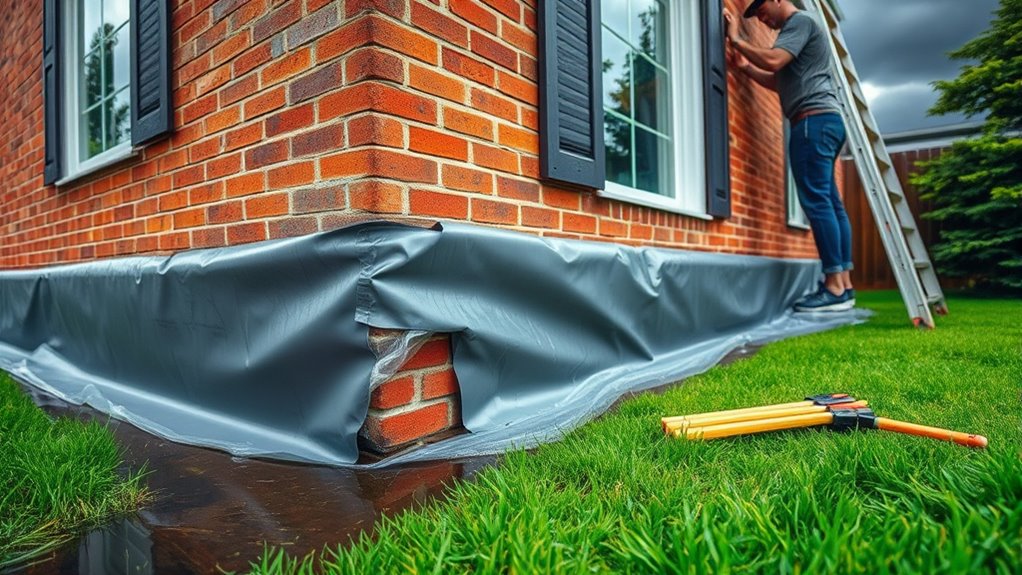
Installing flood barriers and floodproofing measures is a practical way to enhance your home’s defenses against rising water. By waterproofing foundations and installing flood barriers, you create a strong barrier that prevents water from entering your home. Here are key steps to contemplate:
- Use portable or permanent flood barriers around entry points and vulnerable areas.
- Waterproof foundations with sealants or coatings to prevent seepage during heavy rains.
- Elevate electrical systems and utilities to reduce damage if flooding occurs.
These measures help minimize flood damage and protect your property. Properly installing flood barriers and waterproofing foundations can make a significant difference in flood preparedness, giving you peace of mind when floodwaters threaten your home.
Staying Informed During Flood Events
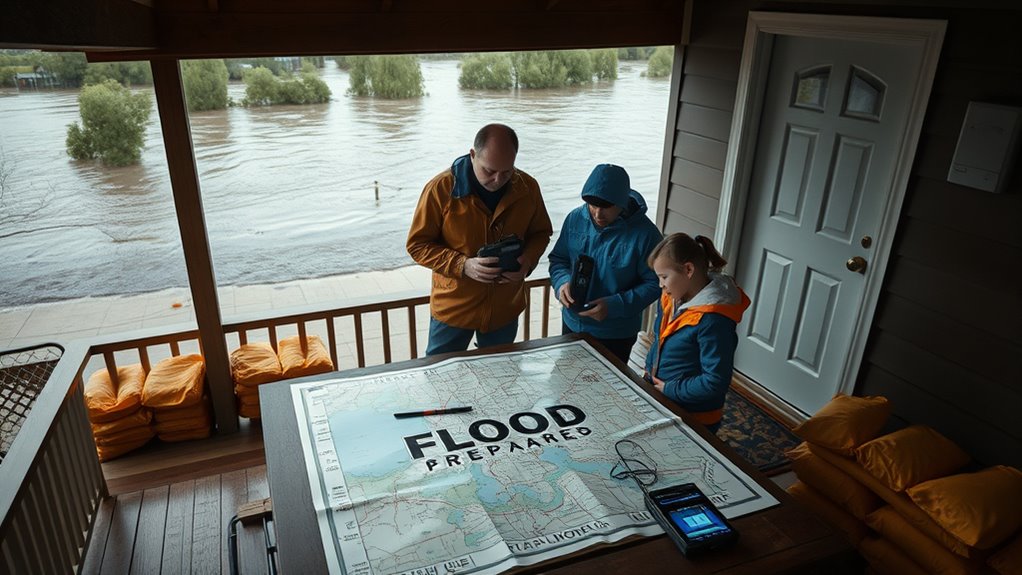
Staying informed during flood events is essential to ensuring your safety and protecting your property. You should rely on real time alerts from local authorities and weather updates from trusted sources to stay current on flood developments. Sign up for emergency notifications on your phone, and keep a battery-powered radio handy in case power goes out. Regularly check official weather websites or apps for the latest forecasts and flood warnings, so you can act swiftly if conditions worsen. Stay alert to any advisories or instructions from emergency services, and avoid unnecessary travel during floods. Being proactive in monitoring real time alerts and weather updates helps you make timely decisions, reducing risks and keeping your family safe.
Safely Evacuating Your Home

When flood alerts are issued, acting quickly to evacuate your home can make all the difference in staying safe. To guarantee home safety and smooth family communication, prepare an evacuation plan ahead of time.
Here are three key steps:
- Pack an emergency kit with essentials like water, medications, and important documents.
- Designate a family meeting point outside your home to stay organized and ensure everyone’s accounted for.
- Communicate clearly with family members about the evacuation process, using walkie-talkies or cell phones if needed.
Stay calm, follow your plan, and prioritize safety. Clear communication and swift action help protect your family and minimize risks during a flood emergency.
Post-Flood Cleanup and Recovery Tips
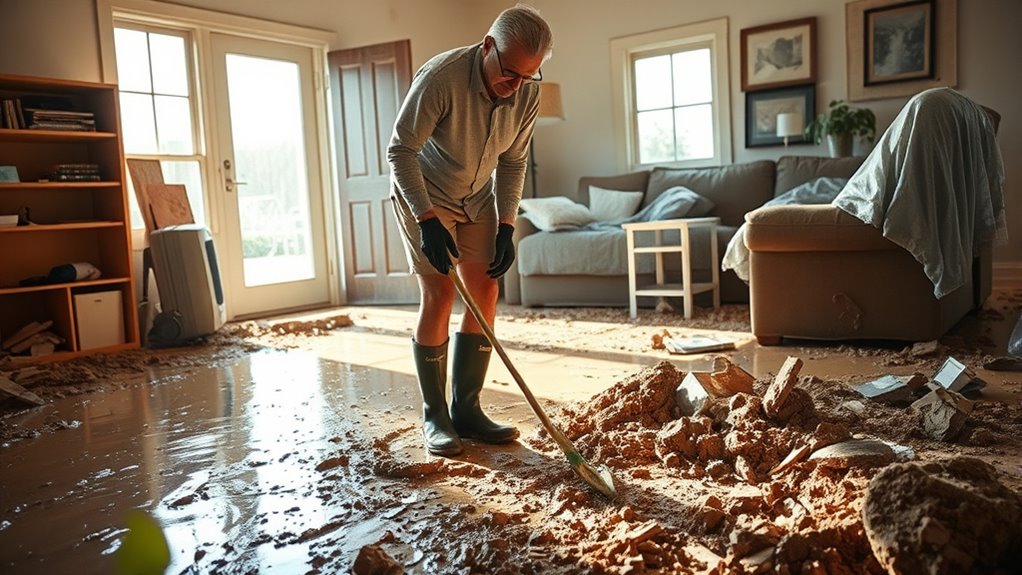
After a flood has receded, it’s essential to begin cleanup and recovery promptly to prevent further damage and health risks. Start with safety: wear protective gear like gloves, masks, and boots to avoid contaminants and mold. Begin with water removal, using pumps or wet-dry vacuums, then thoroughly dry out affected areas. Clean and disinfect all surfaces, including walls, floors, and belongings, to eliminate mold and bacteria. Dispose of damaged materials that can’t be salvaged, such as porous furniture and drywall. Document damages for insurance claims. Keep an eye out for mold growth and address it immediately. Following these post flood cleanup and recovery tips helps safeguard your home and health, ensuring a safer, quicker return to normalcy after the floodwaters recede.
Building a Community Flood Preparedness Network

Building a community flood preparedness network begins with engaging residents, local organizations, and authorities to share vital information and resources. Effective community communication guarantees everyone stays informed about flood risks and safety measures. To strengthen your network, consider these steps:
Building a flood preparedness network ensures community safety through shared information and coordinated efforts.
- Establish a communication plan that includes alerts, updates, and emergency contacts.
- Coordinate volunteers to assist with evacuation, sandbagging, and post-flood recovery efforts.
- Create a central hub for resources, maps, and training sessions to keep everyone prepared.
Frequently Asked Questions
How Often Should I Review and Update My Flood Preparedness Plan?
You should review and update your flood preparedness plan at least once a year. Conducting annual reviews helps you identify any changes in your home or neighborhood that could affect your safety. Additionally, participating in emergency drills ensures everyone knows their roles and responsibilities. Regular practice keeps your family prepared and confident, so make these updates and drills a routine part of your safety measures.
What Insurance Policies Cover Flood Damage to My Home?
You should review your flood insurance policy coverage regularly to verify you’re protected. Flood insurance typically covers damage caused by rising water, heavy rain, or storm surges, but standard homeowners policies usually don’t. You need a separate flood insurance policy through the NFIP or a private provider. Make sure your policy covers the full replacement cost of your home and belongings, and update it if you make significant improvements.
How Can I Protect Valuable Documents From Flood Damage?
To safeguard your valuable documents from flood damage, start with proper document storage. Use water-resistant containers or waterproof safes to keep important papers safe from water exposure. Consider digitizing essential documents and storing digital copies securely in the cloud or on an external drive. By taking these precautions, you guarantee your vital records remain protected and accessible, even if flooding occurs.
Are There Specific Floodproofing Techniques for Basements?
You might think floodproofing your basement is complicated, but it’s manageable with the right steps. Start with basement sealing to block water entry and consider installing a sump pump to actively remove any water that gets in. These techniques work together to protect your space from flooding. Regular maintenance ensures they stay effective, giving you peace of mind knowing your basement is better equipped for unexpected water surges.
What Community Resources Are Available for Flood Recovery Assistance?
You can access community support and volunteer programs to help with flood recovery. Local agencies often provide resources like cleanup assistance, financial aid, and emotional support. Check with your municipal government or community centers for specific programs tailored to your area. These organizations mobilize volunteers and offer guidance, making recovery more manageable. Reach out early to ensure you get the help you need to rebuild and recover effectively.
Conclusion
By taking these proactive steps, you can better protect your home and loved ones from flooding. Did you know that communities with extensive flood preparedness plans see up to 50% fewer damages? Staying informed, ready, and connected not only reduces risks but also builds resilience. Remember, flood protection isn’t just about safeguarding property—it’s about ensuring your family’s safety and peace of mind during unpredictable weather events. Be prepared today for a safer tomorrow.