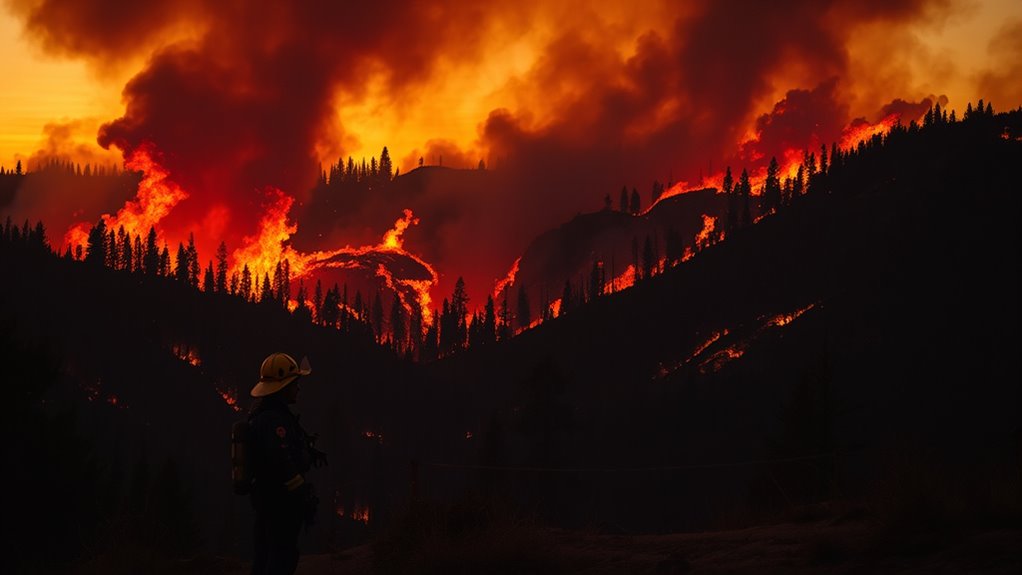

To understand wildfire behavior, you need to contemplate weather, terrain, and fuel types. Wind can speed up fire spread, while steep slopes and dense vegetation can cause fires to jump and grow quickly. Managing fuels around your property with clearing and defensible space helps prevent fires from reaching your home. Recognizing these factors makes you better prepared. If you keep exploring, you’ll discover effective strategies to protect yourself and your surroundings during wildfire threats.
Key Takeaways
- Wind, terrain, and vegetation significantly influence wildfire spread and intensity.
- Ignition sources include lightning, human activity, and power lines, especially during dry seasons.
- Managing fuels through clearing vegetation and creating defensible space reduces fire risk.
- Weather changes and terrain features can cause sudden shifts in fire behavior.
- Fire prevention includes avoiding sparks, maintaining clearance around properties, and following safety guidelines.
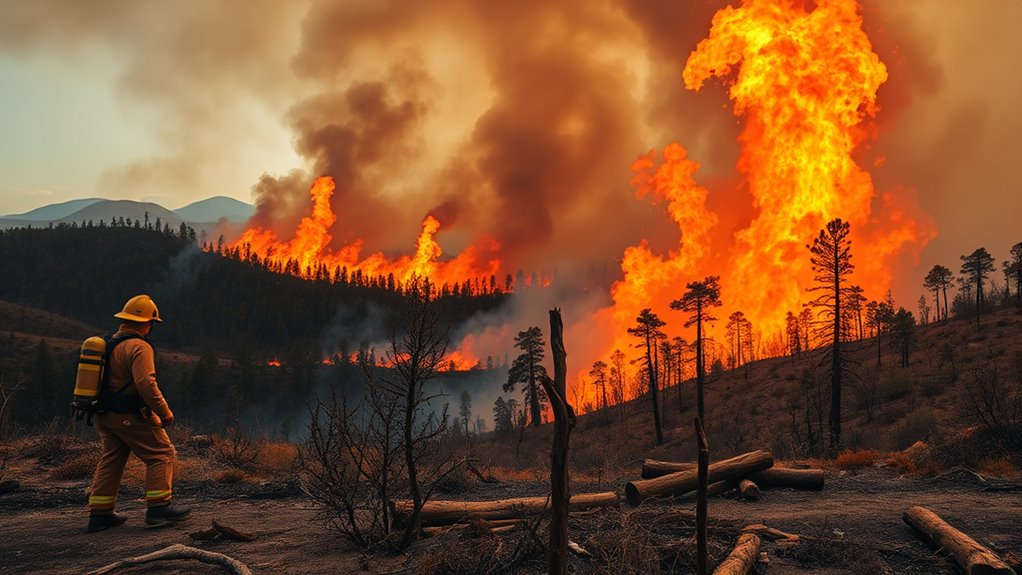
Wildfires can spread rapidly and unpredictably, posing serious threats to both natural ecosystems and human communities. To understand how they grow and how to prevent them, you need to grasp the fire spread dynamics and the ignition sources that start these destructive fires. Fire spread dynamics describe how a fire moves across landscapes, influenced by factors like wind, terrain, and vegetation. Wind acts as a fuel, carrying flames forward and encouraging faster expansion. Steep slopes can cause fires to leap uphill quickly, while dense vegetation provides ample fuel for sustained burning. Recognizing these factors helps you anticipate a wildfire’s behavior and act accordingly.
Wildfire spread depends on wind, terrain, and vegetation, making rapid and unpredictable growth a serious threat.
Ignition sources are the starting points of most wildfires. They can be natural, such as lightning strikes, or human-made, like unattended campfires, discarded cigarettes, or power lines. You should always be aware of potential ignition sources, especially during dry seasons when the risk of fire ignition increases markedly. For instance, outdoor burning or using equipment that produces sparks can easily ignite surrounding dry grass or leaves. Even a small spark can escalate into a wildfire if conditions are right. Understanding these ignition sources allows you to take proactive measures, like safely extinguishing fires or avoiding activities that could cause sparks during high-risk periods.
The way a fire spreads also depends on the availability of fuels, which include grasses, shrubs, and trees. If you’re in an area with dense, dry vegetation, the fire can quickly escalate once ignited. That’s why managing fuels around your property is critical. Creating defensible space by clearing brush and dead vegetation reduces the available fuel, making it less likely for a fire to take hold or spread rapidly. Additionally, understanding the fire spread dynamics helps you recognize when fire behavior might change suddenly, such as during shifts in wind direction or speed. Being alert to these changes allows you to evacuate or reinforce protective measures in time. Implementing fire-resistant landscaping and materials can further decrease the risk of fire spreading to structures.
Preventing wildfires ultimately involves controlling ignition sources and managing the landscape to disrupt fire spread. You should avoid activities that can cause sparks during risky weather conditions, and always follow local guidelines for fire safety. Maintaining a defensible space around your home and clearing combustible materials can profoundly reduce fire risk. By understanding how fires ignite and spread, you can better prepare and respond, helping protect your community and natural surroundings from the devastating impacts of wildfires. Additionally, utilizing fire behavior knowledge can enhance your ability to predict and respond effectively to wildfire threats.
As an affiliate, we earn on qualifying purchases.
Frequently Asked Questions
How Do Wildfire Smoke Impacts Human Health Long-Term?
Wildfire smoke can harm your long-term health by worsening air quality and damaging your respiratory health. Prolonged exposure to fine particles in the smoke may lead to chronic respiratory issues, asthma, or even heart problems. You might notice lingering coughs or breathing difficulties. To protect yourself, limit outdoor activities during smoky days, use air purifiers, and stay indoors when air quality is poor.
What Are the Most Effective Community Wildfire Preparedness Measures?
You should prioritize community drills and clear evacuation planning to boost wildfire preparedness. Regular drills help everyone know what to do, reducing panic and confusion during emergencies. Make sure your community has designated evacuation routes and communication plans, so residents stay informed and safe. Encourage neighbors to stay updated on fire alerts and participate in preparedness activities. These measures build resilience and ensure a swift, coordinated response when wildfires threaten your area.
How Does Climate Change Influence Wildfire Frequency and Intensity?
Climate change alters climate patterns, leading to hotter, drier conditions that increase wildfire frequency and intensity. You’ll notice longer fire seasons and more severe fires because these changing patterns create ideal conditions for fires to ignite and spread. As fire regimes shift, expect more frequent, larger, and more destructive wildfires, making it essential for you to stay informed and prepared to protect your community and environment from these escalating threats.
Can Certain Plants or Landscaping Reduce Wildfire Risk Around Homes?
You can reduce wildfire risk around your home by choosing native plants, which are less flammable and better adapted to your local environment. Create defensible space by removing dead vegetation, trimming trees, and maintaining a safe distance between plants and structures. Avoid highly combustible landscaping materials, and use fire-resistant plants to create a buffer zone. These steps help slow the spread of fire and protect your property effectively.
What Are the Latest Technological Innovations in Wildfire Detection?
You should know that the latest wildfire detection innovations include advanced satellite sensors and drone technology. Satellite sensors continuously monitor large areas for early signs of fires, providing real-time data to authorities. Drones, equipped with thermal imaging, fly over vulnerable regions to spot smoke or heat signatures quickly. These tools enable faster response times, helping contain wildfires more effectively and protect lives and property.
Conclusion
Just as Prometheus brought fire to mankind, understanding wildfire behavior gives you the power to tame it. By staying informed and practicing prevention, you become a modern-day hero, safeguarding your home and community. Remember, fire is a formidable force—like Icarus flying too close to the sun—so respect its power. With knowledge and caution, you can prevent small sparks from becoming uncontrollable infernos, ensuring that fire remains a tool for progress, not destruction.